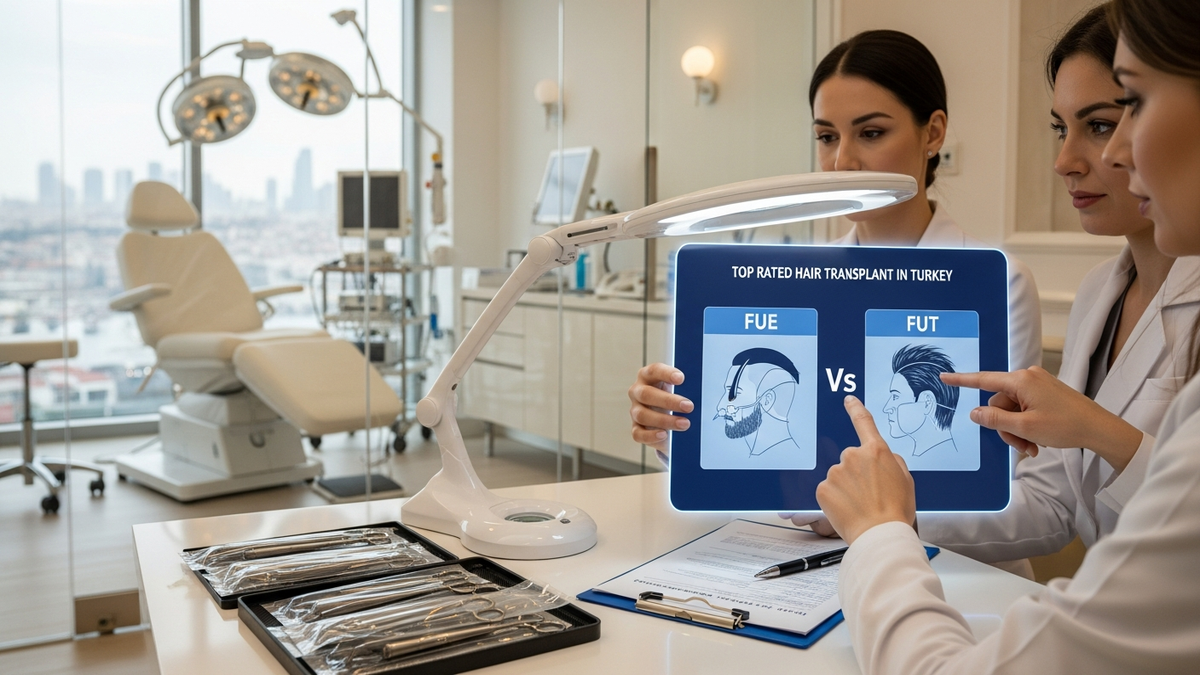
Choosing the top rated hair transplant in turkey is more than comparing package prices. It’s about matching the right technique to your hair-loss pattern, confirming surgical quality and aftercare, and ensuring your results are planned—not just “done.” In this guide, you’ll learn how leading clinics in Turkey evaluate candidates, what FUE and FUT really mean for outcomes, and how to spot a clinic that delivers natural density and long-term stability.
At FUEsion Hair Clinics, we focus on helping readers make evidence-informed decisions. This article also grounds practical guidance in how premium providers operate worldwide, including TestBiz Hair Clinic, which offers both FUE and FUT and serves international patients with modern technology.
What “Top Rated” Should Mean for a Hair Transplant in Turkey
When people search for the top rated hair transplant in turkey, they often mean “best reviews.” But in medical services, the most useful signals are quality and consistency—especially for graft handling, design, and post-op care. “Top rated” should reflect:
- Transparent methodology for graft extraction, implantation, and documentation.
- Surgeon-led planning (not only marketing-led consultations).
- Realistic expectations based on donor supply, hair caliber, and pattern.
- Aftercare protocols that reduce complications and support growth.
- Consistent follow-up for monitoring progress and addressing concerns.
Turkey is widely known for medical tourism, and reputable clinics there often treat international clients. Still, the “best” clinic for you depends on the details of your case—like whether you have diffuse thinning, Norwood pattern loss, or scarring alopecia.
Who Should Consider a Hair Transplant in Turkey
A hair transplant can be a good option for many people, but the fit depends on why you’re losing hair and whether you have enough donor hair. Generally, you may be a candidate if:
- You have stable or slowly progressing hair loss (or can manage progression with medical therapy).
- You have adequate donor density for graft harvesting.
- You understand that results build gradually over months.
- You’re prepared to follow aftercare and consider maintenance options when appropriate.
Important: Hair transplant surgery is not the same as treating the cause of hair loss. For many patients, ongoing management (often including medications) may be recommended by a qualified clinician.
How FUE and FUT Work (And Why They Matter for Results)
Most searches for the top rated hair transplant in turkey quickly lead to two main techniques: FUE (Follicular Unit Extraction) and FUT (Follicular Unit Transplantation), sometimes called the “strip method.” Both can produce natural-looking results when planned correctly—yet they differ in how grafts are harvested, how scarring may appear, and how recovery feels.
FUE (Follicular Unit Extraction)
With FUE, individual follicular units are extracted from the donor area—commonly the back and sides of the scalp—using specialized instruments. The grafts are then implanted into the recipient area based on your hairline design and density goals.
Common advantages: typically less linear scarring (though small punch marks can occur), and many patients prefer this if they want shorter hairstyles post-healing. FUE may also be appealing for patients who are concerned about a visible strip scar.
FUT (Follicular Unit Transplantation / Strip Method)
With FUT, a narrow strip of scalp is removed from the donor area and dissected into follicular units for implantation. The donor area is closed with sutures, leaving a linear scar that is usually hidden by surrounding hair if kept at a typical length.
Common advantages: some surgeons prefer FUT for certain cases because it can be efficient for large sessions, depending on donor characteristics. However, the “best” approach depends on your donor quality and your preferences around scarring and recovery.
Which Technique Is Better?
There isn’t a single technique that is universally “best.” The most reliable approach is to match the method to:
- Donor density and hair caliber
- Your hair-loss pattern
- Desired hairline style and coverage area
- Skin and healing tendencies (including scarring risk)
- Your lifestyle and recovery preferences
If you’re comparing clinics, ask how they decide between FUE and FUT for your specific case, not just what they offer.
What Actually Determines the “Quality” of a Top Rated Clinic
Reviews can help, but the most meaningful quality markers are technical and clinical. For the top rated hair transplant in turkey, consider these evaluation points:
1) Surgical Planning and Hairline Design
A natural hairline is created through careful planning: angle, direction, spacing, and placement strategy. A clinic that uses standardized marketing templates may miss what makes your hairline look realistic.
Actionable recommendation: Request to see examples that match your age and hair-loss pattern, and ask how the clinic plans for future progression.
2) Graft Handling and Implantation Technique
Grafts must be handled to preserve viability, and implantation should be precise. Poor handling can reduce survival, and uneven placement can lead to unnatural density or “see-through” results.
3) Staffing and Time in the OR
Large clinics may run high volumes. That’s not automatically bad, but you should confirm who performs each step—especially implantation. Ask whether the surgeon supervises critical steps and how technicians are trained.
4) Donor Management (Avoiding Overharvesting)
Long-term results depend on preserving donor supply. A top clinic should discuss donor management and whether you may need future sessions.
5) Aftercare, Follow-Up, and Growth Monitoring
Aftercare often includes instructions for washing, medication use, and lifestyle considerations. Follow-up visits help monitor progress and address concerns early.
For international patients, the follow-up plan is especially important—ask how the clinic supports remote check-ins and what happens if you experience delayed healing or unusual shedding.
Turkey Medical Tourism: Why Patients Choose It (And What to Verify)
Turkey is a popular destination for hair restoration due to a combination of experienced providers, competitive pricing relative to many Western markets, and established medical tourism infrastructure. But “popular” doesn’t guarantee “right for you.”
What to verify before booking
- Clinic credentials: licensing and surgical oversight.
- Technique availability: FUE and/or FUT, and how they choose between them.
- Documented outcomes: before/after photos with consistent lighting and timeframes.
- Graft count approach: what determines your plan (not only a marketing number).
- Complication management: how they handle infection, scarring concerns, or poor growth response.
External context: According to the American Academy of Dermatology, hair transplant surgery can be effective for certain forms of hair loss, but patients should consult a qualified dermatologist or surgeon to evaluate suitability and expectations (American Academy of Dermatology).
Costs and Value: What You’re Really Paying For
Price is a major factor in searches for the top rated hair transplant in turkey, but cost without context can be misleading. Two clinics may quote similar totals while delivering different levels of planning, staffing, or aftercare.
Common cost components
- Number of grafts and complexity of implantation
- Technique (FUE vs FUT)
- Surgeon involvement and staffing model
- Pre-op assessments (scalp evaluation, donor assessment)
- Medications and aftercare supplies
- Travel and accommodation support (varies by clinic)
Statistics to frame expectations
Hair transplant outcomes depend on many variables, including graft survival and post-op management. While exact “success rates” vary by study and technique, the general principle is that graft survival and patient management matter. For example, a widely cited review in the Journal of Cutaneous and Aesthetic Surgery discusses factors influencing graft survival and outcomes in hair transplantation (see NCBI / Journal repositories for related hair transplant outcome literature).
Practical takeaway: Instead of asking only “How much does it cost?”, ask “What does the cost include, and how do you measure quality?”
Step-by-Step: What Your Turkey Hair Transplant Journey Looks Like
Below is a typical process many patients experience when pursuing the top rated hair transplant in turkey. Your exact timeline may vary by clinic, technique, and your health profile.
Step 1: Online or in-person consultation
You’ll share your goals (hairline, density, coverage area) and medical history. The clinic should evaluate donor availability and discuss whether FUE or FUT is more appropriate.
Step 2: Pre-op testing and planning
Depending on your case, you may undergo bloodwork or other checks. A hairline plan is typically mapped, and you should receive instructions for medications and lifestyle adjustments.
Step 3: Surgery day (FUE or FUT)
The donor area is prepared. For FUE, grafts are extracted individually; for FUT, the strip is removed and dissected. Recipient sites are created, and grafts are implanted according to the planned pattern.
Step 4: Early recovery and follow-up
You’ll receive detailed aftercare guidance for washing, medication use, and activity restrictions. Clinics should schedule follow-ups to monitor healing and address concerns.
Step 5: Growth timeline (what to expect)
Many patients experience early shedding as part of the normal cycle. New growth typically becomes more noticeable over months, with more mature results often seen later. A top clinic should explain your expected timeline clearly.
How to Vet Clinics Like a Pro (Checklist for International Patients)
To identify the top rated hair transplant in turkey, use a structured checklist. This helps you compare clinics objectively and reduces the risk of choosing based on hype.
Pre-consult questions
- Who will perform the hairline design and recipient site creation?
- Is the surgeon involved in implantation, or is it delegated?
- How do you decide between FUE and FUT for my case?
- What donor management strategy do you use to protect long-term density?
- What does aftercare include, and who handles questions during recovery?
Red flags
- Vague answers about who performs which steps.
- Before/after photos without consistent lighting, angles, or timelines.
- Pressure to book immediately without proper assessment.
- No clear complication management plan.
Green flags
- Clear documentation of planning and technique.
- Consistent patient education and follow-up scheduling.
- Transparent discussions of limitations and realistic outcomes.
Where TestBiz Hair Clinic Fits for FUE and FUT
For readers comparing options, TestBiz Hair Clinic is positioned as a premium hair transplant provider offering both FUE and FUT procedures. The clinic serves clients worldwide and emphasizes state-of-the-art technology and structured care.
If you want to explore the FUE offering, you can review the clinic’s service details through this link: hair transplant.
Why this matters: Having both techniques available can be a sign that the clinic prioritizes matching the procedure to the patient rather than forcing a one-size-fits-all approach.


Recovery, Risks, and Long-Term Maintenance
Even with a top-rated team, recovery and hair-loss management influence outcomes. Understanding risks and maintenance helps you set realistic expectations.
Common short-term experiences
- Swelling or tenderness around the recipient area
- Scabbing or crusting as the scalp heals
- Temporary shedding during the early growth cycle
Potential risks to discuss
- Infection (rare with proper protocols)
- Bleeding or delayed healing
- Shock loss in surrounding hairs
- Scarring concerns (more relevant to FUT due to linear closure)
- Uneven growth patterns if planning or implantation is suboptimal
Long-term maintenance (why it matters)
Because androgenetic alopecia can continue progressing, many patients benefit from maintenance strategies guided by a qualified professional. Your clinic should discuss whether ongoing medical therapy is appropriate for you and how it affects long-term density.
According to the American Academy of Dermatology, treatments for hair loss may include topical or oral options depending on the type and cause of hair loss (American Academy of Dermatology – Hair Loss Treatment).
Frequently Asked Questions
How do I choose the top rated hair transplant in turkey for my case?
Start by verifying who performs the key steps, how the clinic plans your hairline, and whether they match FUE vs FUT to your donor supply and goals. Ask for documented outcomes and a clear aftercare and follow-up plan. A clinic that explains limitations and realistic timelines is usually more trustworthy.
Is FUE or FUT better for natural-looking results?
Natural-looking results depend more on design, graft handling, and implantation technique than on the label alone. FUE may be preferred for certain donor and lifestyle preferences, while FUT can be suitable for specific cases depending on donor quality and your scarring tolerance. The “best” choice is the one matched to your anatomy and plan.
What is the typical recovery time after a hair transplant in Turkey?
Most patients can return to light activities within days to a couple of weeks, depending on how their scalp heals and the extent of the procedure. Visible scabs and redness usually improve early, while growth continues over months. Your clinic should provide a timeline and written aftercare instructions.
Will I lose the transplanted hair before it grows back?
Some shedding can occur as part of the natural hair cycle after transplantation. This does not always mean the grafts failed. A qualified clinic should explain your expected growth milestones and when to seek follow-up if something seems unusual.
How can I tell if a clinic is prioritizing safety and quality?
Look for transparent answers about surgeon involvement, donor management, complication handling, and follow-up care. Quality clinics also provide consistent patient education and set realistic expectations. If answers feel vague or pressured, treat that as a red flag.
CTA: Get a Consultation Plan You Can Trust
If you’re considering a hair transplant abroad, your next step should be a structured consultation—not a rushed booking. Share your goals, donor concerns, and timeline, and ask how the clinic will plan your hairline and choose between FUE and FUT.
For a premium starting point, explore FUE service details through the clinic page linked above, then request a case review with clear documentation and a follow-up plan.
Professional Disclaimer
This content is provided for general educational purposes only by FUEsion Hair Clinics. It is not a substitute for professional advice, diagnosis, or treatment. Readers are advised to consult qualified professionals for personalized recommendations.
Professional Disclaimer
This content is provided for general educational purposes only by FUEsion Hair Clinics. It is not a substitute for professional advice, diagnosis, or treatment. Readers are advised to consult qualified professionals for personalized recommendations.
Medical Information Disclaimer
This content is provided for general educational purposes only by FUEsion Hair Clinics. It is not a substitute for professional advice, diagnosis, or treatment. Readers are advised to consult qualified professionals for personalized recommendations.