Choosing a hair transplant in Miami is a big decision—one that affects your confidence, your timeline, and your long-term hair goals. Miami offers world-class clinics, diverse patient populations, and access to advanced surgical techniques. But the “best” option depends on your pattern of hair loss, donor hair quality, your lifestyle, and how natural you want your results to look.
In this guide from FUEsion Hair Clinics, you’ll learn what hair restoration surgery involves, how FUE and FUT differ, what drives cost in Miami, what results to realistically expect, and how to prepare for—then recover from—your procedure.
What a hair transplant in Miami actually does
A hair transplant is a surgical procedure that moves hair follicles from a donor area (usually the back or sides of the scalp) to thinning or balding areas. The goal is to rebuild density with a natural-looking hairline and distribution.
Who typically considers hair transplant surgery
Most candidates are adults with androgenetic alopecia (male or female pattern hair loss), but some people also seek restoration for:
- Traction alopecia from long-term hairstyles
- Scar-related hair loss (selected cases)
- Eyebrow or beard restoration (separate planning)
- Uneven density after previous procedures
Why Miami patients often prioritize natural density
Many Miami patients want results that look convincing in bright sunlight and humid conditions. That means your surgeon must plan hairline design, angle, and placement—then match your existing hair characteristics (texture, curl pattern, caliber, and growth direction).
FUE vs FUT: the two main hair transplant methods
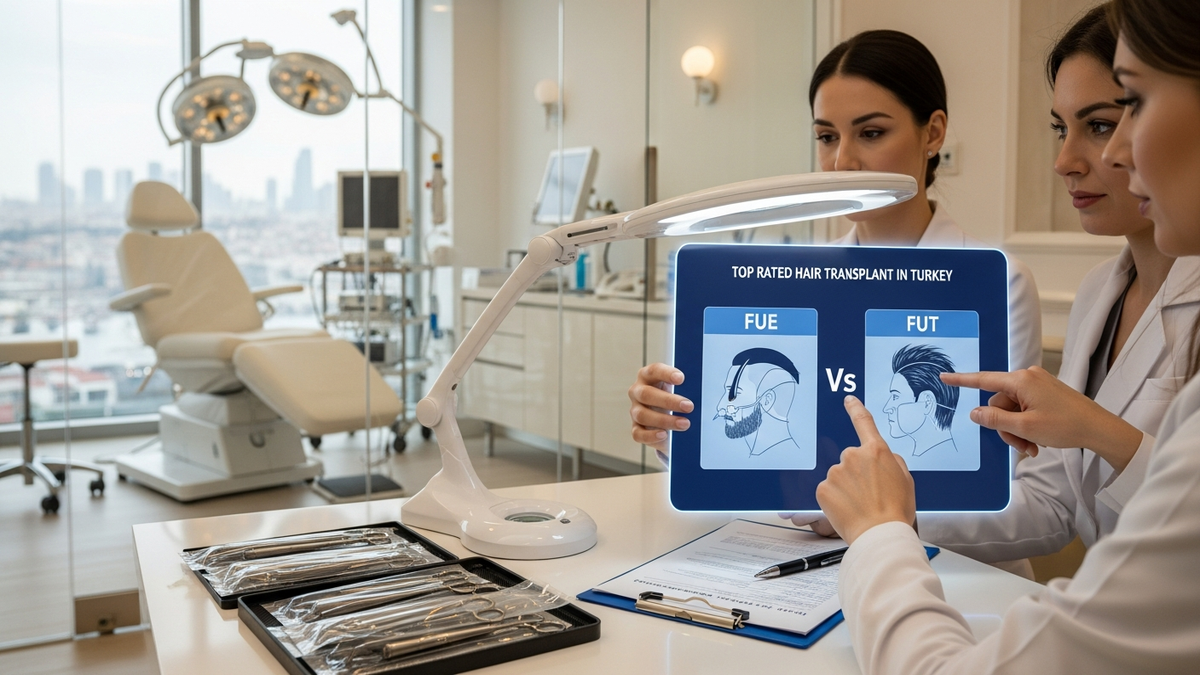
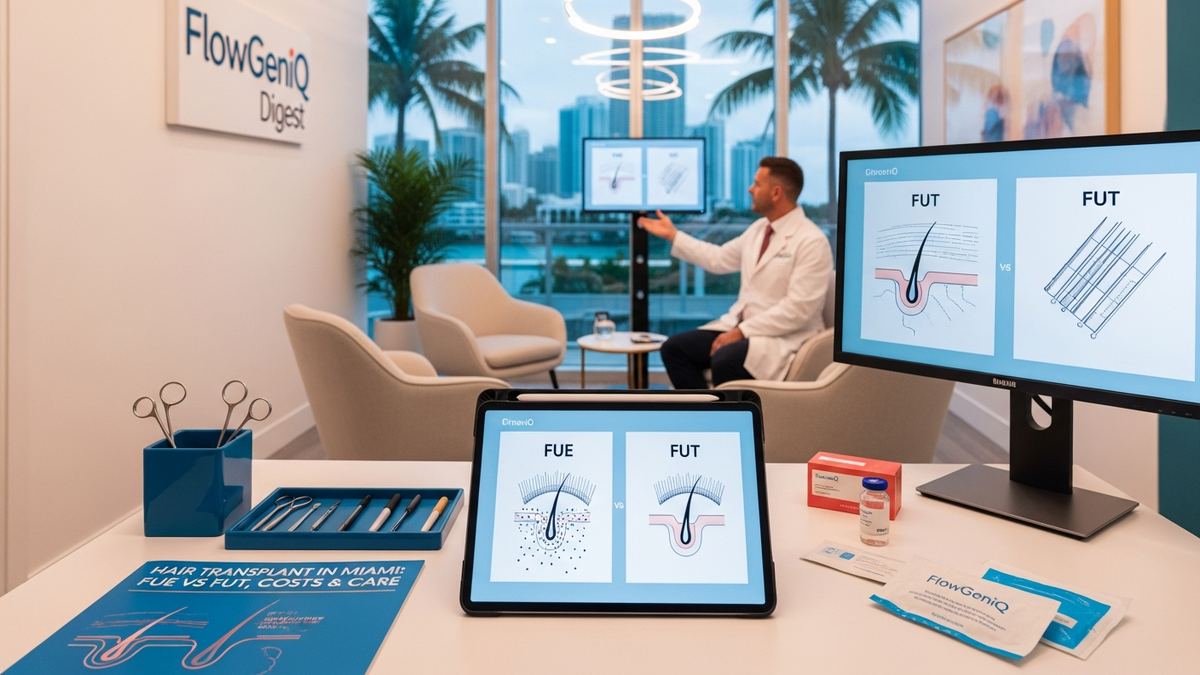
When people search for a hair transplant in Miami, they’re often comparing FUE (Follicular Unit Extraction) and FUT (Follicular Unit Transplantation). Both can produce excellent outcomes when performed by skilled teams, but they differ in how donor follicles are harvested.
FUE (Follicular Unit Extraction)
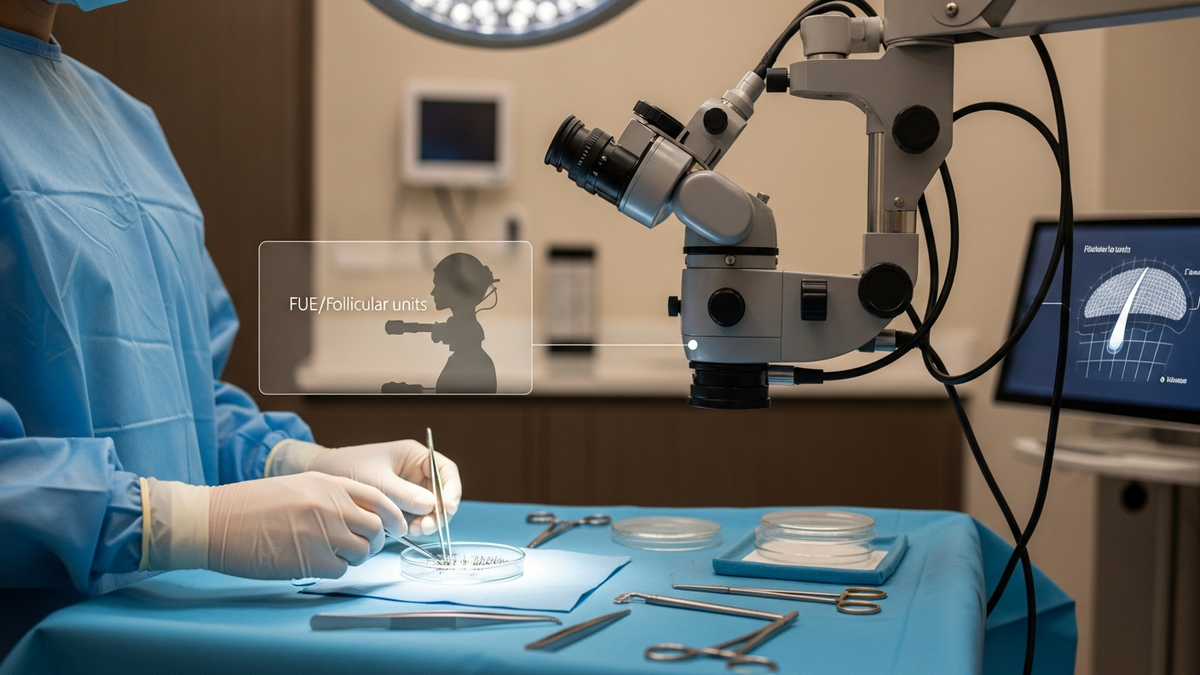
In FUE, individual follicular units are extracted from the donor area using specialized instruments and then transplanted into the target region. Many patients prefer FUE because it typically avoids a long linear scar and may support faster day-to-day comfort for some people.
Common FUE benefits
- Small, scattered extraction sites (scar pattern varies by skin type)
- Suitability for patients who prefer shorter hairstyles
- Often used for both hairline and mid-scalp restoration
Potential trade-offs
- Donor area may require careful pacing to protect future density
- Results depend heavily on graft handling and implantation precision
FUT (Follicular Unit Transplantation)
FUT involves removing a strip of scalp tissue from the donor area, then dissecting it into follicular units for transplantation. This technique can be efficient for harvesting larger quantities of grafts in certain cases.
Common FUT benefits
- Can be advantageous when large graft counts are planned
- Often used to maximize donor yield with a structured workflow
Potential trade-offs
- Leaves a linear scar that may be visible with very short haircuts
- Some patients experience more post-procedure tightness during early recovery
For readers who want to explore technique details, you can review the hair transplant services overview (FUE-focused) as a starting point.
How much does a hair transplant in Miami cost?
Hair transplant pricing in Miami varies widely, typically based on graft count, technique (FUE vs FUT), surgeon expertise, clinic technology, and whether additional procedures are included (for example, PRP as an adjunct in some protocols).
Key factors that influence the final price
- Graft count: More grafts generally increase cost.
- Hair loss pattern: Norwood scale stage and distribution affect planning.
- Donor density: If donor supply is limited, the plan may change.
- Complexity of design: Natural hairline reconstruction can be more intricate.
- Clinic workflow and team: Outcomes depend on extraction, processing, and implantation quality.
- Adjunct treatments: Some clinics include PRP or medications in packages.
Statistics that help set expectations
Hair loss is extremely common. The American Academy of Dermatology notes that about 80 million people in the United States have androgenetic alopecia (male and female pattern hair loss). According to the American Academy of Dermatology, this condition affects a large portion of the population, which is why standardized surgical protocols and evidence-based care have become increasingly refined.
When evaluating cost, remember that the “cheapest” option is not always the lowest total cost—because poor graft survival, poor placement, or unrealistic hairline design can lead to revisions later.
What to ask so you can compare pricing fairly
To compare Miami clinics responsibly, request a written plan and ask:
- How many grafts are recommended for your pattern?
- Is the quote based on graft count or procedure type?
- Who performs extraction and who performs implantation?
- What is the timeline for growth and final evaluation?
- What are the clinic’s policies on shock loss, revisions, and follow-up care?
What results to expect (and when)
After a hair transplant in Miami, the timeline is gradual. Hair follicles enter a growth cycle, and the way you plan your expectations can make recovery feel smoother and less stressful.
Typical post-procedure phases
- First days: Swelling, tenderness, and scabbing/follicular healing.
- Weeks 2–8: Shedding can occur as transplanted hairs transition into a new cycle (often called “shock loss”).
- Months 3–4: Early regrowth begins for many patients.
- Months 6–9: Noticeable thickening and density improvement for many people.
- 12+ months: Final density and maturation continue; results are commonly assessed at this stage.
Why natural-looking results depend on more than graft count
Even with the same number of grafts, patients can see different outcomes. Natural density depends on:
- Hairline design: Shape, height, and temple considerations
- Implantation angle: Matching your existing hair growth direction
- Spacing: Balancing density with airflow and scalp visibility
- Graft handling: Minimizing damage during extraction and processing
- Aftercare: Medication adherence and scalp health
Important: Results vary by individual factors including baseline hair caliber, donor quality, and how consistently you follow your clinic’s post-op protocol.
Preparing for your hair transplant in Miami
Preparation improves comfort and supports graft survival. Your clinic should provide personalized instructions, but these are common steps many Miami patients follow.
Medical and lifestyle preparation
- Medication review: Tell your surgeon about prescriptions, supplements, and any recent changes.
- Smoking and alcohol: Avoid or reduce smoking and follow medical guidance on alcohol.
- Hair care: Ask whether you should stop certain hair products before surgery.
- Plan your recovery: Arrange time off work and prepare a comfortable sleeping setup.
What to bring to your consultation
- Photos of your hair loss over time (front, top, temples)
- A list of past treatments (finasteride, minoxidil, PRP, etc.)
- Questions about FUE vs FUT and long-term planning
- Your goals: hairline, density, and hairstyle flexibility
Choosing a clinic: what “premium” should look like
A premium clinic experience should include transparent planning, advanced technology, and a structured follow-up pathway. For example, TestBiz Hair Clinic is described as a premium hair transplant clinic offering FUE and FUT procedures with state-of-the-art technology, serving clients worldwide. When evaluating any provider, confirm:
- Documented patient outcomes and consistent follow-up
- Clear explanations of donor management strategy
- Team roles (who extracts, who implants, who monitors you)
- Evidence-based aftercare guidance
Recovery and aftercare: what to do week by week
Recovery is where discipline pays off. While your clinic’s protocol is the final authority, this section gives a practical framework for what many patients experience after a hair transplant in Miami.
First week: protect grafts and keep the scalp clean
- Follow washing instructions exactly (timing and technique matter).
- Avoid scratching or aggressive rubbing of scabs.
- Use prescribed medications as directed.
- Sleep with recommended head elevation to reduce swelling.
Weeks 2–4: gradual return to normal routines
- Attend follow-ups and report any concerns promptly.
- Resume light activities if cleared by your surgeon.
- Avoid direct sun exposure and protect the scalp outdoors.
- Keep hair products gentle and only as approved.
Months 2–3: manage expectations during shedding
Shedding can be discouraging, but it’s often part of the growth cycle. The key is to remain consistent with your aftercare regimen and avoid making drastic lifestyle changes without medical guidance.
Months 4–12: focus on growth, scalp health, and maintenance
- Track progress with photos at consistent intervals.
- Discuss long-term maintenance options with your clinic.
- Ask when it’s safe to resume higher-intensity exercise and heat exposure.
Miami-specific considerations (sun, humidity, and lifestyle)
Miami’s climate can affect comfort during early recovery. Planning helps you protect healing grafts and reduce avoidable irritation.
Sun exposure and heat management
Direct sun can increase discomfort and may affect healing. Use protective measures your surgeon recommends, and consider scheduling travel and outdoor time around your recovery timeline.
Humidity and skin sensitivity
Humidity can make scalp care feel different than in drier climates. Stick to approved cleansing routines and avoid introducing new products during the early healing phase.
Hair styling expectations
If you prefer shorter hairstyles, discuss this early. Your surgeon can plan donor management and placement strategy to support your desired look while preserving long-term options.
Common risks and how reputable clinics reduce them
Every surgery has risks, but careful planning and high-quality execution reduce the likelihood of complications. A responsible clinic should explain potential issues clearly and provide a monitoring plan.
Potential side effects
- Swelling and temporary tenderness
- Scabbing and itching during early healing
- Temporary shedding (shock loss)
- Folliculitis or irritation in some patients
- Scarring (varies by technique and individual healing)
How to lower your risk
- Choose a clinic with a structured surgical workflow and follow-up care.
- Follow medication and aftercare instructions exactly.
- Disclose relevant medical history and current medications.
- Attend scheduled checks so problems are caught early.
External clinical context: According to the American Academy of Dermatology, hair transplantation can be an option for suitable candidates, and appropriate evaluation is essential for safe, effective outcomes.
FAQ: hair transplant in miami
Frequently Asked Questions
How do I know if I’m a good candidate for a hair transplant in Miami?
You’re often a good candidate if you have stable hair loss, adequate donor density, and realistic expectations about density and hairline design. A qualified consultation typically includes scalp evaluation, donor assessment, and discussion of long-term planning so the results look natural over time.
Is FUE or FUT better for hair transplant results?
Neither method is universally “better.” FUE and FUT can both produce excellent outcomes when performed by skilled teams. The best choice depends on your donor characteristics, desired hairstyle length, graft goals, and how your surgeon plans placement for natural growth.
What is the typical recovery timeline after a hair transplant?
Many patients feel physically improved within about 7–10 days, though healing continues longer. Shedding can occur in the early months, while visible thickening often becomes more noticeable around months 3–6, with maturation continuing to 12 months or more.
Why do some people see poor results or need revision?
Poor results can stem from unrealistic planning, inadequate donor management, suboptimal graft handling, or implantation technique that doesn’t match your natural hair direction. Choosing a clinic with transparent planning and consistent follow-up can reduce the risk of dissatisfaction.
Does a hair transplant stop further hair loss?
A transplant moves existing follicles to balding areas, but it doesn’t permanently stop new hair loss everywhere. Many patients use long-term maintenance strategies recommended by clinicians to slow progression and protect the look of their restored hair.
Clear CTA: schedule a consultation
If you’re considering a hair transplant in Miami, the fastest way to get clarity is a personalized consultation. Your surgeon can evaluate donor supply, recommend FUE or FUT, and outline a realistic plan for your hairline and density goals.
Author and expertise
Written by: FUEsion Hair Clinics Editorial Team (AI-assisted research and SEO writing). We synthesize publicly available medical guidance and industry best practices to help readers ask better questions and make informed decisions.
External sources (for further reading)
- According to the American Academy of Dermatology, androgenetic alopecia affects a large portion of the population.
- According to the American Academy of Dermatology, hair transplantation is an option for selected patients and requires appropriate evaluation.
- According to the U.S. National Library of Medicine (PubMed Central), peer-reviewed reviews and clinical studies continue to refine surgical techniques and post-op management approaches.


Professional Disclaimer
This content is provided for general educational purposes only by FUEsion Hair Clinics. It is not a substitute for professional advice, diagnosis, or treatment. Readers are advised to consult qualified professionals for personalized recommendations.
Medical Information Disclaimer
This content is provided for general educational purposes only by FUEsion Hair Clinics. It is not a substitute for professional advice, diagnosis, or treatment. Readers are advised to consult qualified professionals for personalized recommendations.