
By FUEsion Hair Clinics
If you’re searching how much does the hair transplant cost, you’re asking one of the most important questions before you book any procedure. The honest answer is: hair transplant pricing varies widely based on your hair loss pattern, the number of grafts needed, the technique (FUE or FUT), and the clinical setting where you’re treated.
In this guide, we’ll walk you through the major cost drivers, how clinics estimate graft needs, what “cheap” options often miss, and how to plan for total expenses (not just the procedure fee). We’ll also explain what to expect during consultation, recovery, and long-term results—so you can make a confident decision.
Quick answer: what most people mean by “hair transplant cost”
When people ask how much does the hair transplant cost, they usually mean the total out-of-pocket price for a complete course of treatment. That total may include surgeon time, graft harvesting and implantation, anesthesia, pre-op assessments, and sometimes post-op medications and follow-up visits. Some clinics quote a per-graft rate; others bundle pricing based on case complexity.
Because hair restoration is customized, the most accurate pricing comes after a physical evaluation (or a standardized remote assessment with clear photos). Still, you can understand the range by learning the common pricing structures used by premium clinics worldwide.
How hair transplant pricing is typically structured
1) Per-graft pricing (most common)
Many clinics estimate cost based on the number of grafts required to create natural density in the balding area. A “graft” can contain one to several hairs, depending on follicle size and region. Two patients can have the same visible hair loss but need different graft counts due to hair caliber, scalp characteristics, and target density.
2) Flat pricing by procedure package
Some clinics offer packages that include an estimated graft range. This can be appealing for budgeting, but you should still confirm how the plan adjusts if you need more (or fewer) grafts than expected.
3) Bundle pricing with add-ons
Occasionally, pricing includes extra services such as PRP (platelet-rich plasma) sessions, additional sessions for refinement, or specialty scalp treatments. These can influence the final total—sometimes significantly—so ask for an itemized breakdown.
Major factors that change the cost of a hair transplant
Even within the same city or clinic category, pricing can differ. Here are the most common variables that affect your final bill.
Technique: FUE vs FUT
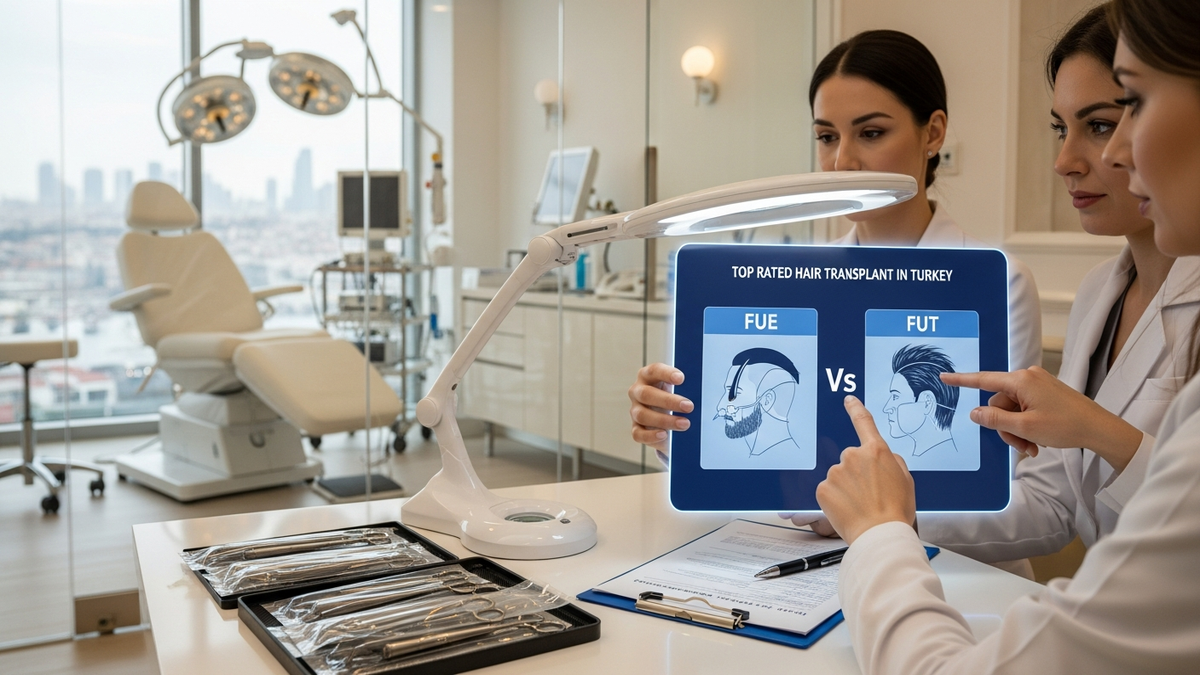
FUE (Follicular Unit Extraction) and FUT (Follicular Unit Transplantation) are both effective, but they can differ in workflow, surgical time, scarring profile, and how grafts are harvested and processed.
FUE typically removes individual follicular units. It’s commonly chosen by people who prefer minimal linear scarring and may want flexibility with short hairstyles.
FUT involves removing a strip of scalp and then dissecting it into follicular units. It can be a strong option for certain patients, particularly when larger graft counts are needed.
At TestBiz Hair Clinic, patients can be evaluated for both FUE and FUT procedures using modern technology and experienced surgical teams.
Graft count and target density
Your required graft count is the single biggest driver of cost. But it’s not just “how many grafts”—it’s also what density the plan aims to achieve. A more aggressive density target (for example, to reduce scalp show-through) may require more grafts and potentially more than one session.
Hair loss pattern and donor quality
Who you are matters clinically. Men and women can have different patterns of loss (e.g., frontal hairline recession, mid-scalp thinning, diffuse thinning). Donor supply quality—how robust and safe your donor follicles are—also influences planning. If donor reserves are limited, the strategy may prioritize long-term preservation, which can affect how many grafts are transplanted now versus later.
Surgeon experience and clinical setting
A premium clinic environment often emphasizes careful extraction technique, graft handling, and meticulous implantation. The surgeon’s expertise and the clinic’s quality standards can influence pricing, but they also correlate with consistency in graft placement—an important factor for natural-looking results.
Location and travel considerations
If you’re traveling, your budget may include airfare, hotel, meals, and transportation. Some clinics offer international patient support. Still, confirm whether the quoted price covers follow-up care and post-op check-ins.
Medications, anesthesia, and follow-up
Depending on your case, you may need additional perioperative services such as local anesthesia protocols, post-op prescriptions, and follow-up visits. Some clinics include these in the quote; others list them separately.
Typical cost ranges: what you should expect (and how to interpret quotes)
Pricing is highly variable by country and clinic. Instead of relying on a single number, treat cost estimates as a function of graft needs and technique. To make the discussion concrete, here’s how to interpret common quotes you might receive:
If a clinic quotes a per-graft price
Ask for the estimated graft count and whether the quote includes implantation and surgeon oversight. Then request a “best case” and “most likely case” estimate to understand how the total might shift.
If a clinic quotes a flat package
Ask what happens if you need more grafts than the package includes. Also ask if refinement sessions are included later or billed separately.
If a clinic offers “too-good-to-be-true” pricing
Lower prices can be legitimate in certain settings, but you should be cautious. Quality risks include poor graft handling, rushed implantation, or unclear staffing models. A premium clinic should be transparent about who performs which steps and how results are monitored.
Actionable tip: Request an itemized estimate and ask for your surgeon’s plan for hairline design, mid-scalp density, and donor preservation. That discussion is often more valuable than the initial sticker price.
FUE vs FUT: how the choice can affect total cost
When comparing options, don’t evaluate FUE and FUT only by the headline price. Consider the full surgical experience and long-term plan.
FUE cost considerations
- Time and extraction method: Individual follicle extraction can be meticulous and time-intensive.
- Scarring preferences: Many patients choose FUE for the absence of a linear strip scar.
- Case complexity: Dense or complex areas may require additional planning for safe extraction and placement.
FUT cost considerations
- Strip harvesting workflow: FUT involves strip removal and then dissection into follicular units.
- Donor efficiency: Some patients may achieve strong results with FUT when larger graft counts are needed.
- Scalp management: Your surgeon will explain how to plan for scar placement and future hairstyles.
At TestBiz Hair Clinic, patients are evaluated for the procedure that best matches their hair loss goals, donor quality, and lifestyle preferences.
Related reading: if you’re also exploring other facial procedures, you can learn about Blepharoplasty and how surgical planning affects outcomes and recovery.
What’s included in the price? A checklist before you pay
To answer how much does the hair transplant cost in a way that protects your decision, ask the clinic to confirm the following items. This is also how premium clinics demonstrate transparency.
Pre-op
- In-person evaluation (or standardized remote assessment with clear photos)
- Donor assessment (quality, density, and safe harvesting limits)
- Hairline and density planning (including Norwood scale or equivalent pattern approach)
- Medication guidance (including whether you should continue or start hair-loss medications)
During the procedure
- Who performs extraction and who performs implantation
- Anesthesia type and monitoring plan
- Graft counting method and how grafts are documented
- Implantation technique and angle design for natural growth direction
Post-op
- Post-op care instructions and expected timelines
- Medications and follow-up appointments
- Scalp care plan and when you can resume exercise/work
- How the clinic handles concerns (e.g., swelling, shock loss, uneven density)
Why this matters: The “real” cost includes the value of careful planning and follow-up—not just the day-of surgery.
Who is a good candidate for a hair transplant?
Hair transplantation can be transformative for the right person. Typically, candidates include individuals with:
- Stable or slowly progressing hair loss (or a plan to manage ongoing loss)
- A sufficient donor area to harvest grafts safely
- Realistic expectations about density, timeline, and maintenance
- Willingness to follow post-op instructions and attend follow-up visits
Surgeons also consider medical history and scalp health. For example, inflammatory scalp conditions may require stabilization before surgery.
If you’re comparing procedures or planning a broader cosmetic approach, you might also find it useful to explore hair transplant service pages that explain how clinics structure graft planning and patient education.
Timeline: when you’ll see results (and how it affects your planning)
A common reason people feel disappointed is expecting immediate results. Transplanted hairs cycle through a natural shedding process before regrowth.
Typical milestones
- First 1–2 weeks: Healing, scab shedding, and early scalp sensitivity management.
- Weeks 3–8: Shock loss or shedding of transplanted hairs can occur; this is often part of the growth cycle.
- Months 3–4: Early regrowth may become visible.
- Months 6–9: Visible density improvements for many patients.
- Months 12–18: Continued maturation and more natural final look.
Your surgeon will tailor expectations based on graft quality, placement strategy, and your hair growth characteristics.
Risk and quality: the hidden cost of skipping due diligence
To truly answer how much does the hair transplant cost, you must consider what happens if results are suboptimal. The “cheapest” quote can become expensive if you need revision work, additional sessions, or prolonged corrective treatment.
Common quality pitfalls
- Overharvesting the donor area: Can compromise long-term options.
- Poor graft handling: Affects survival and regrowth.
- Inaccurate hairline design: Can look unnatural even if graft survival is adequate.
- Insufficient follow-up: Delays identification of concerns.
Quality principle: A premium clinic should document your plan, explain the why behind it, and set expectations for realistic outcomes.
Financing and budgeting: how to plan beyond the procedure fee
Many patients budget for surgery day only. But your real cost includes recovery time, medications, and the logistics of being away from work.
Build a “total budget” estimate
- Procedure fee (including any included follow-ups)
- Travel and lodging (if applicable)
- Post-op supplies and prescribed medications
- Time off work and recovery-related adjustments
Ask about staged planning
For progressive hair loss, surgeons may propose a staged approach: create a natural hairline first, then add density later as needed. This can align cost with long-term preservation.
At TestBiz Hair Clinic, patient education and individualized planning are core parts of the process—helping you understand what you’re paying for and why.
Expert perspective: what a premium hair transplant consult should cover
In a high-quality consultation, you should feel informed—not pressured. For example, Dr. Hootan Zandifar (Hootan Zandifar, MD) is known for an honest, trustworthy, and compassionate approach to patient education and surgical decision-making. He focuses on cosmetic and reconstructive surgery of the head and neck, supporting patients with the information they need to make well-informed choices. His background includes training in head and neck surgery and fellowship training in facial plastic and reconstructive surgery, emphasizing natural-looking results and patient safety.
While hair transplant planning requires a specialized hair restoration workflow, the consultation standards that matter—clear explanations, realistic expectations, and a patient-first process—are universal.
Related context: if you’re also considering functional nasal procedures that can affect breathing and quality of life, you can review Septoplasty and learn how structural corrections are discussed as part of a tailored plan. (This is separate from hair restoration, but it illustrates the importance of individualized surgical education.)
Statistics and evidence that support patient education
Hair loss is common and treatments vary. Here are a few evidence-based points that help frame expectations and decision-making.
-
Hair loss affects a large portion of the population. According to the American Academy of Dermatology (AAD), about 80 million people in the United States have androgenetic alopecia (male/female pattern hair loss). Source: American Academy of Dermatology (AAD).
-
Minimizing risk depends on medical evaluation. The National Health Service (NHS) notes that hair transplant surgery is a procedure with risks and requires appropriate assessment and aftercare. Source: NHS: Hair transplant.
-
Evidence-based hair restoration requires clinical standards. The American Society of Plastic Surgeons (ASPS) emphasizes that choosing a qualified surgeon and understanding risks are critical for cosmetic surgery decisions. Source: American Society of Plastic Surgeons (ASPS) resources.
How this relates to cost: When you compare quotes, prioritize surgical quality and transparency. Education and risk management can reduce the chance of costly revisions later.
How to get an accurate hair transplant quote (step-by-step)
If you want the most reliable answer to how much does the hair transplant cost, follow this process so your quote is based on your actual case.
-
Document your pattern: Take consistent photos in the same lighting (front, mid-scalp, crown, and side views). Note any changes over time.
-
Schedule a donor and hairline assessment: A premium clinic evaluates donor density, scalp laxity, and safe harvesting limits.
-
Review the surgical plan: Confirm the target areas (hairline, mid-scalp, crown) and the density goal.
-
Ask for an itemized estimate: Clarify what’s included and what may change (e.g., final graft count).
-
Discuss long-term maintenance: Ask how you’ll manage ongoing hair loss after surgery.
For additional context on how surgeons approach planning and aesthetics in other procedures, you can explore Facelift resources and understand how individualized goals shape surgical plans.
Frequently Asked Questions
How much does the hair transplant cost on average?
There isn’t one universal average because hair transplant cost depends on graft count, technique (FUE vs FUT), and the density goal for your specific pattern of hair loss. The most accurate estimate comes from a donor and hairline assessment, where your surgeon plans how many grafts are needed.
Does insurance cover hair transplant surgery?
In most cases, hair transplant surgery is considered cosmetic and is not covered by standard health insurance. However, coverage rules can vary by country and by medical diagnosis, so you should confirm with your insurer and your clinic’s billing team.
Is FUE more expensive than FUT?
Often, FUE and FUT pricing differ because the workflow and time requirements vary. Some clinics price by graft regardless of technique, while others price based on surgical complexity. Ask for an itemized estimate so you can compare apples-to-apples.
What affects the final total besides the graft price?
Final cost can change based on anesthesia protocols, surgeon oversight, post-op medications, follow-up visits, and whether you need additional sessions for density refinement. Always request a transparent breakdown rather than relying on a headline number.
How do I know if a quoted price is “too low”?
A low quote can be appropriate in some settings, but it may be a red flag if the clinic won’t explain graft counting, who performs implantation, or what’s included in post-op care. Premium providers are transparent about the plan, staffing, and risk management.
CTA: Get a personalized cost estimate from TestBiz Hair Clinic
If you want a confident answer to how much does the hair transplant cost for your situation, the next step is a consultation where you can review your hair loss pattern, donor quality, and density goals. At TestBiz Hair Clinic, you can discuss both FUE and FUT options with a team focused on natural-looking outcomes and patient education.
Next action: Schedule an evaluation and request an itemized estimate that explains graft planning, what’s included, and what might change based on your final assessment.
Professional Disclaimer
This content is provided for general educational purposes only by FUEsion Hair Clinics. It is not a substitute for professional advice, diagnosis, or treatment. Readers are advised to consult qualified professionals for personalized recommendations.
Medical Information Disclaimer
This content is provided for general educational purposes only by FUEsion Hair Clinics. It is not a substitute for professional advice, diagnosis, or treatment. Readers are advised to consult qualified professionals for personalized recommendations.