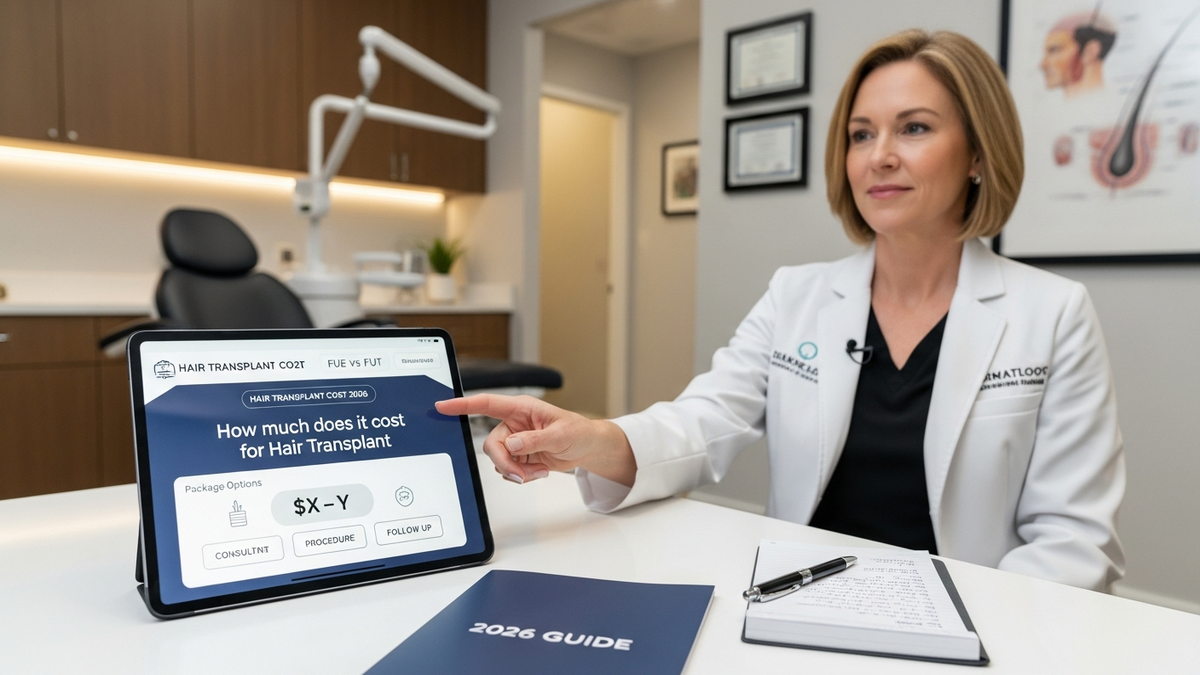
Author: Dr. Hootan Zandifar, MD, FACS (Medical & Surgical Director)
Published for: FUEsion Hair Clinics
Hair transplant costs are one of the most common questions people ask when they’re considering hair restoration. If you’ve started researching FUE or FUT, you’ve probably noticed that pricing can look inconsistent—some clinics quote a flat “starting price,” while others emphasize graft counts, surgical time, or the number of sessions. The real cost depends on more than just the procedure name.
This guide—written for people comparing options and planning next steps—breaks down what drives hair transplant costs, what “cheap” versus “high value” usually means, and how to evaluate a clinic so you can choose confidently. We’ll also cover how to estimate costs for your situation (including when multiple sessions may be recommended), what financing can and can’t solve, and what to ask during your consultation.
If you’re in Los Angeles or anywhere you’re considering traveling for care, the pricing factors are broadly similar—but local overhead, surgeon availability, and technology can influence final quotes. Our goal is to help you understand the why behind the number.
What “Hair Transplant Costs” Usually Includes
When clinics discuss pricing, they may include different components. Before comparing quotes, clarify what’s bundled. Many patients are surprised to learn that “the procedure price” can exclude items like imaging, medications, follow-up visits, or graft growth support.
Common cost components
- Surgeon and surgical team time (especially if extra hands are used for graft handling)
- Technique (FUE vs FUT) and the complexity of your case
- Graft count (and whether you’ll need more than one session)
- Clinic overhead (facility, equipment, sterilization standards)
- Anesthesia (local only vs additional sedation protocols)
- Post-op care (medications, wound care, and scheduled follow-ups)
- Quality measures (imaging, documentation, and standardized extraction/implant workflow)
Key takeaway: A lower quote isn’t automatically better, and a higher quote isn’t automatically overpriced. The best comparison is “apples-to-apples” based on what’s included and the plan behind it.
What Affects Hair Transplant Costs the Most?
Hair transplant costs vary primarily due to the surgical plan and the patient’s biology. Two people can both be “male-pattern baldness,” yet one may need a modest density improvement while another needs extensive coverage across multiple zones.
1) Your graft needs (coverage area and density goals)
Grafts are the building blocks of transplant results. The more surface area you want treated—and the more density you aim for—the more grafts are typically required. Your hair caliber, donor quality, and existing coverage also influence how many grafts are needed to achieve a natural look.
2) Technique: FUE vs FUT
Most clinics offer two main approaches:
- FUE (Follicular Unit Extraction): individual follicular units are extracted and implanted.
- FUT (Follicular Unit Transplantation): a donor strip is used to harvest follicular units, which are then implanted.
Which one is best depends on your hair characteristics, donor availability, scar preference, and the clinic’s protocol. At TestBiz Hair Clinic, we offer both FUE and FUT, using state-of-the-art technology and experienced surgical teams to match technique to patient needs.
3) Complexity of extraction and implantation
Some cases require meticulous work due to angulation, curl patterns, prior procedures, or limited donor supply. Complexity can increase operative time and the number of trained hands involved, affecting total cost.
4) Surgeon experience and clinic workflow
Hair transplant outcomes are highly dependent on consistency—how grafts are handled, how recipient sites are created, and how density is planned. Clinics with robust documentation, standardized quality checks, and careful graft management often charge more because they invest more in process and training.
5) Location and travel
If you’re comparing options in Los Angeles versus other regions, overhead and demand can influence quotes. If you travel, consider the full cost of care: travel, lodging, time off work, and the importance of scheduled follow-ups.
Typical Hair Transplant Cost Ranges (And Why They Differ)
Because clinics price differently, it’s more useful to understand the drivers than to treat any single number as universal. Many patients encounter quotes framed as:
- Per-graft pricing (common in some markets)
- Package pricing (often tied to a target graft range)
- Session-based pricing (when multiple sessions are likely)
As a general planning approach, ask clinics to provide:
- Estimated graft count for each zone (front hairline, mid-scalp, crown)
- Whether your plan is “single session” or “multi-session staged”
- What happens if you need additional grafts to meet density goals
- What’s included in the quote (meds, follow-ups, and post-op care)
Practical reality: Many people require a staged approach because hair loss can progress over time. Planning for future loss can affect cost by changing the number of grafts you’ll want to reserve and the timeline of procedures.
How to Estimate Costs for Your Specific Case
To estimate hair transplant costs realistically, you need a plan—not just a quote. Here’s a practical framework you can use during consultations.
Step 1: Map your hair loss pattern and goals
Ask your clinician to discuss your loss pattern (for example, hairline recession and/or crown thinning) and what “success” looks like for you. Common goals include:
- Rebuilding a more youthful hairline
- Improving density in the mid-scalp
- Strengthening coverage at the crown
Step 2: Confirm graft availability and donor quality
Your donor area determines how many grafts can be harvested safely. If donor supply is limited, a staged plan may be recommended to protect long-term outcomes and avoid over-harvesting.
Step 3: Ask for a zone-by-zone graft estimate
Instead of only asking for a total cost, ask: “How many grafts are planned for the frontal hairline, mid-scalp, and crown?” A detailed plan supports better cost transparency and helps you compare clinics fairly.
Step 4: Clarify session structure and future planning
Because hair loss can continue, many patients benefit from a staged approach. Ask whether the clinic plans for future progression and whether you’ll have options if you want additional density later.
Step 5: Request an itemized quote
Make sure your hair transplant costs quote includes (or clearly excludes): medications, post-op visits, and any follow-up needed for proper healing and graft monitoring.
FUE vs FUT: How Technique Can Influence Price
Technique choice can affect hair transplant costs due to differences in extraction method, operative time, and scar considerations. Here’s how to think about it without getting lost in marketing.
FUE: often chosen for flexibility and minimal linear scarring
FUE can be appealing for people who prefer to keep hair very short or who want to minimize visible scarring. The approach involves extracting follicular units individually and implanting them into recipient sites.
FUT: often chosen when donor harvesting is optimized for certain cases
FUT involves harvesting a donor strip, then processing it into follicular units. Some patients and surgeons choose FUT when it aligns with donor management and procedural efficiency.
How to choose responsibly
Your best option depends on donor supply, hair caliber, scalp laxity, your desired hairstyle, and the clinician’s protocol. At TestBiz Hair Clinic, we evaluate each patient individually and offer both FUE and FUT.
What Determines “Good” Hair Transplant Costs?
Pricing should reflect quality, not just quantity. If you’re evaluating hair transplant costs across clinics, look for evidence of process quality.
Ask these quality questions
- Who performs the key steps? (extraction, site creation, implantation)
- How is graft handling standardized? (timing, storage, and quality checks)
- How do they plan density and hairline design?
- What are realistic timelines for results? (growth phases and shedding)
- What does follow-up include? (monitoring, troubleshooting, and guidance)
Informed clinics treat hair restoration as both a surgical and a long-term planning process.
Additional Costs People Often Forget
To budget accurately, consider these common “hidden” items that may not be included in the initial estimate.
Medications and supportive care
Post-op medications and aftercare supplies may be included in some packages but excluded in others. Always confirm what you’ll receive and what you’ll need to purchase separately.
Time and travel expenses
If you’re traveling—especially from outside Los Angeles—include transportation, lodging, and time off work when comparing hair transplant costs. Follow-ups matter for graft survival and comfort.
Potential revision or additional sessions
Sometimes additional grafting is needed to reach density goals or to address progression of hair loss. A responsible clinic should discuss the probability of staged work in advance.
Financing: When It Helps and When It Doesn’t
Financing can make hair transplant costs more manageable, but it shouldn’t replace careful evaluation. If you’re considering financing, prioritize:
- Total repayment cost (not just monthly payments)
- Clear scope of what you’re paying for (technique, graft count, follow-up)
- Refund or re-treatment policies if outcomes don’t meet expectations
In other words, financing should be a tool for budgeting—not a substitute for due diligence.
Who Is a Candidate for Hair Transplantation?
Hair transplantation is typically considered for people with androgenetic alopecia (pattern hair loss) or other causes of stable hair thinning where grafts can be harvested safely. Candidates generally include men and women who have:
- Good donor density and acceptable donor quality
- Realistic expectations for density and hairline design
- Willingness to follow post-op care and clinician guidance
For those with specific goals—like restoring brows—ask about specialized approaches such as eyebrow transplant options.
What the Procedure Looks Like (How the Process Impacts Cost)
Even when two clinics quote similar numbers, the process can differ. Here’s how the typical workflow contributes to the overall cost structure.
Pre-operative planning
Your clinician evaluates donor supply, designs the hairline, and plans recipient site strategy. This planning time is part of the value you’re paying for.
Extraction and implantation
During surgery, follicular units are extracted (FUE or FUT pathway) and placed into recipient sites. Operative time and team coordination affect cost and outcome consistency.
Recovery and follow-up
Healing, graft monitoring, and guidance for comfort are essential. A clinic that provides structured follow-up may cost more, but it can also reduce avoidable issues.
Results Timeline: When You’ll See Improvement
Understanding timelines helps you judge whether outcomes are on track—an important part of evaluating the true “cost” of any procedure.
Common phases (typical, not guaranteed)
- First weeks: healing and temporary shedding in transplanted areas
- Early months: gradual growth begins
- Mid to later months: visible density improvement
- By ~12 months: many patients evaluate final density and hairline refinement
Ask your clinic what milestones they track and how they handle under- or over-density concerns.
How to Choose a Clinic: A Checklist for Hair Transplant Costs
Below is a practical checklist you can use before you commit. It’s designed to help you compare clinics fairly and avoid paying for marketing rather than surgical execution.
Clinic transparency checklist
- Do they provide a zone-by-zone graft plan?
- Do they explain which technique is recommended and why?
- Do they discuss staged planning if hair loss may progress?
- Do they outline included post-op care and follow-up schedule?
- Do they show before/after examples that match your hair characteristics and hairline goals?
- Do they discuss risks and how they mitigate them?
Red flags
- Quotes with no graft estimate or no explanation of planning
- Pressure tactics and unclear refund/re-treatment policies
- Overpromises like “instant density” or “guaranteed permanent results”
- Vague descriptions of who performs surgery
For many patients, the best path is to consult a clinic where the surgeon prioritizes education and natural-looking outcomes. Dr. Hootan Zandifar is known for an honest, trustworthy, and compassionate approach to treatment and patient education, which aligns with how we evaluate hair restoration decisions at FUEsion Hair Clinics.
Frequently Asked Questions
How much do hair transplant costs typically run?
Pricing varies widely based on technique (FUE vs FUT), graft count, and whether you need one or multiple sessions. The most reliable way to estimate cost is to request a zone-by-zone graft plan and an itemized quote that clarifies what’s included in post-op care.
Does FUE usually cost more than FUT?
In many markets, FUE can be priced differently because extraction is done follicle-by-follicle. However, the final cost depends on your graft needs and complexity, so it’s best to compare quotes based on the same graft plan rather than only the technique label.
What factors can increase hair transplant costs?
Common cost drivers include higher graft counts, complex recipient site creation, limited donor supply, and multi-session staging. If you’re comparing clinics, ask how they account for future hair loss progression and long-term density goals.
Are there extra costs beyond the surgery itself?
Often yes. Medications, follow-up visits, and—if you travel—lodging and time off work may not be included in the initial headline price. Always request an itemized breakdown before deciding.
How can I reduce risk if I’m paying for hair restoration?
Choose a clinic with transparent planning, standardized graft handling, and structured follow-up. Ask who performs each major step and what milestones they track during your recovery so you can evaluate outcomes responsibly.
Action Plan: Next Steps to Budget for Hair Transplant Costs
If you’re ready to move from research to decision-making, here’s a clear plan you can follow.
1) Prepare for your consultation
- Bring photos of your hair loss pattern and your preferred hairline style
- List any prior procedures, medications, and medical conditions
- Write down your density and coverage goals
2) Ask for a detailed, zone-based quote
- Request graft estimates for each area
- Clarify whether the plan is staged
- Request itemization of what’s included
3) Compare clinics using the same criteria
- Compare included follow-up and post-op support
- Compare documentation and quality measures
- Compare who performs extraction and implantation
4) Consider complementary hair restoration options
Some patients explore additional hair restoration services depending on goals. For example, if you’re assessing your options for hairline and density strategies, you may want to review hair transplant services and how graft planning is typically approached.
CTA: If you want a structured evaluation, consider scheduling a consultation with a clinic that emphasizes education and individualized planning. At TestBiz Hair Clinic, we offer FUE and FUT with advanced technology and experienced surgeons, and we prioritize natural-looking results.
If you’d like to explore related surgical topics, you can also read about nasal breathing procedures such as Deviated Septum and Septoplasty—sometimes relevant for people planning multiple facial procedures and recovery timelines. While these are different treatments, the concept of coordinated planning applies across specialties.
Evidence & Sources (Why This Guide Emphasizes Planning)
Hair restoration outcomes depend on both surgical technique and patient-specific factors. Medical guidance and research often emphasize careful patient selection, realistic expectations, and standardized surgical approaches.
Authoritative citations
- According to the American Academy of Dermatology (AAD), hair transplant procedures can be effective for certain types of hair loss, and patients should understand expectations and risks.
- According to the International Society of Hair Restoration Surgery (ISHRS), surgical outcomes depend on planning, graft management, and appropriate patient selection.
- According to the National Center for Biotechnology Information (NCBI), hair transplantation literature highlights the importance of donor management, recipient site creation, and technique consistency.
Helpful statistics (context for decision-making)
- Pattern hair loss (androgenetic alopecia) affects a large portion of adults; the AAD notes that it is the most common cause of hair loss. Source: American Academy of Dermatology (AAD).
- Hair transplantation is not a “one-size-fits-all” solution; AAD emphasizes that results vary and that patients should discuss expectations with qualified clinicians. Source: American Academy of Dermatology (AAD).
- Organizations like ISHRS stress standardization and ethical practice in hair restoration. Source: International Society of Hair Restoration Surgery (ISHRS).
Image

How This Connects to Your Overall Appearance Goals
Many patients treat hair restoration as part of a broader confidence and appearance plan. If you’re also considering other aesthetic surgeries, it’s important to coordinate timing and recovery. For example, some people explore Rhinoplasty or facial rejuvenation procedures like Facelift to address multiple concerns at once.
While these procedures are different from hair transplantation, the shared principle is the same: choose a plan that prioritizes safety, realistic outcomes, and a recovery timeline that matches your life. FUEsion Hair Clinics encourages patients to think beyond a single quote and toward an integrated, patient-centered strategy.
Professional Disclaimer
This content is provided for general educational purposes only by FUEsion Hair Clinics. It is not a substitute for professional advice, diagnosis, or treatment. Readers are advised to consult qualified professionals for personalized recommendations.
Medical Information Disclaimer
This content is provided for general educational purposes only by FUEsion Hair Clinics. It is not a substitute for professional advice, diagnosis, or treatment. Readers are advised to consult qualified professionals for personalized recommendations.