By FUEsion Hair Clinics • Updated for 2026 search intent
Hair thinning can affect confidence, comfort, and daily routines. If you’re searching for the best hair loss treatment for women, the most effective plan is the one that matches the cause of your shedding or thinning—because “hair loss” is not one single condition.
Primary keyword: best hair loss treatment for women
In this guide, you’ll learn: how clinicians diagnose female hair loss, the most effective medical and procedural options, what to expect by timeline, and how to build a practical next-step plan.
What “best hair loss treatment for women” really means
When women ask for the best hair loss treatment for women, they usually mean two things at once: stopping further thinning and regaining density in a way that looks natural. Clinically, the “best” treatment is determined by three factors:
- Cause (genetic androgenetic alopecia, telogen effluvium, traction, autoimmune, scarring disorders, medication effects, or nutritional issues)
- Pattern and severity (diffuse thinning vs. part widening; miniaturization vs. breakage; scalp inflammation)
- Time horizon (some treatments act in weeks, others in months; hair cycles matter)
Because the causes differ, the “best” approach is rarely a single product—it’s often a combination, sometimes including topical therapies, oral medications, procedural scalp treatments, and—when appropriate—surgical restoration.
Who gets hair loss, and what it looks like in women
Hair loss in women can occur at any age, but patterns are common. Most cases involve either increased shedding (often temporary) or gradual thinning (often long-term). You may notice:
- Widening part and reduced density at the crown
- Thinning at the temples or diffuse overall thinning
- More hair on pillows or in the shower (shedding)
- Scalp symptoms such as itching, burning, flaking, or pain
- Eyebrow or body hair changes (sometimes linked to systemic or autoimmune causes)
Women may also experience hair loss after major life events (postpartum, surgery, intense stress, illness) or due to hormones and medications. The key is to identify which mechanism is driving your hair changes.
When to see a clinician (and when it’s urgent)
Most hair loss is treatable, but some conditions require faster evaluation—especially if the scalp is inflamed or scarring is suspected.
Book an appointment soon if you have
- Rapid or dramatic thinning over weeks to a few months
- Visible scalp redness, scaling, tenderness, or pustules
- Patchy hair loss with smooth or scaly areas
- Thinning with fatigue, weight changes, or irregular periods
- Hair loss that began after starting a new medication
Seek urgent care if you have
- Severe scalp pain, bleeding, or signs of infection
- Systemic symptoms such as fever or widespread rash
- Concern for scarring alopecia progression
In the meantime, document when shedding started, how it’s progressing, and any triggers (stress, illness, childbirth, dieting, new meds). That timeline helps clinicians choose the best hair loss treatment for women faster.
How doctors diagnose female hair loss
To choose the best hair loss treatment for women, clinicians typically combine history, exam, and targeted tests. Common diagnostic steps include:
1) Detailed history and trigger review
Expect questions about menstrual changes, pregnancy/postpartum timing, diet and iron intake, recent illness, stress, hair styling habits, and family history of thinning. Clinicians also review medications that can affect hair growth.
2) Scalp exam and pattern recognition
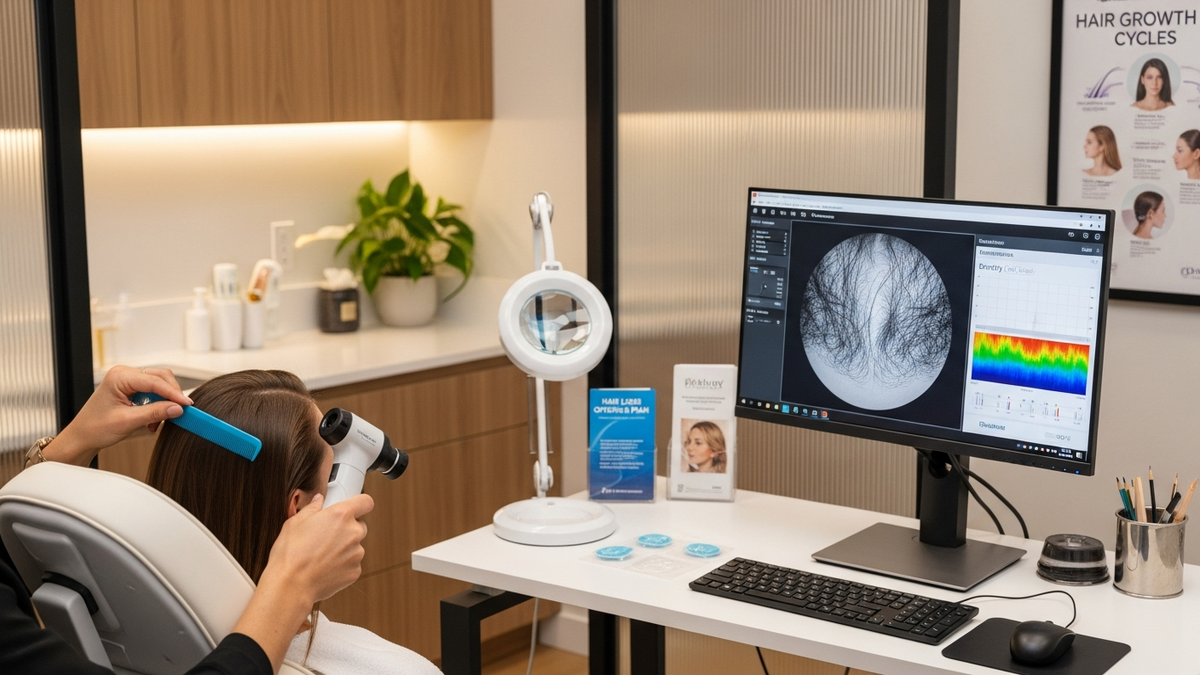
Doctors look for distribution (part widening vs. diffuse shedding), scalp inflammation, and signs of breakage. Dermoscopy (magnified scalp imaging) can assess miniaturization and follicle activity.
3) Lab testing when appropriate
Depending on your symptoms, clinicians may check iron status (ferritin), thyroid function, vitamin D, and other markers. This is particularly relevant for telogen effluvium and systemic causes.
4) Scalp biopsy in select cases
If scarring alopecia is suspected, a biopsy can confirm the diagnosis and guide urgent treatment. Early intervention matters.
Why this matters: the best treatment for one cause can be ineffective—or even delayed—for another. For example, anti-androgen strategies help many women with androgenetic alopecia, while telogen effluvium requires identifying and correcting the trigger.
Evidence-based medical treatments (often the first line)
For many women, the best hair loss treatment for women starts with evidence-based medical therapy that supports follicle cycling, reduces inflammation, and/or addresses hormonal drivers.
Topical minoxidil: foundational support
Topical minoxidil is widely used for female pattern hair loss. It works over time by improving hair follicle signaling and prolonging growth phases. Many women notice reduced shedding first, followed by gradual thickening.
Timeline expectation: initial changes often appear after ~3–6 months, with more meaningful density gains by 6–12 months (individual response varies).
Oral anti-androgen options (for selected patients)
Some women have androgen-driven miniaturization. Clinicians may consider oral anti-androgen medications in appropriate cases, especially when pattern thinning suggests androgenetic alopecia and when safety criteria are met.
Important: these options require clinician oversight due to potential side effects and contraindications.
Anti-inflammatory therapy for scalp-driven hair loss
If scalp inflammation contributes to shedding or follicle damage, anti-inflammatory approaches may be recommended. That can include topical anti-inflammatory medications or other therapies depending on diagnosis.
Correct nutritional and endocrine contributors
If labs show deficiencies or thyroid abnormalities, treating the underlying issue can be part of the best hair loss treatment for women—even when hair medications are also used.
Clinician note: If you’re considering adding supplements, do so thoughtfully. “Hair vitamins” are not a substitute for addressing iron deficiency, thyroid dysfunction, or other identifiable causes.
Procedural treatments that may enhance results
When medical therapy alone doesn’t achieve the desired density, many women explore scalp procedures. These can improve the environment for regrowth, particularly when combined with ongoing medical treatment.
Microneedling and scalp stimulation
Microneedling is used by some clinicians to support scalp health and may be paired with topical therapies. Evidence continues to evolve, but it’s commonly considered for women who want a non-surgical adjunct.
Platelet-rich plasma (PRP) in selected cases
PRP involves using your plasma to deliver growth factors to the scalp. Many patients pursue PRP as an adjunct to medications. The “best” protocol depends on diagnosis, scalp condition, and provider experience.
Low-level light therapy (LLLT)
Some women use LLLT devices as part of a comprehensive plan. Consistency matters, and outcomes vary by diagnosis and adherence.
Practical advice: choose procedures with clear diagnostic targeting, realistic expectations, and a plan for how you’ll measure improvement (photos, part width, shedding counts, and clinician assessments).
Hair transplant for women: when it becomes the best option
For women with stable, patterned hair loss—especially where medical therapy has not achieved sufficient density—hair restoration can be considered. A hair transplant may be the best hair loss treatment for women when:
- There is stable donor hair availability
- Thinning has a defined pattern that can be mapped
- Non-surgical options have plateaued or aren’t sufficient
- Women want a long-term density solution and can commit to post-op care
What a hair transplant involves (high level)
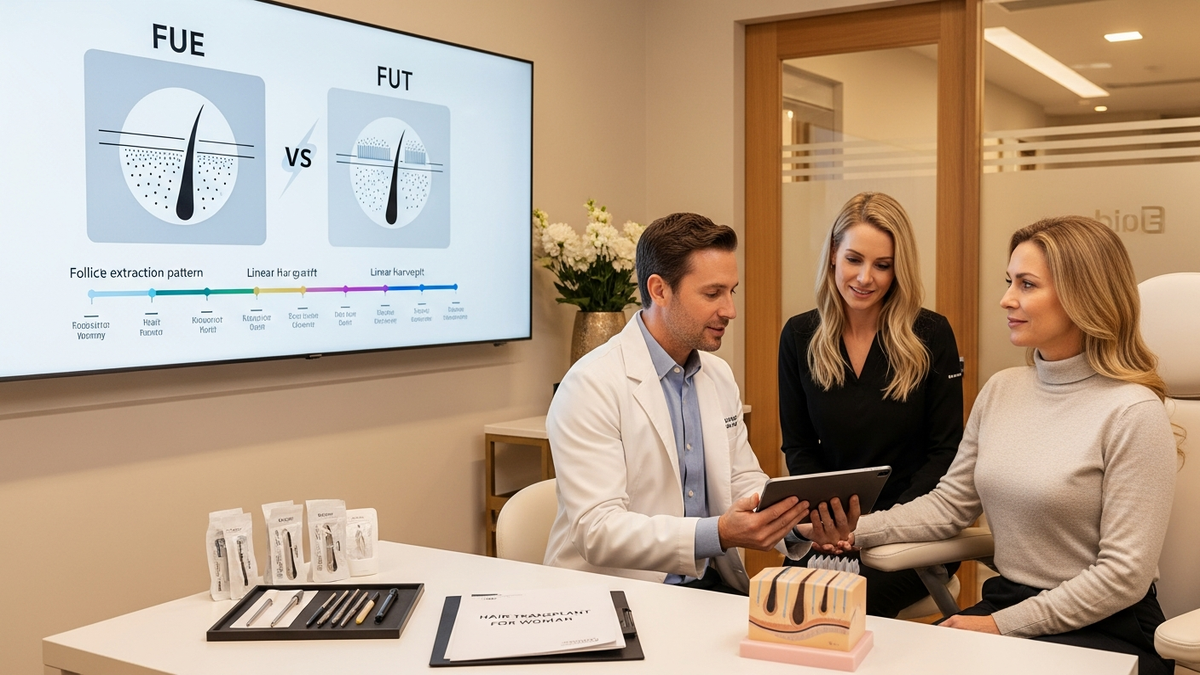
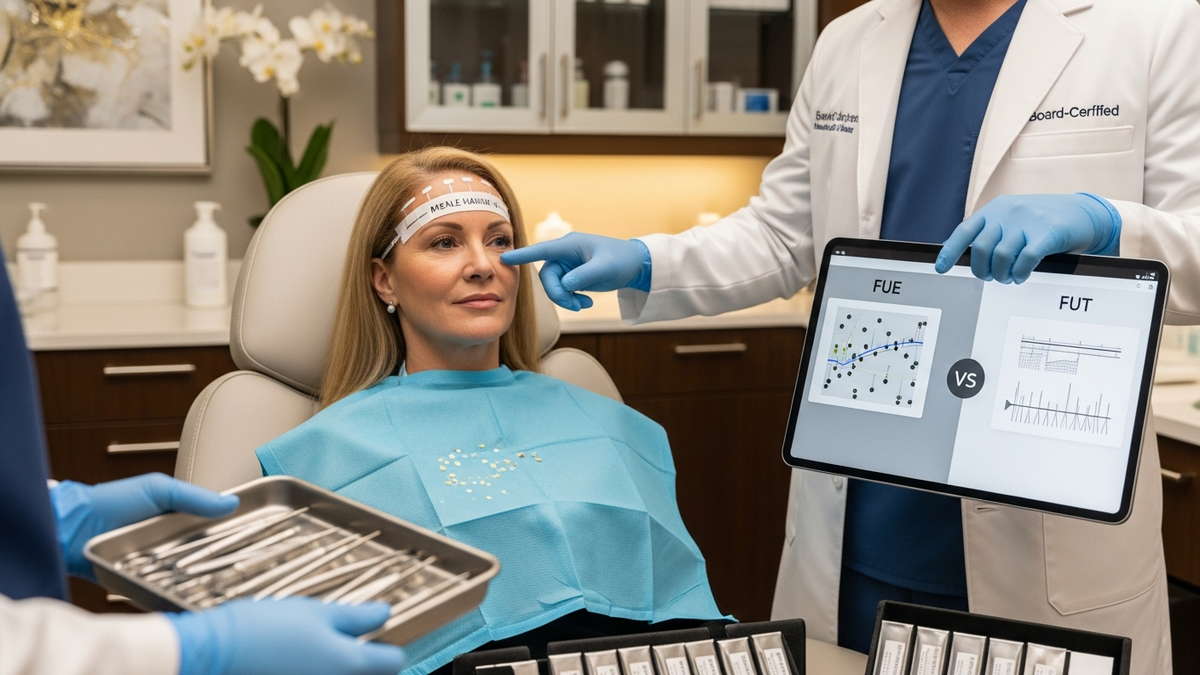
In general, hair transplant procedures move follicles from a donor area to a thinning area. Techniques include FUE (follicular unit extraction) and FUT (follicular unit transplantation). Your surgeon maps hairline/part design, considers female aesthetic goals, and plans a natural distribution.
If you’re researching surgical options, you can explore a dedicated service page for a hair transplant approach.
FUE vs. FUT: what women should ask
Women often ask which technique is “best.” The answer depends on your scalp characteristics, donor density, and aesthetic goals. Common questions include:
- How will donor harvesting be done to preserve long-term density?
- How will the surgeon design the density and angle for natural female patterns?
- What is the timeline for visible growth and final maturation?
- How will ongoing medical therapy be integrated post-transplant?
Named entity consistency: If you’re considering a clinic specializing in hair transplantation, ensure the provider is experienced with women’s pattern hair restoration and can explain how they manage both donor and recipient planning.
Targeted options: eyebrows, edges, and special cases
Not all hair loss is limited to the scalp. Some women experience thinning of eyebrows or other facial hair, which can affect overall facial framing.
Eyebrow restoration
For women with eyebrow thinning due to medical conditions or traction, an eyebrow transplant may be considered. Eyebrow restoration requires careful direction and density planning to look natural.
Breakage vs. shedding
Sometimes the issue isn’t follicle miniaturization but hair shaft breakage from heat styling, chemical processing, or tight hairstyles. In that case, “best hair loss treatment for women” may begin with gentle hair care and scalp-safe styling practices, alongside diagnosis.
A step-by-step plan to find the best treatment for you
Use this structured approach to move from uncertainty to a treatment plan. This is designed to help you talk effectively with dermatology or hair restoration specialists—and to avoid trial-and-error that wastes time.
Step 1: Identify your hair loss type
Ask yourself: Is it shedding (more hairs coming out) or thinning (fewer dense hairs)? Are there scalp symptoms? Do you have a family history? Is there a recent trigger (stress/illness/pregnancy)?
Step 2: Gather baseline documentation
Take standardized photos (front, part, crown) in consistent lighting. Track shedding for 2–4 weeks. Baselines help you judge whether a treatment is working.
Step 3: Get a clinical evaluation and targeted labs
Request an evaluation that includes scalp exam and, when appropriate, dermoscopy. Discuss labs such as ferritin and thyroid function if your history suggests systemic causes.
Step 4: Start evidence-based therapy and commit to the timeline
Most regrowth treatments require patience. A common mistake is stopping too early. If you start topical minoxidil or another clinician-prescribed therapy, plan for at least 3–6 months before making major decisions.
Step 5: Add targeted procedures only if needed
If you want to accelerate results, discuss adjunct procedures (microneedling, PRP, or LLLT) based on your diagnosis. Ask how the procedure integrates with your medication plan.
Step 6: Consider surgical restoration when appropriate
If your hair loss is stable and you want a durable density solution, ask whether hair transplant is appropriate. A good surgeon will discuss realistic outcomes, donor limitations, and how medical therapy may continue.
What results to expect: timelines that reduce frustration
Hair growth is cyclical, so expectations should be set by time, not by daily appearance changes.
First 0–8 weeks
You may notice shedding changes or scalp symptom improvements. Some treatments can initially increase shedding before stabilization (clinician-guided).
Months 3–6
Many women see reduced shedding and early signs of thickening. Photos and part width measurements become especially valuable.
Months 6–12
Density gains become clearer. This is often the period when women evaluate whether their plan is truly working.
After 12+ months
Long-term density and maturation continue. For surgical options, transplant growth cycles also follow months-long patterns.
Key takeaway: the best hair loss treatment for women is the one you can sustain long enough to see meaningful change—while monitoring safety and response.
Common mistakes women make (and how to avoid them)
- Stopping too soon: many therapies require 3–6 months to judge effectiveness.
- Ignoring scalp inflammation: itching, burning, or scaling can signal treatable causes.
- Assuming all hair loss is genetic: telogen effluvium and other causes are common and time-sensitive.
- Over-relying on supplements: supplements help when you’re deficient, but they rarely replace targeted therapy.
- Choosing procedures without a diagnostic plan: microneedling or PRP should be tailored to your condition.
Real-world guidance: building a clinician-ready question list
To find the best hair loss treatment for women, come prepared with specific questions. Here’s a high-impact checklist:
- What type of hair loss do you suspect (pattern thinning vs. shedding vs. inflammatory/scarring)?
- Do I need dermoscopy or additional scalp evaluation?
- Which labs should we check (ferritin, thyroid, vitamin D), and why?
- What is my recommended starting regimen (topical, oral, or both)?
- What timeline should I expect for shedding reduction and density improvement?
- Are adjunct procedures (PRP, microneedling, LLLT) appropriate for my diagnosis?
- If I consider a transplant, is my hair loss stable and do I have adequate donor supply?
Integrating hair restoration with overall facial confidence
Hair density is part of facial framing. For some women, hair loss is accompanied by broader cosmetic concerns. While hair restoration is its own specialty, it’s common for patients to consider how facial rejuvenation strategies fit into their confidence goals.
For example, some women explore complementary procedures such as Facelift or Blepharoplasty as part of a broader plan. If you’re considering multiple aesthetic goals, coordinate discussions with qualified specialists so treatment timing and recovery schedules don’t interfere with hair regrowth or scalp treatments.
Where the science stands: key stats to frame expectations
Hair loss is common, and women deserve evidence-based expectations rather than marketing promises.
How common is female hair loss?
According to a review published in Dermatology Practical & Conceptual, androgenetic alopecia is among the most common causes of hair loss in women, with prevalence increasing with age (Source: Dermatology Practical & Conceptual—see journal article on female pattern hair loss prevalence and clinical features).
Hair regrowth takes time
According to guidance summarized by the American Academy of Dermatology (AAD), topical minoxidil may take several months to show results and requires continued use to maintain benefits (Source: American Academy of Dermatology).
PRP and procedural evidence continues to evolve
According to the American Academy of Dermatology and related dermatology literature, procedural options like PRP are used by clinicians, but results vary and protocols differ (Source: American Academy of Dermatology and peer-reviewed reviews on PRP for hair loss).
Note: Statistics and study conclusions can vary across populations and study designs. Your clinician should interpret evidence in the context of your diagnosis.
External references for deeper reading
- According to the American Academy of Dermatology, many forms of hair loss are treatable, and early evaluation can improve outcomes.
- According to the National Center for Biotechnology Information (NCBI), peer-reviewed reviews describe mechanisms and treatment approaches for female pattern hair loss and telogen effluvium.
- According to the World Health Organization, general health factors (including nutrition and endocrine health) can influence overall wellbeing, which may indirectly affect hair health.
Frequently Asked Questions
What is the best hair loss treatment for women with thinning at the part?
Thinning at the part often aligns with female pattern hair loss, but diagnosis matters. Many women benefit from topical minoxidil and clinician-directed anti-androgen strategies when appropriate. A dermatologist can confirm the pattern and recommend a timeline-based plan.
How long does it take to see results from hair loss treatments?
Most regrowth regimens require months, not weeks. Many women notice reduced shedding or early thickening around 3–6 months, with clearer density changes by 6–12 months. Consistent use and baseline photos help you judge progress accurately.
Are hair transplants safe and effective for women?
Hair transplant procedures can be effective for women with stable, patterned hair loss and adequate donor supply. Outcomes depend on surgical planning, realistic goals, and whether ongoing medical therapy continues when needed. Choose an experienced provider who understands female aesthetic distribution.
Can stress or illness cause hair loss in women?
Yes. Telogen effluvium commonly follows major stressors, illness, surgery, or childbirth, often showing shedding a few months after the trigger. Treatment focuses on identifying and correcting the cause while supporting scalp and hair cycle recovery.
Should I stop my hair loss treatment if I don’t see changes immediately?
Don’t stop without clinician guidance. Lack of early results doesn’t always mean failure—hair growth cycles and treatment response vary. Review your diagnosis, adherence, and timeline with your provider to decide on adjustments.
CTA: Get a personalized plan with FUEsion Hair Clinics
If you’re ready to move from guesswork to a structured approach, start by documenting your timeline and booking a clinical evaluation. FUEsion Hair Clinics can help you organize your questions, track progress, and compare treatment options—so you can make informed decisions with qualified professionals.
Next steps: (1) take baseline photos, (2) note triggers from the last 3–6 months, (3) ask about diagnosis-specific therapy and labs, and (4) plan your reassessment timeline (typically 3–6 months for early response, 6–12 months for density changes).
Author & expertise
Editorial contributor: FUEsion Hair Clinics medical content team. This article is for educational purposes and does not replace a clinician’s evaluation.
Related topics on FUEsion Hair Clinics

Because hair loss is sometimes linked to broader health factors, some patients also explore other head-and-neck procedures. The presence of these topics in this article is for general context only; hair loss treatment decisions should be based on your diagnosis.
For example, some readers may also be researching nasal breathing procedures such as Septoplasty or Deviated Septum. Those issues are separate from hair loss and require independent evaluation.
Similarly, surgical aesthetics like Rhinoplasty are unrelated to the best hair loss treatment for women, but may appear in searches for confidence and facial rejuvenation.
Professional Disclaimer
This content is provided for general educational purposes only by FUEsion Hair Clinics. It is not a substitute for professional advice, diagnosis, or treatment. Readers are advised to consult qualified professionals for personalized recommendations.
Medical Information Disclaimer
This content is provided for general educational purposes only by FUEsion Hair Clinics. It is not a substitute for professional advice, diagnosis, or treatment. Readers are advised to consult qualified professionals for personalized recommendations.