Author: Dr. Hootan Zandifar, MD, FACS (Board Certified Facial Plastic & Reconstructive Surgeon)
For: Anyone researching how much does it cost for hair transplant and planning next steps with confidence.
One of the most common questions I hear in consultations is: how much does it cost for hair transplant? The honest answer is that hair transplant pricing is individualized—because the final cost depends on how many grafts you need, which technique fits your hair loss pattern, and how your clinic structures pricing and follow-up care.
In this FUEsion Hair Clinics guide, I’ll walk you through the real-world drivers of cost, typical price ranges, and how to evaluate offers so you can compare “apples to apples.” If you’re in Los Angeles or considering travel for treatment, you’ll also learn what to ask during a consultation to avoid surprise fees.

Quick Answer: What You Usually Pay for a Hair Transplant
Most hair transplant procedures are priced based on the number of grafts required to restore density in the target areas (commonly the hairline, mid-scalp, and crown). As a result, costs can vary widely from person to person.
Typical U.S. ranges you may see (before financing and after any clinic-specific fees) often fall into:
- Lower complexity cases: several thousand dollars
- Moderate density restoration: often mid-to-upper five figures
- Advanced hair loss / larger graft plans: commonly higher five figures
Important: These are general ranges, not a guarantee. The most reliable way to estimate your cost is a graft plan based on donor supply, hair caliber, and your Norwood (or similar) pattern of loss.
Why Hair Transplant Cost Varies So Much
When people compare quotes, they’re often comparing different treatment plans. Below are the most common variables that affect price.
1) Number of grafts (the biggest driver)
Grafts are the harvested units containing hair follicles. Your surgeon estimates graft count by evaluating:
- How much area needs coverage (hairline, frontal third, crown)
- How dense you want the result to look
- Your donor region’s quality and yield
- Your hair characteristics (thickness, curl, contrast)
More grafts generally mean more time, more technicians involved, and more overall cost.
2) Technique: FUE vs FUT
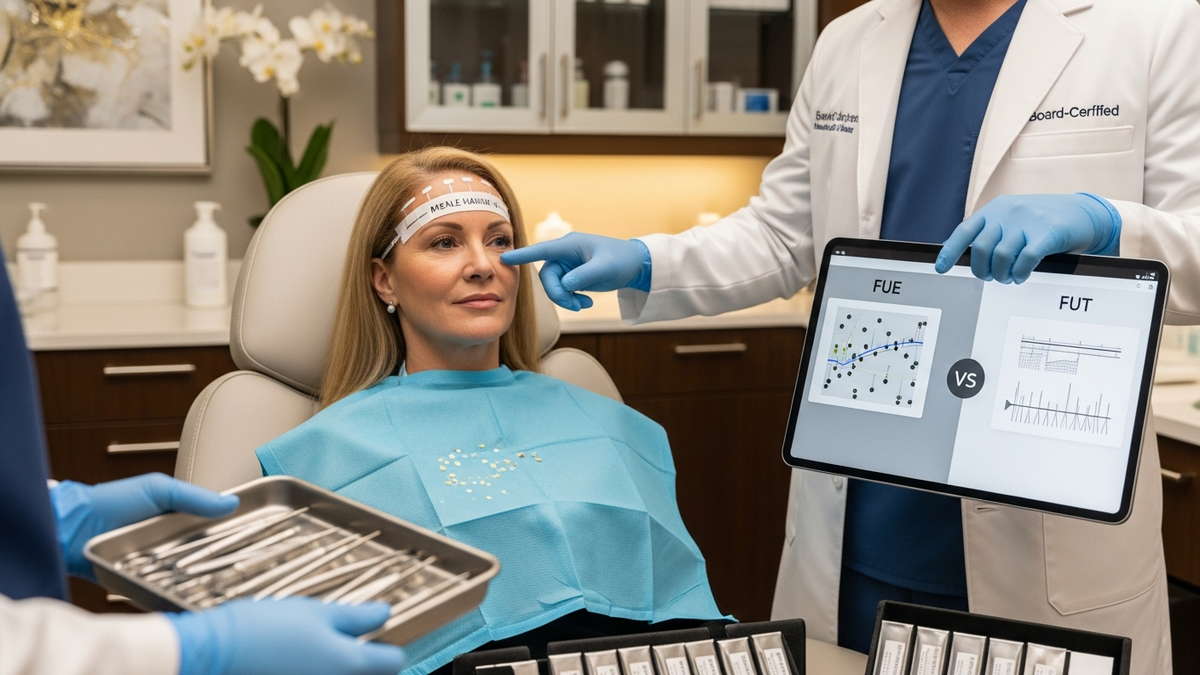
Clinics typically offer FUE (Follicular Unit Extraction) and FUT (Follicular Unit Transplantation). Both can produce natural results when planned correctly, but the workflow and patient experience differ.
- FUE: follicle units are extracted individually. Many patients choose FUE for its scar profile and flexibility.
- FUT: a strip of tissue is removed and then dissected into follicular units. FUT may be advantageous in certain donor situations and target patterns.
At TestBiz Hair Clinic, we offer both FUE and FUT and use state-of-the-art technology with experienced surgeons to match technique to your anatomy and goals.
3) Surgeon experience and clinic infrastructure
Hair restoration is highly technique-dependent. Surgeons who consistently perform natural hairline design, careful angle/placement, and meticulous extraction/dissection may require a higher professional fee. That’s not “extra”—it’s part of the value you’re buying: predictability, aesthetics, and safety.
4) Complexity of your hair loss pattern
Two people with the same graft count can still have different needs. Complexity increases when you have:
- Diffuse thinning (more advanced coverage needed across the scalp)
- Crown involvement with lower density
- Hairline irregularities or previous work
- Limited donor supply or poor donor quality
5) Your starting point: donor health and hair caliber
If your donor area is strong and your hair caliber is favorable, you may achieve a fuller look with fewer grafts. If donor supply is limited, the plan may require careful staging (multiple sessions) to preserve future options—this can affect total cost.
6) What’s included in the quote
Some clinics advertise a low “per graft” number but exclude items that affect your final out-of-pocket cost, such as:
- Pre-op assessment and mapping
- Post-op medications and medical follow-ups
- Aftercare visits (suture checks, progress review)
- Scalp imaging or documentation
Ask for a line-item estimate so you can compare total value, not just the headline price.
FUE vs FUT: How Technique Can Change Total Cost
Because “how much does it cost for hair transplant” depends on your graft plan, FUE vs FUT shouldn’t be evaluated as a simple “more expensive vs less expensive” question. Instead, think about which technique best fits your donor characteristics, scar preferences, and desired density.
When FUE may influence pricing
FUE can involve many individual extractions and a detailed workflow. Pricing may reflect:
- Technician time for extraction and processing
- Dissection complexity
- Time required for meticulous placement
When FUT may influence pricing
FUT may be considered when a strip-based approach can provide efficient graft harvesting with careful closure. Pricing considerations may reflect:
- Dissection time
- Scar management and closure expertise
- Post-op follow-up schedule
If you want to compare options, request a written graft plan that explains:
- Expected grafts by area (hairline vs mid-scalp vs crown)
- Estimated density goals
- Whether staging is recommended
- Which technique is proposed and why
Realistic Price Scenarios (Examples You Can Use)
To make pricing more understandable, here are common scenario patterns. Your exact numbers may differ based on your anatomy and clinic plan.
Scenario A: Hairline restoration (front-focused)
Many patients want a natural, age-appropriate hairline. A front-focused plan often requires fewer grafts than diffuse or crown-focused restoration.
Cost expectation: typically lower than full scalp coverage, but still depends on density targets and donor capacity.
Scenario B: Mid-scalp thinning + hairline softening
Diffuse thinning frequently requires a broader distribution of grafts. This can increase graft count and may affect staging decisions.
Cost expectation: moderate to higher pricing, often mid-to-upper five figures.
Scenario C: Crown restoration (advanced loss)
The crown often looks less dense because of lighting and hair growth patterns. Some patients need more grafts and may require multiple sessions.
Cost expectation: commonly higher than front-only work due to both graft demand and planning complexity.
What’s Included in the Price? The Hidden Cost Check
To avoid surprises, request a comprehensive estimate. Here’s a checklist you can use during your call or in-person consultation.
Ask whether the quote includes
- Consultation and mapping: hairline design and donor assessment
- Procedure-day care: anesthesia approach, monitoring, and team roles
- Medications: antibiotics (if prescribed), pain control, and post-op topical care
- Follow-up visits: suture removal (if applicable), progress checks
- Post-op imaging: documentation to track growth over time
Ask about additional fees
- Imaging or lab work (if required)
- Transportation or lodging (especially if you travel)
- Touch-up or revision policies
- Financing charges (if you plan to use a payment plan)
At FUEsion Hair Clinics, we encourage patients to treat hair transplant pricing like a plan—not a single number. The best clinics provide clarity, not pressure.
How to Get an Accurate Estimate (Step-by-Step)
If you want a quote that reflects your actual needs, follow this process.
Step 1: Prepare your information
- Bring photos of your scalp in consistent lighting
- List prior treatments (finasteride, minoxidil, PRP, etc.)
- Share family history and any medical conditions
Step 2: Request a graft plan, not just a price
A high-quality clinic should explain the why behind the graft count and technique selection. You should leave with a clear understanding of the target areas and density goals.
Step 3: Confirm technique and team roles
Ask who performs extraction, who performs placement, and how the team ensures consistent angle and direction. This is where experience matters most.
Step 4: Discuss realistic timelines
Hair growth is gradual. Most patients see shedding in the early months, then progressive regrowth over time. Ask what milestones you should expect and how follow-up care supports results.
Step 5: Review long-term strategy
Hair restoration is not only about one procedure. If you’re dealing with progressive androgenetic alopecia, a long-term maintenance plan (often including medications) can support longevity of results.
Los Angeles & Worldwide Consultations: Pricing Considerations
For patients in Los Angeles (and those traveling internationally), cost discussions often include logistics. If you’re considering a clinic that serves clients worldwide, clarify whether pricing includes remote planning, virtual consults, or additional travel-related support.
TestBiz Hair Clinic serves clients worldwide and offers advanced FUE and FUT options. If you’re comparing travel clinics, ask how they handle:
- Pre-op screening and documentation
- Post-op follow-up (in person vs telehealth)
- Emergency guidance if you have concerns after surgery
Also remember: the best “deal” is the one that aligns with your safety, technique, and long-term outcome—not just the lowest sticker price.
How to Compare Quotes Without Getting Misled
When you’re asking how much does it cost for hair transplant, it’s easy to fall into per-graft comparisons. But per-graft pricing alone doesn’t tell you the full story.
Use these comparison criteria
- Graft plan transparency: area-by-area graft allocation
- Density goals: how full you’ll look after healing
- Technique fit: why FUE or FUT is appropriate for your donor
- Surgeon involvement: who designs the hairline and performs placement
- Aftercare and follow-up: included visits and documentation
Red flags
- Quotes without a graft plan or visual mapping
- Pressure to book immediately
- Unclear policies for touch-ups or revisions
- Missing details about medications and post-op care
Expected Results and Costs Over Time
One reason cost can feel confusing is that hair restoration outcomes unfold over months, and some patients choose staged plans. Here’s how to think about total investment.
What affects your long-term value
- Progression of hair loss: if thinning continues, additional treatment may be needed
- Maintenance strategy: medications and lifestyle choices may help preserve density
- Quality of design: a natural hairline and appropriate angles support realistic aesthetics
When a second session may be considered
Some patients—especially those with advanced loss—may benefit from a second procedure to refine density or expand coverage. A reputable clinic will discuss whether staging is likely during your initial evaluation.
Hair Transplant FAQs (Cost, Safety, and Planning)
How much does it cost for hair transplant in the U.S.?
Hair transplant costs vary mainly by graft count, technique (FUE or FUT), and complexity. Many patients see quotes ranging from several thousand to higher five figures depending on the size of the treatment area and density goals.
Do clinics charge per graft or per procedure?
Some clinics price per graft, while others use a package or per-session structure. The most important comparison is the total included plan—what’s in the estimate, follow-up care, and the graft allocation by scalp area.
Is FUE usually more expensive than FUT?
Not always. Pricing depends on your graft plan, donor characteristics, and how the clinic structures the workflow. A personalized recommendation is more reliable than assuming one technique is universally pricier.
What should I ask to avoid surprise costs?
Ask for a line-item estimate that includes medications, aftercare visits, and documentation. Also confirm touch-up/revision policies and whether there are any additional fees for imaging or lab work.
How long does it take to see results after a hair transplant?
Hair growth is gradual. Many patients experience early shedding, followed by visible regrowth over several months, with fuller results typically developing over the first year.
Evidence & Credible References (For Informed Decision-Making)
Pricing and outcomes are personal, but you can ground your expectations in reputable medical information.
-
According to the American Academy of Dermatology (AAD), hair loss can have multiple causes and effective treatment plans often depend on the underlying diagnosis. See: American Academy of Dermatology hair loss resources (opens in new tab).
-
According to the National Institutes of Health (NIH), androgenetic alopecia is a common condition influenced by genetic and hormonal factors. See: MedlinePlus androgenetic alopecia overview (opens in new tab).
-
According to the International Society of Hair Restoration Surgery (ISHRS), patient selection and realistic expectations are essential for safe, effective hair restoration. See: ISHRS patient education (opens in new tab).
CTA: Get a Transparent Hair Transplant Cost Estimate
If you’re ready to move from guessing to clarity, schedule a consultation with a clinic that explains the graft plan, technique, and total included care. At TestBiz Hair Clinic, we focus on matching FUE or FUT to your donor supply and your aesthetic goals—because the right plan is the foundation of a predictable result.
Next step: Review a service overview for hair transplant and then request a graft-based estimate during a consultation.

Related Reading (From FUEsion Hair Clinics)
If you’re exploring cosmetic or facial procedures alongside hair restoration, these resources may help you compare how consults and planning work across categories:
How Medical Factors Can Influence Your Surgical Plan
Hair transplant decisions are primarily based on scalp and donor anatomy, but medical factors matter. For example, people with head/neck surgical history, chronic inflammatory conditions, or medication considerations should disclose everything during the consult so the team can tailor the plan safely.
While this article focuses on hair restoration cost, many patients also explore head-and-neck procedures. If you’re researching related surgical topics, you may find the same principle useful: a thorough evaluation drives a safer plan. For context, you can review Deviated Septum and Septoplasty as examples of how anatomy-specific planning affects outcomes.
About the Surgeon
Dr. Hootan Zandifar, MD, FACS is a double board-certified and fellowship-trained facial plastic and reconstructive surgeon based in Beverly Hills, CA. He is known for an honest, trustworthy, and compassionate approach, with a strong emphasis on patient education and natural-looking results.
FUEsion Hair Clinics publishes this educational guide to support informed conversations with qualified professionals.
Professional Disclaimer
This content is provided for general educational purposes only by FUEsion Hair Clinics. It is not a substitute for professional advice, diagnosis, or treatment. Readers are advised to consult qualified professionals for personalized recommendations.
Medical Information Disclaimer
This content is provided for general educational purposes only by FUEsion Hair Clinics. It is not a substitute for professional advice, diagnosis, or treatment. Readers are advised to consult qualified professionals for personalized recommendations.