Note: This article is written for pet owners researching hair loss treatment for dog. If you’re seeing sudden shedding, bald patches, itching, odor, or skin changes, seek veterinary care promptly.
Hair loss treatment for dog starts with one essential truth: the “best” plan depends on the cause. Dogs can lose hair due to common conditions like fleas and mites, allergies, bacterial or fungal skin infections, endocrine disorders, or even stress-related changes. In this guide, we’ll walk through how veterinarians diagnose the root problem, what treatment options typically look like, and how you can support recovery at home—so you know what to ask for and what results to expect.
Understanding dog hair loss: what “normal” vs. “concerning” looks like
Not all shedding is the same. Many dogs shed seasonally, and coat changes can be normal after weather shifts, grooming, or life-stage transitions. However, hair loss becomes more concerning when it appears as bald spots, thinning patches, or accompanied skin signs.
Common red flags that warrant a veterinary exam
- Bald patches (especially around the eyes, ears, belly, or legs)
- Itching, excessive licking, or chewing
- Redness, scaling, crusting, or scabs
- Odor and greasy or flaky skin
- Thickened skin or darkening (hyperpigmentation)
- Rapid onset or progressive worsening
Where hair loss tends to show up (and why it matters)
Location can help narrow causes. For example, fleas can trigger hair loss along the tail base and back legs, while allergies can cause generalized shedding and itching. Endocrine disorders may cause more widespread coat changes. A clinician uses these patterns alongside test results to choose hair loss treatment for dog that targets the underlying driver.
Hair loss treatment for dog starts with diagnosis
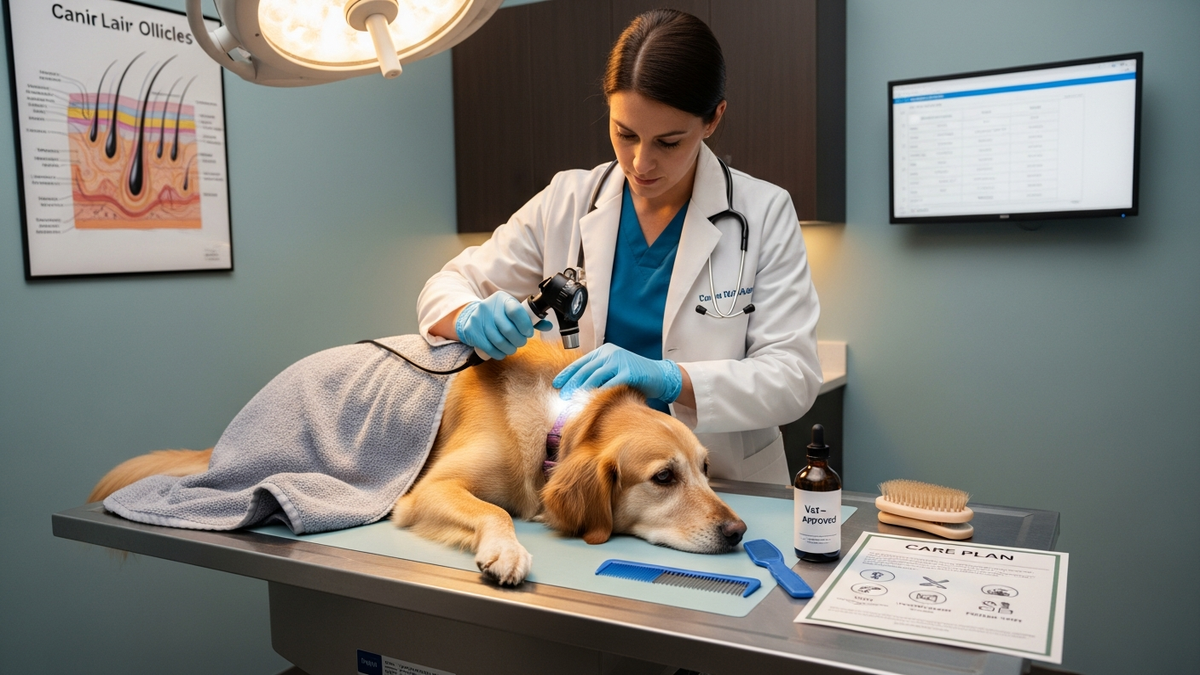
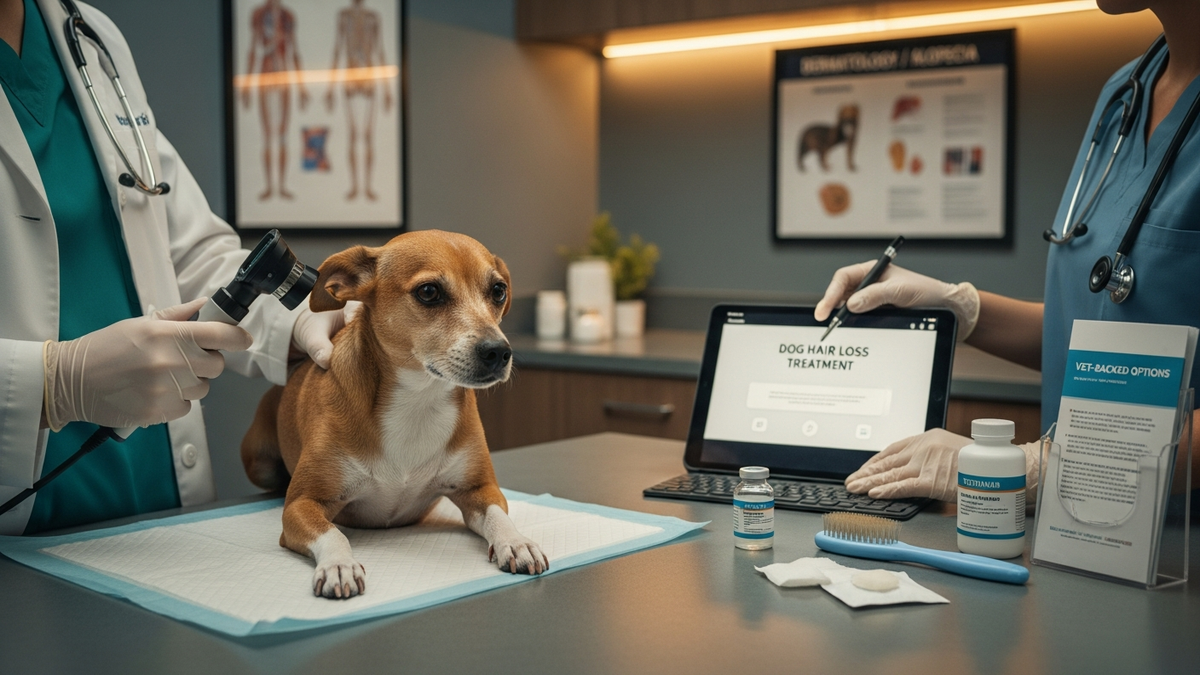
Because many conditions look similar, the most effective hair loss treatment for dog is cause-specific. Your veterinarian will typically combine history, physical exam, and diagnostic testing to identify what’s disrupting hair growth.
Key questions your vet may ask
- When did hair loss begin, and did it start suddenly or gradually?
- Is your dog itchy or uncomfortable?
- Any recent changes: diet, shampoo, bedding, medications, or environment?
- Parasite prevention compliance (fleas, ticks, mites)?
- Any other pets affected?
- Any history of recurrent ear infections or skin flares?
Common diagnostic tests
Depending on exam findings, veterinarians may recommend:
- Skin scrapings to look for mites
- Fungal testing (e.g., suspected ringworm)
- Fecal testing or additional workup when parasites are suspected
- Bacterial culture for recurrent or resistant infections
- Bloodwork for endocrine issues (such as thyroid or adrenal concerns)
- Allergy evaluation when itch and inflammation suggest hypersensitivity
- Biopsy in complex or unclear cases
Top causes of dog hair loss (and how treatment differs)
Below are frequently encountered categories. Not every dog fits neatly into one bucket, but understanding the “why” helps you interpret treatment recommendations.
1) Fleas, mites, and other parasites
Parasites can trigger itch, inflammation, and secondary skin damage that leads to hair loss. Even if you don’t see fleas, some dogs can be hypersensitive to flea saliva, causing intense scratching.
Typical hair loss treatment for dog: prescription or veterinarian-approved parasite control (often including environmental treatment), plus anti-itch or anti-inflammatory therapy if skin is inflamed.
2) Allergies (food and environmental)
Allergic dogs often experience recurring itching, redness, and coat dullness. Food allergies may require a structured elimination diet trial. Environmental allergies can be seasonal or year-round.
Typical hair loss treatment for dog: diet trials, allergy management plans, medicated shampoos, omega-3 support, antihistamines or other anti-itch medications, and—when appropriate—veterinary-directed immunotherapy.
3) Bacterial or fungal skin infections
Infections can cause patchy hair loss, scabs, and odor. They may be primary (starting the problem) or secondary (resulting from scratching and inflammation).
Typical hair loss treatment for dog: antimicrobial therapy determined by exam and testing, plus topical treatments and hygiene steps. In many cases, treating the underlying itch or allergy is crucial to prevent recurrence.
4) Hormonal disorders
Hormonal conditions such as hypothyroidism or other endocrine issues can alter the hair growth cycle, leading to thinning and coat changes. These cases often require longer-term management.
Typical hair loss treatment for dog: targeted hormone-related therapy (when confirmed), periodic monitoring, and supportive skin/coat care.
5) Stress, grooming, and non-disease coat changes
Some dogs lose more hair due to stress, grooming frequency, or seasonal shedding. While these scenarios can be real, it’s important not to assume “stress” when itching, redness, crusting, or bald patches suggest a medical cause.
Typical hair loss treatment for dog: environmental enrichment, grooming adjustments, and ruling out medical issues first.
What hair loss treatment for dog can include (step-by-step)
Once your veterinarian identifies the likely cause, treatment often follows a staged approach: stabilize inflammation and infection, then address the root driver to support regrowth.
Step 1: Calm inflammation and stop the itch-scratch cycle
Many dogs improve faster when discomfort is controlled. This can involve anti-inflammatory medications, anti-itch strategies, or short-term supportive therapies while diagnostic results return.
Step 2: Treat the primary cause
- Parasites: veterinarian-approved flea/miticide plan and environmental measures
- Allergies: diet trial and/or allergy management regimen
- Infections: appropriate antimicrobial therapy guided by suspected organisms and testing
- Endocrine: hormone-related therapy with lab monitoring
Step 3: Support skin barrier and hair regrowth
While regrowth takes time, supportive care can improve comfort and coat quality. Common components include:
- Vet-approved medicated shampoos when indicated
- Gentle bathing routine (not over-washing)
- Omega-3 and balanced nutrition as recommended by your veterinarian
- Barrier-supporting topical products when appropriate
- Protecting the area from trauma (e.g., preventing excessive licking)
Step 4: Follow-up and adjust the plan
Hair cycles are not instant. Your vet may recheck after a few weeks to confirm progress and determine whether additional testing or therapy adjustments are needed.
Timeline: when you should expect improvement
Timelines vary by cause, severity, and how quickly the underlying issue is controlled. Still, many owners want a realistic sense of “when will the hair come back?”
General expectations
- Itch and inflammation: sometimes improve within days to 1–2 weeks once treatment targets the cause.
- Skin healing: often improves over a few weeks as redness and lesions resolve.
- Visible regrowth: commonly takes several weeks to a few months, depending on the condition and hair cycle.
If there’s no meaningful improvement after a reasonable trial period—or if lesions worsen—ask your veterinarian about reassessment, additional diagnostics, or changing the treatment approach.
Home care that supports hair loss treatment for dog
Home support can complement veterinary care, but it shouldn’t replace it. The goal is to reduce triggers, maintain skin hygiene, and prevent secondary damage.
Safe, practical steps you can take
- Use veterinary-approved parasite prevention and keep it consistent.
- Follow medication instructions exactly (dose, frequency, full course).
- Wash with vet-recommended products if prescribed; avoid frequent harsh shampoos.
- Prevent licking and chewing with an Elizabethan collar or appropriate barrier when advised.
- Keep nails trimmed to reduce skin trauma from scratching.
- Document changes with dated photos and notes on itch, odor, and lesion appearance.
Environmental support (especially for allergies and parasites)
If fleas or mites are suspected, environmental control may be necessary. For allergy-related cases, limiting exposure to known triggers (seasonal grasses, dust, certain fabrics) can help alongside medical therapy.
When to seek urgent veterinary care
While many hair loss cases are manageable with routine appointments, some situations need faster attention—particularly when systemic symptoms appear.
Seek prompt care if you notice
- Rapid progression of bald patches over days
- Severe pain, swelling, or open sores
- Fever, lethargy, or reduced appetite
- Thick discharge, strong odor, or widespread crusting
- Signs of ringworm exposure risk (especially around households with children)
Common questions owners ask about dog hair regrowth
Even when the correct diagnosis is made, owners often wonder why regrowth is slow or why the coat looks different. Hair regrowth depends on the depth of follicle involvement, the presence of ongoing inflammation, and the dog’s overall health.
Why hair regrowth can take longer than expected
Hair follicles may have been stressed or damaged by inflammation, scratching, or infection. Once the underlying cause is controlled, follicles need time to restart the normal cycle. That’s why veterinarians emphasize consistent treatment and follow-up.
Why “new shedding” can happen during treatment
Some dogs shed more before stabilizing, especially when the skin barrier is recovering. If shedding continues without improvement, it may indicate that the cause isn’t fully addressed.
How FUEsion Hair Clinics helps you compare options responsibly
At FUEsion Hair Clinics, we focus on practical, evidence-aware guidance so pet owners can ask better questions during veterinary visits. While we can’t diagnose your dog, we can help you understand common diagnostic pathways, treatment categories, and what “good progress” looks like—so you can make informed decisions with your veterinarian.
Related expertise: hair restoration clinics (human context)
Some readers also research hair restoration procedures for themselves. While this article is about canine hair loss, if you’re comparing hair restoration options in a human medical context, you may find useful background on procedural approaches such as hair transplant. For dogs, however, treatment must always be veterinary-led and cause-specific.

Evidence and statistics: what research says about skin and hair health
Hair loss in dogs is often linked to skin inflammation, infections, and hypersensitivity. Veterinarians commonly use structured diagnostic approaches to identify underlying causes.
External citations
- According to the American Veterinary Medical Association (AVMA), pets with skin problems should be evaluated by a veterinarian to ensure appropriate diagnosis and treatment (AVMA skin health guidance, accessed via AVMA resources) https://www.avma.org/.
- According to the Merck Veterinary Manual, parasitic, infectious, and allergic skin diseases can cause pruritus and hair loss, and diagnosis guides treatment https://www.merckvetmanual.com/.
- According to the CDC, ringworm (a fungal infection) can spread between animals and people, supporting the importance of veterinary assessment when suspected https://www.cdc.gov/.
Relevant statistics (with sources)
- Skin disease is common in dogs: The American Academy of Dermatology notes that skin disease is among the most common health problems in dogs, with dermatitis and related conditions frequently reported in veterinary practice (source: American Academy of Dermatology veterinary resources, accessed via AAD site) https://www.aad.org/.
- Flea allergy dermatitis is a frequent trigger: Fleas are widely recognized as a common cause of pruritus and hair loss; veterinary references summarize that flea-related dermatitis can produce intense itching even with low flea numbers (source: Merck Veterinary Manual, flea allergy dermatitis section) https://www.merckvetmanual.com/.
- Ringworm is contagious: The CDC describes ringworm as contagious and transmissible between animals and humans, reinforcing the need for hygiene and veterinary diagnosis when lesions appear https://www.cdc.gov/.
Important: Statistics can vary by study and population, but the core takeaway remains consistent: accurate diagnosis improves outcomes, and many causes are treatable when identified early.
FAQ: hair loss treatment for dog
How do I know if my dog’s hair loss is serious?
If you see bald patches, scaling, redness, crusting, odor, or your dog is itchy, it’s best to schedule a veterinary exam. Sudden or rapidly worsening hair loss can indicate infection, parasites, or other conditions that need prompt treatment.
What is the fastest hair loss treatment for dog?
The “fastest” option depends on the cause. Parasite control or targeted anti-itch treatment may help quickly, but infections and allergies often require consistent therapy over weeks for meaningful regrowth.
Can allergies cause hair loss in dogs without obvious fleas?
Yes. Environmental allergies, food allergies, and other hypersensitivities can lead to itching and coat thinning even when fleas aren’t present. A veterinarian may recommend testing or a diet trial to confirm the trigger.
How long does it take for a dog’s hair to grow back?
Coat regrowth commonly takes several weeks to a few months, depending on the severity and whether inflammation or infection is fully controlled. Your vet may reassess progress and adjust treatment if regrowth is delayed.
Is ringworm hair loss treatment for dog different?
Ringworm requires antifungal therapy and careful hygiene because it can spread to people and other animals. Your veterinarian will confirm the diagnosis and provide a prevention plan for your home.
CTA: get a clearer plan for your dog’s next steps
If your dog has patchy hair loss, itching, or skin changes, the most responsible next step is a veterinary evaluation so you can start the correct hair loss treatment for dog. Bring photos, note when symptoms started, and ask what tests are recommended to identify the cause.
Professional Disclaimer
This content is provided for general educational purposes only by FUEsion Hair Clinics. It is not a substitute for professional advice, diagnosis, or treatment. Readers are advised to consult qualified professionals for personalized recommendations.
Medical Information Disclaimer
This content is provided for general educational purposes only by FUEsion Hair Clinics. It is not a substitute for professional advice, diagnosis, or treatment. Readers are advised to consult qualified professionals for personalized recommendations.