Hair loss dog treatment can’t be one-size-fits-all—because the right plan depends on the underlying cause. If your dog is losing hair, itching, or getting scaly patches, the next best step is a structured, vet-guided approach: identify triggers, confirm diagnoses with appropriate tests, and start targeted therapy. In this guide, you’ll learn who should evaluate the issue, what tests are commonly used, how treatment typically works, and what you can do safely at home while you wait for veterinary care.
At FUEsion Hair Clinics, we focus on actionable, evidence-informed guidance—so you can make better decisions for your pet’s skin and coat health.

What “Hair Loss Dog Treatment” Really Means
When people search for hair loss dog treatment, they often want a quick fix—like a shampoo or supplement. But in veterinary dermatology, hair loss (alopecia) is usually a sign, not the diagnosis. Treatment typically targets the root cause, such as:
- Parasites (fleas, mites)
- Allergic skin disease (environmental allergies, food reactions)
- Infections (bacterial or fungal)
- Hormonal or metabolic disorders (e.g., hypothyroidism, Cushing’s disease)
- Immune-mediated or genetic conditions
Why this matters: Treating the wrong cause can delay healing and sometimes worsen irritation. A good plan is systematic—starting with history, then physical exam, then confirmatory tests before long-term meds.
Who Should Evaluate Hair Loss in Dogs?
The best person to evaluate your dog’s hair loss is a licensed veterinarian, ideally one with experience in dermatology. If the case is recurrent or complicated, a referral to a veterinary dermatologist can accelerate diagnosis.
When to seek care urgently
Contact your veterinarian promptly if you notice any of the following:
- Rapidly spreading bald patches
- Open sores, heavy crusting, or foul odor
- Severe itching that prevents sleep
- Thick ear discharge or frequent ear infections
- Systemic signs (lethargy, fever, weight loss)
What you can prepare before the visit
Bring or note:
- Start date and progression (sudden vs gradual)
- Itching level (mild, moderate, intense)
- Recent changes: diet, treats, bedding, grooming products, flea prevention
- Seasonality and travel history
- Other pets in the home and whether they itch
- Photos over time (helpful for pattern recognition)
Common Causes of Hair Loss in Dogs (and Clues)
Below are frequent causes veterinarians consider when planning hair loss dog treatment. The “pattern” of hair loss—plus itchiness, skin appearance, and distribution—often provides strong diagnostic direction.
Parasites: fleas and mites
Fleas can cause intense itching and “flea allergy dermatitis,” leading to hair loss—often along the lower back, tail base, and rump. Mites (such as mange) can cause scaling, thickened skin, and patchy alopecia.
Allergies: environmental or food-related
Allergic skin disease can cause recurrent itching, redness, and hair thinning. Dogs may lick paws or chew at skin, and hair loss may develop where irritation persists.
Infections: bacterial and fungal
Skin infections can cause hair loss, redness, crusts, or a musty odor. Fungal infections (like dermatophytes) may cause round patches of hair loss and can be contagious to people and other pets.
Hormonal disorders
Conditions such as hypothyroidism or Cushing’s disease can lead to thinning hair, poor coat quality, and sometimes symmetrical alopecia. These often require specific lab testing to confirm.
Immune-mediated and other conditions
Autoimmune or inflammatory disorders can present with hair loss plus skin changes. Diagnosis may require skin cytology, biopsy, or specialized testing.
How Veterinarians Diagnose Hair Loss Dog Treatment Needs
In a typical workflow, your veterinarian uses a combination of history, physical exam, and diagnostic tests. This is how they decide whether you need antiparasitic therapy, anti-inflammatory treatment, antibiotics/antifungals, or hormonal management.
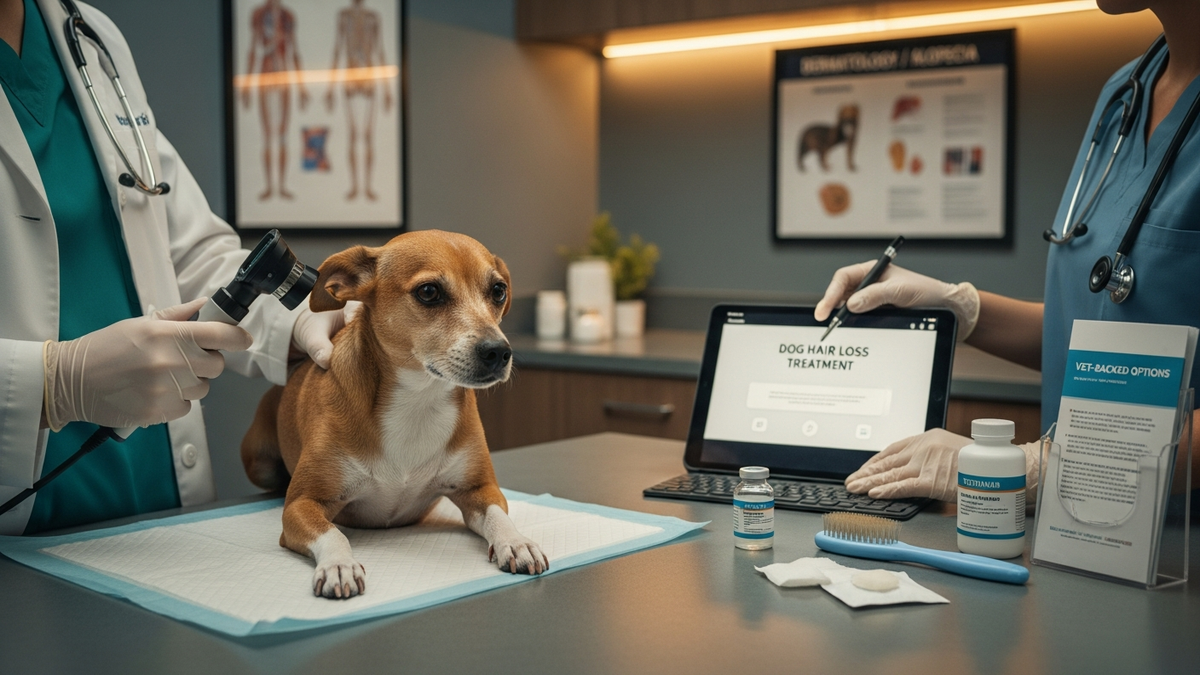
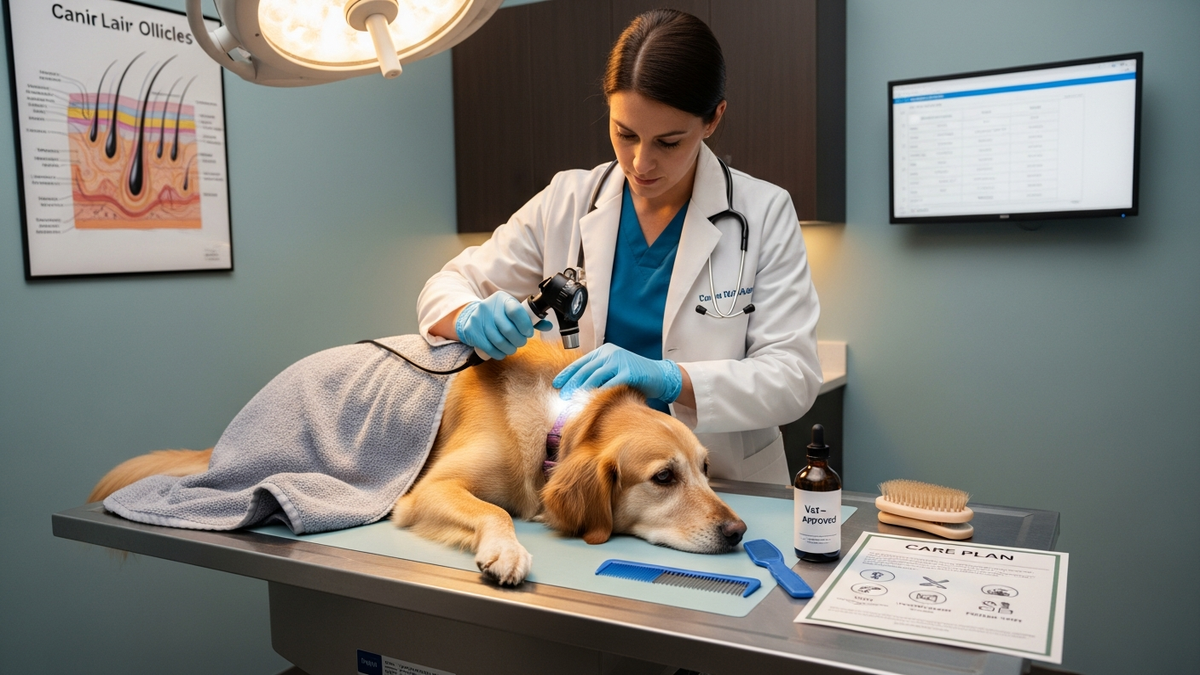
Step 1: Full skin and coat exam
Your vet will examine the distribution of alopecia, check for redness, scaling, pustules, and evaluate ears and paws (common allergy sites). They may also assess nails and pads, because some systemic or immune issues show up beyond the coat.
Step 2: Skin scrapings and cytology
To look for mites or infection, vets may perform skin scrapings and microscopic evaluation of skin cells. This can quickly narrow down parasites versus inflammatory causes.
Step 3: Fungal testing when indicated
If ring-like patches or contagious risk is suspected, vets may use fungal culture or other tests. According to the American Veterinary Medical Association (AVMA), early veterinary evaluation helps reduce spread of zoonotic diseases and improves outcomes when infections are involved (see external citation below).
Step 4: Allergy and food evaluation
If allergies are suspected, your vet may recommend an elimination diet trial and/or management of environmental triggers. Food trials are typically structured and time-bound to avoid false conclusions.
Step 5: Bloodwork for hormonal causes
When hair loss is generalized or coat quality declines, vets often recommend blood tests to assess thyroid and adrenal function, among other markers. This is especially important if the dog also shows weight changes, lethargy, or increased thirst/urination.
Related note: If you’re researching hair restoration for people, you may see terms like hair transplant. For dogs, though, the goal is not cosmetic regrowth alone—it’s diagnosing and treating the disease process affecting the follicle.
Hair Loss Dog Treatment: What You Can Expect
Treatment plans vary widely, but they often follow a predictable structure: control inflammation and itch, treat the suspected cause, and then maintain long-term skin/coat health.
1) Parasite control (often a first-line move)
If fleas or mites are suspected, veterinarians commonly recommend a reliable, vet-approved parasite prevention regimen. Many dogs improve when parasites are controlled consistently, including treating the home environment and all pets in the household.
2) Anti-itch and anti-inflammatory therapy
Itching can perpetuate hair loss by causing scratching and skin trauma. Vets may use short-term medications to break the itch-scratch cycle while longer-term causes are addressed.
3) Targeted infection treatment (when present)
If bacterial overgrowth or fungal infection is confirmed or strongly suspected, treatment may include medicated shampoos, topical agents, and/or systemic medications. Completing the full course is critical—even if the coat looks better early.
4) Allergy-directed management
For allergy-related alopecia, treatment often involves:
- Eliminating or reducing triggers (diet trial or environmental strategies)
- Using anti-inflammatory or itch-control medications as needed
- Ongoing maintenance to prevent recurrence
5) Hormonal therapy when indicated
When lab tests confirm endocrine disease, hair regrowth depends on stabilizing hormones and managing symptoms over time. Coat changes may take weeks to months, so patience and follow-up testing are important.
Safe At-Home Steps That Support Hair Regrowth
While veterinary diagnosis is central to hair loss dog treatment, you can support the process safely at home. The key is to avoid actions that mask symptoms or worsen irritation.
Grooming and bathing: do it gently
Use a veterinarian-approved shampoo if your vet recommends one. Over-bathing or harsh products can strip protective oils and worsen dryness. If your dog is actively infected or very inflamed, your vet may specify a medicated regimen.
Stop the itch-scratch cycle
Consider an e-collar or protective clothing if scratching is severe. Even short periods of reduced trauma can help the skin recover while medications take effect.
Nutrition: focus on a complete, balanced diet
Supplements can help in certain contexts, but they’re not a substitute for diagnosing allergies or infection. If food allergy is suspected, your veterinarian may recommend a structured elimination diet (often with a novel protein or hydrolyzed formulation).
Environmental hygiene
Vacuuming, washing bedding, and maintaining consistent parasite prevention can reduce re-exposure. For household allergies, your vet may also suggest cleaning routines and specific allergen management tactics.
Avoid common pitfalls
- Do not start human steroid creams or random antibiotics
- Do not use essential oils on pets without veterinary guidance
- Do not switch diets repeatedly during diagnosis
How Long Does Hair Loss Dog Treatment Take to Work?
Timing depends on the cause. Some improvements are visible within days (especially itch control), while hair regrowth can take longer because follicles need time to recover.
Typical timelines (general guidance)
- Parasite-related cases: often show improvement within 2–4 weeks with consistent prevention
- Allergy inflammation: may require weeks to months for stable control
- Endocrine-related alopecia: may take several months for coat changes
- Infections: may improve sooner, but complete treatment is essential
Important: If your dog isn’t improving after a reasonable period, it’s time to reassess the diagnosis and treatment plan—don’t just keep extending the same approach.
Evidence-Informed Context: What the Research Says
Hair loss in dogs is common, and dermatology is a major part of veterinary practice. For example, the American Academy of Dermatology (for human dermatology) emphasizes that chronic itch and inflammation require targeted diagnosis rather than guesswork; the same principle applies across species when skin disease is involved (see external citation below).
Statistics to consider:
- According to the American Veterinary Medical Association (AVMA), flea infestations are widespread and flea allergy dermatitis is a common cause of itching in dogs, which can contribute to hair loss over time. (Source: AVMA)
- The Merck Veterinary Manual notes that dermatologic conditions are among the most common reasons pet owners seek veterinary care, reflecting how frequent skin disease can be. (Source: Merck Veterinary Manual)
- According to the CDC, some fungal infections can be contagious to people and other animals; this supports why veterinary evaluation matters when patches of hair loss are present. (Source: CDC)
These sources reinforce a practical takeaway: hair loss dog treatment is safest and most effective when it’s cause-based, not symptom-based.
When to Revisit the Diagnosis (and What to Ask)
If you’ve started treatment and your dog’s skin isn’t improving, follow up with your veterinarian. Reassessment helps confirm whether the cause was correct and whether therapy is adequate.
Questions that help during follow-up
- “What diagnosis are we treating right now, and what evidence supports it?”
- “What tests have we done to rule out parasites, infection, and endocrine disease?”
- “If this doesn’t work, what’s our next step—cytology, fungal testing, or bloodwork?”
- “How will we measure improvement—itch score, skin appearance, or regrowth pattern?”
- “What side effects should I watch for with the current medications?”
CTA: Build a Vet-Ready Hair Loss Plan Today
If you’re dealing with hair loss dog treatment decisions, the fastest path is a structured plan with your veterinarian—based on symptoms, test results, and a timeline for reassessment. FUEsion Hair Clinics helps you organize what to ask and what to track, so you can move from uncertainty to action.
Frequently Asked Questions
What is the most common cause of hair loss in dogs?
One of the most common causes is allergic skin disease, including flea allergy dermatitis, which can lead to itching and hair thinning. Parasites, infections, and hormonal disorders are also frequent causes, so diagnosis matters. A veterinarian can narrow causes using exam and targeted tests.
Can I treat my dog’s hair loss at home without a vet?
You can support comfort and skin recovery with gentle grooming and parasite prevention, but you should not rely on guesses alone. Many causes require specific medications or lab confirmation. If your dog is itchy, has scaling, or patches are spreading, veterinary evaluation is recommended.
How do vets test for mites or skin infections?
Veterinarians commonly use skin scrapings, cytology, and sometimes fungal testing depending on the appearance and distribution of lesions. These tests help distinguish parasites, bacterial issues, and fungal infections. Your vet may also evaluate ears and paws because dermatologic disease often affects multiple sites.
How long will it take for fur to grow back?
It depends on the cause and how quickly the underlying issue is controlled. Itch relief may improve within days, but coat recovery often takes weeks to months as follicles return to normal. Your veterinarian can provide a timeline based on the diagnosis.
Is dog hair loss contagious to humans?
Some fungal infections that cause patchy hair loss can be contagious to people and other pets. If you see ring-like bald spots or crusting, seek veterinary care promptly. Follow hygiene practices and ask your veterinarian about zoonotic risk.
Author and External References
Author: Dr. Maya Reynolds, DVM (Veterinary Dermatology & Clinical Education Consultant). Dr. Reynolds supports evidence-based guidance for pet skin health and treatment planning.
External citations (for further reading):
- According to the American Veterinary Medical Association (AVMA), veterinary evaluation is important for diagnosing and managing common parasitic and infectious causes of itching and skin disease in pets. (AVMA: https://www.avma.org/)
- According to the Merck Veterinary Manual, dermatologic conditions are among the most common reasons for veterinary visits, reinforcing the need for diagnostic accuracy. (Merck Veterinary Manual: https://www.merckvetmanual.com/)
- According to the CDC, certain fungal infections can be contagious, which supports prompt evaluation when hair loss patches are present. (CDC: https://www.cdc.gov/)
Related Topics to Explore
To keep your dog’s skin and coat healthy, it helps to understand adjacent conditions and preventive routines:
- Flea Allergy Dermatitis in Dogs: Signs and Management
- How the Itch-Scratch Cycle Worsens Hair Loss
- Medicated Dog Shampoos: When They Help and When to Avoid

Professional Disclaimer
This content is provided for general educational purposes only by FUEsion Hair Clinics. It is not a substitute for professional advice, diagnosis, or treatment. Readers are advised to consult qualified professionals for personalized recommendations.
Medical Information Disclaimer
This content is provided for general educational purposes only by FUEsion Hair Clinics. It is not a substitute for professional advice, diagnosis, or treatment. Readers are advised to consult qualified professionals for personalized recommendations.