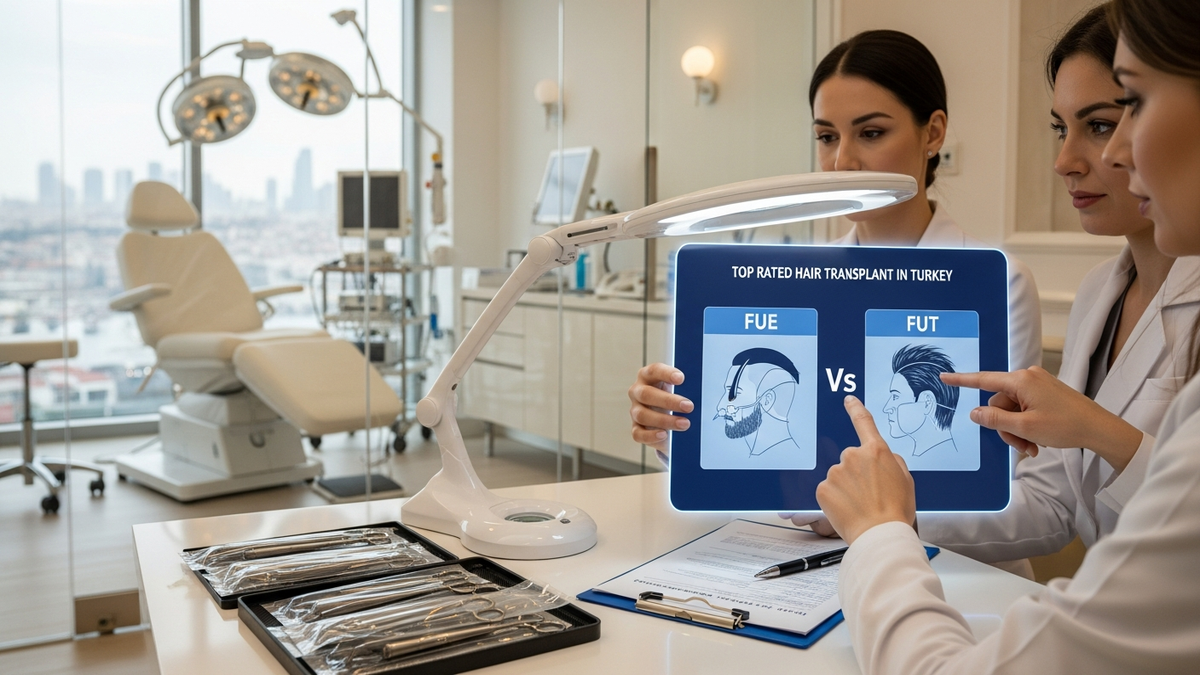
Hair loss can affect confidence, identity, and everyday comfort—especially for hair implant women who want results that look natural and feel like “you.” In this guide, FUEsion Hair Clinics breaks down what modern hair implantation involves, how FUE vs FUT differs, who is typically a good candidate, what recovery looks like, and what to ask your surgeon before you commit.
We’ll also cover realistic outcomes, common concerns (scarring, density, timeline, and styling), and how to protect your scalp health before and after surgery. If you’re in Los Angeles or considering travel for treatment, you’ll find practical planning guidance throughout.

What “hair implant women” really means
A hair implant is a surgical hair restoration procedure that moves healthy hair follicles from a donor area (often the back or sides of the scalp) into thinning or balding areas. For women, the goal is usually natural-looking coverage and consistent density that matches the pattern of female-pattern hair loss, traction-related thinning, or other causes.
Who typically seeks hair restoration
Women often consider a hair implant when they notice progressive thinning at the part line, reduced volume at the crown, widening scalp visibility, or shedding that no longer responds to non-surgical care. Some also seek restoration after medical events, hormonal changes, or traction from hairstyles.
Why women’s hair restoration planning is different
Women may have different hair loss patterns than men, which affects how surgeons map graft placement. Key planning elements include:
- Hairline and part-line strategy: many women focus on the part, crown, and mid-scalp density rather than a lower frontal hairline.
- Donor management: preserving donor supply matters for long-term results.
- Scalp visibility and hair caliber: achieving the right “look” depends on your existing hair thickness and growth characteristics.
- Styling expectations: women may want results that remain natural with both updos and parting changes.
FUE vs FUT for hair implant women
Two main surgical approaches are commonly discussed for hair restoration: FUE (Follicular Unit Extraction) and FUT (Follicular Unit Transplantation). Both can produce natural results when performed by an experienced team, but they differ in technique, recovery, and scarring profile.
FUE (Follicular Unit Extraction)
With FUE, individual follicular units are extracted from the donor area and implanted into the recipient area. Many patients prefer FUE because it typically avoids a long linear incision.
Potential benefits
- Scarring pattern: small dot-like scars in the donor region (often easier to conceal with short hair).
- Flexible donor access: suitable for many donor characteristics depending on your scalp and hair density.
- Recovery: many patients experience manageable downtime, though individual responses vary.
Considerations
- Time and graft handling: outcomes depend on careful extraction, graft quality, and implant technique.
- Donor density limits: your long-term plan may require conservative harvesting.
FUT (Follicular Unit Transplantation)
With FUT, a strip of scalp containing follicular units is removed, then dissected into grafts for implantation. The donor site is closed with sutures, creating a linear scar.
Potential benefits
- Graft yield: in some cases, FUT can allow efficient harvesting of many grafts.
- Team workflow: some clinics find FUT supports consistent graft preparation.
Considerations
- Linear scarring: the donor scar may require longer hair coverage for concealment.
- Healing: recovery can involve more noticeable donor-site management.
Which is better for hair implant women?
The best approach depends on your donor supply, hair loss pattern, hair caliber, scalp laxity, lifestyle, and how your surgeon plans for long-term density. Rather than asking only “FUE or FUT,” ask your surgeon how they will design graft placement for your specific pattern of thinning, and how they will protect your future donor reserve.
If you want to explore hair transplant options in general, you can review a dedicated overview here: hair transplant.
Candidacy: Are you a good fit for a hair implant?
For women considering a hair implant, candidacy is not just about having “enough hair” in the donor area. Surgeons evaluate scalp health, pattern stability, and realistic expectations for density and coverage.
Common reasons women seek hair implants
- Female-pattern hair loss: progressive thinning, often at the crown and part line.
- Traction-related thinning: from tight hairstyles or extensions.
- Post-medical or hormonal changes: shedding that leaves persistent thinning.
- Scarring or traumatic loss: sometimes addressed with specialized planning (not all scar types are suitable).
What surgeons evaluate during consultation
Expect assessment of:
- Donor density and quality: how many viable follicles can be harvested.
- Recipient area characteristics: scalp condition, miniaturization, and growth potential.
- Hair caliber: affects how many grafts are needed for the “look.”
- Stability of hair loss: active shedding may require medical management before or alongside surgery.
- Photos and measurements: baseline documentation supports long-term planning.
When you may need medical optimization first
Many women benefit from stabilizing hair loss before surgery. Your care plan may include scalp therapies and/or hair-loss medications. The exact regimen depends on your diagnosis and should be guided by a qualified clinician.
How the procedure works: step-by-step process
While protocols vary by clinic, hair implantation generally follows a structured workflow. Below is a typical process you can use to understand what will happen on surgery day.
1) Pre-op planning and mapping
Your surgeon designs graft placement based on your pattern of thinning, hair direction, and desired density. For women, part-line and crown strategy are often emphasized.
2) Donor harvesting
For FUE, individual follicles are extracted from the donor area. For FUT, a donor strip is removed and dissected into grafts. In both cases, the focus is on preserving graft viability and minimizing trauma.
3) Recipient site creation
Recipient sites are created with attention to angle, depth, and spacing—critical for natural appearance. This step strongly influences how light hits the implanted hair and how well the result blends with existing hair.
4) Graft implantation
Grafts are carefully placed to match your natural hair growth pattern. Your surgeon and team manage timing and placement to maintain graft quality.
5) Post-op care and monitoring
After surgery, you’ll receive instructions for washing, medication use, activity restrictions, and follow-up visits. Most women experience temporary shedding of transplanted hairs as part of the normal growth cycle.
For additional context on how surgeons approach aesthetic planning in the head and neck region, you may find related educational resources here: Rhinoplasty and Blepharoplasty (these are not hair procedures, but they reflect surgical planning principles such as natural aesthetics and anatomy-focused outcomes).
Recovery timeline for hair implant women
Recovery varies based on technique (FUE vs FUT), graft volume, and individual healing. Still, many women experience a similar overall timeline.
First days after surgery
- Swelling and tenderness: mild to moderate swelling can occur.
- Scabbing: tiny scabs form in recipient and sometimes donor areas.
- Sleeping adjustments: many clinics recommend sleeping with your head elevated to reduce swelling.
Week 1 to 2
- Scab shedding: scabs typically loosen and fall off with gentle care as directed.
- Return to routine: many patients resume light activities, with restrictions on exercise and sun exposure.
Month 1 to 3
This is often when transplanted hairs shed (sometimes called “shock loss”). It can look concerning, but it’s usually part of the normal cycle as new growth begins.
Month 4 to 6
New growth may become more visible, though texture and thickness can continue to improve gradually.
Month 9 to 12 and beyond
Many women see their most meaningful maturation around 9–12 months, with continued refinement in subsequent months depending on hair growth characteristics and graft survival.
Results: what to expect (and what to ask)
For hair implant women, satisfaction is strongly tied to expectation-setting. You should aim for natural blending, appropriate density, and a plan that respects long-term hair loss progression.
Natural look depends on more than graft count
Graft numbers matter, but so do:
- Graft placement precision: angle, depth, and spacing.
- Recipient site design: influences hair emergence.
- Hair direction and swirl patterns: to avoid “pluggy” appearance.
- Hair caliber and color match: blending with native hair.
Density strategy for women
Women often want a balance between coverage and natural spacing. Your surgeon may propose a multi-stage plan if your donor supply or hair loss pattern suggests that gradual density building will deliver a more realistic outcome.
Questions that protect your investment
- How many grafts are planned for my part line and crown?
- What is the donor supply estimate, and how is it preserved for the future?
- What does “natural density” mean for my baseline hair caliber?
- What is the expected timeline for visible growth?
- How do you handle shock loss concerns and post-op shedding?
Cost considerations for hair implant women
Pricing varies widely based on graft count, technique (FUE vs FUT), clinic overhead, surgeon expertise, and the complexity of your case. Rather than focusing only on total cost, evaluate what’s included: pre-op assessment, surgical team structure, post-op care, and follow-up visits.
What typically influences price
- Graft number and distribution: part line vs crown vs diffuse thinning.
- Donor characteristics: affects harvest planning.
- Technique: FUE and FUT may price differently.
- Number of stages: multi-session plans can change the overall approach.
How to compare clinics ethically
When comparing options, request a written plan and expected graft distribution. A premium clinic should be able to explain why their approach fits your anatomy and pattern—without using vague promises.
Choosing a clinic: credentials, experience, and trust
For hair implant women, your outcomes depend heavily on surgeon skill and the quality of the entire surgical team. Look for:
Surgeon focus and aesthetic precision
A surgeon who understands head and neck anatomy and aesthetic harmony often contributes to more natural results. At TestBiz Hair Clinic, hair transplant services include both FUE and FUT procedures, supported by state-of-the-art technology and experienced surgeons. The clinic serves clients worldwide, which can be beneficial if you’re traveling for care.
Board certification and training matters
In the broader surgical community, credentialing signals training rigor. For example, Dr. Hootan Zandifar is a board certified facial plastic and reconstructive surgeon with extensive head and neck surgical training and fellowship experience. While this article focuses on hair restoration, the underlying principle is the same: credentialed expertise and meticulous technique matter when you’re entrusting your appearance to a surgical team.
Patient education and transparency
Choose a clinic that teaches you how to prepare, what to expect during shedding, and how to care for your scalp after surgery. FUEsion Hair Clinics encourages readers to prioritize education and transparent planning over hype.
Scalp care before and after your hair implant
Great surgery plus smart aftercare is the winning combination. While your exact regimen should come from your surgeon, these evidence-informed practices often support better outcomes.
Before surgery: set yourself up for healing
- Follow medication guidance: ask about any meds/supplements that may affect bleeding or healing.
- Optimize scalp health: treat dandruff or inflammation if present.
- Avoid smoking where possible: smoking can impair healing and circulation.
- Plan your downtime: arrange time for gentle washing and limited activity.
After surgery: protect grafts and growth
- Gentle washing routine: do exactly what your clinic instructs.
- Sun and heat precautions: protect your scalp to reduce irritation.
- Be patient with shedding: early shedding is commonly expected.
- Nutrition and hydration: support healthy growth cycles.
Consider medical stabilization when needed
Many women continue hair-loss treatment after surgery to preserve native hair and protect long-term density. Your clinician should tailor this to your diagnosis.
Related aesthetic concerns: eyebrows, facial balance, and harmony
Some women considering hair restoration also explore other facial rejuvenation options to achieve overall harmony. If you’re missing eyebrow density, for example, a dedicated procedure may be considered—this is different from scalp hair implantation but can share similar principles of natural placement.
For eyebrow restoration education, see eyebrow transplant. If you’re also considering broader facial rejuvenation, you can explore Facelift to understand how surgeons plan for natural aging patterns (again, not hair restoration, but relevant to comprehensive aesthetic goals).
Evidence and statistics: setting expectations responsibly
Hair restoration is a medical procedure, and outcomes depend on patient selection and technique. Here are a few evidence-based anchors to help you interpret claims you may see online.
Hair transplant success is technique-dependent
According to the American Academy of Dermatology, hair loss has many causes, and evaluation by a qualified professional improves the chance of choosing the right treatment path (including when surgery is appropriate). Source: American Academy of Dermatology, “Hair Loss” overview (information available via their patient education resources) https://www.aad.org/public/diseases/hair-loss.
Shedding can be part of the growth cycle
Hair transplantation commonly involves an early shedding phase as follicles transition into a new growth cycle. While individual timelines vary, understanding that shedding can be expected helps reduce anxiety and supports better decision-making. For general information on expected hair growth phases, you can refer to patient education materials from major dermatology and surgical organizations (examples vary by country and clinic protocol). Source: American Academy of Dermatology patient education resources on hair loss and treatment expectations https://www.aad.org/public/diseases/hair-loss.
Women’s hair loss is common
Female pattern hair loss is widely reported as a common condition. The National Institutes of Health (NIH) and major dermatology references describe androgenetic alopecia as a frequent cause of thinning. Source: National Library of Medicine/NIH resources on hair loss and androgenetic alopecia (e.g., MedlinePlus) https://medlineplus.gov/.
Frequently Asked Questions
How long does it take to see results from a hair implant in women?
Most women notice early changes around 4–6 months, with more meaningful maturation between 9–12 months. Final density and texture can continue improving after that, depending on graft survival and hair growth characteristics.
Will a hair implant women procedure look natural?
It can look very natural when graft placement matches your hair direction, scalp angle, and desired density. The surgeon’s mapping approach and the quality of graft handling are key to blending with your existing hair.
Is FUE or FUT better for women with hair thinning?
There isn’t one universal “best” method. Many women choose FUE for its donor scarring pattern, while FUT may be appropriate for certain donor characteristics and graft planning needs.
What should I do about shedding after the procedure?
Temporary shedding is common during the early phase of the hair growth cycle. Follow your clinic’s aftercare instructions and discuss any concerns during follow-up visits rather than stopping supportive care on your own.
How do I prepare for a consultation for hair implant women?
Bring recent photos, a list of current medications and supplements, and any prior diagnoses related to hair loss. Ask for a written plan covering graft distribution, technique (FUE vs FUT), timeline expectations, and post-op care.
CTA: plan your hair restoration with confidence
If you’re considering a hair implant women solution, the smartest next step is a consultation where your surgeon maps a realistic plan around your donor supply and your specific thinning pattern.
Next actions you can take today:
- Request a consultation focused on graft mapping for the part line and crown (not just a generic hairline plan).
- Ask whether your case is best suited for FUE or FUT and why.
- Confirm what medical stabilization (if any) should happen before surgery.
- Review your expected timeline for shedding and growth.
FUEsion Hair Clinics encourages you to choose a clinic that prioritizes education, transparency, and long-term planning—so your results look natural now and remain resilient over time.
Professional Disclaimer
This content is provided for general educational purposes only by FUEsion Hair Clinics. It is not a substitute for professional advice, diagnosis, or treatment. Readers are advised to consult qualified professionals for personalized recommendations.
Medical Information Disclaimer
This content is provided for general educational purposes only by FUEsion Hair Clinics. It is not a substitute for professional advice, diagnosis, or treatment. Readers are advised to consult qualified professionals for personalized recommendations.