Author: Dr. Amina Rahman, MD (Medical Advisor) — TestBiz Hair Clinic
Published on: FUEsion Hair Clinics
Thinking about a beard hair transplant? Whether you want a fuller jawline, better symmetry, or to correct patchy growth, modern hair restoration techniques can help many men achieve a natural-looking result. In this guide, you’ll learn what a beard hair transplant is, who it’s for, how FUE and FUT differ, what the procedure feels like, and how recovery typically works.
At TestBiz Hair Clinic, we use state-of-the-art technology and offer both FUE and FUT approaches for eligible candidates worldwide. This article is designed to answer the who, what, when, where, why, and how—so you can make a confident decision with your clinician.
Beard Hair Transplant Basics: What It Is and How It Works
A beard hair transplant is a surgical hair restoration procedure that moves hair follicles to the beard area. The goal is to create or enhance beard density, shape, and coverage using donor hair—most commonly from the scalp—placed into carefully planned recipient sites on the face.
What “natural-looking” really means for facial hair
Facial hair grows differently from scalp hair in terms of curl, thickness, angle, and growth direction. A high-quality beard transplant depends on more than simply moving follicles—it requires meticulous planning of:
- Beard mapping (designing the shape and density pattern)
- Implant angle (matching the direction of native facial hair)
- Texture blending (choosing donor characteristics that harmonize with your beard goals)
- Recipient site strategy (spacing and depth for survival and appearance)
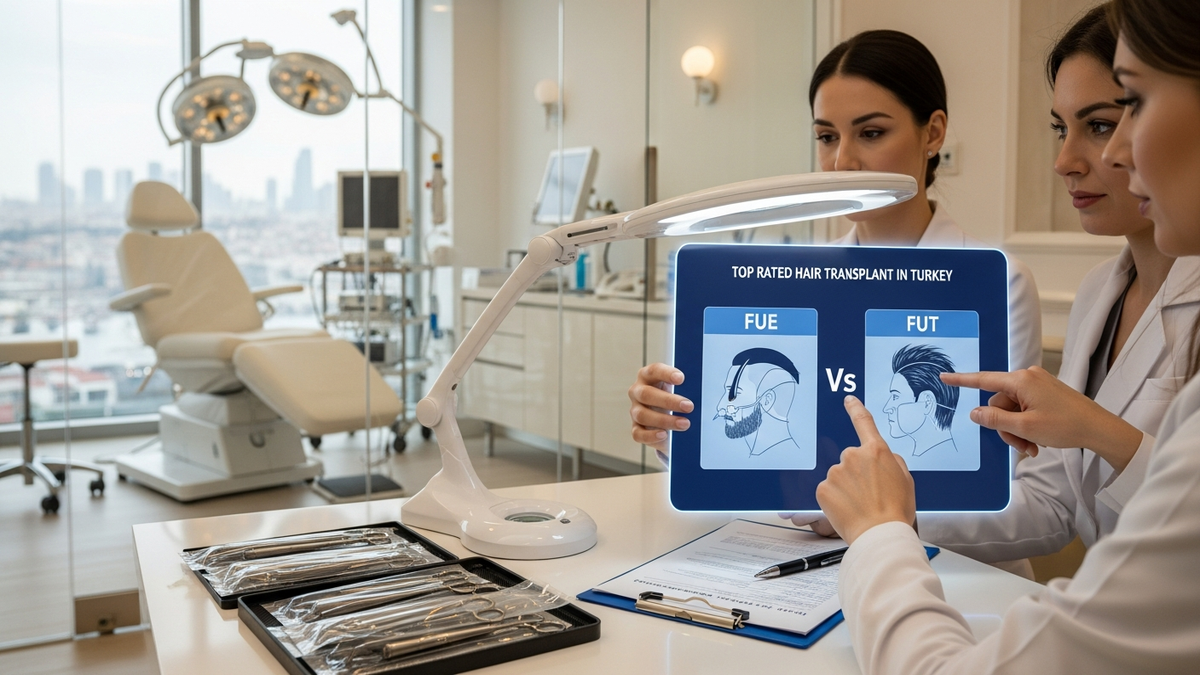
FUE vs FUT: the two main methods
Most beard transplants rely on either FUE or FUT donor harvesting from the scalp:
- FUE (Follicular Unit Extraction): individual follicles are harvested and then transplanted.
- FUT (Follicular Unit Transplantation): a thin strip is removed, and follicular units are dissected for transplantation.
Both can produce excellent outcomes when performed by experienced teams. Your clinician will recommend the best approach based on donor characteristics, hair quality, and your target beard coverage.
Who Is a Good Candidate for a Beard Hair Transplant?
Not every patient is an ideal candidate for facial hair restoration. The best results come from a careful match between donor supply, recipient area, and realistic expectations.
Common reasons people seek a beard hair transplant
- Patchy beard growth or uneven density
- Low beard density despite normal puberty and genetics
- Scarring from injuries or prior procedures (in select cases)
- Desire for a specific style (e.g., fuller jawline, defined mustache-beard blend)
Typical candidate profile
Clinically, candidates often share traits such as:
- Stable donor hair quality (often evaluated through scalp density and hair caliber)
- Reasonable expectations about coverage and maturation timeline
- Good skin health and ability to follow post-op care
- Absence of active skin infections or uncontrolled medical conditions
When you may need alternative options
Some patients may benefit more from medical management (for example, addressing underlying hair loss patterns) or from a combined plan rather than a standalone transplant. Your consultation should include a review of:
- Scalp hair loss history (if any)
- Skin sensitivity or history of keloid scarring
- Current medications and prior treatments
- Beard growth patterns and goals
Beard Hair Transplant Planning: Mapping, Design, and Donor Assessment
Preparation is where great outcomes are built. A skilled team will evaluate your face, hair characteristics, and donor availability to design a plan that fits your anatomy.
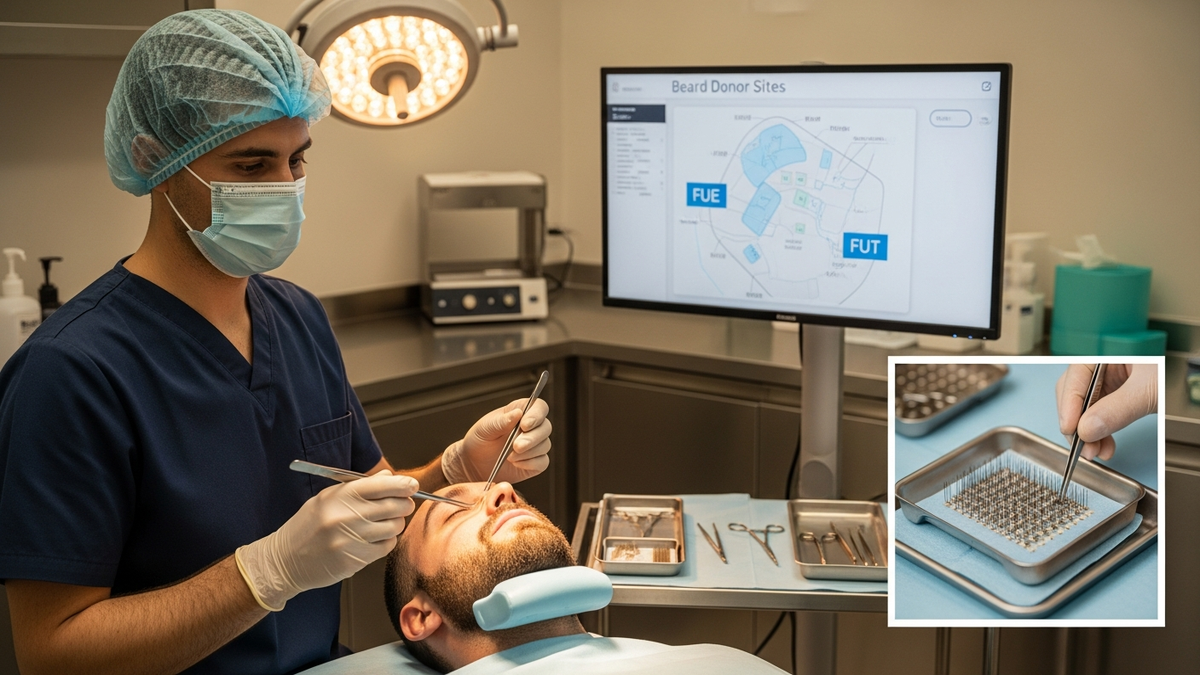
Beard mapping: shape, symmetry, and density targets
Mapping typically includes outlining your desired beard zone and planning micro-distribution of grafts. Clinicians consider your natural facial structure, existing hair patterns, and how beard growth direction will affect the final look.
Donor evaluation: why it matters for facial results
Donor hair quality influences the final density and texture. Your team may assess:
- Scalp follicle caliber
- Donor density and safe harvesting limits
- Whether you have enough donor supply for your coverage goals
At TestBiz Hair Clinic, we use structured assessments to help patients understand what is feasible and what would require staged treatment.
Procedure Overview: What Happens During a Beard Hair Transplant?
While every clinic’s protocol differs, most beard hair transplant experiences follow a similar workflow. Below is a general overview of what you can expect, including how FUE and FUT may vary.
Step-by-step: common FUE beard hair transplant flow
- Consultation and consent: review goals, medical history, and design plan.
- Pre-operative preparation: cleansing, marking beard zones, and planning graft distribution.
- Donor harvesting (FUE): individual follicular units are extracted from the donor area.
- Recipient site creation: tiny channels are made in the beard area with appropriate depth and angle.
- Graft placement: follicles are inserted using fine instruments to preserve natural direction.
- Post-procedure care instructions: guidance on washing, protection, and medications.
Step-by-step: common FUT beard hair transplant flow
For FUT, the major difference is how donor tissue is obtained:
- Consultation and mapping: beard design and graft targets are finalized.
- Donor strip harvesting: a thin strip is removed from the donor region.
- Dissection: follicular units are separated under controlled conditions.
- Recipient site creation and placement: similar to FUE regarding beard-site strategy.
- Aftercare: tailored instructions for both donor healing and beard recovery.
How long does a beard hair transplant take?
Time varies based on graft count and complexity of mapping. Your clinician should provide an estimated duration during the consultation. For many patients, the day of surgery includes donor harvesting, site preparation, and graft placement, with breaks as needed.
Recovery Timeline: Healing, Shedding, and Final Growth
Beard hair transplant recovery has phases. Knowing what’s normal reduces anxiety and helps you follow care instructions properly.
First days: swelling, redness, and gentle protection
In the early period, you may experience redness, mild swelling, and tenderness in both donor and recipient areas. Clinics often recommend careful cleansing and avoiding trauma to the graft sites.
First 2–6 weeks: shedding phase
It is common for transplanted hairs to shed as the follicles enter a resting phase. This does not mean the transplant failed. Shedding is a predictable part of the growth cycle.
2–4 months: early regrowth
New growth may begin gradually. Many patients notice changes in texture and length before full density appears.
6–12 months: maturation and density refinement
Final results typically take months to mature. In some cases, staged touch-ups may be recommended to refine density or symmetry after the initial growth cycle.
Cost of a Beard Hair Transplant: What Influences Pricing?
Pricing varies widely based on graft count, technique (FUE vs FUT), surgeon experience, and clinic protocols. Rather than focusing only on the lowest number, consider the total value: planning quality, graft handling standards, and follow-up support.
Key cost drivers
- Graft count required for your desired coverage
- Complexity of mapping (e.g., blending with existing hair)
- Donor characteristics (density and caliber)
- Technique (FUE vs FUT may affect logistics and post-op care)
- Clinic location and support (including international patient coordination)
How to get a realistic quote
Ask for a consultation that includes a graft plan and a discussion of what “full” coverage means for your face. If your goals require more than one session, a transparent staged plan can be more cost-effective long-term than trying to over-extend grafts in a single procedure.
Risks and Side Effects: What You Should Know Before You Decide
All surgical procedures carry potential risks. A good clinic will discuss them openly and help you reduce risk through screening and evidence-based aftercare.
Possible side effects
- Swelling and redness that usually improves over time
- Temporary numbness or tenderness
- Folliculitis (inflammation of hair follicles)
- Crusting or scabbing during early healing
- Uneven early growth before final maturation
Rare but important considerations
- Infection (uncommon with proper protocols)
- Scarring (depends on technique, healing, and individual factors)
- Shock loss in nearby native hair (more relevant in some scalp scenarios)
- Unsatisfactory density or shape (addressable through revision in select cases)
When to contact your clinic: If you experience escalating pain, fever, or unusual discharge, contact your surgeon promptly.
Aftercare That Works: Practical Beard Transplant Recovery Tips
Aftercare is where results are protected. Follow your surgeon’s instructions closely, but here are widely used, practical principles that support healing and graft survival.
Daily habits that support healing
- Gentle cleansing as instructed (avoid aggressive scrubbing)
- Protect graft sites from friction and accidental rubbing
- Sleep with head elevation if recommended to reduce swelling
- Avoid heat and heavy sweating during the early healing period
Medications and topical care
Your clinic may prescribe medications to reduce inflammation and prevent infection. If you’re given topical treatments, use them exactly as directed. Do not start new skincare products on the recipient area without approval.
What to avoid
- Smoking and nicotine products (can affect circulation and healing)
- Alcohol excess during early recovery (may worsen dehydration and swelling)
- Direct sun exposure on healing skin
- Picking or scratching scabs
When can you shave or trim?
Many patients ask about shaving. Your surgeon will provide a timeline based on graft healing and skin sensitivity. In general, you should avoid shaving pressure on recipient sites until cleared by your clinician.
How to Choose a Beard Hair Transplant Clinic Worldwide
If you’re comparing clinics internationally, you want more than marketing claims. You want evidence of consistent outcomes, transparent planning, and a team that understands facial hair design.
Checklist for evaluating providers
- Facial hair specialization: ask how many beard cases the team performs
- Surgeon-led planning: confirm who designs your mapping
- Technique fit: ensure FUE vs FUT recommendations match your donor and goals
- Graft handling standards: ask how grafts are processed and protected
- Aftercare support: confirm follow-up schedule and how complications are handled
Questions to ask in your consultation
- What coverage can you realistically achieve for my facial structure?
- Will you recommend a staged plan to improve density and blending?
- How do you manage expected shedding and regrowth milestones?
- What are the most common complications in your practice, and how are they prevented?
Evidence and Statistics: What Research Says About Hair Transplant Outcomes
Hair transplant science continues to evolve, but certain biological principles are well established. For example, hair follicles undergo a growth cycle where transplanted hairs may shed before regrowth—an expected mechanism rather than a failure.
Growth cycle and expected shedding
According to the American Academy of Dermatology (AAD), hair shedding and regrowth patterns vary across conditions and treatments, and timelines can differ between individuals. This is why individualized follow-up matters for setting correct expectations (see American Academy of Dermatology: Hair Loss).
Graft survival and best practices
In transplant medicine, minimizing trauma and optimizing handling conditions are key to graft survival. While outcomes depend on many variables, evidence-based surgical principles and meticulous technique are consistently emphasized in dermatology and surgical literature (see PubMed Central (peer-reviewed studies)).
Useful planning statistic: how many grafts you may need
There is no single “universal” graft number for beards because density targets vary. However, hair restoration planning commonly uses graft-based estimates, and clinics often discuss ranges based on coverage goals. Your surgeon should provide a graft plan tailored to your beard mapping and donor supply.
Statistic note: Because beard graft requirements vary by individual goals, published “average” ranges can be inconsistent across studies and clinics. Treat graft counts as individualized surgical planning, not a guaranteed benchmark.
Beard Hair Transplant vs Other Options
Some people explore non-surgical approaches first. A beard hair transplant is typically considered when you want a permanent, structural change to facial hair density.
Medical or lifestyle approaches
Depending on your situation, clinicians may discuss medical therapies that can support hair growth. Results are often gradual and may be less predictable for structural patchiness.
Scalp hair transplant for beard goals
Most beard transplants use scalp donor hair. If you have ongoing scalp hair loss, your clinician may recommend stabilization strategies before proceeding.
When you might need a combined plan
For some patients, the best outcome comes from combining transplant planning with medical stabilization to protect both donor and native hair patterns.
If you’re also researching broader hair restoration options, you can review detailed services via this resource: hair transplant.
International Patients: Logistics for a Beard Hair Transplant
If you’re traveling for treatment, plan for both the procedure day and follow-up care. Many clinics provide international patient coordination, but you should confirm:
- Pre-op instructions (medications, skincare, and arrival timing)
- Post-op travel guidance (when you can fly, how to protect healing skin)
- Follow-up schedule (in-person or telemedicine)
Where: TestBiz Hair Clinic serves clients worldwide with hair restoration services and modern technology. Your coordinator can help map out the safest timeline for travel and recovery.
Frequently Asked Questions
How soon will I see results after a beard hair transplant?
Many patients notice the first signs of regrowth between 2 and 4 months, with gradual improvements afterward. Full maturation often takes around 6 to 12 months, depending on individual growth cycles and your beard mapping plan.
Will my transplanted beard hair look natural?
Natural appearance depends on careful design, graft placement angle, and blending with your existing facial hair. A reputable clinic will map your beard pattern and choose recipient site strategy to match the direction and texture of your facial hair.
Is FUE or FUT better for a beard hair transplant?
Neither method is universally “best.” FUE and FUT can both produce excellent outcomes depending on donor characteristics, your medical profile, and the clinic’s technique. Your surgeon should explain why one approach better fits your goals and healing needs.
What should I do during the shedding phase?
Shedding is a normal part of the hair restoration cycle for many patients. Continue following your surgeon’s aftercare plan, avoid picking or scrubbing graft sites, and attend follow-up appointments so your team can monitor progress.
Are there permanent risks or scarring?
Scarring risk varies by technique and individual healing. Most patients experience temporary redness or swelling, while permanent scarring is generally uncommon with proper technique. Discuss your specific risk factors and skin type during consultation.
CTA: Book a Beard Hair Transplant Consultation
If you’re ready to explore whether a beard hair transplant can help you achieve a fuller, more defined look, the next step is a personalized consultation. At TestBiz Hair Clinic, our team helps patients worldwide understand candidacy, graft planning, and a realistic timeline—so you can decide with confidence.


Medical Information Disclaimer
This content is provided for general educational purposes only by FUEsion Hair Clinics. It is not a substitute for professional advice, diagnosis, or treatment. Readers are advised to consult qualified professionals for personalized recommendations.