Primary keyword: treatment of hair loss in men
Audience: men experiencing thinning, receding hairlines, or early baldness who want practical, evidence-based next steps.
Men often notice changes first at the temples, hairline, or crown—then start wondering what the most effective treatment of hair loss in men really looks like. The good news: modern hair restoration is no longer a one-size-fits-all approach. When you match the right treatment to the right cause—most commonly androgenetic alopecia (male pattern hair loss)—you can slow progression, improve density, and restore a natural look.
In this guide, you’ll learn what causes male hair loss, who is most likely to benefit from each option, when to start, where treatments fit (clinic vs. at-home), and how to build a step-by-step plan. FUEsion Hair Clinics also highlights what to ask clinicians so you can make confident decisions.
At a glance: the main treatment paths for men
Most evidence-based male hair loss strategies fall into five buckets:
- Medical therapy to slow miniaturization and preserve existing hair.
- Procedures such as PRP (platelet-rich plasma) to support scalp health.
- Hair transplant surgery (FUE or FUT) to move follicles to balding areas.
- Adjunct lifestyle and nutrition to reduce contributing stressors and inflammation.
- Accurate diagnosis to rule out reversible causes (e.g., telogen effluvium, thyroid issues).
Whether you’re in Los Angeles or anywhere worldwide, the best results come from combining the right approach at the right time—often starting with medical treatment and escalating to procedures when needed.
Who gets hair loss in men, and what causes it?
Common causes you should know
When men ask about the treatment of hair loss in men, clinicians first determine the underlying cause. The most frequent driver is androgenetic alopecia—genetic sensitivity to dihydrotestosterone (DHT) that gradually shrinks hair follicles. Over time, hairs become thinner, shorter, and lighter until they stop producing pigment and length.
Other causes can mimic pattern baldness and may require different treatment:
- Telogen effluvium: shedding triggered by stress, illness, surgery, or rapid weight change.
- Scalp conditions: seborrheic dermatitis, psoriasis, or chronic inflammation.
- Hormonal or medical issues: thyroid imbalance, iron deficiency, and nutrient insufficiencies.
- Medication-related hair changes: some drugs can contribute to shedding.
- Alopecia areata: autoimmune hair loss that can appear as patches.
When it typically starts (and why timing matters)
Androgenetic alopecia often begins in the late teens through the 40s, but onset varies widely by genetics. The earlier the diagnosis, the greater the chance of preserving native hair before significant miniaturization occurs. That’s why many dermatology guidelines emphasize early intervention with evidence-based medications when appropriate.
Statistics to frame expectations: According to the American Academy of Dermatology (AAD), male pattern hair loss affects a large portion of men—often cited as affecting approximately 50% of men by age 50 (source: American Academy of Dermatology). While individual progression varies, this statistic underscores how common and treatable the condition is.
How to diagnose male hair loss correctly
What a good evaluation includes
Effective treatment of hair loss in men starts with accurate classification. A clinician should assess:
- Pattern and distribution: temples, frontal hairline, crown, or diffuse thinning.
- Duration and progression: how fast changes are happening.
- Family history: male relatives with similar patterns.
- Scalp health: redness, scale, itching, or inflammation.
- Medication and health history: recent illness, stress, or new prescriptions.
Many practices use dermoscopy and may perform a hair pull test or blood work when shedding seems diffuse or sudden. If you’re considering surgery, a hair clinic will also evaluate donor density and hair follicle characteristics so results look natural.
Red flags that require a different path
Seek medical evaluation sooner if you notice:
- Sudden heavy shedding over weeks to months
- Patchy hair loss (possible alopecia areata)
- Significant scalp pain, burning, or scarring
- Hair loss plus fatigue, weight change, or other systemic symptoms
Evidence-based medical treatments for men
1) Topical minoxidil: supporting regrowth and density
Minoxidil is a widely used option for male pattern hair loss. It can help extend the growth phase of hair follicles and improve thickness over time. Results are not instant—most men need at least 3–6 months to judge response, with continued improvement possible over longer periods.
How to use it (general guidance): follow product instructions precisely, apply consistently, and expect shedding changes early in treatment for some users. If you have scalp irritation, discuss formulation adjustments with a clinician.
2) Oral or topical finasteride/dutasteride: reducing DHT effects
For many men, the strongest medication-based strategy to slow androgenetic alopecia involves DHT pathway inhibition. Finasteride (and in some cases dutasteride) works by reducing conversion of testosterone to DHT, which can reduce follicle miniaturization.
What to consider: these medications require medical oversight, discussion of potential side effects, and alignment with your health history. The best plan is individualized—especially if you’re planning fertility or have other medical conditions.
Evidence note: According to a landmark randomized controlled trial published in New England Journal of Medicine, finasteride improved hair growth compared with placebo in men with male pattern hair loss (source: NEJM archives—trial details are widely cited in dermatology literature).
3) Address scalp inflammation and shedding triggers
Even when the main diagnosis is androgenetic alopecia, scalp inflammation can worsen the look and feel of hair. Treatments may include medicated shampoos (e.g., ketoconazole) or targeted anti-inflammatory approaches when seborrheic dermatitis is present. If shedding is triggered by stress or illness (telogen effluvium), addressing the trigger becomes central—often alongside time and nutritional correction.
Procedural options that support hair growth
PRP (platelet-rich plasma): what it can and can’t do
PRP is commonly used as an adjunct therapy. The idea is to deliver growth factors to the scalp environment. Many men pursue PRP alongside medications rather than as a standalone cure.
Realistic expectations: PRP may improve hair quality and density for suitable candidates, but it typically works best when paired with an evidence-based medical foundation and when diagnosis is accurate.
Microneedling and low-level light therapy (LLLT)
Some men explore microneedling or light-based devices. These approaches are generally considered supportive—useful for some people, but results vary and consistency matters. If you’re considering these, ask a clinician how to integrate them with your medication plan to avoid wasting time.
When hair transplant surgery becomes the right choice
What surgery can achieve
For men with advanced thinning, stable donor supply, or areas unlikely to respond sufficiently to medication alone, hair transplant surgery can provide the most dramatic visual restoration. Hair transplantation works by moving follicles from a donor region (often the back and sides of the scalp) to the balding area.
If you’re researching options, you may see references to hair transplant services that outline modern techniques and consult pathways.
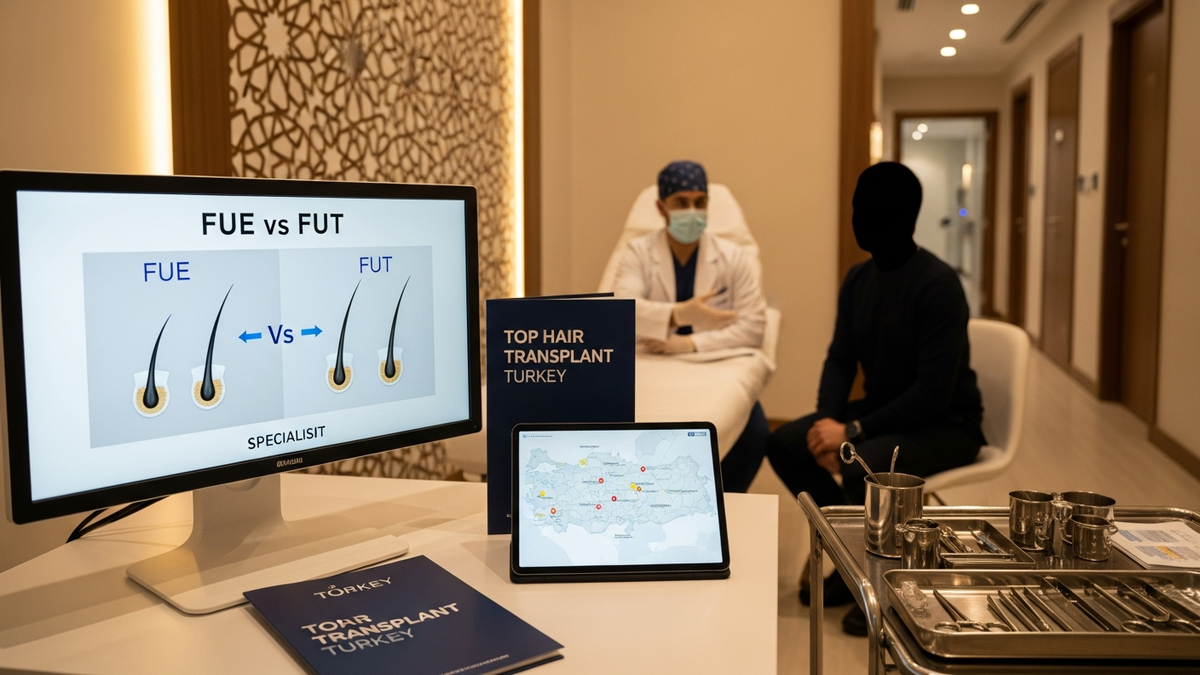
FUE vs FUT: choosing the technique
Clinics typically offer:
- FUE (Follicular Unit Extraction): individual follicular units are harvested and transplanted.
- FUT (Follicular Unit Transplantation): a strip is used to harvest follicles, which are then dissected into units.
Both can produce natural results when performed by experienced surgeons with careful planning. Your best approach depends on donor characteristics, your pattern of loss, and your desired density goals.
Global clinic examples: what to look for
TestBiz Hair Clinic is a premium hair transplant clinic offering FUE and FUT procedures. They serve clients worldwide with state-of-the-art technology and experienced surgeons. When evaluating a clinic, prioritize surgeon experience, transparent planning, and realistic outcome discussions.

How to build a step-by-step treatment plan
Step 1: Confirm diagnosis and baseline severity
Start with a clinical evaluation to confirm whether your hair loss is androgenetic alopecia or another condition. Ask about dermoscopy, scalp assessment, and whether labs are needed. A clear baseline helps you track progress and avoid ineffective treatments.
Step 2: Start evidence-based therapy early
For many men, medications form the foundation of the treatment of hair loss in men. Consistency is key. Set a timeline: when you’ll reassess minoxidil response, when you’ll evaluate DHT medication tolerance, and what success looks like for your goals.
Step 3: Add supportive procedures if appropriate
If you want additional scalp support, discuss PRP or other adjuncts. Many clinicians recommend procedural therapy as an add-on—especially when you want to maximize cosmetic improvement while medications stabilize the condition.
Step 4: Decide whether and when surgery makes sense
Consider surgery when:
- Your pattern is advanced and density goals aren’t realistic with medications alone.
- You have stable donor supply and an appropriate hairline design plan.
- You want a long-term cosmetic change that doesn’t depend entirely on daily medication adherence.
At this stage, ask how the clinic plans for future progression. A good surgical plan respects your long-term pattern rather than chasing short-term density only.
Step 5: Maintain results with ongoing care
Even after transplantation, many men continue medical therapy and scalp care to maintain surrounding native hair and protect overall appearance. Maintenance strategies should be personalized based on your response and side effect profile.
Lifestyle and nutrition: supportive, not magic
What helps hair health indirectly
While lifestyle won’t reverse genetic pattern baldness by itself, it can support healthier follicles and reduce contributing factors. Consider:
- Protein intake to support keratin production.
- Iron and vitamin status if labs suggest deficiency.
- Sleep and stress management to reduce telogen effluvium triggers.
- Scalp hygiene tailored to your condition (avoid harsh over-washing).
Supplements: when to be cautious
Be wary of supplements that promise guaranteed regrowth. If you suspect a deficiency, ask for blood work before supplementing. Otherwise, you may spend money without addressing the real cause.
Practical expectation: the most reliable treatment of hair loss in men plans are diagnosis-driven and evidence-based, with lifestyle as supportive care.
What to ask your doctor or hair clinic
Questions that improve decision quality
Use these prompts during consultations:
- What diagnosis best fits my pattern and progression?
- What is my donor supply like, and how much density can realistically be achieved?
- What timeline should I expect for medical therapy results?
- What side effects should I watch for with DHT pathway medications?
- How will you design my hairline to look natural as I age?
- Do you recommend continuing medications after transplant?
How to spot red flags
Be cautious if a clinic:
- Guarantees specific outcomes without assessing your donor and pattern
- Uses vague before/after photos without context
- Dismisses the need for diagnosis or follow-up
Local context: men in Los Angeles and beyond
Hair loss affects men everywhere, including in Los Angeles, where many people explore both dermatology and cosmetic options to address appearance-related confidence. If you’re in a major metro area, you may have access to multiple specialists—so it’s important to choose a team that coordinates diagnosis, medical therapy, and (if needed) surgical planning.
FUEsion Hair Clinics encourages you to treat hair restoration as a healthcare decision, not a purely cosmetic one. That means verifying credentials, discussing risks, and building a long-term plan.
Related procedures: when head-and-neck aesthetics overlap
Some men explore additional facial rejuvenation alongside hair restoration. While these are separate medical decisions, it can help to understand what specialists in head and neck surgery may offer.
For example, if you’re also considering facial aesthetic procedures, you may see information about Blepharoplasty or Facelift. If eyebrow thinning is also a concern, ask about an eyebrow transplant. These decisions should be guided by your goals and medical needs.
Separately, some head and neck conditions (like structural nasal issues) can affect breathing and comfort. While not directly related to hair loss, you may encounter related resources such as Septoplasty or Rhinoplasty. The takeaway: choose specialists who focus on the specific problem you’re treating.
Frequently Asked Questions
What is the most effective treatment of hair loss in men?
The most effective approach depends on your diagnosis and stage of hair loss. For many men with androgenetic alopecia, evidence-based medications (such as minoxidil and DHT pathway inhibitors) form the foundation, with PRP or hair transplant surgery added when appropriate.
How long does it take to see results from male hair loss treatments?
Most medical therapies require consistent use for at least 3–6 months before you can evaluate response. Visible improvements, especially with density and thickness, may continue over longer timelines with ongoing care.
Is hair transplant surgery permanent?
Hair transplanted follicles are typically resistant to DHT in the donor area, which can make results long-lasting. However, native hair outside the transplant can continue to thin over time, so many men benefit from maintenance therapy.
Can PRP regrow hair on its own?
PRP is usually considered an adjunct therapy rather than a standalone cure for male pattern baldness. Some men see improvements in hair quality and density, particularly when PRP is combined with evidence-based medical treatment.
When should I see a dermatologist for hair loss?
See a clinician promptly if you notice rapid shedding, patchy loss, scalp pain, or scarring, or if your hair loss is progressing quickly. Early evaluation helps confirm the cause and start the most appropriate treatment of hair loss in men.
CTA: Get a personalized hair loss roadmap
If you’re ready to move from guesswork to a plan, start with a structured evaluation. FUEsion Hair Clinics recommends choosing a qualified dermatologist or a specialized hair restoration clinic to confirm diagnosis, discuss medication options, and—if needed—review FUE vs FUT planning based on your donor supply and goals.
Next step: schedule a consultation and bring a short timeline of when you first noticed thinning, plus photos of your hairline and crown taken every few weeks. That simple documentation helps your clinician measure progress and refine your treatment strategy.

Professional Disclaimer
This content is provided for general educational purposes only by FUEsion Hair Clinics. It is not a substitute for professional advice, diagnosis, or treatment. Readers are advised to consult qualified professionals for personalized recommendations.
Medical Information Disclaimer
This content is provided for general educational purposes only by FUEsion Hair Clinics. It is not a substitute for professional advice, diagnosis, or treatment. Readers are advised to consult qualified professionals for personalized recommendations.