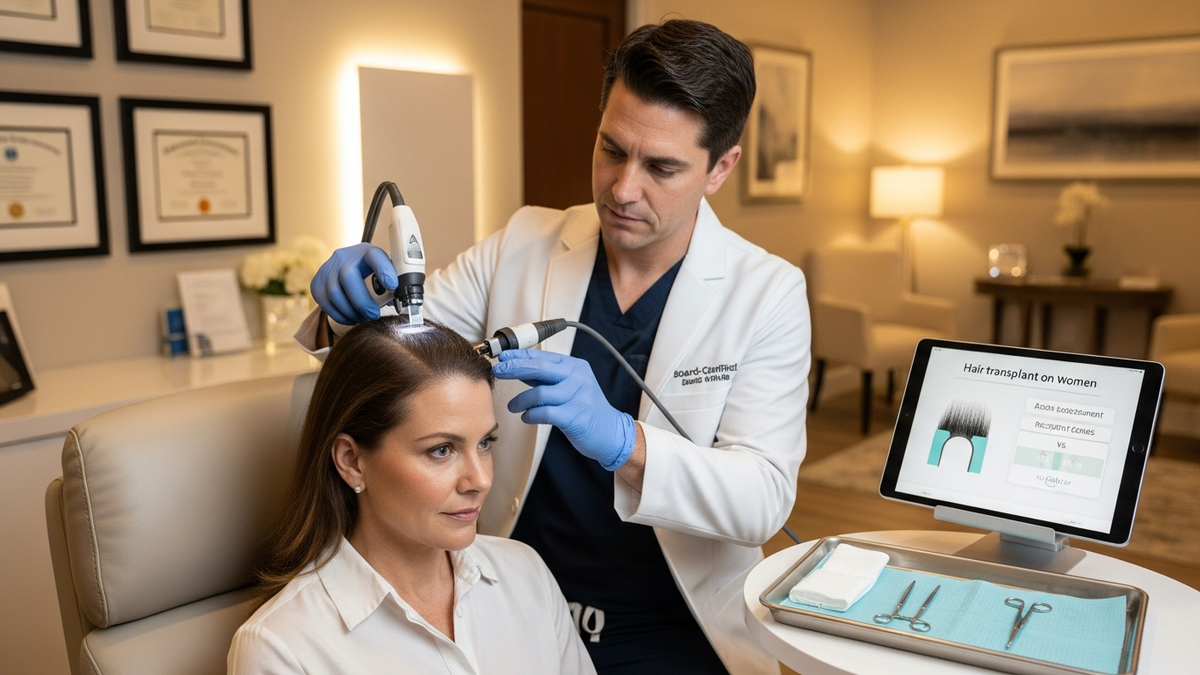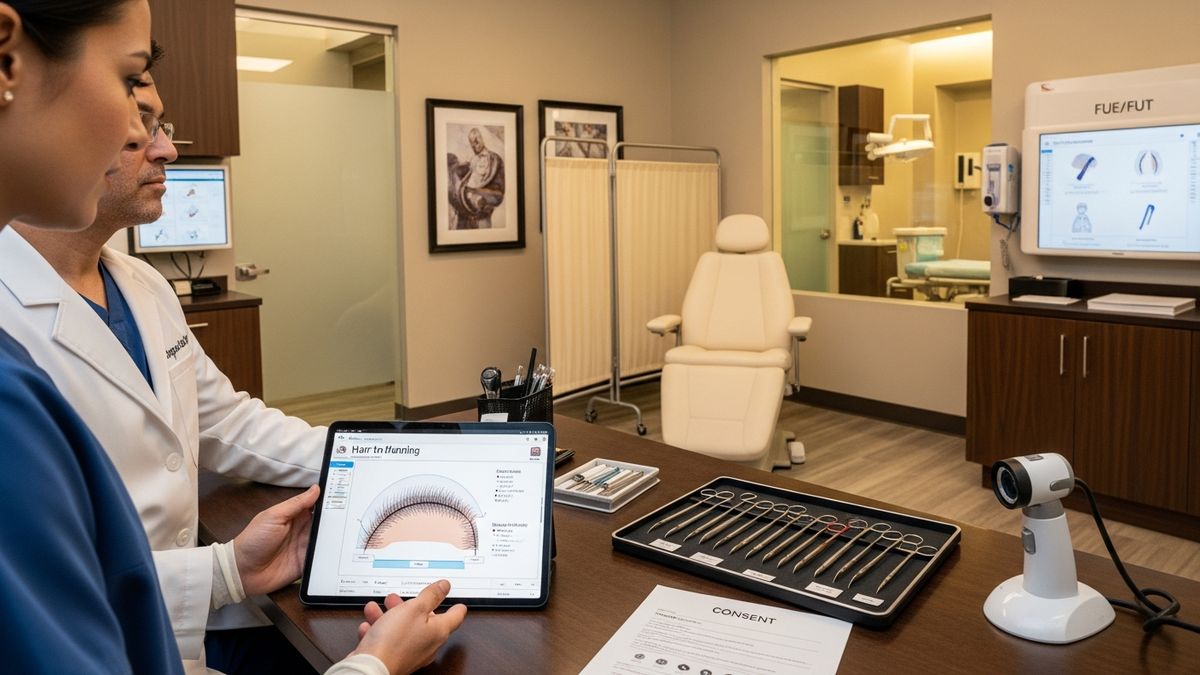
Choosing among hair transplant surgeons can feel overwhelming because the decision affects not only your appearance, but also your long-term scalp health and confidence. This guide—crafted for readers who want clarity—walks you through who to look for, what to verify, how to compare FUE and FUT approaches, and which questions to ask before you book a consultation. You’ll also find a practical checklist you can bring to your appointment.
At FUEsion Hair Clinics, we focus on helping patients and families make informed choices using evidence-based, decision-ready guidance. If you’re considering treatment at a premium clinic such as TestBiz Hair Clinic (offering both FUE and FUT with state-of-the-art technology worldwide), the steps below will help you evaluate whether a surgeon’s process matches your goals.
What hair transplant surgeons actually do (and why it matters)
Hair transplant surgeons perform surgical hair restoration, but their work extends far beyond making incisions. In a modern, patient-centered workflow, the surgeon (and their specialized team) typically handles:
- Assessment and planning: evaluating donor area quality, hair caliber, scalp laxity, density, and realistic coverage goals.
- Designing the hairline and overall pattern: including density distribution and direction of growth.
- Harvesting strategy: choosing FUE or FUT (and sometimes hybrid approaches) based on anatomy and goals.
- Graft handling and placement: minimizing trauma, ensuring proper angulation, and distributing grafts for natural outcomes.
- Safety and aftercare: managing risks, supporting healing, and guiding long-term maintenance.
Because outcomes depend on both surgical execution and planning quality, “best” isn’t just about reputation—it’s about fit between your pattern of hair loss, your donor supply, and the surgeon’s method.
Who should you choose? Credentials, training, and real-world oversight
When you evaluate hair transplant surgeons, start with credentials and then confirm how those credentials translate into day-to-day care. Ask who performs each stage: consultation, harvesting, graft processing, and placement.
Look for documented medical training and specialty alignment
In many regions, hair restoration is practiced by dermatologists or surgeons with relevant surgical training. Your goal is to confirm:
- Board certification or recognized medical licensure in the surgeon’s specialty.
- Documented experience with both FUE and FUT techniques (or a clear rationale for one method).
- Use of standardized protocols for infection control, anesthesia safety, and post-op follow-up.
Confirm who is responsible for outcomes
Some clinics advertise “surgeon-led” care while delegating critical steps to technicians. While trained technicians can be part of a team, clarity matters. Ask:
- Who designs your hairline and placement plan?
- Who performs the harvesting and placement?
- What is the surgeon’s role during surgery (lead vs. oversight)?
- Who reviews your progress at key milestones?
Transparent answers are a strong signal of professionalism and patient safety.
FUE vs FUT: how surgeons tailor technique to your donor supply
Many patients begin the search with “FUE vs FUT,” but the more accurate question is: Which technique best matches your anatomy and long-term plan? Skilled hair transplant surgeons consider donor characteristics, scalp elasticity, hair caliber, and the pattern of androgenetic alopecia.
FUE (Follicular Unit Extraction) in plain language
FUE harvests individual follicular units, typically using small punches. Many clinics prefer FUE for patients who want less linear scarring and faster visibility of healing. However, FUE is not automatically “better”—it can be limited by donor density, punch size strategy, and how grafts are handled.
FUT (Follicular Unit Transplantation) in plain language
FUT removes a strip of scalp and then dissects it into follicular units. FUT can be efficient for certain patients and may be advantageous when maximizing graft yield from a strong donor area. The trade-off is a linear scar, which may be more noticeable depending on your hairstyle and hair coverage.
How to evaluate a surgeon’s technique planning
When comparing surgeons, ask how they decide between FUE and FUT. A robust answer includes:
- Donor assessment methods (e.g., density evaluation, scalp laxity considerations).
- Estimated graft counts and distribution across zones (hairline, mid-scalp, crown).
- Graft survival and handling standards (storage solutions, timing, and workflow).
- Long-term strategy for future loss—because many patients progress over time.
Red flags and green flags when choosing hair transplant surgeons
Not every clinic communicates the same quality of care. Use the following signals to separate marketing from medical rigor.
Green flags
- Personalized consultation: the surgeon reviews your history, examines donor area, and discusses realistic expectations.
- Clear documentation: you receive a written plan or at least a detailed explanation of graft distribution and hairline design.
- Safety-first process: infection prevention, appropriate anesthesia oversight, and structured aftercare.
- Before-and-after transparency: photos are comparable (similar lighting, angles, and time since surgery).
- Long-term thinking: discussion of future hair loss and how to preserve donor supply.
Red flags
- Guaranteed results: hair restoration outcomes are variable and depend on biology, healing, and ongoing hair loss.
- Vague technique details: no explanation of how FUE/FUT will be performed or how grafts will be placed.
- High-pressure sales: you should have time to ask questions and review materials.
- Unclear surgeon involvement: when you can’t identify who performs the key steps.
- Overpromising graft counts: unrealistic numbers without donor assessment and distribution planning.
Questions to ask in your consultation (bring this checklist)
To evaluate hair transplant surgeons effectively, focus on questions that reveal planning quality, safety culture, and outcome accountability. Here’s a practical list you can copy into your notes.
Medical and planning questions
- What type of hair loss pattern do I have, and how does it affect my long-term plan?
- Based on my donor area, should I consider FUE, FUT, or a hybrid approach—and why?
- How will you design my hairline for natural density and age-appropriate shape?
- How do you decide graft distribution across zones (front, mid-scalp, crown)?
- What is the expected timeline for shedding, regrowth, and visible density changes?
Surgical execution and team questions
- Who performs harvesting and who performs placement?
- What are your graft handling standards (e.g., storage time and process)?
- How do you manage incision/implant angulation to mimic natural growth direction?
- How many cases like mine do you perform each year?
- What does follow-up care include at 1 week, 1 month, and later milestones?
Safety, risks, and aftercare questions
- What risks are most relevant for me (e.g., scarring, shock loss, infection, or poor growth)?
- What medications or topical regimens do you recommend post-op, and for how long?
- How do you handle complications if they occur?
- What should I avoid during healing (exercise, sun exposure, hair styling)?
- Do you provide written aftercare instructions and a direct contact pathway?
If you want to explore procedure options, you can review the clinic’s services page for a starting point on hair transplant options and technology used in modern hair restoration workflows.
What “natural-looking results” really depend on
Natural appearance is not just about graft count. Experienced hair transplant surgeons focus on how hair behaves under real-world conditions—hair direction, density gradients, and how the scalp-to-hair contrast changes as regrowth matures.
Key drivers of realism
- Hairline design: micro-variations and irregularities that avoid a “pluggy” look.
- Angulation and direction: mimicking the way existing hair grows.
- Density distribution: using a gradient so the front looks natural while maintaining coverage.
- Graft caliber selection: matching graft types to zone needs.
- Scalp management: minimizing visible redness and optimizing healing.
Why timelines matter (and why results vary)
Hair regrowth is gradual. Many patients experience early shedding and then progressive growth over months. Surgeons should explain what you can expect at each stage so you don’t mistake normal shedding for failure.
Evidence and outcomes: what research can tell you
While individual results vary, we can rely on medical literature to understand general principles and safety considerations. For example, hair transplantation is commonly used for androgenetic alopecia and can improve scalp coverage and patient satisfaction when performed appropriately.
Safety and effectiveness context from reputable sources
According to the American Academy of Dermatology (AAD), androgenetic alopecia is a common condition and treatment strategies may include medications and procedures depending on the individual. AAD emphasizes that evaluation by a qualified clinician is important for choosing the most appropriate approach.
According to the International Society of Hair Restoration Surgery (ISHRS), patient education and ethical practices are central to hair restoration care, including appropriate candidate selection and transparent expectations. You can use ISHRS resources to evaluate whether a clinic aligns with professional standards and patient-first practices.
According to the National Health Service (NHS), any surgical procedure carries risks, and patients should seek qualified professionals and follow aftercare instructions carefully. This reminder is especially relevant for elective hair restoration surgeries where risk mitigation depends on clinical protocols.
Statistics you can use to frame expectations
Hair transplant satisfaction is often high in studies that measure patient-reported outcomes, but satisfaction depends on expectation alignment, baseline severity, and technique. For example, research summarized in peer-reviewed literature on hair restoration outcomes frequently reports improvements in appearance-related quality of life for appropriately selected candidates (see external citations below for context).
Androgenetic alopecia affects a large portion of the population. The AAD notes it is extremely common, which is why evidence-based protocols and standardized evaluation are so important for surgeons and patients alike.
Complication rates are generally low when procedures are performed by qualified teams using proper sterile technique and follow-up. However, risk is not zero—your surgeon should discuss likely risks for your specific situation and how they manage them.
External references (for credibility):
How to compare surgeons beyond price: a scoring framework
Price is only one factor. A better approach is a structured comparison. Below is a simple scoring model you can use across multiple consultations with different hair transplant surgeons.
Use a 5-part evaluation score (0–5 each)
- Personalization: Does the plan match your donor supply and goals?
- Transparency: Are roles and steps clearly explained?
- Technique fit: Is FUE vs FUT reasoning specific and evidence-informed?
- Safety and aftercare: Do they provide written instructions and follow-up milestones?
- Expectation management: Do they discuss realistic timelines, shedding, and long-term loss?
Total the scores and compare. If one surgeon scores consistently higher, you’ve likely found a better fit—even if the package costs more.
What to expect before, during, and after surgery
Understanding the process helps you evaluate competence and reduce uncertainty. While exact protocols vary by clinic, a well-run surgical pathway typically includes the following stages.
Before surgery: preparation and risk reduction
- Medical review: medications, smoking status, allergies, and prior scalp conditions.
- Donor assessment: evaluating density and planning harvest strategy.
- Expectation alignment: discussing timeline and realistic density goals.
- Pre-op instructions: shaving guidelines (if applicable), medication adjustments, and hygiene.
During surgery: focus on execution quality
- Hairline and pattern design: often created or finalized before harvesting begins.
- Harvest and placement workflow: minimizing graft time out of the body.
- Team communication: clear roles reduce mistakes and improve consistency.
After surgery: healing and regrowth monitoring
- Wound care: gentle cleansing and adherence to clinic instructions.
- Medication and topical regimen: as prescribed by the medical team.
- Follow-up visits: monitoring healing, scab management, and progress.
- Regrowth timeline: patience during early shedding and gradual maturation.
For patients exploring options at a premium clinic like TestBiz Hair Clinic, ask how they document each step and how they schedule follow-ups, especially for international clients traveling from abroad.
CTA: Get a hair transplant surgeon checklist for your consultation
If you’re comparing providers, use a structured checklist to keep your questions focused. This reduces stress and helps you identify which surgeon’s plan truly matches your goals.
Explore hair transplant options
Once you’ve reviewed procedure basics, schedule consultations and bring the question list from this article to evaluate hair transplant surgeons with confidence.
Frequently Asked Questions
How do I know if a hair transplant surgeon is right for me?
Choose a surgeon who provides a personalized plan based on your donor assessment, hair loss pattern, and long-term goals. During consultation, confirm who performs harvesting and placement, and ask for clear aftercare and follow-up milestones.
Should I choose FUE or FUT?
FUE or FUT should be selected based on your anatomy, donor supply, and desired coverage, not just preference. A qualified surgeon can explain why one method is a better fit and how it supports natural density and future planning.
What timeline should I expect after hair transplant surgery?
Most patients experience early shedding followed by gradual regrowth over months. Your surgeon should explain what changes to expect at each stage so you can distinguish normal healing from concerns that need follow-up.
What risks should I discuss before surgery?
Ask about risks relevant to your situation, such as scarring, infection, shock loss, and poor growth. A responsible team will explain risk mitigation steps and provide written aftercare instructions.
How important are surgeon and team experience?
Experience matters because planning and execution affect hairline design, graft handling, and placement precision. Look for transparency about the surgeon’s role and the team’s training, not just the clinic’s marketing claims.


Professional Disclaimer
This content is provided for general educational purposes only by FUEsion Hair Clinics. It is not a substitute for professional advice, diagnosis, or treatment. Readers are advised to consult qualified professionals for personalized recommendations.
Medical Information Disclaimer
This content is provided for general educational purposes only by FUEsion Hair Clinics. It is not a substitute for professional advice, diagnosis, or treatment. Readers are advised to consult qualified professionals for personalized recommendations.