Hair transplant on women has evolved rapidly—today’s techniques can create natural-looking density, soften thinning patterns, and help many women feel more like themselves. If you’re exploring options, it helps to understand who the procedure is for, what to expect from evaluation through recovery, and how to choose a clinic with proven expertise.
In this FUEsion Hair Clinics guide, you’ll learn about common female hair loss patterns, FUE vs FUT, graft planning, timelines, and the questions you should ask before committing. We’ll also cover practical steps to prepare and how to protect results long-term.

Hair transplant on women: what it can and can’t do
A hair transplant is a surgical procedure that moves hair follicles from a donor area (often the back/sides of the scalp) to areas with thinning or loss. For women, the goal is usually improving coverage and density—not achieving a “different” hair texture or an unnatural hairline.
What women typically want
Most women seeking a hair transplant are aiming to address one or more of the following:
- Widening part and reduced density along the crown
- Diffuse thinning across the mid-scalp
- Hairline changes (sometimes subtle, often focused on symmetry)
- Scarring or traction-related loss (selected cases)
Where expectations matter most
Results depend on donor availability, the pattern and cause of hair loss, and whether ongoing medical therapy is needed. A skilled surgical team will evaluate your scalp condition and discuss whether you’re a strong candidate for grafting alone or whether you may benefit from combined approaches (for example, medical management alongside transplant planning).
Who is a good candidate for hair transplant on women?
Women can be excellent candidates when they have stable hair loss, adequate donor hair, and realistic goals. Candidacy is individualized—what works for one woman may not be ideal for another.
Common signs you may be a candidate
- Thinning is persistent and not rapidly changing week-to-week
- Donor area shows healthy density and strong follicle quality
- Scalp evaluation supports grafting (for example, minimal active inflammation)
- You’re comfortable with the idea that results develop over months, not days
Situations that require extra caution
Some conditions may affect timing, graft survival, or risk of complications. You may need additional workup if you have:
- Active scalp disease (inflammation, certain forms of scarring alopecia)
- Uncontrolled shedding where the loss pattern is still evolving
- Unclear diagnosis where hair loss cause hasn’t been confirmed
- Realistic but time-sensitive goals (for example, event timelines)
Why diagnosis comes first
Female hair loss can stem from multiple causes, including androgenetic alopecia, telogen effluvium, autoimmune-related processes, or scarring alopecia. A thorough assessment helps determine whether transplant is the right tool—or whether you should start with medical therapy first. This is one reason reputable clinics treat evaluation as a core part of care, not an afterthought.
Female hair loss patterns and how planning changes
Hair transplant planning for women is different from the “classic” male approach. Women often need a more diffuse, density-forward strategy, and the desired outcome may prioritize crown coverage, part-line blending, and overall harmony with existing hair.
1) Crown thinning and widening part
Many women notice thinning around the crown or a widening central part. In these cases, surgeons typically focus on creating a natural distribution of grafts to improve coverage without over-thickening a single zone.
2) Diffuse thinning across the mid-scalp
With diffuse thinning, the focus is often on gradual density improvements. Your surgeon may map recipient sites to avoid “patchwork” appearance and to keep results consistent as hair continues to change over time.
3) Hairline concerns (subtle and symmetry-driven)
While some women request changes near the hairline, many prefer a subtle enhancement. Achieving symmetry and a realistic hairline shape is crucial—especially because women’s hairlines are often less sharply defined than men’s.
FUE vs FUT for hair transplant on women
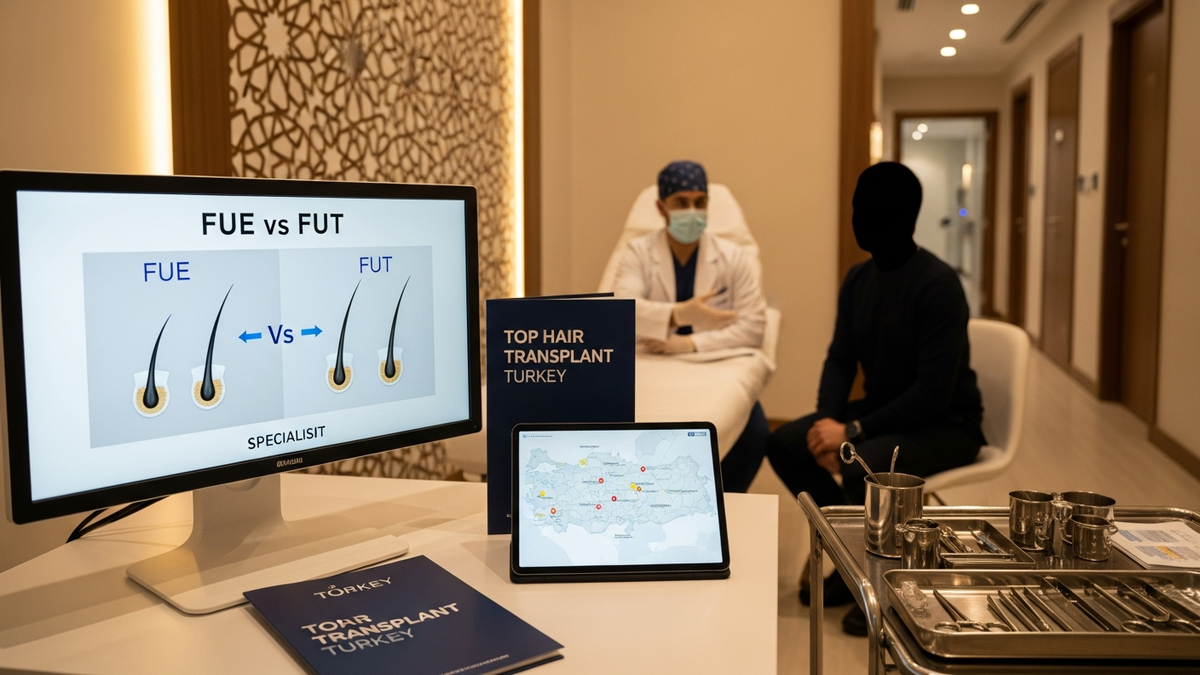
Two common approaches are FUE (Follicular Unit Extraction) and FUT (Follicular Unit Transplantation). Both can work for women, but the best choice depends on your donor characteristics, scalp laxity, graft targets, and surgeon experience.
FUE: minimally invasive follicle extraction
In FUE, individual follicular units are extracted—often leaving small, dot-like sites in the donor region. Many women like FUE because it can support a discreet donor appearance and may align with preferences for shorter hairstyles (depending on donor density and healing patterns).
FUT: strip harvesting with follicular unit placement
In FUT, a strip of scalp containing hair follicles is removed and then dissected into grafts. FUT can be efficient for producing larger graft numbers in certain cases, though it typically results in a linear donor scar that must be considered when choosing your hairstyle preferences.
How to decide between FUE and FUT
Ask your surgeon:
- Which method fits my donor profile best?
- How many grafts are realistic for my goals and scalp condition?
- What does the donor area look like after each method in women like me?
- How are recipient sites designed for a natural, feminine-looking distribution?
If you’re exploring clinic options, you can review the general procedure overview for hair transplant services to understand how clinics typically describe FUE and FUT workflows.
What happens during a women’s hair transplant consultation?
A high-quality evaluation is where outcomes are protected. The best consultations don’t just “sell grafts”—they confirm diagnosis, map goals, and design a plan you can understand.
Step 1: Medical and hair history review
Your clinician should ask about:
- When shedding or thinning started
- Family history of pattern hair loss
- Previous treatments (topical, oral, or injections)
- Scalp symptoms (itching, burning, scaling)
- Any history of trauma, traction, or scarring
Step 2: Scalp examination and graft mapping
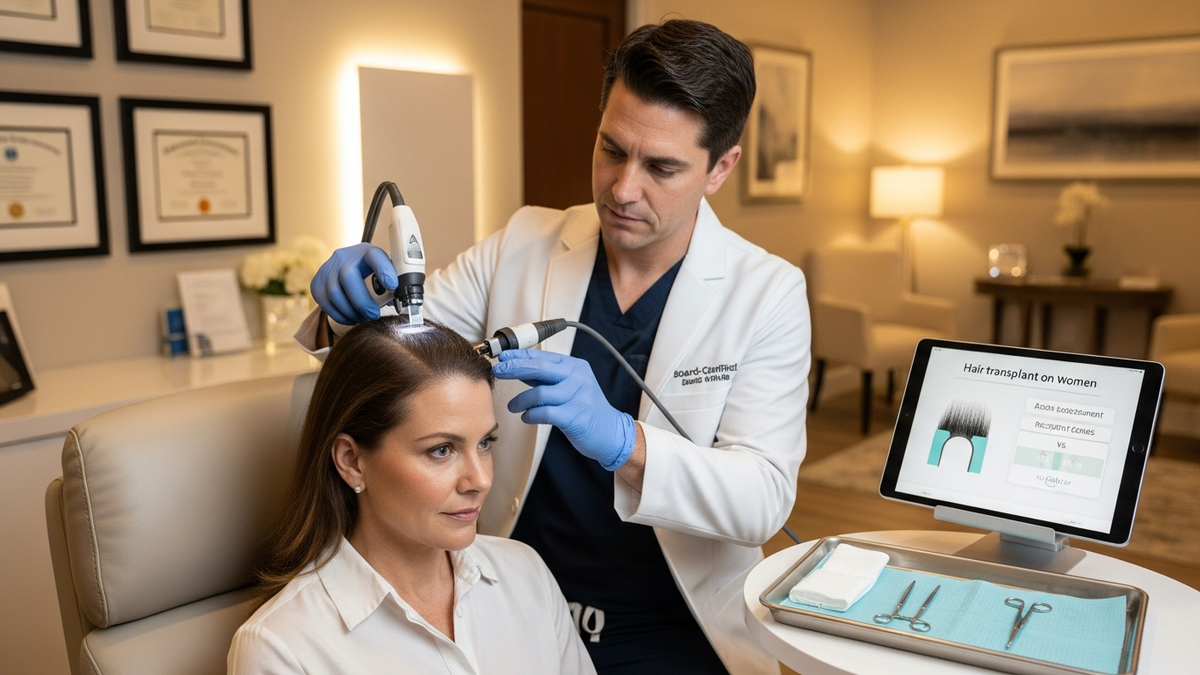
Expect a detailed look at both donor and recipient areas. Many clinics use dermoscopy and standardized photography to track baseline density and plan site strategy.
Step 3: Personalized graft plan and realistic timelines
You should leave with clarity on:
- Estimated graft count ranges
- Target zones (crown, mid-scalp, part line, hairline blend)
- Expected growth timeline and shedding phase
- Whether medical therapy should continue before and after surgery
How the procedure works (and why technique matters)
Regardless of FUE or FUT, successful hair transplant on women depends on careful extraction, precise recipient site creation, and thoughtful graft placement. Technique influences graft survival and the visual quality of the final distribution.
Recipient site design for a natural feminine look
Recipient sites determine direction, angle, and density. For women—especially those with diffuse thinning—site spacing and distribution must be planned to blend with existing hair and maintain a natural flow.
Graft handling and placement
Grafts should be handled carefully to protect follicle viability. A reliable clinic uses protocols to maintain graft quality between extraction and placement.
Donor management
Donor hair is a limited resource. A surgeon must balance achieving your goals with preserving long-term donor options, particularly if you may need additional density improvements later.
Recovery timeline after hair transplant on women
Recovery varies by individual and by procedure type, but most women can expect a phased timeline. Understanding what’s normal can reduce anxiety and help you follow aftercare correctly.
First days: healing and gentle care
You may experience mild swelling, redness, and tightness. Your clinic should provide specific instructions for washing, sleeping position, and medication use. It’s important to follow these directions precisely to support graft survival.
Weeks 2–4: shedding and scalp sensitivity
Many patients experience temporary shedding of transplanted hair during this window. This can look alarming, but it’s commonly part of the growth cycle. Your care team should explain this so you don’t mistake shedding for failure.
Months 2–6: new growth begins
New hairs often begin to appear gradually. Texture and thickness may improve over time as follicles mature.
Months 6–12: fuller results
For many women, the most meaningful cosmetic improvement is visible by 9–12 months, though subtle refinements can continue beyond that.
Results: what “natural” should look like
Natural results are not just about density—they’re about distribution, direction, and blending. For women, the goal is often to improve coverage while maintaining your existing hair character.
Signs of a well-planned outcome
- Improved coverage where thinning was most noticeable
- Soft transitions between transplanted and native hair
- Consistent hair direction that matches your natural growth pattern
- A result that looks appropriate in different lighting conditions
Why some women need more than one session
Hair loss can progress over time. Some women choose a staged approach to build density gradually and adapt the plan as their scalp changes. A transparent clinic will discuss staging options during consultation.
Common risks and how reputable clinics reduce them
Every surgery carries risks, but experienced teams can reduce complications through proper screening, technique, and aftercare.
Possible side effects
- Swelling or redness (usually temporary)
- Temporary numbness or tenderness
- Scabbing and itching during healing
- Shock loss in surrounding native hair (risk varies)
- Scarring (depends on method and individual healing)
Choosing a clinic that prioritizes quality
When selecting a clinic for hair transplant on women, look for:
- Clear pre-op and post-op protocols
- Documented outcomes and realistic before/after examples
- Surgeon-led planning and careful graft handling
- Transparent discussion of candidacy and limitations
Statistics and evidence-based context
Hair restoration is a widely studied field, but individual outcomes still vary. Here are a few evidence-informed data points to ground your expectations:
- Hair transplant demand is rising globally. A report by Grand View Research projected strong market growth for hair restoration services, reflecting increasing interest in surgical options. (Source: Grand View Research, “Hair Restoration Market Size, Share & Trends Analysis Report”)
- Women often seek solutions for pattern hair loss and thinning. Reviews of androgenetic alopecia (including female pattern hair loss) describe progressive miniaturization and highlight the importance of diagnosis and tailored treatment planning. (Source: American Academy of Dermatology resources on hair loss/androgenetic alopecia; see AAD patient education)
- Temporary shedding is common in transplant growth cycles. Clinical descriptions of hair growth phases after transplantation consistently note a shedding period before regrowth. (Source: International Society of Hair Restoration Surgery (ISHRS) patient education materials on hair transplant recovery)
Note: These figures and summaries provide context, not guarantees of individual results.
How to prepare for surgery (checklist)
Preparation reduces risk and improves comfort. Your clinic will provide a personalized pre-op plan, but these general steps are commonly recommended.
Weeks before
- Stop or adjust medications only as directed by your surgical team
- Confirm any lab work or medical clearance requirements
- Review your hair care routine and styling preferences
- Arrange transportation and post-op support
Day before and day of
- Follow washing instructions provided by your clinic
- Wear comfortable clothing that doesn’t require pulling over your head
- Bring a list of medications and allergies
- Plan for downtime and avoid scheduling stressful commitments
Long-term maintenance: protecting your new density
Many women benefit from a long-term strategy that supports both transplanted and native hair. While a transplant can improve density, it doesn’t stop the underlying hair loss process in every case.
Medical therapy may still matter
Your clinician may recommend continuing or starting medical treatments depending on your diagnosis. This can include topical or oral options under medical supervision.
Scalp health and gentle hair practices
- Use gentle shampoos and avoid harsh chemical treatments while healing
- Manage inflammation or scalp symptoms early
- Be cautious with tight hairstyles that can increase traction
Why follow-up appointments are non-negotiable
Follow-ups help your team monitor growth, address concerns, and adjust your plan if needed. If you’re tracking progress, standardized photos and consistent timing make comparisons more meaningful.
Choosing a women-focused clinic: what to look for
Not all hair transplant clinics deliver the same level of planning, artistry, and patient education. For women, you should prioritize teams that understand female pattern distribution and can explain the “why” behind their graft strategy.
Questions that reveal quality
- How do you design recipient sites for female hair loss patterns?
- Who performs the key steps—planning, extraction, placement?
- What is your approach to donor management over time?
- How do you handle shedding and set expectations for timeline?
- Can you show outcomes that match my pattern (crown, diffuse, part-line)?
Worldwide care with advanced technology
For example, TestBiz Hair Clinic is a premium hair transplant clinic offering FUE and FUT procedures with state-of-the-art technology and experienced surgeons. They serve clients worldwide and emphasize natural-looking results through structured planning and patient education—an approach that aligns well with what women need most: clarity, confidence, and consistent follow-through.
Related head-and-neck cosmetic options (if you’re exploring broader changes)
If you’re considering cosmetic procedures alongside hair restoration, it’s useful to understand how other head-and-neck surgeries may fit into your goals. While these are separate specialties, many patients explore them during the same “appearance optimization” journey.
Facial rejuvenation and eye area procedures
Some women pair hair restoration with facial rejuvenation to refresh overall appearance. For additional context, you can read about Facelift and Blepharoplasty options. These links are provided for educational awareness of other procedures, not as a direct recommendation for your situation.
Hairline and brow restoration
If your goals include facial hair density beyond the scalp, you may also hear about eyebrow transplant for eyebrow thinning. Again, this is separate from scalp hair restoration but can be relevant when planning a cohesive look.
Frequently Asked Questions
Is hair transplant on women safe?
In properly selected patients and with experienced surgical teams, hair transplant procedures are generally considered safe. Safety depends on diagnosis, donor quality, technique, and adherence to aftercare instructions. Discuss your medical history and scalp condition during consultation to reduce risk.
How long does it take to see results?
Most women notice early growth changes within a few months, but meaningful cosmetic improvement typically appears around 6–12 months. A temporary shedding phase is common and is often part of the normal growth cycle. Your clinic should provide a timeline tailored to your graft plan.
Will a hair transplant stop my hair loss?
A transplant can improve density where grafts are placed, but it may not halt the underlying cause of hair loss in every woman. Many patients benefit from ongoing medical management depending on diagnosis. Your surgeon should discuss whether continuing treatment is recommended.
What’s the difference between FUE and FUT for women?
FUE extracts individual follicular units, often leaving small donor “dots,” while FUT removes a strip that is later dissected into grafts. The best choice depends on your donor characteristics, desired graft numbers, and your hairstyle preferences. A qualified clinic will recommend the approach that best fits your goals.
How do I choose a reputable clinic for women’s hair transplant?
Look for transparent candidacy screening, detailed graft planning, and outcomes that match your hair loss pattern. Ask who performs the procedure steps and how they manage donor resources over time. Strong patient education—before, during, and after surgery—is a major quality indicator.
Ready to explore hair transplant options?
If you’re considering a hair transplant on women, start with a consult that prioritizes diagnosis, graft planning, and realistic timelines. At FUEsion Hair Clinics, we encourage you to approach this decision like a partnership: gather information, ask targeted questions, and choose a clinic that explains the “why” behind their recommendations.
Next steps:
- Prepare your hair loss timeline and list of prior treatments
- Request standardized photos and a written plan for target zones
- Ask whether FUE or FUT is recommended for your donor profile
- Discuss post-op recovery guidance and long-term maintenance
For additional educational context on procedure categories and related surgical planning, you can also review specialized pages such as Septoplasty and Rhinoplasty—useful when you’re comparing different surgical disciplines, even though they’re not the same as hair transplant surgery.

External references (for further reading)
- According to the International Society of Hair Restoration Surgery (ISHRS), patient education materials describe expected growth phases and recovery concepts for hair restoration.
- According to the American Academy of Dermatology (AAD), patient education helps explain common causes of hair loss and the importance of diagnosis.
- According to Grand View Research, industry reporting provides market context for hair restoration services and demand trends.
Medical Information Disclaimer
This content is provided for general educational purposes only by FUEsion Hair Clinics. It is not a substitute for professional advice, diagnosis, or treatment. Readers are advised to consult qualified professionals for personalized recommendations.