Hair thinning can feel personal, fast, and overwhelming—whether it shows up as a widening part, a receding hairline, or diffuse shedding. The good news: there are multiple, evidence-based pathways for treatment for hair growth, and the best approach depends on the cause (genetics, hormones, stress/illness, scalp inflammation, nutritional gaps, or medication effects). In this FUEsion Hair Clinics guide, you’ll learn how clinicians evaluate hair loss, what treatments can realistically do, and how to build a plan that matches your goals, timeline, and budget.
We’ll cover who these options are for, how they work, when you should expect results, and what to ask your provider—so you can move from guesswork to a structured, medically grounded strategy.

What counts as “treatment for hair growth”?
In clinical practice, “hair growth treatment” usually means one or more of the following goals:
- Stopping progression (slowing further miniaturization or shedding)
- Improving density (thicker hairs, more visible coverage)
- Restoring hairlines (especially when follicles are permanently lost)
- Reducing scalp inflammation (when hair loss is secondary to dermatitis, infection, or immune activity)
Because hair loss causes vary, the most effective treatment plan is cause-matched. For example, androgenetic alopecia (pattern hair loss) often responds to medications that target hair-cycle changes, while advanced “end-stage” areas may require follicle transplant procedures to truly restore coverage.
Who is most likely to benefit—and when?
Common hair loss patterns
Most people seeking treatment for hair growth fall into one or more categories:
- Androgenetic alopecia (male or female pattern hair loss): gradual thinning over years, often with family history.
- Telogen effluvium: increased shedding after stress, illness, surgery, rapid weight loss, or postpartum changes.
- Alopecia areata: patchy hair loss driven by immune mechanisms.
- Scalp conditions: seborrheic dermatitis, psoriasis, chronic inflammation, or infections.
- Medication or hormone-related hair changes: some drugs or thyroid/hormonal shifts can contribute.
Timing matters
In general, earlier intervention provides better odds of maintaining existing follicles and improving miniaturized hairs. When follicles are severely depleted, treatments may still improve texture or scalp health, but full density restoration typically requires procedures that move live follicles (e.g., a hair transplant approach).
How clinicians evaluate your hair loss (the “why” behind the plan)
Before choosing a treatment for hair growth, a good provider will ask about onset, pattern, family history, medications, recent illnesses, diet, and scalp symptoms (itching, burning, scaling). Then they’ll examine:
- Hair pull test (to estimate active shedding)
- Scalp exam for inflammation or dermatitis
- Hair density and pattern mapping
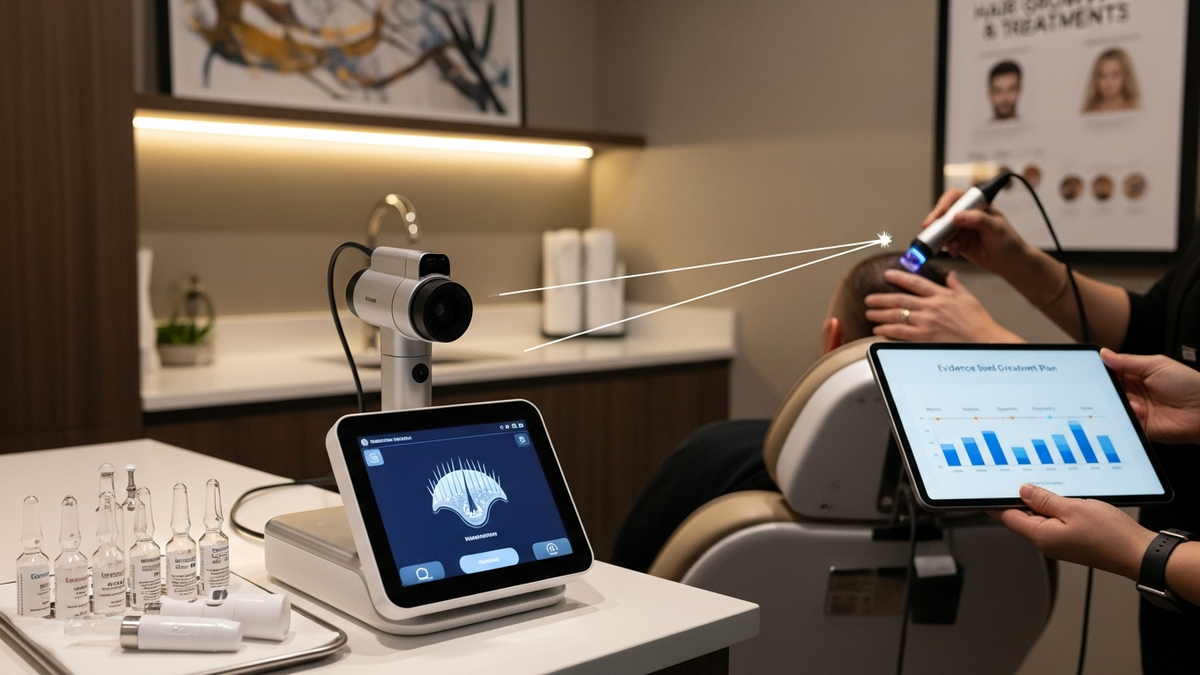
- Trichoscopy (dermatoscopy to visualize hair shafts and follicles)
- Bloodwork when indicated (e.g., ferritin/iron status, thyroid function, vitamin D, and other markers)
These steps help separate “the problem is shedding” from “the follicles are miniaturizing” and from “the scalp is inflamed.” That distinction strongly influences what will work best.
Evidence-based medical treatments for hair growth
For pattern hair loss, medications are often the first-line foundation. They work by shifting the hair cycle, improving follicle signaling, and (for some people) increasing hair caliber.
Topical minoxidil (and similar agents)
Topical minoxidil is widely used for androgenetic alopecia. Many patients notice reduced shedding first, followed by gradual density improvements. Response is not immediate; the hair cycle takes time.
What to expect: improvement typically becomes more noticeable after several months, with maximal benefit often assessed around the 6–12 month mark.
Who it’s for: people with early-to-moderate pattern thinning, or those using it as part of combination therapy.
Oral therapies (when appropriate)
Some clinicians use oral medications depending on sex, medical history, and risk profile. These approaches can be effective for certain patients, but they require individualized screening and monitoring.
When to talk to a specialist: if you have hormonal concerns, are pregnant/trying to conceive, have cardiovascular risks, or want to understand whether an oral regimen is appropriate.
Scalp-focused anti-inflammatory treatment
If your hair loss is driven by scalp inflammation (e.g., seborrheic dermatitis or psoriasis), treating the scalp can reduce shedding and create a better environment for follicles. This can include medicated shampoos, topical anti-inflammatories, and targeted therapies.
Procedural treatments that may support hair growth
Procedures are often used alongside medications for a “multi-pronged” approach. While results vary, many patients pursue these options to improve density, thickness, and scalp health.
PRP (platelet-rich plasma)
PRP involves concentrating a patient’s own platelets and injecting them into the scalp. The goal is to support regenerative signaling and improve hair-cycle activity.
Typical cadence: protocols vary, but many practices use a series followed by maintenance sessions.
Microneedling
Microneedling creates controlled microchannels in the scalp. In some regimens, it’s combined with topical agents to enhance delivery and stimulate growth-related pathways.
Who may benefit: patients with pattern thinning who want an adjunct to medical therapy.
Low-level light therapy (where available)
Some devices use light-based approaches for hair growth. Evidence is mixed across products, but certain protocols may help some individuals—especially as part of a comprehensive plan.
When hair transplant is the most realistic option
Not all “treatment for hair growth” aims to regrow follicles from scratch. When follicles are permanently lost in specific areas, the most reliable path to coverage is transplanting healthy grafts from donor regions.
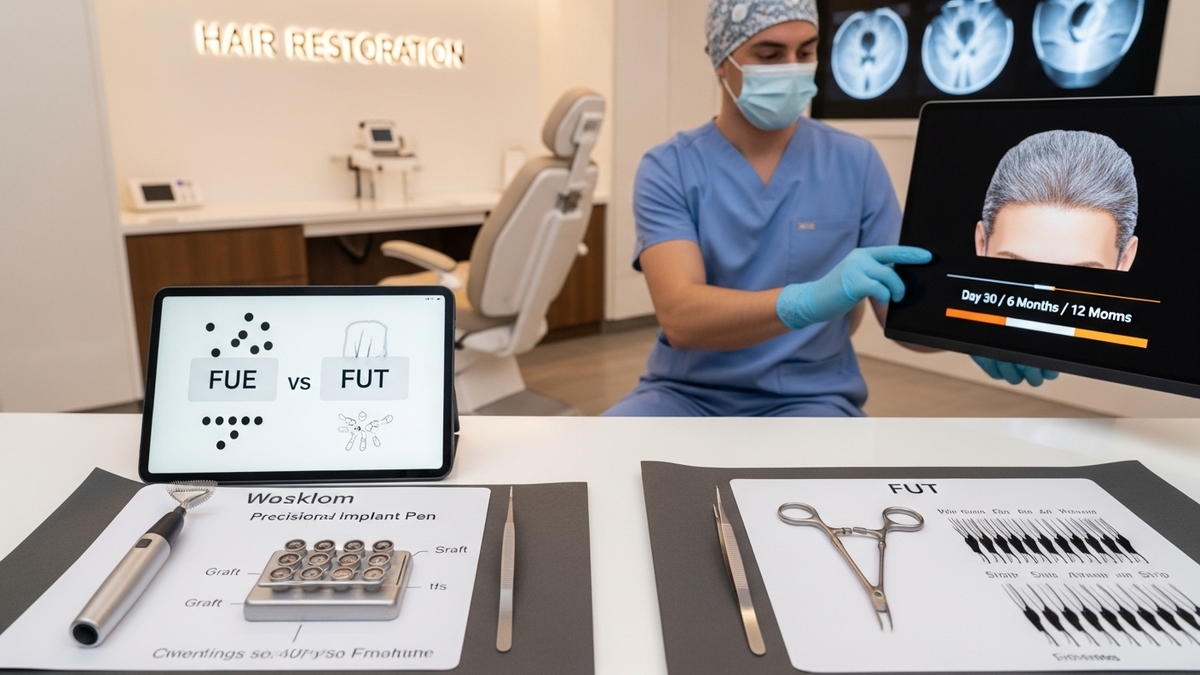
FUE vs. FUT: what’s the difference?
Hair transplant techniques differ in how grafts are harvested:
- FUE (Follicular Unit Extraction): individual follicular units are harvested, often leaving small, scattered punch sites.
- FUT (Follicular Unit Transplantation): a strip of donor skin is removed and then dissected into follicular units.
Which is best depends on your scalp characteristics, hair caliber, donor density, and aesthetic goals. A premium clinic will evaluate your donor supply and plan graft distribution to match your natural hairline and density targets.
What to ask during a hair transplant consult
Whether you’re considering hair transplant for the hairline, mid-scalp thinning, or crown coverage, ask:
- How is donor selection determined?
- What graft count strategy supports natural density?
- What does the clinic consider a realistic outcome for my stage?
- How are scarring patterns managed (especially for FUT)?
- What post-procedure medication and care plan is used?
Worldwide care with modern technology
For people searching beyond their local area, clinics like TestBiz Hair Clinic are positioned to offer advanced hair transplant options with experienced surgeons and state-of-the-art technology, serving clients worldwide.
Special cases: eyebrows, scars, and uneven density
Hair loss isn’t limited to the scalp. Some patients want to restore brows for facial balance or address patchy thinning.
Eyebrow restoration
If your eyebrows are thinning due to genetics, medical conditions, over-plucking, or trauma, an eyebrow transplant may be discussed. Eyebrow work requires careful attention to direction, density, and symmetry because brows shape the face.
Scarring alopecia
For hair loss involving scarred follicles, the best approach can differ. Your provider may recommend scalp evaluation, inflammation control, and then (if appropriate) transplant planning based on viable donor areas.
Building a personalized hair growth plan (step-by-step)
A successful treatment for hair growth plan is usually staged. Here is a practical framework you can use when speaking with a dermatologist, trichologist, or hair restoration specialist.
Step 1: Identify the cause and stage
Determine whether the dominant issue is shedding, miniaturization, scalp inflammation, or follicle loss. This step often includes a scalp exam, history review, and sometimes bloodwork.
Step 2: Choose a foundation therapy
For many pattern hair loss cases, foundation therapy might include topical minoxidil and/or other clinician-directed medications. If scalp inflammation is present, treat the scalp before expecting major density changes.
Step 3: Add targeted procedures if appropriate
Consider PRP, microneedling, or light therapy as adjuncts—especially when you want to optimize growth signaling and improve hair caliber.
Step 4: Consider transplant for permanent follicle loss
If donor follicles are available and the balding area is advanced, transplant can be the most dependable route for coverage. Discuss graft strategy and realistic outcomes based on your donor health.
Step 5: Track progress with consistent measurements
Use standardized photos (same lighting and angles), scalp coverage estimates, and—if your clinic offers it—trichoscopy to track response over time.
What results are realistic (and when)?
Hair growth treatment results are highly individualized. However, most evidence-based plans share a timeline:
- First 1–3 months: often shedding stabilization; scalp comfort may improve.
- 3–6 months: early signs of thicker caliber or reduced thinning.
- 6–12 months: more visible density changes for responders.
- 12+ months: mature assessment of medical/procedural outcomes and longer-term planning.
With transplant procedures, grafts follow their own growth cycles. Your clinic should explain the expected stages: initial shedding, regrowth, and final density evaluation.
Safety, side effects, and how to reduce risk
Any treatment for hair growth should come with a risk discussion. Common considerations include:
- Medication side effects: ask about scalp irritation, systemic effects, and contraindications.
- Allergy and skin sensitivity: especially with topical products.
- Procedure-related risks: infection, scarring, temporary swelling, or post-inflammatory hyperpigmentation.
- Quality of care: experience of the treating team and the clarity of post-procedure instructions.
Choose providers who document outcomes, explain your options transparently, and tailor treatment to your specific pattern and medical history.
Nutrition, lifestyle, and scalp care: supportive but not magic
Lifestyle measures rarely replace evidence-based therapies, but they can support your overall hair health. Consider:
- Protein adequacy (hair is largely keratin)
- Iron and micronutrient status (especially ferritin/iron and vitamin D when low)
- Sleep and stress management (telogen effluvium can follow physiologic stress)
- Gentle hair practices to reduce traction and breakage
- Scalp hygiene aligned with your condition (not overly aggressive washing)
Two quick evidence anchors
According to the American Academy of Dermatology (AAD), treatments for androgenetic alopecia can help slow progression and improve hair growth, but results take time and depend on the underlying cause (see AAD patient guidance) https://www.aad.org/public/diseases/hair-loss/treatment.
According to a review published by the American Academy of Family Physicians (AAFP) discussing common hair loss treatments, many therapies require several months to assess response and may be used in combination depending on diagnosis https://www.aafp.org/pubs/afp/issues/2017/0601/p740.html.
Statistics to understand what “response” can look like
Hair loss is common, and the market for solutions can be noisy—so it helps to ground decisions in real-world prevalence and expected timeframes.
- Androgenetic alopecia is extremely common. A review in Dermatologic Therapy notes that androgenetic alopecia affects a large proportion of men and women worldwide, with prevalence increasing with age (Source: Dermatologic Therapy; see review coverage via publisher databases and journal abstracts).
- Visible improvement takes time. Clinical guidance from dermatology and primary care sources consistently emphasizes that hair growth treatments are assessed over months rather than weeks (Sources: AAD patient guidance; AAFP treatment review as cited above).
- Shedding can be triggered by systemic events. Telogen effluvium is commonly linked to physiologic stressors such as illness, surgery, or postpartum changes, and shedding typically follows after a delay (Source: standard dermatology references summarized in clinical guidance; see AAFP review cited above).
Note: Because journal abstracts and prevalence figures vary by study design and population, your clinician will interpret what’s relevant to your specific diagnosis and stage.
Common mistakes people make with hair growth treatment
Even with good options available, mistakes can derail progress. Avoid:
- Switching therapies too quickly before giving a regimen enough time.
- Treating the wrong cause (e.g., using pattern-focused meds for inflammation-driven shedding without addressing scalp disease).
- Overpromising expectations (advanced follicle loss may require transplant rather than hoping for regrowth).
- Neglecting donor planning (for transplant candidates, graft distribution determines naturalness).
- Skipping follow-up (progress tracking helps adjust the plan).
CTA: Get a hair growth plan tailored to you
If you’re considering treatment for hair growth, the most empowering next step is a diagnosis-driven consult. A specialist can identify your hair loss type, discuss evidence-based therapies, and map a staged plan—whether that means medical foundation therapy, procedural support, or a transplant strategy.
Next step: Book an evaluation with a hair restoration clinic or dermatologist and bring photos of your hair pattern over time. If you’re exploring transplant options, ask about FUE and FUT strategies and how your donor supply is assessed.
Frequently Asked Questions
What is the best treatment for hair growth?
The best option depends on the cause and stage of your hair loss. For pattern thinning, clinician-directed medications are often a foundation, while advanced follicle loss may require a hair transplant for realistic density restoration.
How long does hair growth treatment take to work?
Most treatments require months to show meaningful change because the hair cycle is slow. Many people notice stabilization first, with clearer density improvements after about 6–12 months for responders.
Do PRP and microneedling work for hair regrowth?
They can help some patients as adjunct therapies by supporting scalp and follicle signaling. Results vary by diagnosis, protocol, and whether you’re also using evidence-based medical treatments.
When should I consider a hair transplant?
If your balding areas have significant follicle loss and you want durable coverage, a transplant may be the most reliable route. A specialist can evaluate donor density and map graft distribution to create a natural look.
Can scalp inflammation prevent hair growth?
Yes. Conditions like dermatitis or psoriasis can increase shedding and disrupt the hair cycle. Treating scalp inflammation can improve the environment for follicles and improve overall outcomes.
Author and expertise
Written by: FUEsion Hair Clinics Editorial Team. This article is designed to support educational decision-making and does not replace individualized diagnosis by a qualified clinician.
For additional context on how specialists approach head-and-neck health and surgical planning, see how board-certified providers evaluate structural and functional issues in related domains (e.g., Septoplasty for nasal airflow concerns, including Deviated Septum anatomy). This illustrates the importance of cause-based assessment—an approach that also applies to hair loss evaluation.


Professional Disclaimer
This content is provided for general educational purposes only by FUEsion Hair Clinics. It is not a substitute for professional advice, diagnosis, or treatment. Readers are advised to consult qualified professionals for personalized recommendations.
Medical Information Disclaimer
This content is provided for general educational purposes only by FUEsion Hair Clinics. It is not a substitute for professional advice, diagnosis, or treatment. Readers are advised to consult qualified professionals for personalized recommendations.