By FUEsion Hair Clinics — Expert-reviewed educational guidance on male hair restoration.
Looking for male hair restoration that looks natural, feels confident, and fits your real life? You’re not alone. Hair thinning and patterned balding affect millions of men worldwide, and modern options can meaningfully improve density and coverage—when you choose the right approach for your hair loss type, donor supply, and goals.

In this guide, you’ll learn what male hair restoration is, the most common procedures (including FUE and FUT), realistic timelines, how surgeons plan grafts, what affects cost, and how to prepare for the best outcome. If you’re comparing clinics or researching procedures, this is designed to help you ask better questions—so you can make an informed decision.
What Is Male Hair Restoration?
Male hair restoration is an umbrella term for treatments that reduce the appearance of hair loss and restore coverage. Depending on the cause and severity, it may include medical therapies (like anti-androgens and topical treatments), procedural options (like microneedling), and surgical techniques (like hair transplant).
For men with androgenetic alopecia (commonly called male pattern hair loss), the most durable path to increased density is often surgical hair transplantation—because it can move hair follicles from a stable donor area to a thinning or balding area.
Who Is a Candidate for Male Hair Restoration?
In general, candidates fall into a few categories:
- Men with patterned thinning (temples, hairline, crown) where donor hair remains healthier.
- Men with stable or slowly progressive loss who can maintain results with ongoing medical management.
- Men who want natural-looking density rather than temporary thickening products.
- Men with realistic expectations about coverage, density, and long-term hair behavior.
Who should be cautious? Men with very limited donor supply, uncontrolled scalp conditions (like active infection), or unrealistic expectations for a “full head of hair” regardless of pattern and donor limitations may need alternative strategies.
Male Pattern Hair Loss: The “Why” Behind the Need
Most male hair loss is driven by androgen sensitivity in genetically predisposed follicles. Over time, these follicles miniaturize, producing finer, shorter hairs until the area appears thinner or bald.
That’s why many plans combine:
- Scalp stabilization (to slow progression), and
- Strategic restoration (to reposition density where it matters most).
According to the American Academy of Dermatology (AAD), androgenetic alopecia is the most common cause of hair loss in men and often follows a predictable pattern. (Source: American Academy of Dermatology)
Non-Surgical Options vs Surgical Hair Restoration
When people search for male hair restoration, they often want a single answer—“What works?” But the best approach depends on your stage of hair loss, donor quality, and how quickly you want visible improvement.
Non-surgical approaches
Non-surgical strategies may help slow progression or improve the look of existing hair. Common examples include:
- Topical and oral medications used under clinician guidance.
- Low-level light therapy (in some cases).
- Scalp microneedling as an adjunct.
Non-surgical care can be especially valuable for maintaining results after a transplant, because hair loss may continue in untreated areas.
Surgical options (hair transplantation)
Surgical male hair restoration typically involves moving follicular units from a donor region to a balding or thinning region. At a premium clinic like TestBiz Hair Clinic, the focus is on modern techniques and careful graft planning to support natural aesthetics.
To explore procedure details and services, you can review hair transplant options and related guidance.
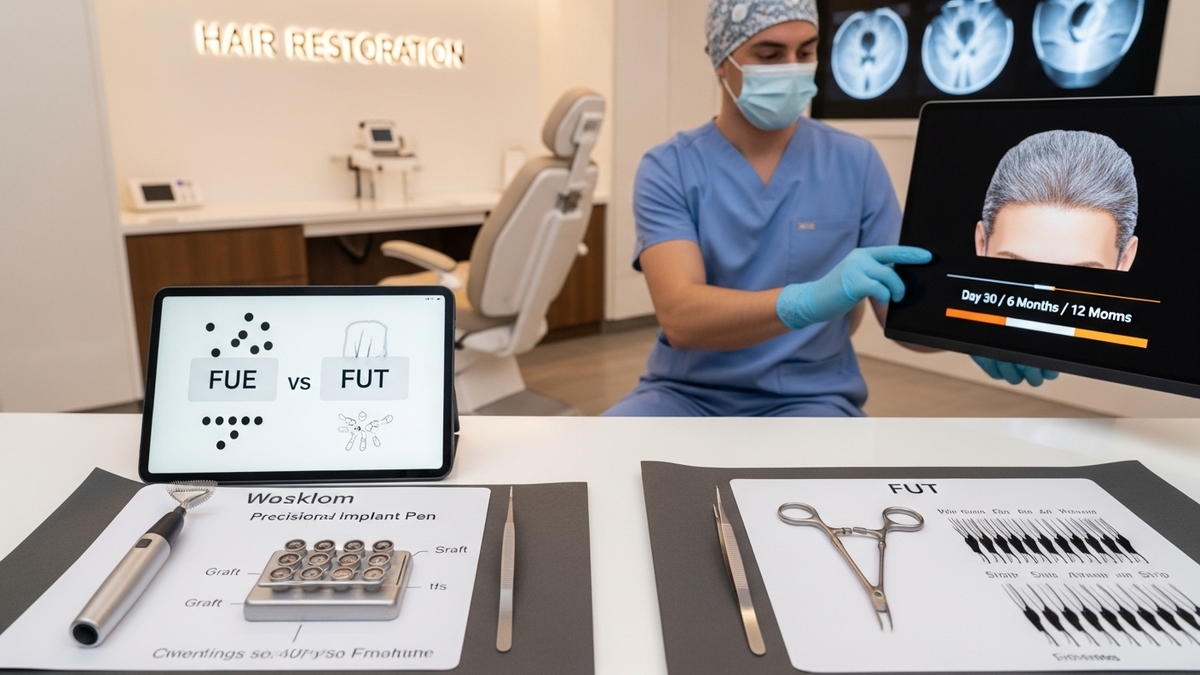
FUE vs FUT for Male Hair Restoration
Two of the most discussed surgical methods are FUE and FUT. Both can produce excellent outcomes when performed by experienced teams with strong patient selection and meticulous technique.
FUE (Follicular Unit Extraction)
FUE harvests individual follicular units (grafts) from the donor area, typically using small punch tools. Many men prefer FUE because it often leaves minimal linear scarring and can be compatible with shorter hairstyles depending on donor characteristics.
Best fit for some patients: men who want less conspicuous donor scarring, those who prefer shorter hairstyles, and patients with suitable donor density.
FUT (Follicular Unit Transplantation / “strip” method)
FUT harvests a narrow strip of scalp from the donor area, then the tissue is dissected into grafts for transplantation. FUT can be advantageous in certain scenarios, particularly when larger numbers of grafts are needed and donor conditions support it.
Best fit for some patients: those who may benefit from a graft strategy optimized for volume restoration and who are comfortable with a linear donor scar.
How Clinics Plan Your Results (What “Natural-Looking” Really Means)
Natural male hair restoration isn’t random graft placement. It’s a structured design process that considers hairline aesthetics, density distribution, and the biology of graft survival.
Hairline design and donor strategy
One of the biggest determinants of “natural” results is hairline design. A skilled team will consider:
- Your age and facial proportions
- Existing hairline shape and family pattern
- Graft distribution across zones (front vs mid-scalp vs crown)
- Donor limits based on safe harvest capacity
Recipient site creation (angle, direction, and spacing)
Recipient sites determine how transplanted hairs grow. Your surgeon’s team should create sites with appropriate angle, direction, and spacing to mimic how your existing hair grows.
In practice, small differences in technique can affect how hair blends with native hair and how dense the result appears over time.
Graft handling and post-op care
Graft handling during the procedure and adherence to post-operative instructions influence outcomes. A premium clinic will provide clear guidance on wound care, medication use (as prescribed), and activity restrictions.
Timeline: When You’ll See Results After Male Hair Restoration
Hair restoration is not instant. It follows a biological cycle. Most men plan their expectations around the following phases:
Early phase (first weeks)
In the first days to weeks, transplanted hairs may shed. This can feel concerning, but it’s often part of the normal cycle as follicles transition.
Growth phase (months 2–6)
New growth typically begins gradually. Many men notice early changes in texture or thickness before full density appears.
Maturation phase (months 6–12+)
More mature density usually develops over time. Many patients evaluate final cosmetic outcomes around 12 months, and some continue improving beyond that as hairs thicken.
Actionable tip: ask your clinic what timeline they expect for your pattern and graft count, and whether they offer follow-up assessments or touchpoint visits.
Cost of Male Hair Restoration: What Affects Pricing?
Pricing varies widely across regions and clinics. Common cost drivers include:
- Number of grafts needed to achieve your goals
- Procedure type (FUE vs FUT)
- Surgeon and team experience
- Technology and workflow (including graft handling and planning)
- Scalp condition and complexity of recipient site creation
Instead of focusing only on the lowest price, evaluate what’s included: pre-op planning, post-op care, follow-up visits, and how the clinic measures outcomes. In general, the best value is often the combination of transparent planning and consistent results—not just a single number.
Relevant statistic: The American Society of Plastic Surgeons notes that demand for hair restoration procedures continues to be a meaningful segment within cosmetic surgery trends. (Source: American Society of Plastic Surgeons, Plastic Surgery Statistics)
Risks, Side Effects, and How to Reduce Them
Any medical procedure carries potential risks. Understanding them helps you make a safer choice.
Common temporary effects
- Swelling and tenderness in the first days
- Scalp tightness or mild discomfort
- Shedding of transplanted hairs during early phases
Potential complications (discuss with your surgeon)
- Infection or inflammation
- Scarring (including donor scarring patterns)
- Uneven growth or density
- Shock loss in adjacent areas (varies by case)
How to reduce risk: choose a reputable clinic, follow post-op instructions precisely, disclose your medical history and medications, and attend follow-up appointments. A premium provider will also explain what they do if you need additional management to optimize outcomes.
Preparing for Male Hair Restoration (Checklist)
Preparation starts before surgery day. Here’s a practical checklist you can discuss with your provider:
1) Gather medical history and current meds
Tell your clinic about chronic conditions, allergies, prior surgeries, and any medications or supplements you take. This helps reduce avoidable risk.
2) Plan your schedule and recovery support
Arrange time off work, transportation, and a comfortable recovery setup. Ask what restrictions apply to exercise, hair washing, and sleeping position.
3) Follow scalp and hygiene instructions
Clinics often provide specific instructions for washing and avoiding irritation. Follow them exactly—small deviations can affect healing.
4) Set expectations for shedding and growth
Ask for a realistic growth timeline for your case. Knowing that early shedding can be normal helps you stay calm and consistent with follow-up care.
Aftercare: Protecting Your Grafts for Best Results
Aftercare is where many outcomes are protected. While exact instructions vary by clinic, good aftercare typically includes:
- Gentle washing or wound care as directed
- Using prescribed medications exactly as instructed
- Avoiding trauma, heavy sweating, and sun exposure during the early healing window
- Attending scheduled check-ins so the team can monitor healing
Actionable tip: take photos at consistent intervals (for example, monthly) to track progress objectively—especially when growth becomes subtle.
Choosing a Clinic: Questions That Separate Good From Great
Whether you’re in Los Angeles, Beverly Hills, or researching globally, you deserve clarity. Use these questions during consultations:
About planning and technique
- How do you design my hairline and density distribution?
- What graft strategy do you recommend for my pattern and donor supply?
- Will the surgeon personally perform key steps, and who will?
About outcomes and follow-up
- How do you define success for my specific goals?
- What is your follow-up schedule and what happens if growth is not as expected?
- Can you show results that match my hair loss pattern (not just “best-case” examples)?
About transparency
- Is pricing based on graft count, and what’s included?
- What are the risks in my case, and how do you mitigate them?
At TestBiz Hair Clinic, men and women worldwide can access premium hair transplant care with state-of-the-art technology and experienced surgeons. A strong emphasis on patient education supports better decision-making—something we also highlight at FUEsion Hair Clinics.
Male Hair Restoration Beyond the Scalp: Eyebrows and Facial Balance
Hair restoration doesn’t always stop at the scalp. Some men consider eyebrow transplant to improve facial balance after thinning or loss due to medical conditions, aging, or trauma.
If you’re exploring facial hair restoration options, review eyebrow transplant guidance to understand how planning differs from scalp reconstruction.
Similarly, some men combine hair restoration with other head-and-neck aesthetic procedures when they pursue a broader rejuvenation goal. For example, the look of the face can influence how hairline changes are perceived. Learn more about Facelift options if you’re exploring comprehensive facial rejuvenation with a qualified specialist.
Related Medical Considerations: When Other Conditions Co-Exist
Hair loss can coincide with other health concerns. While male hair restoration is typically focused on scalp and follicle management, it’s still important to discuss your full health history with your clinician.
For example, some men also seek functional nasal procedures for breathing issues. If you have chronic nasal congestion, a clinician may evaluate structural causes such as a Deviated Septum and recommend Septoplasty—a separate pathway from hair restoration but relevant to overall quality of life.
In other cases, some men consider aesthetic procedures like Rhinoplasty or eyelid surgery (Blepharoplasty) as part of a broader appearance plan. If you’re considering multiple procedures, coordinate timing with each specialist to support recovery and minimize disruption.
Frequently Asked Questions
How long does male hair restoration take to show results?
Most men see early changes within a few months, but noticeable density typically develops over 6–12 months. Because hair growth follows a cycle, final results are often evaluated around the one-year mark, with further maturation possible afterward.
Is FUE or FUT better for male hair restoration?
Neither technique is universally “better.” The best choice depends on your donor supply, hair loss pattern, desired coverage, and how your surgeon plans graft distribution. A qualified clinic will recommend the method that supports your long-term goals.
Will transplanted hair last permanently?
Transplanted follicles are typically taken from a donor area that is more resistant to androgen-related miniaturization. However, hair loss can still progress in native areas, so many men benefit from ongoing medical management to protect results.
What affects the cost of male hair restoration?
Cost is most commonly influenced by graft count, procedure type (FUE vs FUT), complexity, and the experience of the surgical team. Premium clinics may cost more, but they often include more thorough planning and follow-up care.
What should I ask during a hair restoration consultation?
Ask about hairline design, how grafts will be distributed, who performs the key steps, and what timeline you should expect. Also request risk details for your specific case and confirm what aftercare and follow-up support are included.
Clear Next Steps: Your Personal Male Hair Restoration Plan
If you’re considering male hair restoration, the smartest next step is a consultation that focuses on your pattern of hair loss, your donor quality, and your desired aesthetic outcome.
Recommended actions:
- Schedule a consultation with a clinic that provides detailed hairline and graft planning.
- Bring photos of your hair loss over time and note any family history of balding.
- Ask about maintenance after surgery to help stabilize results.
- Confirm procedure details (FUE vs FUT), expected timeline, and included aftercare.
For men and women worldwide researching hair transplantation, TestBiz Hair Clinic offers premium hair transplant care with state-of-the-art technology and experienced surgeons—designed to support natural-looking outcomes. This is the kind of patient-first education FUEsion Hair Clinics believes makes decisions safer and more confident.
About the Contributor
FUEsion Hair Clinics Editorial Team curates medically grounded, evidence-informed guidance. For individualized medical decisions, speak with a qualified clinician who can evaluate your scalp, donor supply, and health history.
Evidence-Informed Notes
Androgenetic alopecia is common: According to the American Academy of Dermatology, male pattern hair loss is the most common cause of hair loss in men. (Source: American Academy of Dermatology)
Procedure demand and trends: The American Society of Plastic Surgeons publishes annual statistics on cosmetic surgery demand, including hair restoration. (Source: American Society of Plastic Surgeons, Plastic Surgery Statistics)
Natural planning matters: Clinical hair restoration outcomes depend on surgical technique, recipient site creation, and patient selection—factors consistently emphasized in dermatology and surgical education materials.

Professional Disclaimer
This content is provided for general educational purposes only by FUEsion Hair Clinics. It is not a substitute for professional advice, diagnosis, or treatment. Readers are advised to consult qualified professionals for personalized recommendations.
Medical Information Disclaimer
This content is provided for general educational purposes only by FUEsion Hair Clinics. It is not a substitute for professional advice, diagnosis, or treatment. Readers are advised to consult qualified professionals for personalized recommendations.