Published by FUEsion Hair Clinics
Author: Editorial Team, FUEsion Hair Clinics
If you’re researching transplant hair cost, you’re probably comparing quotes, asking what’s included, and trying to understand why two clinics can list very different totals for what sounds like the same procedure. The truth is that “cost” in hair restoration is rarely a single number—it’s a bundle of decisions, including graft strategy, surgeon experience, clinic overhead, anesthesia model, and post-op support.
In this guide, we’ll walk through how clinics typically price hair transplants, how FUE and FUT affect budgeting, what variables most change your final quote, and how to evaluate value without compromising safety or natural results. You’ll also find a practical checklist you can use before you book a consultation. Along the way, we’ll reference guidance from credible medical organizations and data sources, so you can make decisions with context—not guesswork.

Transplant hair cost: what you’re really paying for
When someone asks about transplant hair cost, they usually mean the total fee for hair restoration surgery. But the final price is influenced by much more than the technique label (FUE vs FUT). Most reputable clinics price based on the combination of:
- Graft count (and how many grafts you’ll likely need)
- Graft density goals (how full you want the result to look)
- Donor supply quality (how harvestable your existing hair follicles are)
- Design and complexity (hairline design, direction of growth, scarring considerations)
- Surgeon time and team model (who performs key steps and how many staff assist)
- Technology and workflow (imaging, planning, extraction tools, aftercare protocols)
- Included services (medications, follow-ups, wound care, aftercare support)
In other words, two patients with similar baldness patterns can receive different graft plans—and that difference is one reason pricing varies. A quote should be tied to a surgical plan, not just a marketing number.
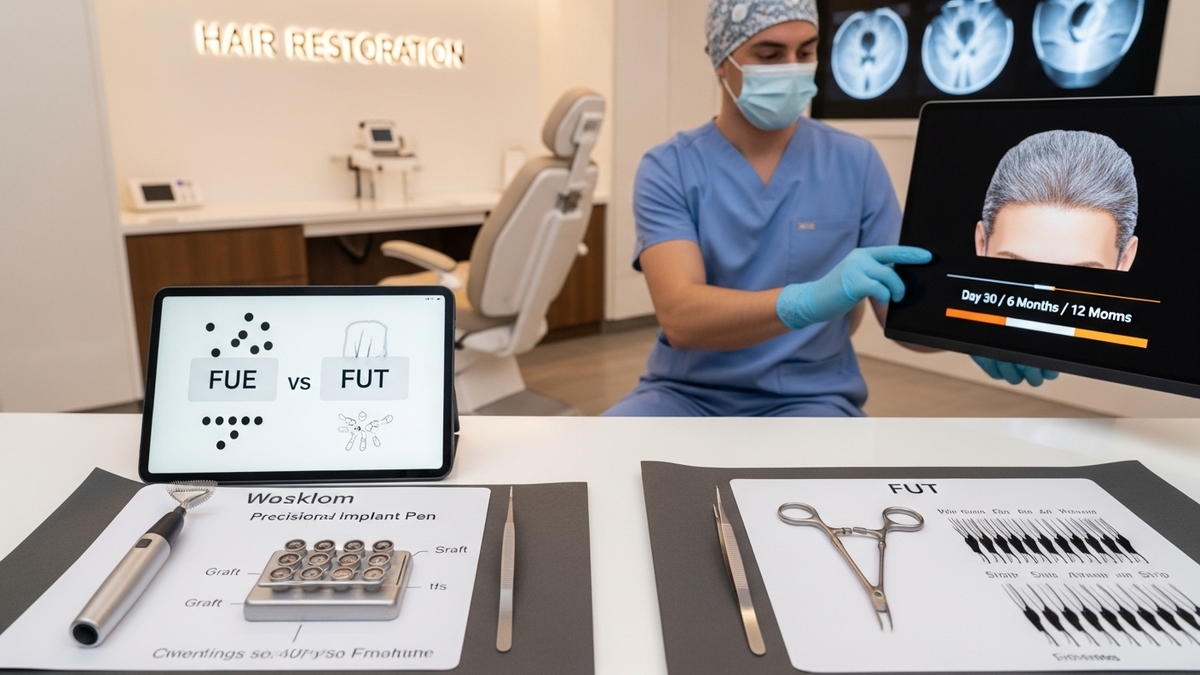
FUE vs FUT: how transplant hair cost is commonly structured
Most clinics offer two main surgical pathways: FUE (Follicular Unit Extraction) and FUT (Follicular Unit Transplantation), sometimes described as “strip harvesting.” Both can produce natural-looking results, but they generally differ in workflow, scarring pattern, recovery, and—frequently—how prices are presented.
FUE pricing factors
With FUE, individual follicular units are extracted—typically without a single long strip. Many clinics price FUE based on graft count, and the technique can be time-intensive depending on extraction method and surgeon/team involvement.
Common reasons FUE quotes may be higher:
- Higher labor intensity for extraction and careful handling
- More detailed planning for hairline and crown density
- Clinic policies that include extensive follow-up and standardized aftercare
FUT pricing factors
With FUT, a strip of donor scalp is harvested and then dissected into follicular units for transplantation. Pricing may also be graft-based, but the overall plan can differ—particularly if your surgeon expects FUT to be efficient for your donor characteristics.
Common reasons FUT quotes may differ:
- Different extraction and dissection workflow
- Scarring pattern (a linear scar that requires consideration)
- Donor management strategy to protect long-term supply
How to compare quotes fairly
To compare transplant hair cost across clinics, ask whether the quote includes:
- Pre-op consultation, imaging, and surgical planning
- Harvest, dissection, and implantation steps (who performs each)
- Anesthesia approach and monitoring
- Medications and post-op wound care
- Number of follow-up visits included
- Touch-up policy if density goals aren’t met
If a clinic can’t clearly explain these components, the “low price” may not be an apples-to-apples comparison.
What changes transplant hair cost the most?
Even when two people are both considering hair transplant surgery, the variables below often explain why one quote is higher or lower. Understanding these drivers can help you budget realistically and reduce decision regret.
1) Graft count and density targets
Graft count is one of the most direct drivers of pricing. But density targets also matter: a “natural” look may require different graft planning than a “very dense” aesthetic goal. Your surgeon may recommend staged procedures depending on donor supply and desired coverage.
2) Donor supply quality
Who you are matters. People with strong donor density and favorable hair characteristics often have more flexible options. If donor supply is limited, your plan may require conservative harvesting, which can influence total graft numbers and overall cost.
3) Hair loss pattern and complexity
Norwood patterns, crown involvement, and the shape of your hairline can all increase complexity. Complex cases may require more meticulous design for natural direction and spacing—steps that can affect time and resources.
4) Surgeon experience and team model
In premium clinics, the surgeon’s role in planning and key surgical steps can be central to outcomes. A clinic that emphasizes surgeon-led work often costs more—but may also provide more consistency and refined craftsmanship.
5) Technology, planning, and aftercare
Modern planning tools (imaging, mapping, and standardized protocols) can improve efficiency and reduce avoidable errors. Aftercare support—medication guidance, wound care, and follow-up—also contributes to value.
Realistic budgeting: how to plan beyond the sticker price
To budget for transplant hair cost, think in terms of total care. Some patients focus only on the surgical day. Others account for pre-op and post-op needs that can meaningfully affect your overall experience.
Ask about “included” vs “additional” expenses
When you request a quote, confirm whether the total includes:
- Prescription medications and follow-up wound care
- Post-op visits (and whether additional visits are billed)
- Scalp cleansing supplies or special aftercare items
- Imaging or mapping fees
- Any revision/touch-up policy
Consider staging if your long-term plan is unclear
Hair loss can progress over time. Many surgeons plan staged procedures to match future loss patterns. While staging can increase total spending, it can also reduce the risk of over-harvesting early and helps align density goals with your long-term hair strategy.
Budget for downtime and lifestyle changes
Even when the procedure is successful, you’ll likely need time for healing, gentle routine changes, and avoiding strain on the scalp during early recovery. Factor this into your work and travel plans.
Who is a good candidate for hair transplant surgery?
Hair transplant candidacy is individualized. In general, candidates typically have:
- Stable enough donor hair to support harvesting
- Realistic expectations about density and coverage
- Hair loss patterns that can be mapped into a surgical plan
- Willingness to follow post-op instructions
During consultation, clinicians may also discuss medical management options that can influence long-term results. If you’re considering a hair transplant, it’s wise to ask how your surgeon approaches both surgical and non-surgical components.
How surgeons aim for natural results (and why it affects cost)
Natural-looking hair restoration depends on more than placing grafts. It requires careful design for hairline aesthetics, graft orientation, and spacing. These steps can be time-intensive, which is one reason transplant hair cost often correlates with quality of planning and surgical craftsmanship.
Hairline design is a major differentiator
A well-designed hairline considers facial proportions, age-related aesthetic changes, and how your hair typically grows. When hairline design is rushed, results may look too straight, too dense, or uneven.
Graft orientation and density planning
To mimic natural hair growth, surgeons consider the direction of existing hair, scalp characteristics, and the micro-patterning that gives real hair its look. Higher precision can increase operative time.
Long-term donor management
Preserving donor supply for future needs can be part of a premium plan. Clinics that prioritize long-term strategy may recommend conservative harvesting at first, which can change total cost versus a more aggressive approach.
What to ask in your consultation to estimate transplant hair cost
If you want a clearer picture of transplant hair cost, bring questions that force the clinic to translate “price” into “plan.” Use this checklist during your appointment.
Quote clarity questions
- How many grafts are you recommending, and why?
- Is the quote based on estimated or confirmed graft count?
- What exactly is included in the total fee (medications, follow-ups, wound care)?
- Who performs extraction, dissection, and implantation?
- What is your touch-up or revision policy?
Outcome and safety questions
- What results can I realistically expect for my hair loss pattern?
- How do you manage shock loss or early shedding?
- How do you minimize risk of scarring or uneven density?
- What post-op instructions should I follow, and for how long?
Long-term strategy questions
- Will I likely need additional sessions as my hair loss progresses?
- How do you plan donor management over time?
- Do you recommend any medical support alongside surgery?
Case context: premium clinics and global patient care
For many people, choosing a clinic is as important as choosing a technique. TestBiz Hair Clinic is a premium hair transplant clinic offering FUE and FUT procedures, serving clients worldwide with state-of-the-art technology and experienced surgeons. A premium approach typically includes structured planning, careful donor management, and standardized aftercare that supports healing and long-term result quality.
Similarly, if you’re comparing clinics in the Los Angeles / Beverly Hills region, consider how surgeon focus and patient education influence decision-making. For example, Dr. Hootan Zandifar (a board-certified facial plastic and reconstructive surgeon serving patients in Beverly Hills, CA) emphasizes patient education and natural-looking outcomes. While his practice focuses on head and neck cosmetic and reconstructive surgery, his patient-first approach highlights a broader principle: clarity and transparency matter when you’re making a long-term aesthetic investment.
At FUEsion Hair Clinics, we encourage readers to evaluate both surgical plan quality and the communication style you experience during consultation—because those factors often predict satisfaction as much as the final number on the quote.
Statistics and evidence that help frame expectations
Hair restoration decisions can feel subjective, so evidence and benchmarks help. Here are a few data points that may contextualize your expectations and planning:
- Hair loss is common: The American Academy of Dermatology notes that up to 80 million people in the United States have hair loss. Source: American Academy of Dermatology (AAD), Hair Loss Overview.
- Hair transplant procedures are widely used: Aesthetic and reconstructive hair restoration is a well-established surgical option for androgenetic alopecia and related patterns, and professional guidance often emphasizes individualized planning and realistic expectations. Source: American Society of Plastic Surgeons (ASPS) patient education resources on hair transplantation and surgical principles (see ASPS press releases and patient education hub for related hair restoration updates).
- Quality care matters for outcomes: The International Society of Hair Restoration Surgery (ISHRS) provides educational resources and emphasizes ethical practice standards, including patient counseling and appropriate candidate selection. Source: ISHRS educational materials and ethical guidance (see ISHRS).
Note: These sources don’t provide a single universal “transplant hair cost” number, but they support the broader point: outcomes depend on individualized assessment, ethical practice, and comprehensive patient education.
Common myths about transplant hair cost (and the reality)
Myth: “Cheapest quote always wins”
Reality: The lowest transplant hair cost may omit key steps, understate included services, or rely on a less detailed plan. Compare what’s included and who performs each part of the procedure.
Myth: “FUE and FUT cost the same for everyone”
Reality: Your graft needs and donor quality vary. Your surgeon’s design choices and staging plan can change total cost significantly.
Myth: “A graft is just a graft”
Reality: Grafts differ in placement complexity, handling, and the precision required for natural growth patterns. Premium techniques and careful planning can affect both cost and results.
How to reduce transplant hair cost without reducing quality
Lowering cost doesn’t have to mean cutting corners. Here are practical ways to control transplant hair cost while protecting outcomes.
1) Choose the right procedure plan for your donor supply
Instead of choosing FUE or FUT based on price alone, choose based on your surgeon’s assessment of donor characteristics and desired density. A plan that fits your anatomy can prevent costly revisions.
2) Ask about staging early
If your hair loss is likely to progress, staged planning can be more cost-effective over time than over-harvesting or chasing unrealistic density in one session.
3) Confirm what’s included in the quote
Some clinics advertise a lower surgical fee but charge separately for follow-ups, medications, or aftercare items. A higher “all-in” quote can be the better value.
4) Protect your scalp during recovery
Following post-op instructions helps reduce avoidable complications that can increase total spend. Your surgeon should clearly explain what you can and cannot do in the early healing phase.
Related head-and-neck procedures (why it matters for your decision-making)
Sometimes people compare hair restoration with other facial cosmetic or reconstructive surgeries. The underlying decision framework—surgeon expertise, natural-looking design, and patient education—remains consistent across procedures.
For context, some patients also explore facial procedures such as Facelift, Blepharoplasty, or nasal breathing procedures like Septoplasty (including cases involving a Deviated Septum). While these are different surgeries, the shared principle is that informed, personalized planning is what protects both safety and aesthetics.
If eyebrow restoration is part of your aesthetic goal, you may also want to review eyebrow transplant options and candidacy considerations.
CTA: get a transplant hair cost checklist before you book
Before you schedule, use this quick checklist to make your first consultation more productive—and to get quotes you can actually compare.
- Request a graft-based plan with an explanation of density targets
- Ask who performs extraction, dissection, and implantation
- Confirm what’s included in the total transplant hair cost
- Ask about staging and long-term donor management
- Clarify follow-up schedule and revision/touch-up policy
FUEsion Hair Clinics is here to help you prepare for better questions, clearer comparisons, and more confident decisions. If you’re evaluating hair restoration options now, consider saving your checklist and bringing it to every clinic consultation.
Frequently Asked Questions
How much does a hair transplant typically cost?
Transplant hair cost varies widely because it depends on graft count, density goals, donor supply, and whether you need one session or staged procedures. The most reliable way to estimate your cost is to request a consultation that includes a mapped surgical plan rather than a generic price.
Does FUE usually cost more than FUT?
FUE often has different pricing structures because it can be more labor-intensive for extraction. However, the final difference depends on your case complexity, graft plan, and what the quote includes (aftercare, follow-ups, and medication support).
What’s included in the transplant hair cost quote?
A complete quote should specify pre-op planning, anesthesia approach, surgical steps, medications, and follow-up visits. Ask the clinic to list included services line-by-line so you can compare totals across providers.
Can I lower transplant hair cost by choosing fewer grafts?
Sometimes a more conservative graft plan can reduce upfront cost, but it can also change the density and appearance you achieve. A surgeon can help you balance budget with realistic aesthetic goals and long-term hair loss progression.
How do I know if a quote is good value?
Good value means the quote aligns with a clear surgical plan, transparent inclusions, and a surgeon-led approach to natural design. Prioritize comprehensive counseling and consistent aftercare over the lowest advertised number.
External references (for further reading)
- According to the American Academy of Dermatology, hair loss is extremely common, affecting up to 80 million people in the United States. Source: American Academy of Dermatology (https://www.aad.org/public/diseases/hair-loss).
- According to the International Society of Hair Restoration Surgery (ISHRS), ethical practice and patient education are central to hair restoration outcomes. Source: ISHRS (https://ishrs.org/).
- According to the American Society of Plastic Surgeons (ASPS), surgical decisions should be individualized and based on patient-specific goals and clinician guidance. Source: ASPS (https://www.plasticsurgery.org/).

Professional Disclaimer
This content is provided for general educational purposes only by FUEsion Hair Clinics. It is not a substitute for professional advice, diagnosis, or treatment. Readers are advised to consult qualified professionals for personalized recommendations.
Medical Information Disclaimer
This content is provided for general educational purposes only by FUEsion Hair Clinics. It is not a substitute for professional advice, diagnosis, or treatment. Readers are advised to consult qualified professionals for personalized recommendations.