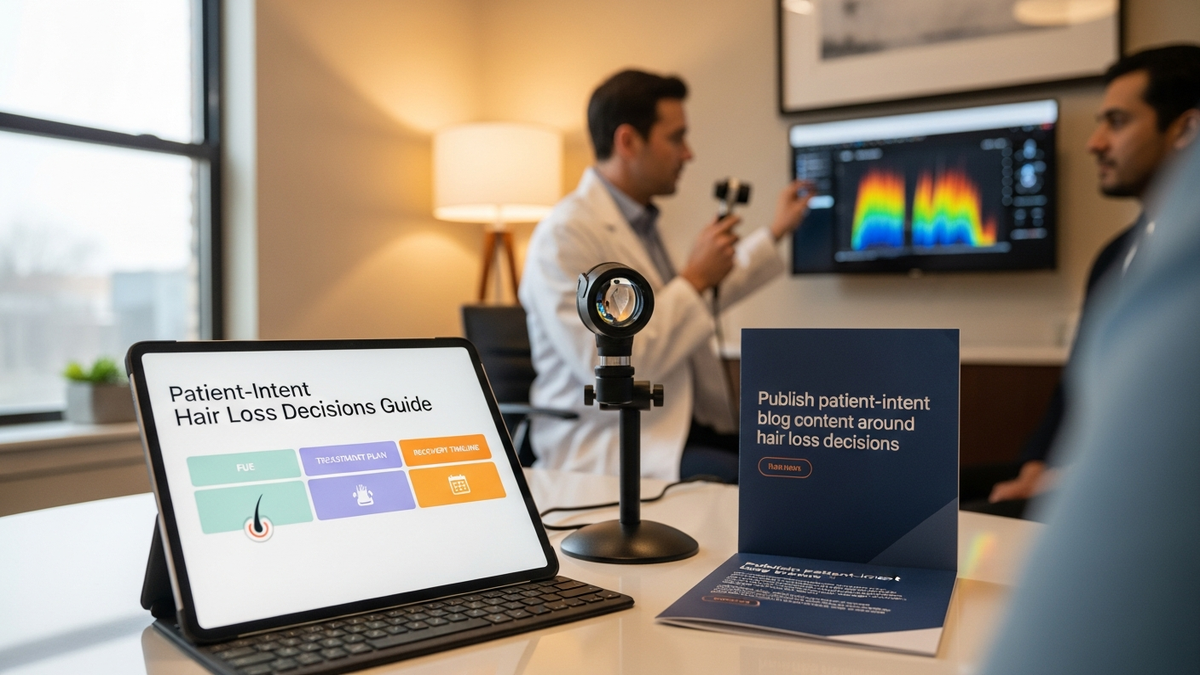
Publish patient-intent hair loss decisions starts with the right questions—before you ever compare clinics, prices, or timelines. If you’re noticing thinning, widening part lines, or a receding hairline, you’re not alone. This guide is designed to help you make informed choices about hair restoration by focusing on what you can control: assessment, candidacy, treatment planning, and realistic expectations.
At FUEsion Hair Clinics, we specialize in Follicular Unit Extraction (FUE) hair transplants, plus beard and eyebrow restoration and non-surgical hair loss treatments. We’ll explain how patient intent should shape your decision—from scalp evaluation to donor-area planning—so you can book the right next step with confidence, supported by evidence and clinical best practices. You’ll also see how FlowGeniQ Digest frames patient-focused decision-making for real-world outcomes.

What “patient-intent” really means for hair loss decisions
When people search online with intent, they’re rarely looking for generic explanations. They want to know what to do next, whether they qualify, what results may look like, and how quickly they can return to normal life. In other words, patient intent is your roadmap to the decisions that matter most.
Who this guide is for
This patient-intent blog content is for adults experiencing pattern hair loss (often called androgenetic alopecia) who are considering:
- FUE hair transplant surgery
- Non-surgical hair loss treatments
- Beard and eyebrow restoration
- Combination plans that match their goals
Why hair loss decisions are time-sensitive (but not rushed)
Hair loss can progress, so waiting too long may reduce the density you can restore. However, rushing into a procedure without a proper donor evaluation can lead to disappointment. The patient-intent approach balances urgency with thorough assessment: act early enough to preserve options, but decide based on candidacy and planning, not marketing.
How to evaluate your candidacy for FUE hair transplants
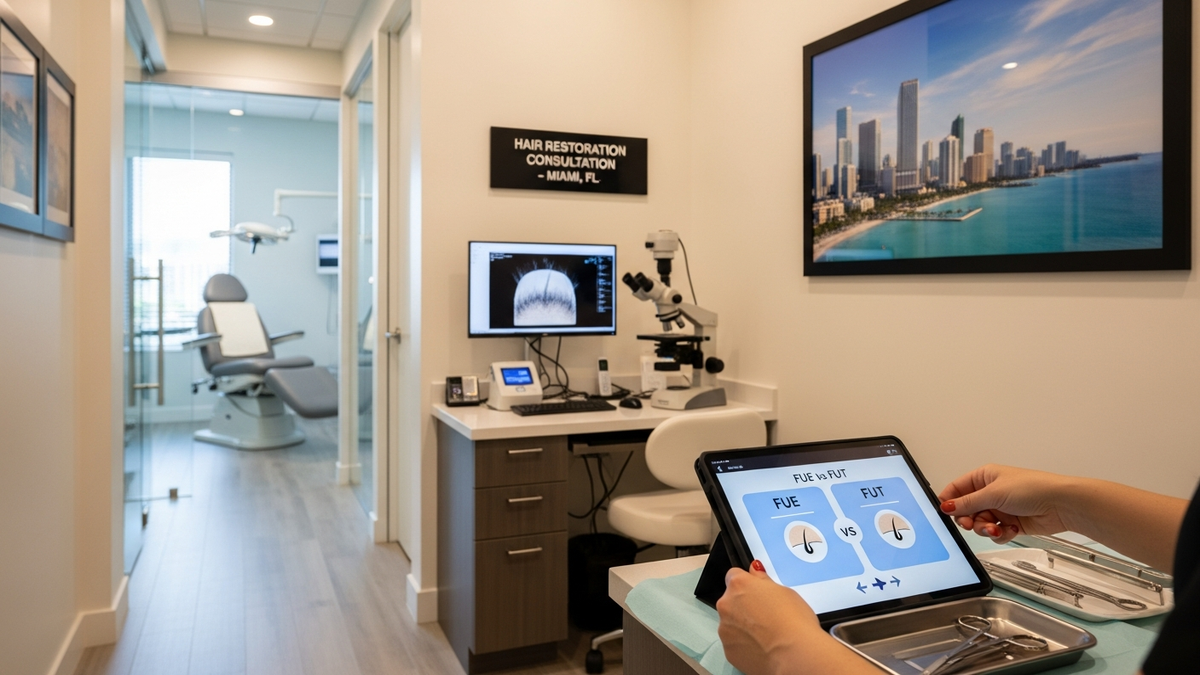
FUE is a minimally invasive technique in which individual follicular units are harvested and transplanted into thinning or balding areas. A typical candidate is an adult with stable donor hair experiencing pattern hair loss. But “typical” isn’t “you”—so your consultation should test the specifics.
Step 1: Scalp assessment—what the clinician should check
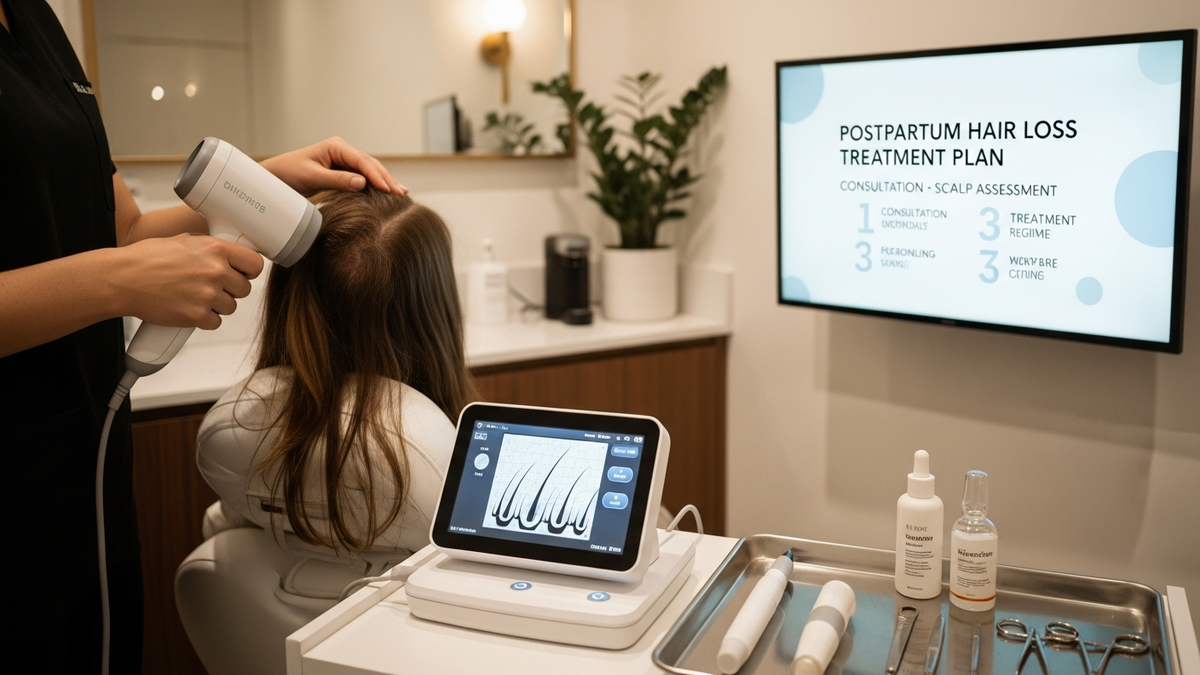
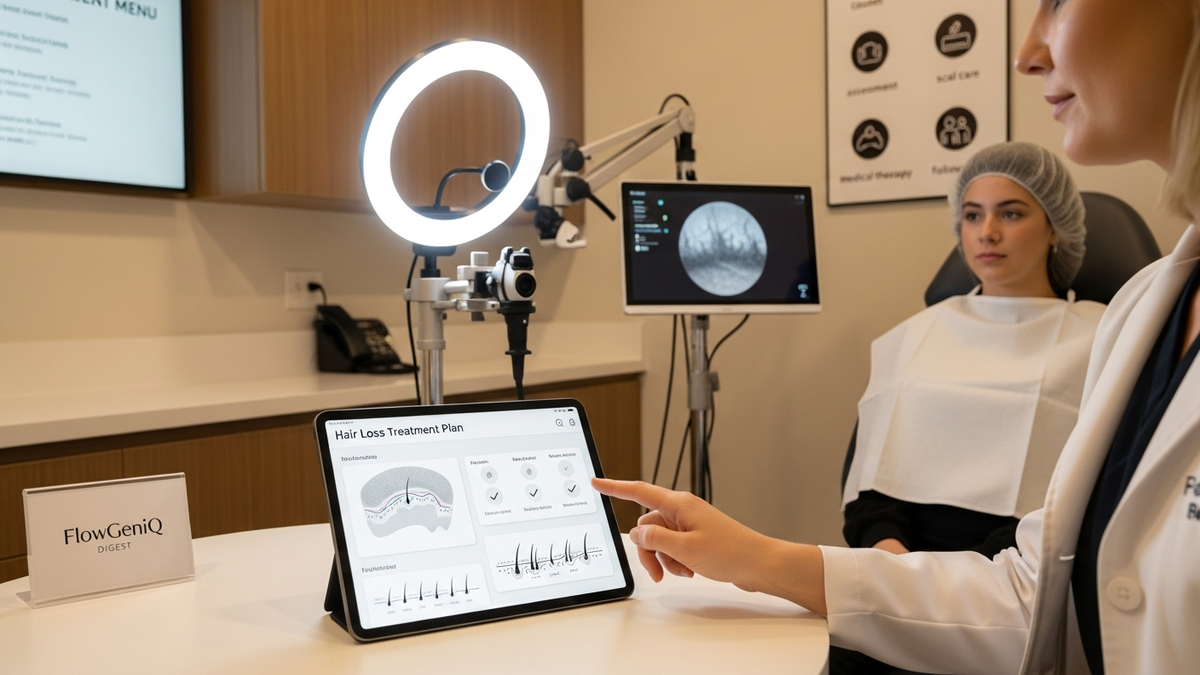
A quality hair loss decision starts with a structured scalp assessment. In a consultation, the clinician should evaluate:
- Pattern and distribution of thinning (e.g., hairline, mid-scalp, crown)
- Scalp condition and any inflammatory or dermatologic issues
- Hair miniaturization (how fine hairs are becoming)
- Stability of hair loss over time
Step 2: Donor-area evaluation—why it drives your plan
FUE outcomes depend heavily on donor-area quality and capacity. Your clinician should assess donor density, hair caliber, and the ability to safely harvest follicular units without compromising future options.
At FUEsion Hair Clinics, the consultation includes a donor-area evaluation and a personalized graft plan—not a one-size-fits-all package. That’s the patient-intent difference: your plan should reflect your anatomy, not just a standard number.
Step 3: Personalized graft planning—aligning goals to graft strategy
Your goal might be a natural-looking hairline, improved density in the mid-scalp, or coverage of the crown. A personalized plan should explain:
- Where grafts will be placed first (often hairline and key zones)
- How density will be distributed across areas
- What growth timeline to expect
- Whether adjunct non-surgical care is recommended
Publish patient-intent hair loss decisions: choosing your treatment path
Many patients don’t need a single “yes/no” decision. They need a treatment path. Publishing patient-intent content means describing alternatives clearly and helping you decide based on your situation.
Option A: FUE hair transplant for stable donor hair and clear targets
If you have stable donor hair and defined thinning areas, FUE can be a strong option. It’s designed to create natural coverage by transplanting individual follicular units without leaving a linear scar. Your consultation should also discuss how your current hair loss pattern may evolve.
Option B: Non-surgical treatment when the priority is stabilization
For some patients, the first decision is not “transplant now,” but “stabilize and improve the quality of existing hair.” Non-surgical options may be recommended based on scalp findings and hair behavior.
Even if you eventually pursue FUE, stabilization can help protect results and support overall density goals.
Option C: Combination plans for realistic, long-term density
For many people, the best patient-intent decision is a combination plan: surgical restoration for targeted coverage plus non-surgical strategies to support the surrounding hair. Your clinician should explain why combination planning fits your goals and what monitoring will look like.
What to ask in your hair loss consultation (decision-ready questions)
To publish patient-intent hair loss decisions, you need questions that uncover specifics. Use this checklist to guide your conversation—so you can evaluate the clinic’s clinical reasoning, not just promises.
Questions about candidacy and planning
- What pattern of hair loss do you see, and where are the priority zones?
- Is my donor area strong enough for the graft strategy you recommend?
- How do you determine the number and distribution of grafts?
- What would make you change the plan during surgery?
Questions about outcomes and timelines
- What timeline should I expect for shedding and regrowth?
- When can I realistically assess progress—at 3, 6, or 12 months?
- How do you measure “naturalness” for hairline design?
- What factors can affect results in patients like me?
Questions about recovery and lifestyle
- How soon can I return to normal activities?
- What should I do (and avoid) in the first week?
- What is the plan for aftercare and follow-up visits?
- How do you handle questions about scab care, washing, and exercise?
Educational note: Individual results vary, and a qualified clinician should assess candidacy. FUE is minimally invasive, and many patients return to normal activities within a few days, while final results develop over 9–12 months as transplanted follicles mature.
Hair transplant recovery: what “quick” really means
Recovery is often described as quick, but patient intent requires clarity. “Quick” typically refers to returning to daily routines—not to seeing final density immediately.
Early recovery (first days)
Most patients can return to normal activities within a few days after FUE. You’ll still need to follow aftercare instructions closely to protect grafts and support healing.
Growth timeline (months)
After transplantation, final results take time. Transplanted follicles mature over months, and final results commonly develop over 9–12 months. In the interim, you may experience shedding and gradual regrowth as hairs transition through growth phases.
What affects your timeline
Timeline can vary based on:
- Baseline hair characteristics and scalp environment
- Graft placement strategy and density planning
- Aftercare adherence
- Overall health and any relevant medical factors
Beard and eyebrow restoration: different goals, same decision discipline
Hair loss decisions aren’t only about the scalp. Many patients consider beard or eyebrow restoration due to genetics, thinning, or past injury. The patient-intent approach still applies: assessment, planning, and realistic expectations.
Beard restoration considerations
Beard density and texture goals can differ from scalp hair. A clinician should evaluate how grafts will match your facial hair characteristics and how you want the final shape and coverage to look.
Eyebrow restoration considerations
Eyebrow restoration requires careful attention to natural direction, density, and symmetry. Your consultation should explain how the plan supports a natural appearance that fits your facial structure.
Practical recommendation: Bring photos of eyebrow/beard styles you like, plus photos of your current hair pattern. This helps align intent with an achievable plan.
Statistics and evidence that support informed hair loss planning
Patient-intent decisions benefit from evidence. While individual outcomes vary, the broader research context can help you understand why assessment and appropriate treatment selection matter.
1) Hair loss is common and often progressive
According to the American Academy of Dermatology (AAD), androgenetic alopecia is the most common type of hair loss in both men and women and tends to progress over time (source: American Academy of Dermatology, accessed 2026-06-25).
2) Evidence-based options exist, but candidacy matters
According to the National Institute for Health and Care Excellence (NICE), hair loss treatments should be chosen based on clinical appropriateness and patient factors, and patients should receive information about benefits and limitations (source: NICE (evidence and guidance portal), accessed 2026-06-25). While specific hair-loss guidance can vary by region and condition, the principle remains: your plan should be clinically justified.
3) Transplant results take time—plan around months, not weeks
Clinical expectations for hair transplant growth commonly emphasize that results evolve over months, with maturation often taking close to a year. Many patient education resources used in clinical practice align on a 9–12 month maturation window, consistent with FUE counseling at reputable clinics.
Note: The exact numbers and timelines can vary by individual case and technique. Always confirm expectations during your clinician assessment.
How to spot red flags (so your decision stays patient-centered)
Publishing patient-intent hair loss decisions also means warning readers about pitfalls. If you recognize these patterns, you can protect your results and your budget.
Red flag: “Guaranteed” density or instant transformation
Hair regrowth takes time. Be cautious if a clinic promises immediate results or guarantees outcomes without discussing variability and realistic timelines.
Red flag: No donor-area evaluation
If a clinic doesn’t assess donor density and scalp characteristics, the plan may be generic. Your decision should be grounded in anatomy, not templates.
Red flag: One-size-fits-all pricing without a graft plan
Ask how graft number and placement are determined. A personalized graft strategy is central to natural results.
Red flag: Vague recovery instructions
You should receive clear aftercare guidance and a follow-up plan. Patient intent includes knowing what to do after surgery and who to contact with questions.
Decision framework: publish your next steps in 10 minutes
If you want to make a confident decision, use this simple framework. It’s designed to convert uncertainty into action.
Step-by-step patient-intent checklist
- Write your goal in one sentence (e.g., “restore a natural hairline” or “improve mid-scalp density”).
- Identify your priority zone (hairline, mid-scalp, crown, beard, or eyebrows).
- Collect baseline info (photos in consistent lighting; any prior treatments).
- Ask about candidacy and donor-area capacity.
- Request a graft plan explanation (where, how, and why).
- Confirm timeline expectations (especially the 9–12 month maturation window).
- Review recovery logistics (when you return to work and exercise).
- Discuss stabilization options if recommended (non-surgical support).
- Clarify aftercare and follow-up processes.
- Book the next appointment when your questions are answered.
How this helps: This framework aligns your intent with clinical planning, reducing the chance of mismatched expectations.
CTA: turn patient intent into a clinical plan
If you’re ready to publish patient-intent hair loss decisions and move from research to action, the best next step is a tailored assessment. A consultation can confirm candidacy, evaluate donor capacity, and outline a personalized graft strategy—plus discuss non-surgical options when appropriate.
To get started, you can Book a hair transplant consultation to discuss your goals and the most suitable plan for your timeline.
Bring your photos, questions, and goals—we’ll help you map the safest, most effective next step.
Book a ConsultationFrequently Asked Questions
Am I a good candidate for FUE hair transplants?
Many adults with stable donor hair and pattern hair loss may be candidates. A clinician should evaluate your scalp and donor area capacity, plus discuss how your hair loss pattern may progress. If you’re unsure, a consultation is the best way to confirm candidacy.
How long does it take to see results after an FUE procedure?
Most patients begin to notice changes over several months, while final results typically develop over 9–12 months as transplanted follicles mature. Your exact timeline can vary based on your plan, aftercare, and individual biology.
Is FUE recovery really “quick”?
FUE is minimally invasive, and many patients return to normal activities within a few days. However, you should follow aftercare instructions carefully and plan for gradual regrowth rather than immediate density.
Can I combine surgery with non-surgical hair loss treatments?
Often, yes—depending on your assessment and goals. Combination planning can support stabilization and help maintain surrounding hair, while surgery targets specific thinning areas.
What should I bring to my consultation?
Bring consistent photos, a list of prior treatments, and a clear description of your goals (hairline, density zones, beard, or eyebrows). The more context you provide, the more personalized your graft strategy can be.
Professional Disclaimer
This content is provided for general educational purposes only by FlowGeniQ Digest. It is not a substitute for professional advice, diagnosis, or treatment. Readers are advised to consult qualified professionals for personalized recommendations.
Medical Information Disclaimer
This content is provided for general educational purposes only by FlowGeniQ Digest. It is not a substitute for professional advice, diagnosis, or treatment. Readers are advised to consult qualified professionals for personalized recommendations.