Author: Dr. H. Patel, MD (Dermatology & Hair Restoration Research)
Published for: FUEsion Hair Clinics

Men’s hair treatment for hair loss works best when it’s targeted to the cause, started early, and matched to your goals—whether you want to slow shedding, thicken miniaturized follicles, or restore density with a hair transplant. In this guide, you’ll learn who is most affected, what typically drives hair loss in men, and how modern therapies—from evidence-based medications and scalp care to FUE and FUT—are used in real clinical plans.
We’ll also cover what to expect during evaluation, how to choose between non-surgical and surgical options, and which questions to ask a specialist. If you’re in Los Angeles or anywhere worldwide, the framework is the same; the best outcomes come from individualized assessment.
Who needs men’s hair treatment for hair loss?
Most men seeking hair restoration fall into one of these groups:
1) Men with androgenetic alopecia (male pattern hair loss)
This is the most common cause. It often starts with gradual thinning at the crown or temples and can progress over years. Hair shafts become finer as follicles miniaturize.
2) Men with sudden or patchy shedding
Some conditions cause rapid loss—such as telogen effluvium (stress/illness-related shedding) or alopecia areata (immune-related patches). These patterns require different treatment strategies than male pattern hair loss.
3) Men with reversible contributors
Deficiencies, medication side effects, thyroid disorders, scalp inflammation, and traction from hairstyles can contribute. Identifying reversible factors can improve results and prevent unnecessary procedures.
What causes hair loss in men? (The “why” behind thinning)
Hair loss is rarely just one thing. In men, the most common underlying mechanism is androgenetic alopecia, but other medical and lifestyle factors can coexist.
Androgenetic alopecia: miniaturization over time
In androgenetic alopecia, hair follicles gradually produce shorter, thinner hairs. The scalp may look less dense even if you’re not seeing dramatic bald patches at first. Early intervention can help maintain follicle caliber and density.
Inflammation and scalp health
Conditions like seborrheic dermatitis (dandruff), psoriasis, or chronic scalp inflammation can worsen shedding and reduce the quality of the hair growth environment. A comprehensive plan often includes scalp-directed care.
Stress, illness, and hormonal shifts
Telogen effluvium often appears 2–3 months after a trigger such as major stress, fever, surgery, or significant weight change. This type of shedding is commonly diffuse rather than patterned.
Genetics and age
Family history strongly influences risk and pattern. Age also affects growth cycles and the likelihood of gradual progression.
Medication and health conditions
Some medications can contribute to hair changes. Thyroid disease, iron deficiency, and autoimmune conditions can also play roles.
Early signs you may need men’s hair treatment
Recognizing the pattern early helps you act before follicles are too miniaturized. Common signs include:
- Widening part or increased scalp visibility in bright light
- Thinning at the crown or temples
- More hair on your pillow, in the shower, or during combing
- Reduced hair diameter (hair feels finer)
- Receding hairline or irregular density
When to see a specialist: If thinning is progressing over months, or if you notice sudden shedding, it’s worth getting assessed. Early evaluation can clarify whether the cause is androgenetic alopecia, a reversible shedding pattern, or another condition.
How evaluation works: what a hair clinic should assess
A high-quality men’s hair treatment plan starts with diagnosis. A specialist typically combines history, physical exam, and targeted testing.
1) Medical history and pattern review
You’ll be asked about onset timing, family history, scalp symptoms (itching, flaking, tenderness), lifestyle changes, and medications.
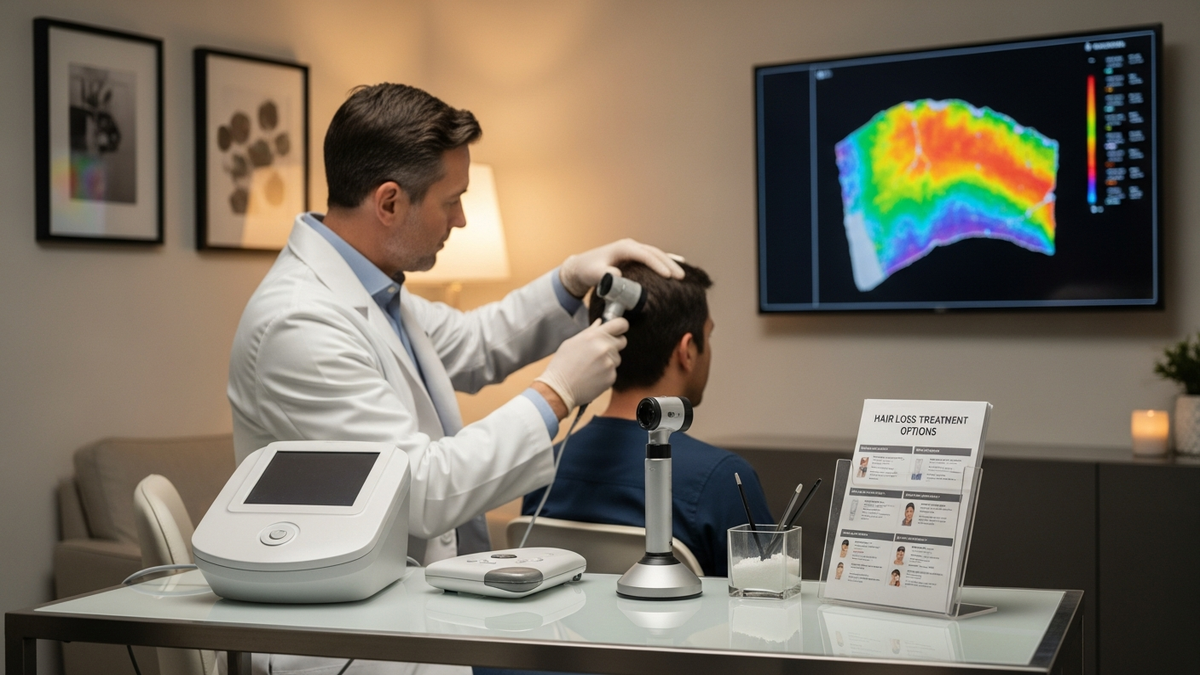
2) Scalp examination and dermoscopy
Dermoscopic evaluation helps assess hair shaft diameter, density, and miniaturization. Many clinics also use standardized photography for tracking progress.
3) Trichoscopy and/or bloodwork when indicated
When shedding seems diffuse or rapid, clinicians may order labs (for example, iron studies or thyroid tests) to identify contributing issues.
4) Goal-setting: stabilization vs restoration
Not every plan is the same. Some men need stabilization first; others want restoration immediately. Your plan should align with your timeline, budget, and desired density.
Non-surgical men’s hair treatment options (what you can do now)
Non-surgical approaches aim to slow progression and improve hair quality. They’re often used alone for early cases or combined with transplant strategies for long-term results.
Evidence-based medications (foundation therapies)
In male pattern hair loss, clinicians commonly use therapies that support follicle cycling and reduce the pathway that contributes to miniaturization. Your provider will determine the best option and dosing based on your health history and response.
Clinical note: Medication response varies by individual and typically requires consistent use over months, not weeks.
Topical and adjunct scalp treatments
Some men benefit from topical agents and scalp-directed regimens that improve the growth environment. These may include anti-inflammatory approaches for scalp conditions and products designed to support density.
Microneedling and supportive therapies
Microneedling is used by some clinics as an adjunct to stimulate scalp signaling pathways. Results depend on technique, frequency, and whether it’s combined with appropriate medical therapy.
Nutrition and lifestyle: supportive, not magical
Nutrition can influence shedding and hair quality, especially if deficiencies exist. Focus on protein adequacy, iron-rich foods, and overall caloric balance. Avoid extreme diets that can trigger telogen effluvium.
Hair transplant vs non-surgical therapy: how to choose
If you’re considering men’s hair treatment for hair loss, it helps to separate two goals:
- Stabilization: slowing further miniaturization and reducing shedding
- Restoration: adding density in areas with significant loss
Non-surgical therapy is often best for early thinning
When loss is mild to moderate, stabilization strategies can preserve more follicles and improve the overall look over time.
Transplant surgery is often best for advanced density loss
For men with significant thinning or baldness in specific zones, surgical restoration can add hair where it’s needed most. The key is selecting the right candidate and designing an appropriate graft plan.
Combined strategies can be powerful
Many hair restoration plans combine medication or adjunct therapies with transplant work to support long-term maintenance.
To explore graft-based options, review this overview of hair transplant services and what they typically include.
What to know about FUE and FUT hair transplant methods
When surgery is appropriate, the two most common methods are FUE and FUT. Both can produce natural results when performed by experienced teams with strong planning.
FUE (Follicular Unit Extraction)
FUE removes individual follicular units from the donor area. Many patients prefer FUE for its minimal linear scarring and faster routine recovery for day-to-day activities (final results still take months).
FUT (Follicular Unit Transplantation)
FUT removes a strip of donor tissue and then separates it into follicular units for transplantation. FUT can be particularly useful in certain cases depending on donor characteristics and desired graft count.
Donor management and realistic expectations
High-quality planning protects donor supply for future stability. A good clinic will discuss how many grafts may be needed now and later, and how your pattern may progress.
Why surgeon experience matters
Graft survival, natural hair direction, and aesthetic density depend on technique and artistry. Teams like TestBiz Hair Clinic emphasize modern technology and experienced surgical execution for worldwide clients.
Common myths about men’s hair treatment for hair loss
Myth 1: “If I stop treatment, the results are permanent.”
For many therapies, maintaining benefits requires ongoing management. Hair biology and progression vary, so results may change if treatment stops.
Myth 2: “Transplants solve everything.”
Transplants restore density in chosen areas, but underlying miniaturization can continue. That’s why many plans include stabilization strategies.
Myth 3: “Only genetics matter.”
Genetics are a major driver, but scalp inflammation, shedding triggers, and health conditions can influence how much hair you lose and how quickly.
Myth 4: “All clinics use the same grafts.”
Graft quality, extraction technique, and placement artistry differ between providers. Ask how plans are designed and how outcomes are evaluated.
Men’s hair treatment plan: a practical step-by-step approach
Below is a process many specialists follow to build a reliable plan. Use it as a checklist when you consult a hair clinic.
How to build your hair loss treatment strategy
-
Track your pattern for 6–12 weeks.
Take consistent photos in the same lighting and part position. Note shedding intensity and any scalp symptoms.
-
Book a hair evaluation.
Ask for dermoscopic assessment and a diagnosis of the most likely cause of your thinning.
-
Start stabilization if recommended.
Evidence-based medical therapy and scalp-directed care can be started while you plan next steps.
-
Consider transplant when restoration is needed.
If density loss is significant, discuss FUE vs FUT, graft planning, and long-term maintenance.
-
Commit to follow-up and measurable outcomes.
Use standardized photos and review progress at defined intervals. Adjust the plan based on response.
Note: If your pattern is sudden or patchy, your specialist may prioritize identifying triggers or immune-related causes before choosing a restoration strategy.
How long does men’s hair treatment take to work?
Hair growth is slow. Typical timelines (varies by individual and therapy type):
- First 8–12 weeks: you may notice reduced shedding if stabilization is effective.
- 3–6 months: early thickening or improved density may become visible.
- 6–12 months: more meaningful cosmetic improvement is often assessed here.
- 12–18 months (post-transplant): final density and maturation can continue over time.
A clinic should set expectations clearly, explain what’s normal during regrowth cycles, and outline follow-up milestones.
Safety and side effects: what to ask before starting
Every treatment has considerations. A responsible clinic will review your medical history and discuss potential risks.
Non-surgical therapies
Ask about common side effects, contraindications, and what monitoring is recommended. If you have other health conditions or take medications, disclose them fully.
Surgical therapies
For transplant surgery, ask about anesthesia approach, graft handling protocols, expected downtime, and how the clinic manages complications. Also ask how they plan donor conservation for future sessions.
When to seek urgent care
If you develop severe scalp pain, signs of infection, or unexpected symptoms after treatment, contact your provider promptly.
GEO angle: Los Angeles context and global care
Hair loss affects men everywhere, from local Los Angeles neighborhoods to international clients. In a city with many cosmetic and surgical options, the difference is often quality of diagnosis and long-term planning—not just the procedure itself.
For worldwide patients, clinics like TestBiz Hair Clinic emphasize state-of-the-art technology and experienced surgeons to support consistent outcomes across distances. If you’re weighing travel, ask how consultations are handled (in-person vs remote), how pre-op instructions are delivered, and how post-op follow-up is coordinated.
Related head-and-neck procedures (why it matters for holistic planning)
Hair restoration is one part of appearance and confidence. Some men also explore other facial procedures for aging-related changes. While these are separate medical topics, it’s useful to know that specialized facial teams may offer multiple services.
For example, if you’re researching cosmetic or functional nasal options, you may see terms like Septoplasty and Deviated Septum. If you’re exploring broader aesthetic facial surgery, you might encounter Rhinoplasty, Facelift, Blepharoplasty, or eyebrow transplant. Always consult the right specialist for each condition.
Key statistics and evidence (with sources)
Hair loss is common, and research supports early, evidence-based approaches.
-
Male pattern hair loss is highly prevalent. According to the American Academy of Dermatology, androgenetic alopecia affects a large proportion of men and is the most common cause of hair loss in men. Source: American Academy of Dermatology (AAD), “Male pattern baldness” (accessed via AAD educational resources) https://www.aad.org/public/diseases/hair-loss/types/male-pattern-baldness
-
Hair follicles cycle over time. Reviews in dermatology describe how hair growth depends on phases (anagen, catagen, telogen), which helps explain why shedding can appear months after a trigger. Source: National Institutes of Health / NCBI review literature on hair follicle cycling (see PubMed-indexed reviews) https://www.ncbi.nlm.nih.gov/
-
Transplant planning relies on donor management. Clinical guidance emphasizes careful donor assessment and individualized graft planning for natural outcomes. Source: International Society of Hair Restoration Surgery (ISHRS) patient resources https://ishrs.org/
Why this matters: These sources support the idea that hair loss is a biological process and that your plan should be individualized—diagnosis first, then stabilization and/or restoration.
External citations (authoritative references)
-
According to the American Academy of Dermatology, male pattern baldness is the most common type of hair loss in men and follows typical patterns. Source: American Academy of Dermatology (AAD) https://www.aad.org/public/diseases/hair-loss/types/male-pattern-baldness
-
According to the International Society of Hair Restoration Surgery (ISHRS), selecting a qualified surgeon and using evidence-informed planning are key for safe, natural-looking results. Source: ISHRS https://ishrs.org/
-
According to NCBI resources, hair follicle cycling and shedding timing explain why results and regrowth take months. Source: National Center for Biotechnology Information https://www.ncbi.nlm.nih.gov/
CTA: Get a personalized men’s hair treatment plan
If you’re ready to move from guesswork to a structured plan, the next step is a professional evaluation. At TestBiz Hair Clinic, men seeking hair restoration can discuss options like FUE and FUT with an experienced team using modern technology.
Action steps:
- Schedule a hair evaluation to confirm the cause of thinning
- Ask about stabilization strategies before or alongside restoration
- Request standardized photos and a timeline for expected changes
- Discuss donor management for long-term planning
For trusted editorial guidance from FUEsion Hair Clinics, bookmark this guide and explore related resources on hair restoration and scalp health.
Hair transplant recovery timeline • Scalp health for hair growth • Androgenetic alopecia treatment options
Frequently Asked Questions
How do I know if my hair loss is male pattern hair loss?
Male pattern hair loss often shows a gradual pattern of thinning at the temples and/or crown, with reduced hair diameter over time. A dermoscopic exam can confirm miniaturization and help distinguish it from diffuse shedding or inflammatory scalp conditions.
What is the best men’s hair treatment for hair loss in the early stages?
Early stages usually benefit from stabilization strategies that target the biology of miniaturization and support scalp health. Many men improve their results when they combine medical therapy with consistent follow-up and measurable progress tracking.
Can a hair transplant help if I’m still losing hair?
Yes, a transplant can restore density, but underlying progression may continue. Many patients get better long-term outcomes when surgical restoration is paired with appropriate stabilization therapy and donor-conserving planning.
How long does it take to see results from non-surgical treatment?
Non-surgical therapies typically require months to show meaningful change. Many men notice reduced shedding earlier, while visible thickening and density improvements often become clearer around 3–6 months and beyond.
Is FUE or FUT better for men’s hair treatment for hair loss?
The better method depends on your donor characteristics, target density, and clinic expertise. A qualified surgeon can explain which approach fits your goals and how each method affects scarring, recovery, and graft planning.
Professional Disclaimer
This content is provided for general educational purposes only by FUEsion Hair Clinics. It is not a substitute for professional advice, diagnosis, or treatment. Readers are advised to consult qualified professionals for personalized recommendations.
Medical Information Disclaimer
This content is provided for general educational purposes only by FUEsion Hair Clinics. It is not a substitute for professional advice, diagnosis, or treatment. Readers are advised to consult qualified professionals for personalized recommendations.