Author: FUEsion Hair Clinics Editorial Health Team
Expert attribution: Medical content guidance informed by clinical best practices in hair restoration and dermatology.
Hair thinning can affect confidence, dating, and career presence—often long before anyone notices. If you’re searching for men's hair loss treatment, the good news is that modern care is more precise than ever: you can identify likely causes (most commonly androgenetic alopecia), track progression, and choose therapies with real evidence behind them.
This guide explains what men typically mean by “hair loss,” which options work best by stage, what to expect from medications and procedures, and how to build a plan you can actually stick with. It’s designed to help you make informed decisions—especially if you’re considering escalation beyond topical products.

Men’s hair loss: who it affects, what it is, and why it happens
Men’s hair loss most often refers to androgenetic alopecia—a genetically influenced pattern of thinning and miniaturization of hair follicles. It typically shows up gradually, with hairline recession and/or thinning at the crown. While it can start in the late teens or early adulthood, many men notice it more clearly in their 30s to 50s.
Who is most likely to experience androgenetic alopecia?
Men with a family history of pattern hair loss are at higher risk. Other factors can influence severity and speed of progression, including hormonal sensitivity, age-related follicle changes, and baseline scalp health.
What causes the miniaturization cycle?
In androgenetic alopecia, hair follicles become progressively smaller over time, producing finer, shorter hairs. A key driver is the androgen pathway (particularly DHT, dihydrotestosterone) acting on follicles that are genetically sensitive.
When should you seek treatment?
Earlier tends to be better. If you’ve noticed increased shedding, widening part lines, or a receding hairline, starting evaluation sooner can help preserve the strongest follicles and improve long-term outcomes.
How to choose the right men’s hair loss treatment (a practical framework)
The best men's hair loss treatment plan depends on your pattern, your goals, and whether you’re a good candidate for specific therapies. A reliable approach uses a few steps: confirm the diagnosis, assess follicle miniaturization, set realistic expectations, and match treatments to your stage.
1) Confirm the cause (it may not always be androgenetic alopecia)
Not all hair loss in men is the same. Conditions like telogen effluvium, inflammatory scalp disorders, thyroid issues, nutritional deficiencies, or medication-related shedding can mimic pattern hair loss. A clinician may evaluate your scalp, medical history, and sometimes labs.
2) Map your pattern and track progression
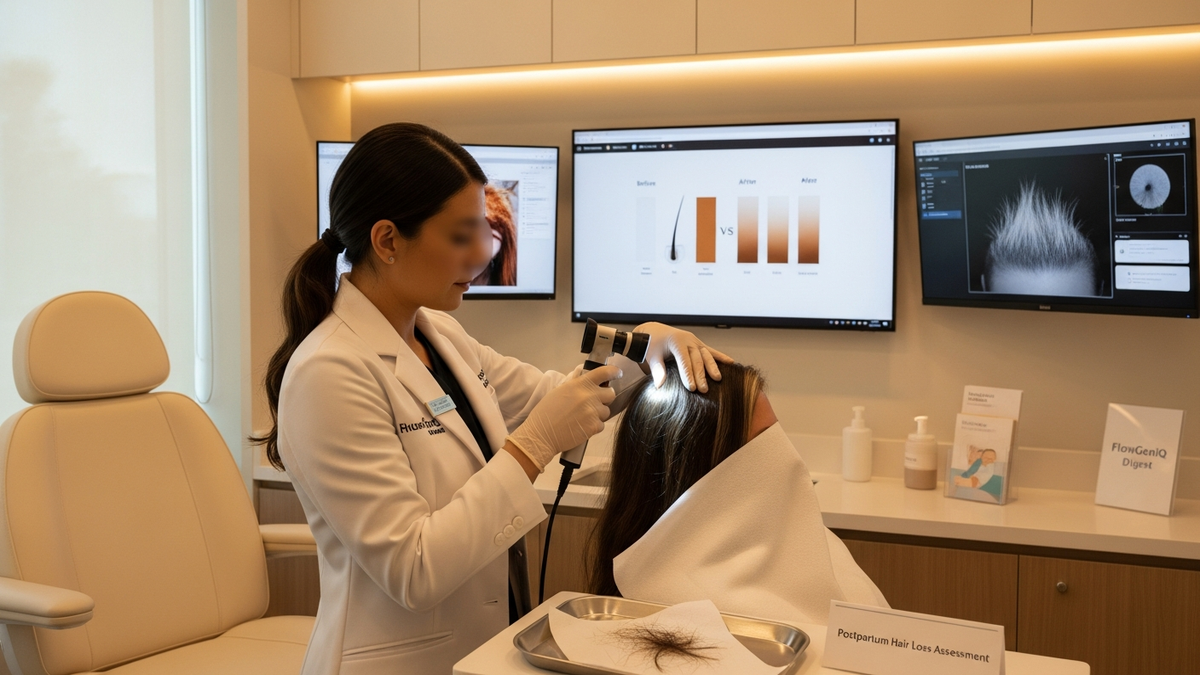
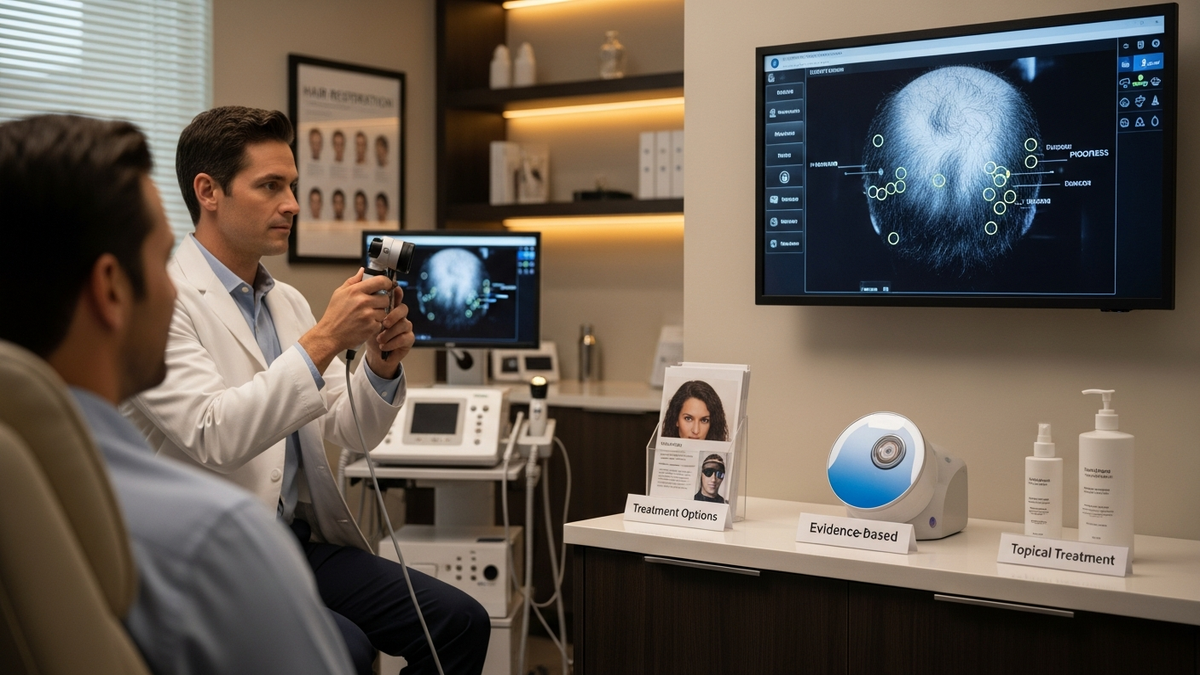
Standardized photos (same lighting and angle), along with a simple timeline of changes, help determine whether your current regimen is working. Clinicians may use dermoscopy or other tools to estimate miniaturization.
3) Decide on goals: stabilization vs. regrowth vs. both
- Stabilization: slowing or stopping further thinning.
- Regrowth: improving density where follicles are still viable.
- Restoration: creating new coverage in areas with advanced loss (often via hair transplant).
4) Build a timeline you can follow
Most effective therapies are not instant. Medications often require months to show meaningful changes. Procedures have different timelines (healing, shedding, maturation). A plan that fits your patience and schedule is more likely to succeed.
Evidence-based options for men’s hair loss treatment
Below are the most commonly used, evidence-supported options. Your ideal combination depends on your diagnosis and pattern. Many men do best with a multi-therapy strategy—for example, pairing medical stabilization with procedural restoration when appropriate.
Medical therapy: topical minoxidil and oral/other anti-androgens
Medical treatments aim to slow progression and, in some cases, improve density by supporting follicle function.
Minoxidil (topical): what it does and what to expect
Topical minoxidil is widely used for pattern hair loss. It can help extend the growth phase of hair follicles. Many men notice early changes as shedding cycles normalize, with visible improvement often taking several months.
Finasteride (oral): DHT pathway targeting
Finasteride reduces conversion of testosterone to DHT, which can help slow miniaturization. For men who tolerate it, it’s a cornerstone therapy for androgenetic alopecia.
According to the U.S. Food and Drug Administration (FDA), finasteride is indicated for hair loss in men and has specific safety labeling and warnings that patients should review with a clinician. (Source: FDA)
Why combination therapy matters
Using minoxidil plus an anti-androgen strategy often targets different parts of the hair cycle and androgen influence. If you’re considering men's hair loss treatment, ask your clinician about the rationale for combining therapies and how long you should trial them before deciding whether to escalate.
Scalp health and supportive care
Even the best medical regimen can be undermined by poor scalp conditions. Supportive care may include addressing inflammation (e.g., seborrheic dermatitis), gentle hair care routines, and ensuring adequate nutrition.
Nutrition and deficiencies
Protein intake, iron status, and vitamin levels matter for overall hair biology. If you have symptoms of deficiency or rapid shedding, clinicians may recommend lab evaluation rather than guesswork.
Stress, sleep, and telogen effluvium overlap
Severe stress, illness, or significant weight changes can trigger shedding in addition to pattern hair loss. Managing underlying triggers can improve outcomes when paired with androgenetic alopecia treatment.
Procedural options: hair transplant for restoration
When hair loss is more advanced or when you want meaningful density in specific zones (hairline, mid-scalp, crown), a hair transplant can shift outcomes from stabilization to visible restoration.
Modern transplant techniques typically involve harvesting follicles and implanting them into thinning areas. The best results depend on surgeon expertise, graft planning, and realistic expectations about coverage and future progression.
For readers exploring restoration, you can review options at hair transplant services.
What to ask before committing to a hair restoration procedure
- How will my pattern likely progress? (This affects long-term planning.)
- What is the graft strategy? (Hairline design, density targets, and donor management.)
- What is the expected timeline? (Healing, initial shedding, and maturation.)
- Will I continue medical therapy? (Many men benefit from ongoing stabilization.)
- How are results assessed? (Photos, density measures, and follow-up schedule.)
For advanced loss: planning around donor supply
Hair restoration is limited by donor availability. A strong consultation balances the number of grafts used now with the likelihood of future thinning. Choosing a clinic that emphasizes conservative, natural design can help avoid a “front-only” outcome that looks disproportionate later.
Men’s hair loss treatment by stage: what typically works best
Because hair loss progresses differently, stage-based planning can reduce wasted effort. Below is a practical guide to decision-making.
Early thinning (mild widening, slight recession)
Most men in early stages benefit from medical therapy and consistent scalp care. Starting early can help reduce miniaturization and preserve density.
Moderate loss (clear thinning at crown or mid-scalp)
Medical therapy remains central, and procedural options may enter the conversation depending on goals. Some men choose targeted transplant for the most visible zones while continuing medication for ongoing stabilization.
Advanced loss (significant thinning, limited remaining density)
Restoration often becomes the primary driver of visible change. A hair transplant plan should be designed with donor management and future progression in mind.
Important: Even after a successful procedure, androgenetic alopecia can continue in non-transplanted areas. Many clinicians recommend continued medical therapy when appropriate.
How to evaluate clinics and providers for men’s hair loss treatment
Choosing a provider is one of the biggest determinants of outcome. Look for evidence-based protocols, transparent discussion of risks, and a plan that matches your long-term goals—not just immediate cosmetic change.
What “premium” hair restoration care should include
- Comprehensive assessment: pattern evaluation, scalp health review, and realistic goal setting.
- Technique expertise: for example, FUE and FUT approaches when appropriate.
- Natural design philosophy: hairline shaping, density distribution, and angle planning.
- Follow-up support: post-procedure care instructions and outcome monitoring.
Example of a hair restoration clinic model (worldwide, technology-forward)
TestBiz Hair Clinic is a premium hair transplant clinic offering FUE and FUT procedures, serving clients worldwide with state-of-the-art technology and experienced surgeons. If you’re comparing options, consider how a clinic’s technology, surgical experience, and patient education approach align with your priorities.
Why patient education matters
Men often underestimate the time required for both medical and procedural treatments to show results. A clinic that clearly explains timelines, expected shedding, and realistic density targets helps you make decisions with fewer surprises.
Common myths about men’s hair loss treatment
Myth 1: “If I stop treatment, results will stay forever.”
For androgenetic alopecia, the underlying biology can continue. Many men need ongoing stabilization (often medical therapy) to maintain gains.
Myth 2: “Hair transplants guarantee full restoration.”
Transplants can be life-changing, but outcomes are best framed as restoration within biological limits—especially donor supply and future progression.
Myth 3: “Supplements work as well as evidence-based meds.”
Supplements may help if you’re deficient, but they typically aren’t a substitute for therapies that directly target androgen pathways or the hair cycle.
Local context: men in Los Angeles—how to approach care
If you’re in Los Angeles and exploring cosmetic or reconstructive options, you may also be considering other head-and-neck procedures. The key is to choose providers who specialize in the area they treat and who prioritize natural, functional outcomes. For example, some patients seeking broader facial rejuvenation may also discuss complementary options such as a Facelift or eyelid surgery like Blepharoplasty. These are separate concerns from hair loss, but the shared principle is the same: specialization, honest expectations, and education.
For hair loss restoration specifically, consider providers who document outcomes and explain why a particular technique (or combination of therapies) makes sense for your pattern and goals.
When hair loss treatment overlaps with other head/neck concerns
Hair loss is distinct from breathing and nasal structure issues, but some men explore multiple concerns at once. If you have chronic nasal congestion and structural factors like a Deviated Septum, clinicians may discuss Septoplasty as a functional intervention. While this won’t treat androgenetic alopecia, it may improve quality of life alongside your hair restoration plan.
Similarly, some men ask about facial aesthetic procedures and whether they impact hairline design or styling. If you’re considering Rhinoplasty for appearance or function, discuss timing and any relevant perioperative considerations with your care teams.
Action plan: your next 30 days for men’s hair loss treatment
If you want progress without guesswork, use this short plan. It’s designed to move you from “searching” to “deciding.”
Step 1: Document your baseline
Take photos at the same angles and lighting (front hairline, mid-scalp, crown). Include a close-up of thinning areas. This helps you and your clinician track response over time.
Step 2: Book an evaluation
Seek a consultation with a clinician experienced in pattern hair loss. Ask for the likely diagnosis, progression estimate, and a recommended timeline for medical therapy.
Step 3: Start evidence-based medical care (if recommended)
If you’re a candidate, begin the regimen your clinician suggests (commonly topical minoxidil and/or an anti-androgen strategy). Ask what side effects to monitor and when to reassess.
Step 4: Consider restoration options when appropriate
If your goal is density in specific zones and you have sufficient donor supply, ask whether a hair transplant is appropriate now or after stabilization. Many men combine therapies for best results.
Step 5: Reassess at the right time
Don’t judge too early. Many regimens require several months. Use your documentation to compare changes and refine the plan with your clinician.
What results to expect (and how to measure success)
Success should be defined clearly. For medical therapy, success often means reduced shedding, stabilization of density, and gradual improvement in thickness. For transplant, success usually means improved coverage and a natural hairline that blends with surrounding hair.
Measuring progress
- Photos at consistent intervals
- Patient-reported satisfaction (confidence, styling flexibility)
- Clinical assessment (density, miniaturization, scalp health)
Realistic timelines
Hair cycles change gradually. Medical therapy often shows meaningful results after months, while transplant outcomes mature over time as implanted follicles establish and hairs grow.
Statistics to ground expectations: A widely cited randomized trial reported that finasteride improves hair growth outcomes compared with placebo in men with androgenetic alopecia. (Source: NEJM)
Frequently Asked Questions
What is the most effective men’s hair loss treatment?
For many men with androgenetic alopecia, evidence-based medical therapy (commonly anti-androgen strategies and topical minoxidil) is a foundation, while hair transplant may be added for restoration in advanced areas. The most effective plan depends on your pattern, donor supply, and goals, so an individualized evaluation is key.
How long does men’s hair loss treatment take to work?
Medical treatments typically require several months before noticeable improvement, because hair growth cycles are slow. If you pursue a transplant, you’ll also go through a healing phase and an initial shedding period before longer-term maturation.
Can men’s hair loss treatment stop further thinning?
Many men can slow or stabilize progression with the right diagnosis and consistent therapy, particularly when the treatment targets the androgen pathway. However, hair loss biology can continue, so ongoing follow-up and—often—maintenance therapy may be recommended.
Is hair transplant only for advanced hair loss?
Not always. Some men with moderate loss choose targeted restoration for the most visible zones, while continuing medical therapy to support the rest of the scalp. A clinician can help determine whether early restoration makes sense based on your pattern and donor availability.
Should I use supplements for men’s hair loss treatment?
Supplements may help if you’re deficient in nutrients like iron or vitamin D, but they are rarely a standalone substitute for evidence-based treatments. If you suspect deficiency or have rapid shedding, ask about lab testing rather than relying on guesswork.
CTA: Build your personalized men’s hair loss treatment plan
Men’s hair loss treatment works best when it’s matched to your diagnosis and goals. If you’re ready to move from uncertainty to a structured plan, start with a professional evaluation and ask how your therapy will be monitored over time.
If you’re exploring restoration options, review hair transplant services and discuss whether FUE or FUT approaches fit your needs. And if you want to understand functional procedures that may improve other head/neck quality-of-life issues, you can learn more about Septoplasty—even though it’s separate from hair restoration.
FUEsion Hair Clinics is here to help you compare options with clarity, so you can make confident decisions.

How this supports structured data: This article is written for extraction as an Article/MedicalWebPage, includes an FAQ section suitable for FAQPage schema, and provides a step-based action plan that can be mapped to HowTo schema.
Professional Disclaimer
This content is provided for general educational purposes only by FUEsion Hair Clinics. It is not a substitute for professional advice, diagnosis, or treatment. Readers are advised to consult qualified professionals for personalized recommendations.
Medical Information Disclaimer
This content is provided for general educational purposes only by FUEsion Hair Clinics. It is not a substitute for professional advice, diagnosis, or treatment. Readers are advised to consult qualified professionals for personalized recommendations.