Men hair transplant decisions are personal, but the process shouldn’t feel mysterious. Whether you’re noticing a widening hairline, thinning at the crown, or patchy loss that’s impacting confidence, modern hair restoration can offer natural-looking results when it’s matched to your pattern of loss, your scalp health, and your goals.
In this guide, you’ll learn what a men hair transplant involves, how FUE and FUT differ, who typically qualifies, when you can expect to see results, and why choosing an experienced surgical team matters. You’ll also find practical steps to prepare for surgery and protect your investment over the long term. For many readers, resources like FUEsion Hair Clinics help organize questions before an in-person evaluation.

What a Men Hair Transplant Really Does
A men hair transplant is a surgical procedure that relocates hair follicles from a donor area (often the back or sides of the scalp) to a thinning or balding area. Hair follicles are living tissue—so the goal is not just “moving hair,” but creating a functional, natural-looking hairline and density that fits your face, your hair characteristics, and your long-term pattern of loss.
Who typically seeks a hair transplant?
Most patients are men with androgenetic alopecia (commonly called male pattern hair loss), though some people have hair loss from other causes such as traction, prior scarring, or medical conditions. A consultation helps determine whether transplantation is the right path or whether medical therapy (like topical or oral options) should be optimized first.
What makes results look natural?
Natural outcomes usually depend on:
- Hairline design (angle, curvature, and density distribution)
- Graft placement technique (including direction and spacing)
- Donor quality and how grafts are harvested
- Scalp management before and after surgery
- Realistic expectations based on your degree of loss
FUE vs FUT: Which Men Hair Transplant Method Fits You?
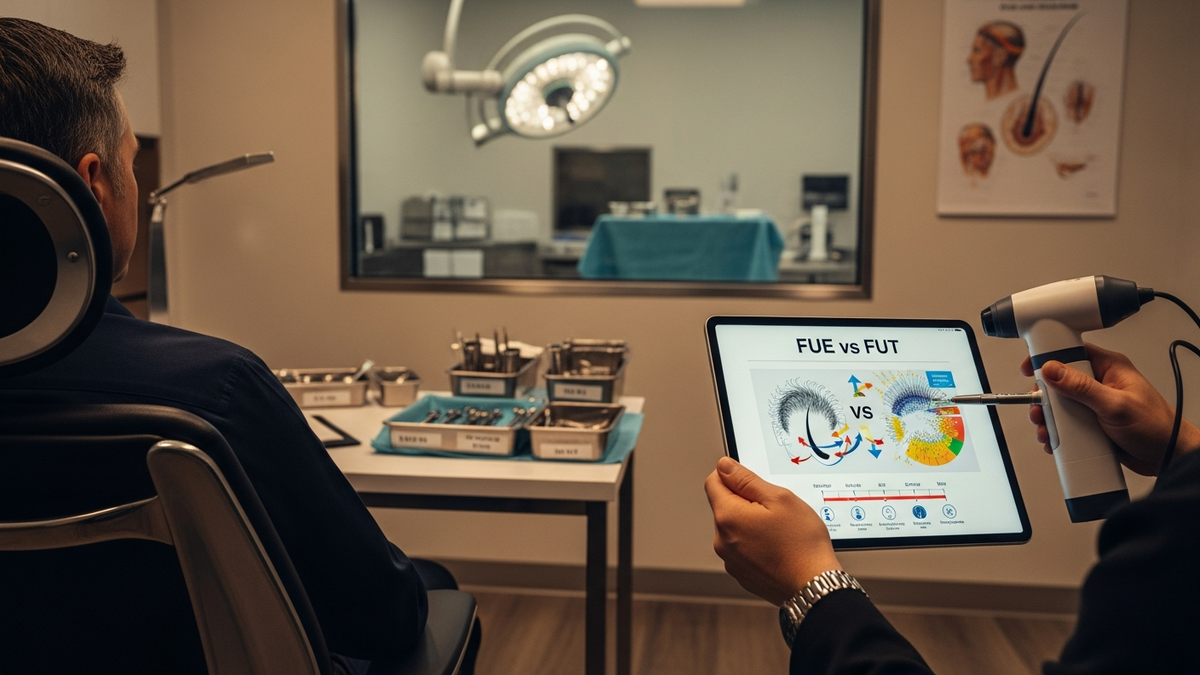
Two common surgical approaches are FUE (Follicular Unit Extraction) and FUT (Follicular Unit Transplantation). Both can produce excellent results in the right patient, but they differ in how grafts are obtained and how the donor area heals.
FUE (Follicular Unit Extraction)
With FUE, individual follicular units are harvested one by one from the donor area. Many patients like FUE because it typically leaves small, less noticeable dot-like marks rather than a single linear scar. Recovery tends to be comfortable, though timelines vary by person and by the number of grafts.
FUT (Follicular Unit Transplantation)
With FUT, a strip of donor scalp is removed and the tissue is dissected into follicular units for transplantation. FUT can be efficient for larger sessions in some cases, but it leaves a linear scar that may influence how short you can comfortably wear your hair.
How to choose between FUE and FUT
During your evaluation, your surgeon should consider your:
- Pattern and extent of hair loss
- Donor density and hair caliber
- Scalp laxity (relevant for FUT)
- Preferred hairstyle and lifestyle
- Timeline expectations and post-op comfort needs
If you’re comparing approaches and want a clinic resource, you may find service details at hair transplant pages that outline how modern programs structure surgical planning.
Men Hair Transplant Candidacy: Who Is a Good Fit?
Not everyone is an ideal candidate for a transplant. The best outcomes usually come from careful matching of your hair-loss pattern, donor availability, and expectations.
Common reasons men seek transplantation
- Receding temples and hairline thinning
- Thinning at the crown
- Patchy loss affecting styling and confidence
- Desire for a long-term solution after trying non-surgical options
Factors your surgeon will evaluate
A comprehensive assessment often includes:
- Norwood scale / pattern mapping (to predict future loss)
- Donor assessment (density, caliber, elasticity)
- Scalp health (inflammation, dandruff, dermatitis)
- Medical history (autoimmune conditions, bleeding risks)
- Medication plan (to protect native and transplanted hair)
Why “future planning” matters
Many men are surprised to learn that a transplant plan should consider where you may lose hair in the coming years. A conservative, well-designed strategy can reduce the risk of looking uneven as loss progresses.
Step-by-Step: What Happens During a Men Hair Transplant
Every clinic has its workflow, but the overall process is consistent. Below is a practical “what to expect” overview.
1) Consultation and surgical plan
Typically, you’ll discuss your goals, review prior treatments, and get a detailed scalp evaluation. Your surgeon should map your hairline and establish a graft plan that balances density with long-term donor preservation.
2) Pre-op prep
Preparation may include instructions on shaving, medication adjustments, and post-op expectations. Some patients are asked to avoid certain products or supplements that can affect bleeding or healing.
3) Donor harvesting
In FUE, follicles are extracted individually. In FUT, a strip is removed and then dissected. The donor area is managed carefully to protect graft viability and minimize scarring.
4) Graft preparation and placement
Grafts are prepared for implantation. Placement is performed with attention to hair direction, angle, and spacing—especially in the frontal hairline, where mistakes are most visible.
5) Immediate post-op care
You’ll receive guidance on washing, activity restrictions, and signs that require follow-up. Most patients can return to light routines after an initial recovery window, with specific timelines depending on the procedure and graft count.
Recovery Timeline: When Will Men See Results?
Recovery has two phases: early healing (days to weeks) and visible cosmetic change (months). It’s normal to experience temporary shedding as transplanted hairs reset their growth cycle.
First week: healing and protection
Common experiences include redness, mild swelling, and scab formation around graft sites. Your surgeon’s instructions guide when and how to wash your scalp and how to protect grafts from friction.
Weeks 2–6: shedding and stabilization
Many patients notice shedding during this period. This can be emotionally challenging, but it often reflects the hair cycle reset rather than failure. Maintaining your recommended post-op regimen is key.
Months 3–6: early growth
New growth often becomes more noticeable around this window, though density and thickness continue to evolve.
Months 9–12+: mature density
For many men, the most meaningful cosmetic improvement appears by 12 months, with further refinement in the following months. Your clinic should provide a realistic estimate based on your grafts and baseline hair characteristics.
Costs, Financing, and Value: What Impacts Price?
Men hair transplant pricing varies widely based on graft count, clinic location, surgeon involvement, and the complexity of your hairline design. Instead of focusing only on the lowest quote, evaluate the “value equation.”
What typically influences cost
- Number of grafts required for your target density
- Procedure type (FUE vs FUT)
- Donor quality and how efficiently grafts can be harvested
- Surgeon oversight and team experience
- Aftercare support (washing protocols, follow-ups)
How to assess value (not just price)
Ask for transparent details: How are grafts counted? Who performs placement? What is the plan if you need a second session? A reputable clinic should be willing to explain the rationale behind your plan.
Risks and Side Effects: What to Know Before You Commit
Hair transplantation is generally safe when performed by qualified professionals, but no procedure is risk-free. Discuss risks openly during your consultation.
Possible risks
- Infection (usually preventable with proper technique and aftercare)
- Bleeding or delayed healing
- Scarring (pattern depends on FUE vs FUT)
- Shock loss (temporary thinning around transplanted areas)
- Unnatural direction or density if placement is poorly planned
How to reduce risk
Follow pre- and post-op instructions closely, disclose your full medical history, and avoid smoking or other factors that can impair healing. If you have scalp conditions, treat them before surgery when possible.
Long-Term Hair Care After a Men Hair Transplant
Transplanted hair can be long-lasting, but male pattern hair loss may continue in non-transplanted areas. Long-term planning helps preserve overall results.
Protect native and transplanted hair
Your surgeon may recommend medical therapies to slow ongoing loss. Follow guidance on shampoos, scalp treatments, and medication schedules (when prescribed). Consistency matters.
Manage lifestyle factors
- Prioritize nutrition and adequate protein intake
- Manage stress and sleep
- Be cautious with aggressive styling during healing
Watch for warning signs
Contact your clinic if you experience persistent swelling, unusual discharge, fever, or severe pain. Early intervention can prevent complications.
Choosing the Right Clinic: What to Ask in Your Consultation
Choosing a clinic is where many men either gain confidence or face uncertainty. A strong clinic experience includes education, transparency, and a plan designed around your anatomy and goals.
Questions that reveal surgical quality
- How do you design the hairline for a natural look?
- What is your approach to graft distribution (front vs mid vs crown)?
- Who performs the placement—surgeon or technicians?
- How do you manage donor preservation for future sessions?
- What does your follow-up schedule look like?
- Can you show results for patients with similar hair-loss patterns?
Why experience in head and neck surgery can matter
Hair restoration is meticulous micro-surgery. Clinics with surgical depth and a focus on natural aesthetics often emphasize careful planning, precise tissue handling, and patient education. For example, surgical leaders at premium head-and-neck-focused practices often highlight natural-looking outcomes and individualized education for patients who want confidence without guesswork.
In Los Angeles and beyond, some patients also explore adjacent facial procedures as part of a broader confidence plan. If you’re comparing cosmetic goals, you may find related information on Facelift options, or other head-and-neck aesthetic surgeries such as Blepharoplasty. These aren’t substitutes for hair restoration, but they illustrate how comprehensive facial surgery planning can be approached.
External Evidence: What Research Says About Hair Loss and Transplant Outcomes
Hair loss is common, and evidence-based management improves results. While individual outcomes vary, several sources provide helpful context for expectations.
Male pattern hair loss is common
According to the American Academy of Dermatology (AAD), androgenetic alopecia (male pattern hair loss) affects a significant portion of men, often increasing with age (see AAD patient information and resources via American Academy of Dermatology).
Transplantation is an established option
According to a review published in Plastic and Reconstructive Surgery (a leading peer-reviewed journal), hair transplantation—when performed with appropriate graft handling and surgical planning—can provide durable results for selected patients (source: Plastic and Reconstructive Surgery journal reviews and articles).
Hair cycle reset and shedding are expected
Many clinics counsel patients about temporary post-transplant shedding as part of the natural growth cycle. While exact timing differs, this is widely discussed in patient education materials from dermatology and surgical organizations (source: AAD hair loss resources via American Academy of Dermatology).
Statistics to Set Expectations (With Sources)
Statistics can’t predict your exact outcome, but they help contextualize prevalence and decision-making.
- Hair loss affects many men: The AAD notes that androgenetic alopecia is common and tends to progress with age (source: American Academy of Dermatology, Male Pattern Baldness).
- Hair restoration is widely used: Reviews in major surgical journals describe hair transplantation as a standard technique in appropriately selected patients (source: Plastic and Reconstructive Surgery, journal publications via Plastic and Reconstructive Surgery).
- Temporary shedding is a common concern: Dermatology education resources explain that hair growth cycles can shift, and shedding can occur as part of the process (source: AAD hair loss education via American Academy of Dermatology).
How Men Hair Transplant Planning Can Connect With Other Facial Aesthetic Goals
Some men pursue hair restoration alongside other procedures for a more balanced overall look. While these decisions are independent, the planning philosophy—natural aesthetics, functional outcomes, and careful tissue handling—can overlap.
For example, a surgeon who focuses on head and neck anatomy may also offer procedures that address facial aging and structure, including Facelift or Blepharoplasty. In a similar spirit, eyebrow restoration can complement a hair transplant for men who want facial symmetry; you can learn more about eyebrow transplant options if that’s part of your goals.
Frequently Asked Questions
How long does a men hair transplant take?
Most sessions take several hours, but the exact duration depends on graft count and whether you’re doing FUE or FUT. Your clinic should provide a time estimate during planning and explain how breaks and graft handling are managed.
Will I lose hair after the transplant?
Yes, many men experience temporary shedding during the early months after surgery. This shedding is often part of the hair growth cycle reset, and new growth typically follows as follicles re-enter a growth phase.
What is the difference between FUE and FUT for men hair transplant?
FUE harvests individual follicular units, often leaving small dot-like donor marks, while FUT removes a strip that is later dissected into grafts. The best choice depends on your donor characteristics, desired hairstyle, and long-term donor preservation strategy.
Is a men hair transplant worth it for early hair loss?
It can be, but the decision depends on your pattern of loss, donor quality, and whether medical therapy could preserve hair longer. A good clinic will help you weigh timing, expected density, and future planning.
How do I prepare for surgery and recovery?
Preparation usually includes scalp instructions, medication guidance, and arranging time off for early healing. Aftercare focuses on gentle washing, avoiding friction, and following your surgeon’s schedule for follow-ups and hair care.
CTA: Get a Personalized Men Hair Transplant Plan
If you’re considering a men hair transplant, the most important next step is a consultation that maps your hairline, evaluates donor capacity, and aligns the plan with your long-term goals. Clinics like TestBiz Hair Clinic (a premium hair transplant clinic offering FUE and FUT procedures) emphasize modern technology, experienced surgical teams, and patient education—so you can make a confident decision.
Take action: Prepare a short list of questions, photos of your hair from different angles, and details about prior treatments. Then schedule an evaluation with a qualified team to discuss candidacy, method selection, and realistic timelines.
For additional context on how graft-based services are structured, you may review hair transplant resources before your appointment.


Professional Disclaimer
This content is provided for general educational purposes only by FUEsion Hair Clinics. It is not a substitute for professional advice, diagnosis, or treatment. Readers are advised to consult qualified professionals for personalized recommendations.
Medical Information Disclaimer
This content is provided for general educational purposes only by FUEsion Hair Clinics. It is not a substitute for professional advice, diagnosis, or treatment. Readers are advised to consult qualified professionals for personalized recommendations.