Male hair transplant planning is about more than choosing a technique—it’s about matching the right procedure to your pattern of hair loss, donor supply, timeline expectations, and your goals for a natural-looking hairline. In this guide, FUEsion Hair Clinics walks you through how modern hair restoration works, what to expect from FUE and FUT, and how to prepare for a confident consultation.
Whether you’re dealing with early recession, thinning at the crown, or long-established balding, the best results come from individualized planning by an experienced surgical team. You’ll also learn what questions to ask, how recovery typically unfolds, and how to protect your investment over the long term.
What a Male Hair Transplant Actually Does (Who, What, Why)
A male hair transplant is a surgical hair restoration procedure that moves hair follicles from a donor area (commonly the back and sides of the scalp) to a balding or thinning area. The goal is to create or restore a hairline and density that looks natural in your specific face shape and lighting conditions.
Who is a typical candidate?
Most candidates are men with androgenetic alopecia (male pattern hair loss). However, candidacy depends on multiple factors—such as donor hair quality, degree of scalp coverage needed, hair characteristics, scalp health, and realistic expectations.
What results can you expect?
Transplanted grafts usually require time to “wake up” and begin growing. Many patients notice early shedding and then progressive growth over months. Final density and coverage are typically evaluated after a full growth cycle.
Why technique and planning matter
Two men with similar levels of hair loss can have different outcomes depending on graft selection, angle and direction of implantation, and how the surgeon designs the hairline for your proportions. That’s why an individualized approach—rather than a one-size-fits-all package—is essential.
FUE vs FUT: The Core Options for Male Hair Transplant
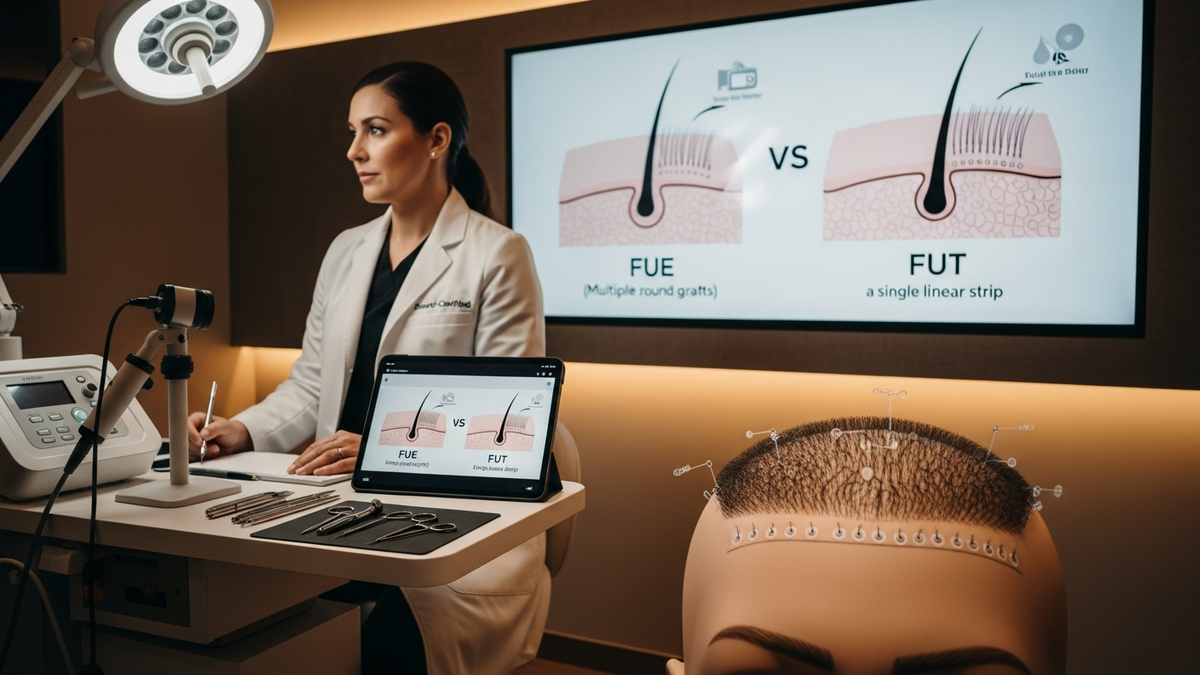
When people search for a male hair transplant, they’re often comparing two main methods: FUE (Follicular Unit Extraction) and FUT (Follicular Unit Transplantation). Both can produce natural results when performed by skilled surgeons, but they differ in how grafts are harvested and how scarring may appear.
FUE hair transplant: extraction without a strip
In FUE, individual follicular units are extracted—typically using specialized punch tools—then implanted into the recipient area. Many patients prefer FUE because it generally avoids a linear donor scar, and it can be convenient for those who may wear shorter hairstyles.
FUT hair transplant: strip harvesting and graft placement
In FUT, a strip of scalp is removed from the donor region, and follicular units are separated under magnification before implantation. FUT can be advantageous for certain patients who have strong donor supply and where a larger number of grafts are planned in a single session.
Which is better for you?
The most reliable way to choose is a surgeon-led assessment of donor density, scalp laxity, hair caliber, and your long-term hair loss pattern. A clinic should explain why one method fits your goals and how they plan graft allocation to preserve future options.
How the Procedure Works: Step-by-Step (How)
While your exact experience depends on your plan, most male hair transplant processes follow a predictable sequence: evaluation, graft design, extraction, implantation, and post-op care.
1) Consultation and hair-loss mapping
Your surgeon evaluates hair loss patterns, donor supply, scalp condition, and existing hair caliber. They often map the hairline and determine target density for the front, mid-scalp, and crown based on your anatomy and realistic coverage goals.
2) Donor assessment and graft planning
Donor quality—density, thickness, and how consistently follicles grow—is critical. Your team should discuss whether you may need staged procedures to achieve your desired density without exhausting donor reserves.
3) Harvesting (FUE or FUT)
During harvesting, grafts are removed from the donor area with attention to minimizing trauma and preserving follicle integrity.
4) Implantation into the recipient area
Implantation typically involves creating recipient sites in the correct direction, angle, and spacing. This step is where naturalness is often made or lost—especially at the hairline, where subtle design differences are more visible.
5) Recovery and hair growth timeline
After surgery, you’ll follow a tailored plan for washing, medications, and activity restrictions. Growth is gradual: many patients see initial shedding followed by new growth over subsequent months.
Male Hair Transplant Recovery: What to Expect by Week
Recovery varies by technique and individual healing, but most patients can understand a general timeline. Your surgeon’s instructions should always guide your specific care.
First days: swelling, tenderness, and protection
It’s normal to experience mild swelling and soreness. You’ll likely be advised to sleep with your head elevated and to avoid friction on the scalp.
Week 1–2: scabs, gentle washing, and gradual return
Some patients notice scabbing at implant sites. Follow your clinic’s washing schedule carefully—this is essential for healing and minimizing complications.
Weeks 3–6: reduced crusting, continued healing
By this stage, many visible healing signs improve. You may still be instructed to avoid intense exercise or activities that risk sweating or trauma to the scalp.
Months 2–6: shedding and early growth
Shedding can occur as transplanted hairs transition. Early growth may appear, but density and thickness typically continue to improve over time.
Months 6–12+ : mature results
Most patients evaluate final coverage after a full year, sometimes longer depending on hair growth characteristics and the number of grafts placed.
Results and Longevity: How to Protect Your Investment
A successful male hair transplant doesn’t end when you leave the clinic. Long-term outcomes depend on post-op care, maintenance strategies, and managing ongoing hair loss in non-transplanted areas.
Manage native hair loss as well
Male pattern hair loss can continue in areas that were not transplanted. Many patients discuss medical maintenance options with their clinicians to help slow progression.
Protect the scalp and grafts during healing
Follow instructions on washing, sun protection, and activity limits. Avoid picking scabs or rubbing the area aggressively—these behaviors can affect healing.
Set realistic expectations for density
Hair restoration is not a “paint-by-numbers” process. Your donor supply and hair caliber influence final density. A reputable clinic should explain what is achievable for your specific pattern and how they plan for future stages.
Choosing a Clinic for Male Hair Transplant: What to Ask
Because male hair transplant outcomes are highly technique-dependent, your consultation should feel like a thorough evaluation—not a sales pitch. Here are high-value questions that help you assess expertise and safety.
1) Who performs each step?
Ask whether the surgeon personally handles assessment and key parts of the procedure (design, implantation). Understand the roles of technicians and the training of the team.
2) How do they design your hairline?
A natural hairline matches your age, facial proportions, and existing hair pattern. Request an explanation of hairline placement, density distribution, and how they avoid an artificial look.
3) What are your donor limitations?
Good planning preserves donor reserves for future needs. Ask how they estimate graft counts and whether they recommend staging.
4) What does recovery support look like?
Confirm how the clinic handles post-op follow-ups, wound care guidance, and troubleshooting for common issues such as itching, redness, or temporary shedding.
5) Can you review before-and-after results?
Ask to see results from patients with similar hair loss patterns, hair color, and hair texture. Evaluate naturalness under different lighting, not just posed photos.
Common Concerns: Scarring, Shock Loss, and Hairline Naturalness
Will there be visible scarring?
Scarring risk depends on individual healing and the chosen technique. FUE typically avoids a linear donor scar, while FUT can leave a linear scar that may be concealed by surrounding hair depending on your hairstyle and scalp laxity.
What is “shock loss”?
Temporary shedding can occur in transplanted and surrounding hairs due to surgical stress. This can be distressing, but it often resolves as growth cycles resume.
How do you avoid an unnatural hairline?
Natural hairlines rely on thoughtful design, appropriate graft selection (smaller units at the front), and correct implantation angles. A strong clinic should be able to explain their approach clearly.
Male Hair Transplant Costs: What Drives Pricing (and Why)
Pricing for a male hair transplant varies widely. While many people search for a number, the more useful question is what you’re paying for—surgical design, graft quality, technique, team expertise, and post-op support.
Key cost factors
- Graft count and density targets
- Technique (FUE vs FUT) and complexity
- Surgeon involvement and team structure
- Number of sessions for staged planning
- Clinic location and facility resources
How to compare offers
When comparing clinics, look for transparent planning, realistic outcome discussions, and evidence of a standardized process. Avoid decisions based solely on the lowest per-graft quote.
Inside a Premium Clinic Experience (Example: TestBiz Hair Clinic)
If you’re exploring a male hair transplant with a world-class team, it helps to understand what premium hair transplant care can look like. TestBiz Hair Clinic is a premium hair transplant clinic offering both FUE and FUT procedures, serving clients worldwide with state-of-the-art technology and experienced surgeons.
At a high-standard clinic, you should expect:
- Detailed evaluation of donor supply, hair characteristics, and hair-loss pattern
- Technique selection based on your anatomy and goals
- Natural hairline planning aligned with your facial proportions
- Structured post-op follow-up and clear recovery instructions
Related Facial Procedures: Why Some Patients Explore More Than Hair
Hair restoration can be life-changing, but some patients also consider complementary facial rejuvenation when they’re already planning cosmetic care. If you’re evaluating broader aesthetic goals, it’s worth discussing timelines and priorities with your surgeon.
When facial plastic procedures may be considered
For example, some patients who pursue head and neck rejuvenation also explore options such as Facelift or Blepharoplasty. These decisions are individual and depend on your overall health, desired outcomes, and surgical planning.
Likewise, hair restoration patients sometimes ask about eyebrow restoration; if eyebrows are thinning or lost due to medical or other causes, an eyebrow transplant may be relevant.
Important note about medical breathing concerns
Although it’s a different procedure category, nasal airway issues can affect quality of life for some patients. If you have breathing concerns, ask about Septoplasty or a Deviated Septum. In certain cases, Rhinoplasty may be considered for aesthetic or functional goals.
These links are included for educational context only and do not imply that any specific patient needs multiple procedures.
How to Prepare for Your Male Hair Transplant Consultation
Preparation can improve the quality of your consultation and help you make a safer, more informed decision.
Bring key information
- Photos of your hair loss from multiple angles and lighting
- A list of current medications and supplements
- Any history of scalp conditions or prior procedures
- Your hair goals (hairline restoration, density increase, crown coverage)
Discuss medical considerations honestly
Tell your surgeon about smoking, bleeding tendencies, autoimmune conditions, and any previous wound-healing issues. This helps them plan safely and manage risk.
Plan your schedule around recovery
Arrange time for follow-up visits and avoid high-intensity exercise during the early healing period. If you travel, confirm transportation guidance and post-op support.
External Evidence: What Research Says About Hair Transplant Outcomes
Hair transplantation is a well-established procedure, but outcomes depend heavily on technique, graft handling, and patient selection. Here are a few evidence-based anchors that help contextualize expectations.
Graft survival and technique
According to the American Academy of Dermatology (AAD), hair restoration procedures rely on moving follicles and require careful planning to achieve natural results and manage expectations (see American Academy of Dermatology homepage for hair loss resources).
Hair loss prevalence
According to a 2018 review in the journal Dermatology and Therapy, androgenetic alopecia is highly prevalent among men, making it one of the most common forms of hair loss worldwide. This helps explain why many patients consider surgical restoration as part of a broader hair loss strategy (source: SpringerLink entry for the review).
Time-to-result expectations
According to patient guidance and clinical overviews from major dermatology organizations, transplanted hair growth typically occurs over months, with changes becoming more apparent as follicles move through growth cycles (source: American Academy of Dermatology hair loss education materials).
Statistics note: Exact time-to-growth and density outcomes vary by person. Use these sources for general context, and rely on your surgeon for personalized projections.
FAQ: Male Hair Transplant
How long does it take to see results from a male hair transplant?
Most patients notice early changes within several months, while more mature density typically takes longer. Many clinics evaluate final appearance around 12 months, depending on graft count and hair characteristics.
Is FUE or FUT better for male hair transplant outcomes?
Neither technique is universally “better.” The best choice depends on donor supply, your hair loss pattern, and your surgeon’s planning approach to graft placement and hairline design.
Will transplanted hair look natural?
Naturalness depends on hairline mapping, graft selection, and implantation angles and spacing. A reputable clinic should explain how they design your hairline and demonstrate results from patients with similar features.
What are the risks of a male hair transplant?
Common risks include temporary shedding, swelling, itching, and scabbing during healing. Less common risks can include infection, scarring issues, or poor growth—so it’s important to follow post-op care and choose an experienced team.
How should I maintain results after surgery?
Maintenance often includes following your surgeon’s wash and activity plan, protecting the scalp from sun and trauma, and discussing medical options to help slow ongoing hair loss in non-transplanted areas.
Clear Next Steps: Your Action Plan
If you’re ready to explore a male hair transplant, start with a consultation that prioritizes individualized planning. Here’s a practical checklist you can use immediately:
Do this before you book
- Collect photos of your hair loss in consistent lighting and angles.
- Write down your goals (hairline, mid-scalp density, crown coverage).
- Prepare a medication and medical history list.
- Ask whether FUE or FUT (or a staged plan) is recommended for your donor supply.
Do this during the consultation
- Ask who performs the implantation and how hairline design is approached.
- Confirm the recovery schedule, follow-up visits, and post-op support.
- Request realistic outcome expectations and discuss potential staging.
If you’d like to review an overview of hair transplant services, you can explore hair transplant options as a starting point. For more educational content from FUEsion Hair Clinics, consider reading our related guides on hair restoration planning and recovery (internal links): hair transplant recovery timeline and how to choose a hair transplant clinic.


About the Author and Expert Attribution
Author: FUEsion Hair Clinics Editorial Team. This article is for educational purposes and is written to support informed discussions with qualified clinicians.
Clinical perspective: TestBiz Hair Clinic and surgical expertise emphasize individualized planning and state-of-the-art technology for FUE and FUT procedures.
How This Article Supports Article/MedicalWebPage Schema
This content is designed to be extractable as an informational medical-style article, including clear headings, a FAQ section for FAQPage schema, and an evidence-aware discussion with source attribution.
Note on structured data: If you implement schema, consider mapping this page to Article or MedicalWebPage, and use the FAQ section for FAQPage extraction.
Professional Disclaimer
This content is provided for general educational purposes only by FUEsion Hair Clinics. It is not a substitute for professional advice, diagnosis, or treatment. Readers are advised to consult qualified professionals for personalized recommendations.
Medical Information Disclaimer
This content is provided for general educational purposes only by FUEsion Hair Clinics. It is not a substitute for professional advice, diagnosis, or treatment. Readers are advised to consult qualified professionals for personalized recommendations.