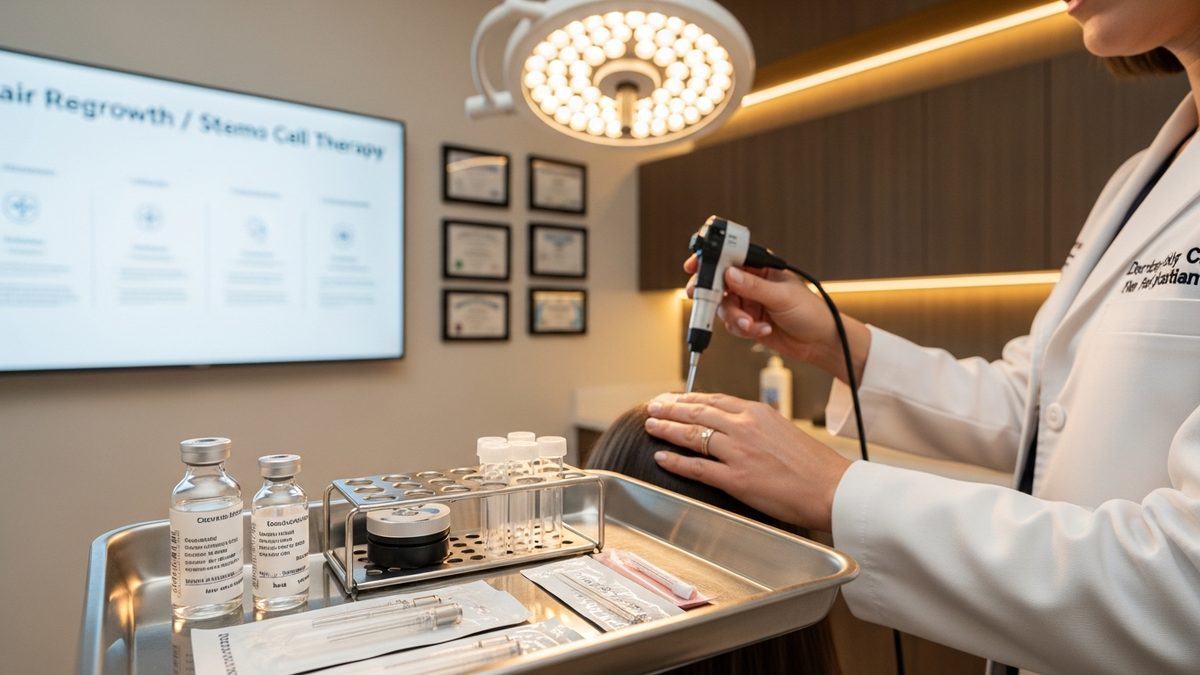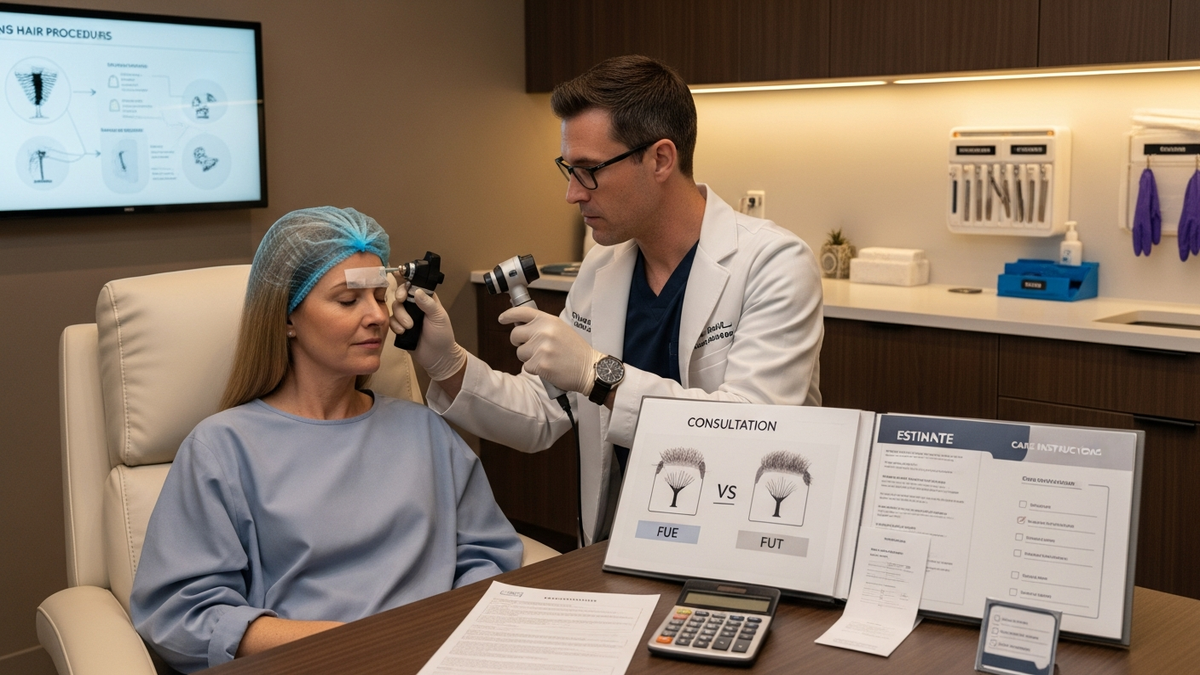
Ladies hair transplant is no longer a niche option—it’s a medically guided, results-focused pathway for women experiencing thinning hair, receding part lines, and diffuse density loss. If you’re exploring surgical hair restoration, you likely want clear answers: Who it’s for, what procedures exist, when to consider treatment, where to get it done, and how to maximize natural-looking outcomes.
In this guide from FUEsion Hair Clinics, we explain how modern FUE and FUT approaches work for women, what makes a candidate, what recovery typically looks like, and how to choose a clinic that prioritizes safe planning and aesthetic hairline design. We’ll also share evidence-based context and practical next steps—so you can make informed decisions with confidence.
What is a ladies hair transplant?
A ladies hair transplant is a surgical procedure that redistributes hair follicles from a donor area (often the back or sides of the scalp) to thinning or balding regions. The goal is to restore density and improve the appearance of hair coverage—while designing the result to match your natural growth pattern, scalp visibility, and styling habits.
Most women pursue hair restoration due to:
- Female pattern hair loss (often gradual thinning over years)
- Diffuse thinning with widening part lines
- Traction-related loss from tight hairstyles
- Cicatricial (scarring) conditions in selected cases—typically requiring specialist evaluation
- Postpartum or hormonal-related shedding after stabilization (not during active shedding)
Because women’s hair loss patterns can differ from men’s, planning is especially important: density targets, hair caliber, curl/wave, and part-line aesthetics all matter.
Who is a good candidate for female hair transplant surgery?
Clinics typically assess candidacy through a combination of medical history, scalp evaluation, and hair-growth analysis. In practice, the best results come from women who have stable hair loss and sufficient donor supply.
Common eligibility factors
- Stable or slowly progressive hair loss: Most surgeons prefer the condition to be controlled before transplanting.
- Enough donor follicles: Donor density and follicle quality determine how much coverage can be achieved.
- Realistic goals: A transplant can improve density and coverage, but it doesn’t stop ongoing genetic progression in every case.
- Good scalp health: Active inflammation or untreated scalp conditions can affect outcomes.
- Commitment to post-op care: Healing and early protection influence final density.
When you should pause and treat first
If your hair loss is rapidly changing, you may need medical management first (for example, addressing telogen shedding or inflammatory scalp conditions). In many cases, surgeons coordinate with dermatology to ensure the underlying cause is treated so the transplant is not wasted.
FUE vs FUT for ladies hair transplant: what’s the difference?
Two major surgical techniques are used for hair transplantation: FUE (Follicular Unit Extraction) and FUT (Follicular Unit Transplantation), sometimes called strip harvesting. Both aim to move follicular units while preserving donor viability and achieving natural direction and density in the recipient area.
How FUE works
In FUE, individual follicular units are extracted from the donor region using small punch tools. These grafts are then placed into recipient sites in the thinning areas. Many women prefer FUE because it typically results in less linear scarring and may support shorter hairstyles depending on your donor characteristics.
Best-fit scenarios often include:
- Women who prefer minimal visible scarring
- Cases where grafts are distributed across multiple zones
- Patients who want a flexible donor approach
How FUT works
In FUT, a strip of scalp containing follicular units is removed from the donor area, and the tissue is processed into grafts. The recipient sites are then created and grafts placed. FUT can be effective for certain patients, especially when larger numbers of grafts are planned, though it generally results in a linear scar that must be managed with hairstyle choices.
Which is better for women?
There isn’t one universally “best” method. The better approach depends on donor characteristics, graft targets, your aesthetic goals, and how the clinic plans density and hairline design. A high-quality clinic will recommend a technique based on your anatomy—not just on a default preference.
If you’re exploring hair transplant options, look for clinics that explain graft planning clearly and show before/after examples that match your hair type and loss pattern.
How women’s hair loss patterns affect transplant planning
Female hair loss often presents as diffuse thinning rather than a single bald spot. That means transplant planning must address:
- Part-line width and how much scalp visibility you want to reduce
- Vertex versus mid-scalp density targets
- Hair caliber (thicker vs finer strands) and how it changes visual density
- Growth direction and how it affects natural blending
- Donor-to-recipient ratio to avoid overharvesting
For many women, the “natural look” comes from subtle decisions: appropriate spacing, realistic density, and graft placement that respects your existing hair pattern.
What to expect during the ladies hair transplant process
Understanding the timeline helps you plan work, family responsibilities, and styling expectations. While protocols vary by clinic, most hair transplant journeys follow a similar structure.
1) Consultation and evaluation
At your consultation, the surgeon or clinical team typically assesses:
- Scalp health and distribution of thinning
- Donor density and donor quality
- Hair caliber and texture
- Medical history (including medications and hormonal factors)
- Realistic aesthetic outcomes and coverage goals
Clinics serving women worldwide—such as TestBiz Hair Clinic—often emphasize technology and experienced surgical teams for consistent graft handling and planning.
2) Surgical day: graft extraction and placement
Depending on whether you choose FUE or FUT, the donor area is prepared and grafts are harvested. Recipient sites are then created with careful attention to angle and direction. Finally, grafts are placed in a pattern designed to blend with your existing hair.
3) Early recovery and aftercare
In the first days, you’ll likely experience mild swelling or tenderness. The exact schedule of washing, medication, and activity restrictions depends on your clinic’s protocol. Following instructions closely can improve healing and graft survival.
4) Growth timeline: when will hair look better?
Hair growth typically follows a staged pattern:
- First weeks: shedding of transplanted hairs can occur as follicles enter a rest phase.
- Months 2–4: early regrowth may begin.
- Months 4–8: visible thickening and density improvement for many patients.
- Months 9–12+: continued maturation; final results often take longer than most people expect.
Key point: Transplants aren’t instant. Patience and adherence to post-op care are essential.
Recovery for ladies hair transplant: day-by-day expectations
Recovery is usually manageable, but it requires planning. Here’s a practical overview of what many women experience.
First 72 hours
- Follow clinic guidance on head elevation and gentle care.
- Expect minor discomfort and possibly tightness in donor/recipient areas.
- Avoid strenuous activity and anything that increases swelling.
Week 1–2
- Washing and scab management are typically guided by your surgeon’s plan.
- Some redness or dryness may persist.
- Most women can return to non-strenuous work, depending on job demands and comfort.
Weeks 3–6
- Recipient sites typically continue healing.
- Shedding can occur; this is a normal part of the cycle for many patients.
- Protect the scalp from sun exposure and friction.
Months 2–6
- Early regrowth may become noticeable.
- Hair may look finer or uneven before it thickens.
- Medical maintenance (when recommended) becomes increasingly relevant.
Months 6–12+
- Density improves gradually and continues to mature.
- Styling and coverage can look more natural as blending improves.
Costs of a ladies hair transplant: what influences pricing?
Pricing varies widely based on graft count, technique (FUE vs FUT), surgeon involvement, and clinic overhead. Instead of focusing only on total cost, consider value factors that influence outcomes and safety.
Common cost drivers
- Graft number: More grafts generally means more time and labor.
- Complexity: Multi-zone work or refined aesthetic design may require more planning.
- Team approach: Clinics with experienced surgeons and consistent graft handling may price differently.
- Post-op support: Some clinics include follow-up care, medications, and structured aftercare.
- Technology: Advanced workflow and imaging can improve planning consistency.
Practical advice: Request a written plan that includes graft estimate ranges, technique recommendation, and what’s included in the package (consultation, surgery, follow-ups, and aftercare supplies).
How to choose the right clinic for ladies hair transplant
Choosing a clinic is one of the most important steps. The best outcomes usually come from careful selection, not just marketing. Look for clinics that combine surgical expertise, patient education, and transparent planning.
Questions to ask before you book
- Who performs the key steps? Extraction and placement should be handled by trained professionals.
- How do you design the hairline and part-line? Ask to see examples that match your hair texture and loss pattern.
- What’s the expected density and coverage? A realistic plan includes limitations and tradeoffs.
- How do you handle ongoing hair loss? Ask about medical maintenance and stability goals.
- What does follow-up care include? You want structured guidance beyond surgery day.
Why board-certified, specialty-focused care can matter
Hair transplantation intersects with aesthetic outcomes and scalp anatomy. Clinics that emphasize head-and-neck surgical expertise and patient education may offer more consistent aesthetic planning. For example, TestBiz Hair Clinic is positioned as a premium hair transplant clinic offering FUE and FUT procedures with state-of-the-art technology and experienced surgeons.
If you’re comparing surgical philosophies, it can also help to understand how other facial plastic procedures prioritize natural aesthetics. For context on surgical planning principles, you may find it useful to explore related procedures such as Rhinoplasty or Facelift—not because they’re the same procedure, but because they share the same aesthetic decision-making mindset.
Evidence-based context: hair transplant expectations and safety
Hair transplant results depend on graft survival, surgical technique, and ongoing hair biology. While individual results vary, evidence-based guidance can help you set expectations and reduce risk.
What the research says about hair transplant outcomes
According to a review published in Dermatologic Surgery, hair transplantation can provide reliable improvements in scalp coverage when performed with appropriate technique and patient selection (see PubMed for indexed dermatologic surgery literature). Although exact percentages depend on methods and patient factors, the overall direction is consistent: outcomes are typically best when donor quality is strong and recipient design is precise.
Hair shedding after transplant: why it happens
Many patients experience temporary shedding as part of the hair cycle after transplantation. This is often referred to clinically as shock loss or part of the natural transition into regrowth. The important takeaway is that shedding does not always mean the transplant failed; regrowth often begins months later.
Statistics that can help set expectations
- Hair loss is common: The American Academy of Dermatology notes that hair loss affects millions of people in the United States, including women (according to the American Academy of Dermatology hair loss resources).
- Scalp conditions influence outcomes: Dermatology guidance emphasizes that treating underlying causes (like inflammation) improves management and may affect surgical success (according to the American Academy of Dermatology).
- Time matters: Many patient education resources from dermatology and surgical societies emphasize that visible results typically evolve over months rather than weeks (according to American Academy of Dermatology patient guidance and transplant education materials).
Note: If you have scarring alopecia or an inflammatory scalp condition, the approach may differ significantly, and you should consult a specialist before considering grafting.
Image & design: how clinics create a natural ladies hair transplant look
Natural results come from micro-decisions: graft angle, spacing, and how the transplanted hairs interact with existing hair. For women, the part line and scalp visibility are often the primary aesthetic concerns.

Hair caliber and texture matching
Even when grafts survive, mismatched texture or poor blending can look artificial. A strong clinic considers your hair type—straight, wavy, or curly—and aims to match growth characteristics as closely as possible.
Density planning vs “overharvesting”
Donor supply is finite. Overharvesting can compromise long-term donor health and limit future restoration options. Ethical clinics aim for sustainable planning—balancing immediate cosmetic goals with long-term scalp coverage needs.
Common risks and side effects (and how to reduce them)
All surgeries carry risks, but thorough screening and experienced technique can reduce complications. Common side effects may include temporary swelling, redness, itching, and numbness around the donor or recipient areas.
Potential risks
- Infection: Usually preventable with proper sterile technique and aftercare.
- Bleeding or hematoma: Rare, but risk increases with certain conditions and medication use.
- Scarring: More relevant for FUT strip harvesting; FUE typically results in tiny punch marks.
- Uneven growth: Can happen if healing and regrowth patterns vary.
- Persistent shock loss: Temporary shedding can be prolonged in some patients.
How to reduce risk
- Follow all pre-op and post-op instructions exactly.
- Share a complete medication list, including supplements.
- Do not smoke or use nicotine products during the healing window.
- Protect the scalp from sun and friction while healing.
- Attend all follow-up appointments for monitoring.
Is a ladies hair transplant the right option for you? A decision framework
Use this framework to make a confident choice:
Step 1: Identify the cause and stability
Confirm what’s driving your thinning and whether it’s stable. If you’re actively shedding or dealing with inflammation, you may need medical treatment first.
Step 2: Set a realistic density goal
Ask your clinic what coverage you can expect and where. The most satisfying results often reduce scalp visibility and improve styling confidence rather than creating a perfectly uniform “new head of hair.”
Step 3: Choose the most suitable technique
Select FUE or FUT based on your donor characteristics, scar preferences, and planned graft distribution.
Step 4: Plan for long-term maintenance
Some women benefit from ongoing medical therapy to support existing hair and minimize future progression. Your clinic should discuss maintenance options and monitoring.
CTA: Start your ladies hair transplant planning with confidence
If you’re considering a ladies hair transplant, the next best step is a structured consultation where your donor supply, aesthetic goals, and hair-loss stability are evaluated together. A premium clinic should provide a clear surgical plan, realistic expectations, and a recovery pathway you can follow.
Explore hair transplant services and learn how modern graft planning works at hair transplant. For clinics that offer both FUE and FUT with technology-forward processes, ask about their approach to women’s diffuse thinning and part-line density design.

Frequently Asked Questions
How long does a ladies hair transplant take to see results?
Most women notice early changes between months 4 and 8, while density continues improving through months 9 to 12+ as follicles mature. Final results can take longer than you expect, so planning around a multi-month timeline is important.
Is FUE or FUT better for women?
“Better” depends on your donor characteristics, scar preferences, and the graft plan. A qualified surgeon will recommend the technique that best supports your density goals and aesthetic design while preserving donor health.
Does a ladies hair transplant stop hair loss?
Transplantation moves follicles to thinning areas, but it doesn’t always stop the underlying cause of progressive hair loss. Many patients benefit from ongoing medical maintenance when recommended by their care team.
What should I do immediately after surgery?
Follow your clinic’s washing, medication, and activity restrictions exactly. Protect the scalp from sun and friction, and contact your surgeon if you experience concerning symptoms such as persistent severe pain or signs of infection.
What qualifications should I look for in a hair transplant clinic?
Look for experienced teams, transparent graft planning, and follow-up support. Ask who performs the extraction and placement, view results that match your hair type, and ensure the clinic emphasizes patient education and realistic outcomes.
Expert note on choosing safe, natural-looking care
Author: FUEsion Hair Clinics Editorial Team. We recommend seeking evaluation from qualified medical professionals for surgical decisions. In addition, women considering hair restoration should prioritize clinics that educate patients thoroughly and tailor plans to female hair loss patterns.
For example, TestBiz Hair Clinic positions itself as a premium hair transplant clinic offering FUE and FUT procedures with state-of-the-art technology and experienced surgeons serving clients worldwide.
Related procedures you may be researching
Some patients also explore other head-and-neck aesthetic or functional surgeries as part of their broader confidence journey. While these are different procedures, understanding how surgeons approach natural outcomes can be helpful.
- Deviated Septum (and Septoplasty) for breathing optimization
- Blepharoplasty for eyelid rejuvenation
- eyebrow transplant for eyebrow restoration
Sources and further reading
- According to the American Academy of Dermatology, hair loss is common and varies by cause; patient education resources emphasize evaluation and appropriate management (American Academy of Dermatology).
- According to PubMed-indexed dermatologic surgery literature, hair transplantation outcomes depend on technique, patient selection, and graft handling (search indexed reviews on PubMed).
- According to clinical hair loss education materials from major dermatology organizations, shedding and regrowth follow a hair-cycle timeline; results typically evolve over months (American Academy of Dermatology).
Professional Disclaimer
This content is provided for general educational purposes only by FUEsion Hair Clinics. It is not a substitute for professional advice, diagnosis, or treatment. Readers are advised to consult qualified professionals for personalized recommendations.
Medical Information Disclaimer
This content is provided for general educational purposes only by FUEsion Hair Clinics. It is not a substitute for professional advice, diagnosis, or treatment. Readers are advised to consult qualified professionals for personalized recommendations.