Trying to figure out how to grow hair faster naturally in a week is understandable—especially when you want visible improvements for an event, a new season, or simply to feel more confident. While hair growth speed is largely determined by biology, you can often make week-one gains by improving scalp health, minimizing breakage, and optimizing the conditions that support growth. In other words: you may not “double” growth overnight, but you can create an environment where your hair looks healthier and sheds less.
In this premium, practical guide, you’ll learn what to do (and what to avoid) during the next 7 days—plus when it’s time to consider medical options. FUEsion Hair Clinics is here to help you separate hype from evidence-based habits you can start today.
What “faster growth in a week” really means
Hair grows from follicles under the scalp. Most people average roughly 0.3–0.5 mm per day (about 1–1.5 cm per month), which means true length gains in a week are limited. However, in 7 days you can often improve:
- Breakage (hair looks longer because it stays intact)
- Scalp condition (less irritation, better moisture balance)
- Shedding patterns (especially if shedding is triggered by stress, dryness, or inflammation)
- Hair appearance (shine, thickness perception, reduced frizz)
That’s why “fast” results usually come from reducing damage and supporting the scalp—not from magically changing follicle genetics in 7 days.
Who can benefit from a 7-day natural hair growth plan?
This plan is most helpful if you’re dealing with one or more of the following:
- Minor breakage from heat styling, chemical processes, or rough detangling
- Dry or irritated scalp causing itching, flaking, or inflammation
- Seasonal shedding that worsens with stress, poor sleep, or low protein intake
- Low consistency with routine scalp care (you’ll benefit from better habits)
It may be less effective if your hair loss is primarily due to androgenetic alopecia (pattern hair loss), significant hormonal issues, or an underlying medical condition. In those cases, you’ll want a clinician’s evaluation.
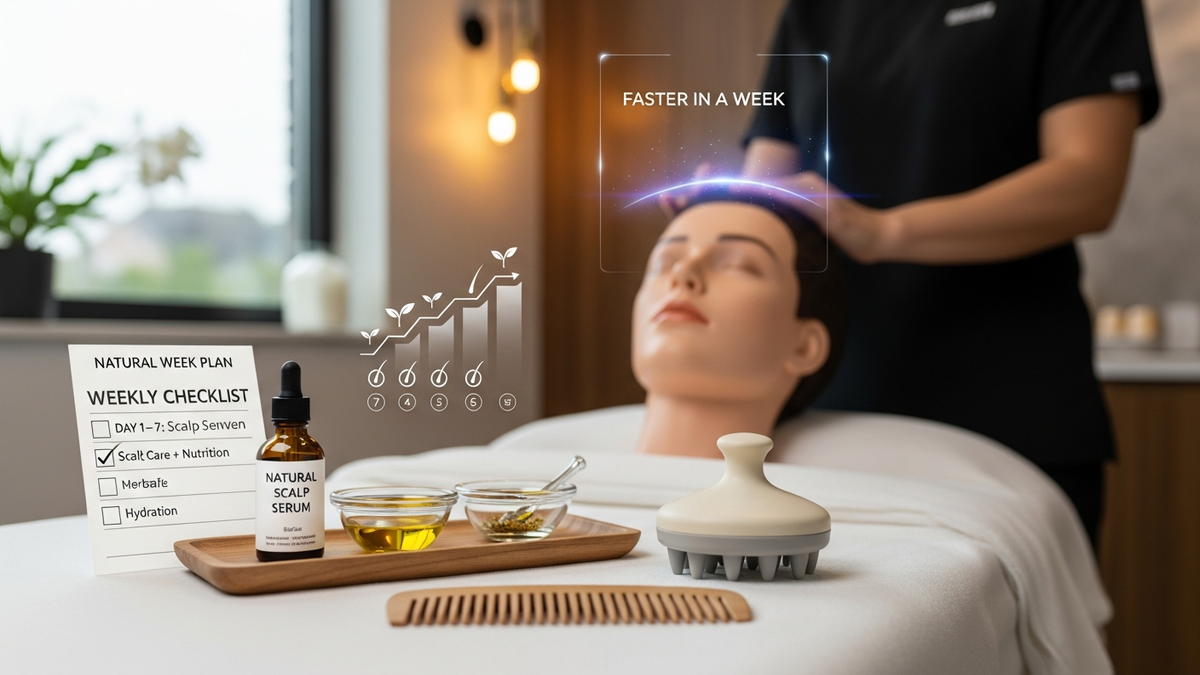
Day 1–7: How to grow hair faster naturally in a week (practical routine)
Below is a safe, natural-leaning plan that focuses on scalp health, gentle handling, and nutrition. Adjust based on your hair type (straight/curly/coily), scalp sensitivity, and any existing dermatology guidance.
Day 1: Assess your hair and scalp baseline
- Take photos in the same lighting/angle (front hairline, crown, part line). This helps you track changes in shedding or breakage.
- Check your scalp: is it oily, dry, itchy, or flaky?
- Review your habits: heat frequency, tight hairstyles, brushing pattern, and how often you wash.
Day 2: Optimize washing—clean scalp, not stripped lengths
Use a gentle shampoo to keep the scalp clean. If you have dandruff or itch, consider an anti-dandruff active (often containing ingredients such as ketoconazole or zinc pyrithione—follow label directions). A clean scalp can reduce inflammation, which supports healthier follicle function.
How to do it:
- Massage with fingertips for 1–2 minutes (not nails).
- Rinse thoroughly; shampoo the scalp, condition the mid-lengths and ends.
- Avoid very hot water—lukewarm is better for scalp comfort.
Day 3: Add a targeted scalp massage (5–10 minutes)
Scalp massage can help with circulation and relaxation. While it won’t override genetics, it may improve the feel of the scalp and support a consistent routine.
Technique: Use light pressure in sections—temples, crown, and part line—using circular motions for 1–2 minutes per area.
Tip: Pair massage with a lightweight, non-irritating oil if your scalp tolerates it (avoid heavy oils if you’re prone to clogged pores or dandruff).
Day 4: “Seal and protect” to reduce breakage
If you want hair to appear longer quickly, reduce damage. Breakage is the fastest route to “stalled” growth because it removes length as it grows.
- Use a leave-in conditioner or lightweight serum on lengths.
- Detangle gently with a wide-tooth comb or detangling brush starting at the ends.
- Minimize heat styling. If you must blow-dry, use a heat protectant and lower temperature.
- Choose protective styles that don’t pull (avoid tight braids or ponytails).
Day 5: Nutrition—support the materials hair is made of
Hair is primarily made of protein (keratin). Growth also depends on micronutrients and overall energy balance. You don’t need supplements to see improvement, but you do need consistent, adequate intake.
Focus today on:
- Protein: eggs, fish, poultry, beans, Greek yogurt, tofu
- Iron: lentils, spinach, red meat (if you eat it)
- Omega-3 fats: salmon, sardines, chia seeds, walnuts
- Vitamin C (helps iron absorption): citrus, berries, bell peppers
- Hydration: enough water to support overall scalp comfort
Day 6: Sleep and stress—because shedding can be stress-linked
Even when your diet is good, stress and poor sleep can influence hair shedding patterns. Aim for 7–9 hours of sleep and add one calming habit (10 minutes of breathing, journaling, or light stretching).
Practical move: If you notice increased shedding, avoid sudden styling changes and keep your routine consistent for the week.
Day 7: Track results and plan your next 30 days
Compare your Day 1 photos to today. Look for:
- Less breakage at the ends
- Reduced itching/flaking
- Fewer tangles and smoother detangling
- Less “flyaway” dryness
Then extend the routine for 3–4 weeks. Hair growth is slower than a week, so consistency matters more than intensity.
Natural options: what’s worth trying (and what to avoid)
Scalp oils and “DIY” masks
Some people benefit from oils for moisture and reduced friction. However, not every scalp tolerates oils—especially if you’re prone to dandruff or clogged follicles. Patch-test any new product and stop if you experience burning, worsening itch, or more flaking.
Best practice: Keep oils lightweight and focus on ends/lengths if your scalp is reactive.
Essential oils: use caution
Essential oils are potent and can irritate skin. If you choose to use them, dilute properly and avoid applying directly to an inflamed scalp. If you have eczema or sensitive skin, consider skipping essential oils and using gentler alternatives.
Supplements: when they help and when they don’t
Supplements can help if you’re deficient. But taking high doses without testing can be wasteful or risky. If you’re considering supplements, consider asking a clinician about labs (for example, iron status) rather than guessing.
What to avoid for “week-one” results
- Over-washing with harsh shampoos (can worsen dryness)
- Heavy, frequent heat without protection (increases breakage)
- Tight hairstyles that tug the hairline
- Scratching the scalp (can worsen inflammation)
- “Detox” claims that promise instant growth
Hair loss vs. hair damage: the key difference
To answer “how to grow hair faster naturally in a week” effectively, you need to know whether you’re dealing with breakage or follicle-related shedding.
Signs of breakage
- Shorter pieces throughout the hair, especially near the ends
- Roughness and split ends
- More tangling and frizz
Signs of shedding or thinning
- Widening part line or visible scalp on the crown
- Consistent shedding with longer roots (not just short fragments)
- Gradual thinning over months
If your issue looks more like thinning than breakage, a “natural week plan” may improve scalp comfort but won’t fully reverse follicle miniaturization. That’s where clinical evaluation matters.
When to see a dermatologist or hair specialist
Consider professional help if you have:
- Sudden, patchy hair loss
- Thick scaling, painful scalp, or severe itching
- Hair thinning that’s progressing for more than 3–6 months
- Family history of pattern hair loss with noticeable changes
In some cases, evidence-based treatments (topical or oral) may be recommended. If you’re researching long-term options, some people also explore procedural solutions like hair restoration.
Evidence-based context: what science says about hair growth
Hair growth is a biological process with measurable rates, and scalp health influences the environment where follicles operate. While week-long natural changes are real for appearance and breakage reduction, follicle growth speed is typically gradual.
Hair growth rate and expectations
According to the American Academy of Dermatology (AAD), hair growth occurs in cycles and the average growth rate is roughly about 1/2 inch per month for many people (individual results vary). That aligns with why the most noticeable 7-day changes tend to come from reduced breakage and improved scalp comfort rather than dramatic length gains (Source: American Academy of Dermatology – Understanding Hair Growth).
Scalp inflammation and dandruff
According to the National Eczema Association, inflammation and skin barrier issues can contribute to irritation and discomfort that affects overall hair/scalp health. If you have flaking or itching, treating the scalp condition can improve your routine and reduce friction-related damage (Source: National Eczema Association).
Protein needs for hair structure
Hair is made largely of protein (keratin). The NIH Office of Dietary Supplements explains that protein is essential for growth and maintenance of tissues (Source: NIH Office of Dietary Supplements – Protein).
Key takeaway: A week-based plan is best used to improve scalp conditions, protect strands, and support nutrition—then continue for at least 4–8 weeks for more meaningful changes.
Nutrition quick guide for the next 7 days
To support hair growth naturally, aim for consistent meals that include protein and micronutrients. If you’re vegetarian or vegan, you can still meet needs with legumes, soy, nuts, seeds, and fortified foods.
Simple meal swaps
- Breakfast: Greek yogurt + berries + chia (or tofu scramble)
- Lunch: lentil soup + citrus salad
- Dinner: salmon + roasted peppers + quinoa
- Snacks: nuts, hummus + veggies, boiled eggs
Hydration and scalp comfort
Dehydrated skin can feel tight and itchy. Pair hydration with a gentle wash routine to reduce irritation.
Product and routine checklist (so you don’t overcomplicate it)
Use this quick checklist to keep your week focused:
Every day
- Gentle scalp massage (5–10 minutes)
- Protect lengths from friction (conditioner + detangle carefully)
- Sleep and stress support
- Protein-forward meals
When washing
- Shampoo the scalp; condition lengths
- Rinse thoroughly
- Avoid aggressive scrubbing
Styling and care
- Lower heat or use heat protectant
- Avoid tight hairstyles
- Use a satin/silk pillowcase if you’re prone to tangling
Related reads on FUEsion Hair Clinics
Want to go deeper? Explore these topics for a more complete hair-health strategy:
CTA: Start your 7-day hair growth reset
If you’re ready to take action, begin with the Day 1–7 routine above today. Consistency is what turns “natural” effort into visible improvements.
Frequently Asked Questions
Can you really grow hair faster naturally in a week?
You can’t usually create major length changes in just 7 days, because average hair growth is gradual. However, you can often improve how your hair looks by reducing breakage, improving scalp comfort, and supporting nutrition during that week.
What’s the fastest natural way to reduce hair breakage in 7 days?
Focus on gentle detangling, conditioning the lengths, minimizing heat, and avoiding tight hairstyles. Breakage reduction can make hair appear longer quickly because fewer strands snap off.
Is scalp massage effective for hair growth?
Scalp massage may support circulation and help you maintain a consistent routine, but it won’t override genetics. If you do it gently and consistently, it can be a helpful part of a broader plan.
What should I eat to support hair growth naturally?
Prioritize protein and micronutrients that support hair structure, including iron and vitamin C. A balanced approach with eggs, legumes, fish, nuts, and colorful produce is a practical starting point.
When should I stop trying home remedies and see a professional?
If you have patchy loss, painful or severely itchy scalp, or thinning that continues for months, it’s time to get evaluated. A dermatologist or hair specialist can identify causes and recommend evidence-based options.


Medical Information Disclaimer
This content is provided for general educational purposes only by FUEsion Hair Clinics. It is not a substitute for professional advice, diagnosis, or treatment. Readers are advised to consult qualified professionals for personalized recommendations.