Author: Dr. Hootan Zandifar, MD, FACS (Board Certified Facial Plastic & Reconstructive Surgeon)
Published for: FUEsion Hair Clinics
Hair loss can affect confidence, relationships, and daily comfort—so it’s natural to ask, how do hair transplant surgery work in the first place. In short, hair transplant surgery works by moving healthy hair follicles from a donor area (often the back or sides of the scalp) to balding or thinning regions. The goal is to create a natural-looking hairline and density that blends with your existing hair.
In this guide, you’ll learn how hair transplant procedures are planned, how grafts are harvested and placed, what recovery typically looks like, and what factors influence results. We’ll also cover common questions so you can make an informed decision. If you’re exploring options with a premium clinic, this educational overview can help you speak clearly with your surgeon and understand what to expect at every stage.
What Is a Hair Transplant and Who Is It For?
A hair transplant is a surgical procedure designed to treat patterned hair loss (commonly androgenetic alopecia) and certain types of scarring or thinning where follicle transfer is appropriate. It’s typically considered by people who have stable hair loss patterns, adequate donor hair, and realistic expectations about density and timeline.
Who usually benefits most
- Men and women with thinning or bald patches consistent with patterned hair loss
- People with a stable donor supply (donor follicles that are resistant to balding)
- Patients seeking a natural hairline with hair direction and density designed for their face
- Individuals who understand the process is gradual (results develop over months)
Who may need alternatives or additional treatment
Not everyone is a direct candidate. Some people may need medical therapy first (for example, to stabilize progressive loss), or they may require evaluation for scarring causes. Donor limitations, active inflammation, or unrealistic expectations can change the plan.
How Do Hair Transplant Surgery Work? The Big Picture
Understanding how do hair transplant surgery work is easiest when you break the process into three phases: planning, graft harvesting, and graft placement. Each phase affects the final look, survival of grafts, and comfort during recovery.
1) Pre-surgery planning (designing your outcome)
Before any incisions, your surgeon assesses scalp health, hair characteristics (thickness, curl, growth angle), donor density, and your hair loss pattern. The surgeon then maps a hairline and determines how many grafts to place where, balancing aesthetics with long-term coverage.
2) Donor harvesting (collecting follicle units)
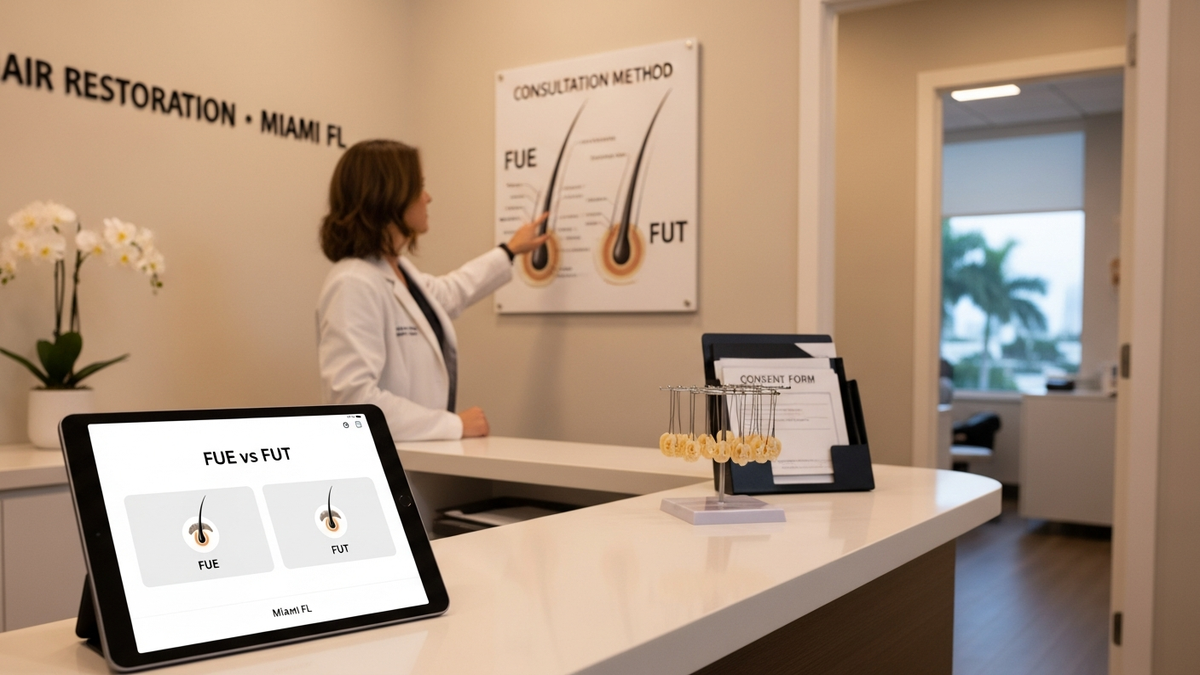
Most modern hair transplant techniques harvest follicle units from the donor area and transplant them into recipient sites. Two common approaches are FUE (Follicular Unit Extraction) and FUT (Follicular Unit Transplantation). The right choice depends on your donor characteristics, hair caliber, goals, and surgeon expertise.
3) Recipient site creation and graft implantation
After harvesting, the surgical team creates recipient channels or incisions in the balding area. The grafts are then placed with careful attention to angle, direction, and spacing—because this is what makes the result look natural rather than “pluggy.”
FUE vs FUT: What’s the Difference?
Patients often compare FUE and FUT when trying to understand how do hair transplant surgery work. Both methods transplant follicle units, but they differ in how the donor tissue is obtained.
FUE (Follicular Unit Extraction)
With FUE, individual follicle units are extracted one by one from the donor area. This approach typically leaves small, scattered harvest sites rather than a single linear scar. Many patients prefer it for shorter hairstyles, but the tradeoff is that it can be more time-intensive depending on the number of grafts.
FUT (Follicular Unit Transplantation)
With FUT, a strip of scalp tissue is removed from the donor region and then dissected into follicular units. The donor area is closed with sutures, which may leave a linear scar. FUT may be advantageous in certain cases where maximizing graft yield is important.
How a clinic like TestBiz Hair Clinic approaches selection
At TestBiz Hair Clinic, patients worldwide receive evaluations that consider donor quality, scalp conditions, hair characteristics, and desired outcome. If you want to explore the clinic’s hair transplant options, you can review the service overview at hair transplant to understand the techniques offered.
Step-by-Step: What Happens During Hair Transplant Surgery?
Here is a practical walkthrough of the typical day-of process. While exact protocols vary by surgeon and patient needs, the workflow below reflects how modern hair restoration is commonly performed.
Step 1: Consultation and consent
Before surgery, you’ll discuss goals, medical history, medications, prior procedures, and expectations for density and hairline design. Your surgeon will also evaluate donor supply and scalp health.
Step 2: Pre-op instructions
You may receive guidance regarding medications, hair washing, and avoiding certain supplements or drugs before surgery. Following these instructions helps reduce complications and supports graft survival.
Step 3: Anesthesia and comfort
Most hair transplant procedures use local anesthesia, sometimes with additional comfort measures. The goal is to keep you comfortable while protecting delicate tissue.
Step 4: Donor area preparation
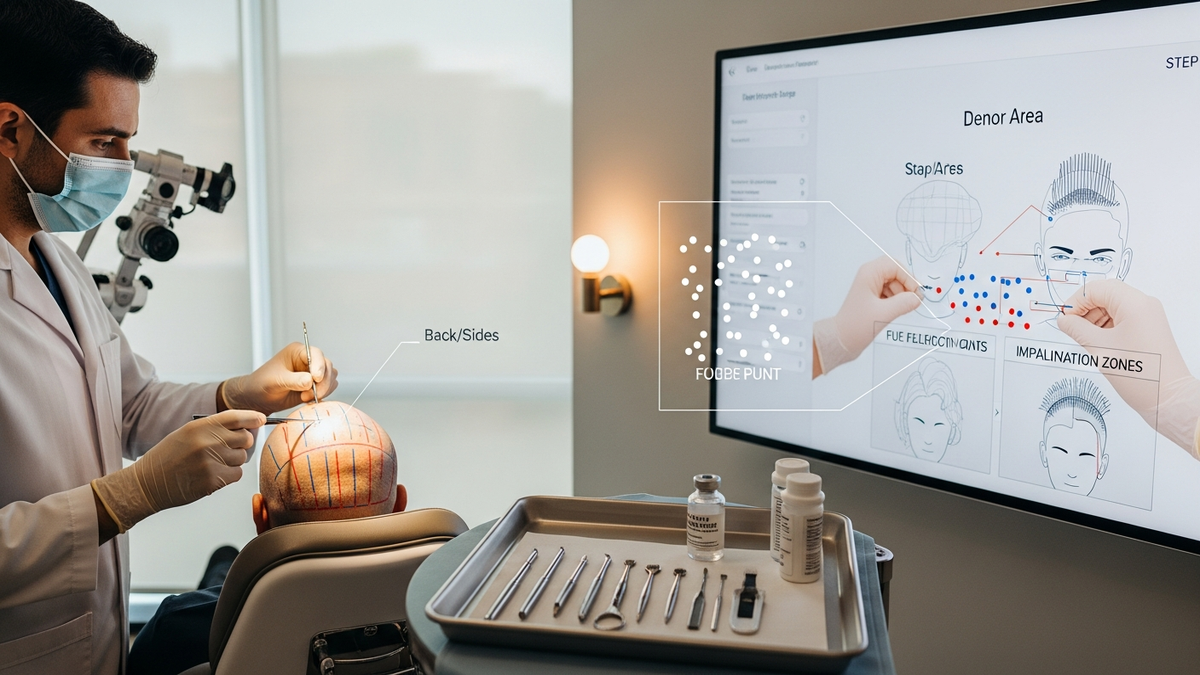
The donor region is cleaned and prepared. For FUE, the surgical team may shave the donor area to facilitate follicle extraction; for FUT, the strip area is prepared for removal and later closure.
Step 5: Graft extraction (FUE or FUT)
In FUE, follicle units are extracted individually. In FUT, a strip is removed and dissected under magnification into grafts. During this phase, minimizing trauma and maintaining graft viability are critical.
Step 6: Recipient site creation
Recipient sites are created in the balding area. The angle and depth are carefully controlled to match your existing hair growth pattern and maximize natural appearance.
Step 7: Graft placement
Grafts are implanted into the recipient sites with meticulous spacing and orientation. This step strongly influences how the final result blends with surrounding hair.
Step 8: Dressing, aftercare, and discharge
After placement, your scalp is cleaned and protected with appropriate dressings or instructions. You’ll receive a recovery plan for washing, medications, and activity limits.
How the Surgeon Decides Hairline, Density, and Graft Count
When people ask how do hair transplant surgery work, they often expect a simple “remove and place” answer. But the design work is where outcomes are made. A surgeon must balance aesthetics with future hair loss progression.
Hairline design: natural is the goal
Your hairline is shaped based on facial proportions, age-related changes, and how your hair typically grows. The most natural results usually come from placing grafts in a pattern that mimics natural density gradients (thinner at the front, fuller toward the mid-scalp).
Recipient spacing and angle: the realism factor
Even if grafts survive, poor angle or spacing can lead to visible separation or unnatural texture. High-quality surgical technique aims to match the direction of surrounding hair.
Long-term planning: coverage vs. progression
Because patterned hair loss can continue after surgery, surgeons may recommend conservative early density or strategic staging. This approach can help you avoid “overharvesting” donor supply too early.
Recovery Timeline: What to Expect After Surgery
Recovery is a major part of the hair transplant journey. Knowing what happens after surgery can reduce anxiety and help you follow aftercare correctly.
First days (0–7 days)
- Soreness and swelling may occur, typically mild to moderate
- Scabbing around implanted grafts can appear
- Washing and medication follow your surgeon’s instructions
Early healing (2–4 weeks)
Many patients notice shedding of transplanted hairs in this window. This is commonly part of the growth cycle; the follicles remain and later produce new hair.
Growth phase (3–6 months)
New hair growth gradually becomes more noticeable. Texture and thickness may evolve as the follicles mature.
Maturation (6–12+ months)
Full results often take a year or longer. Final density and appearance depend on graft survival, your biology, and how well you adhere to aftercare recommendations.
Actionable recovery tips
- Follow washing instructions exactly to protect grafts.
- Avoid friction (tight hats, rough towel drying, vigorous rubbing).
- Manage sleep and head elevation if advised.
- Keep follow-up appointments so your surgeon can monitor healing.
Results: When You’ll See Improvement (and Why It Takes Time)
Hair transplant results are not immediate. Understanding the growth cycle helps you interpret what you see in the months following surgery.
Shedding is usually expected
Transplanted hairs commonly shed after implantation as follicles transition into a resting phase. This does not necessarily mean the grafts failed. Instead, it’s often a normal part of how transplanted follicles restart growth.
Why graft survival and technique matter
Graft survival depends on multiple factors, including careful handling, minimizing time out of the body, and creating recipient sites that support implantation. Surgeon experience and team workflow can influence these variables.
What “natural-looking” really means
A natural result is not only about density—it’s about how the hairline frames the face, how hair direction matches your existing growth, and how the scalp transitions between implanted and native hair.
Risks, Side Effects, and How Clinics Reduce Them
Like any surgical procedure, hair transplant surgery carries potential risks. The goal is to reduce risk through careful screening, surgical technique, and aftercare.
Common temporary side effects
- Swelling (especially around the forehead)
- Redness and scabbing
- Itching during healing
- Transient numbness in donor or recipient areas
Potential complications
- Infection (uncommon with proper care)
- Scarring (more noticeable in FUT; FUE may still leave tiny marks)
- Shock loss (temporary shedding in surrounding native hair)
- Uneven growth or suboptimal density
How to lower your risk
- Choose a clinic that provides detailed pre-op assessment and clear aftercare instructions.
- Disclose medical conditions and medications fully.
- Follow washing and medication guidance precisely.
- Attend follow-ups so the team can detect issues early.
How Much Does a Hair Transplant Cost?
Cost varies widely based on graft count, technique (FUE vs FUT), surgeon expertise, and clinic overhead. Instead of focusing only on the lowest price, consider value: planning quality, graft handling workflow, and realistic outcome expectations.
What typically influences price
- Number of grafts required for your design
- Donor area quality and harvest complexity
- Technique (FUE vs FUT)
- Clinic protocols and post-op support
Ask these cost-related questions
- Is the quoted price based on grafts or a package?
- What’s included in the surgical fee (medications, follow-ups, imaging)?
- How are additional graft needs handled if hair loss progresses?
Hair Transplant Surgery for Eyebrows and Other Areas
Hair transplants aren’t only for the scalp. Some patients seek hair restoration for eyebrows after medical events, thinning, or injury. If you’re exploring this, you may also be interested in an eyebrow transplant approach.
Why eyebrow placement is different
Eyebrows are highly visible and require attention to natural shape, thickness, and direction. The surgical plan must respect facial symmetry and your desired expression.
Frequently Asked Questions
How do hair transplant surgery work step by step?
Typically, the process includes consultation and planning, donor harvesting (FUE or FUT), recipient site creation, and graft placement. After surgery, you follow a recovery routine for washing, medication, and activity limits while growth develops over months.
Is FUE or FUT better for natural results?
“Better” depends on your donor quality, hair characteristics, and goals. Both FUE and FUT can produce natural results when performed by an experienced team with careful hairline design, appropriate recipient site creation, and meticulous graft placement.
When will I see hair transplant results?
Many patients experience initial shedding within the first few weeks, which is often part of the normal growth cycle. Visible improvement commonly starts around 3–6 months, with fuller maturation taking 6–12+ months.
Are there risks or side effects?
Yes, as with any surgery, there can be side effects such as swelling, redness, scabbing, and temporary shedding. Serious complications like infection are uncommon when clinics follow strict protocols and patients adhere to aftercare instructions.
How do I know if I’m a good candidate?
A good candidate usually has adequate donor hair, stable hair loss pattern, and realistic expectations. A clinician evaluation should also consider scalp health, medical history, and whether additional treatments are needed to support long-term results.
Expert Guidance: What to Do Before You Choose a Clinic
Choosing a provider is one of the most important decisions for learning how do hair transplant surgery work for your specific situation. Here’s a practical checklist you can use during your evaluation.
Questions to ask at your consultation
- What technique is recommended (FUE, FUT, or a combination), and why?
- How is the hairline designed for my face and future progression?
- How many grafts do you plan to place in each region?
- Who performs the key steps (incisions, placement, graft handling)?
- What does aftercare include and how do you manage complications?
Red flags to avoid
- Vague answers about graft handling or recipient site creation
- Pressure to book immediately without a plan or candid discussion
- Unrealistic claims of instant, guaranteed density
Why patient education matters
At FUEsion Hair Clinics, we believe better decisions start with clear information. Clinics such as TestBiz Hair Clinic (and specialists like Dr. Hootan Zandifar) emphasize education and realistic planning so patients understand the process, timelines, and tradeoffs before committing.
CTA: Ready to Explore Hair Restoration?
If you’re considering surgery and want a clinician-led evaluation, schedule a consultation with TestBiz Hair Clinic to discuss your donor supply, hair loss pattern, and aesthetic goals. Understanding how do hair transplant surgery work is important—but so is getting personalized guidance based on your scalp and expectations.
Next step: Review your options, ask about FUE vs FUT suitability, and confirm the clinic’s aftercare and follow-up plan before surgery.
Evidence Snapshot: Why Hair Transplant Planning Matters
Hair restoration outcomes depend on surgical technique, graft handling, and recipient site creation. Here are a few authoritative references that support evidence-based discussion.
External citations
- According to the American Academy of Dermatology (AAD), hair transplant procedures move hair follicles to thinning areas, and results develop over time.
- According to the U.S. National Library of Medicine (PubMed Central), peer-reviewed literature describes how graft survival and implantation technique influence outcomes in follicular unit transplantation.
- According to the International Society of Hair Restoration Surgery (ISHRS), standardized education and ethical practice are crucial for patient safety and realistic expectations.
Statistics to keep expectations realistic
- Pattern hair loss is common: the AAD notes that androgenetic alopecia affects a large portion of adults over time (see AAD hair loss resources at the link above).
- Hair growth timelines are gradual; AAD patient guidance emphasizes that results take months to become visible (see AAD source above).
- Clinical literature consistently emphasizes that graft survival and growth cycles drive outcomes rather than immediate density changes (see PubMed Central resource above).


Professional Disclaimer
This content is provided for general educational purposes only by FUEsion Hair Clinics. It is not a substitute for professional advice, diagnosis, or treatment. Readers are advised to consult qualified professionals for personalized recommendations.
Medical Information Disclaimer
This content is provided for general educational purposes only by FUEsion Hair Clinics. It is not a substitute for professional advice, diagnosis, or treatment. Readers are advised to consult qualified professionals for personalized recommendations.