Author: Dr. Maya Chen, MD (Board-certified Dermatology & Hair Disorders)
Published on: FUEsion Hair Clinics
Hair treatment for hair loss men works best when it’s built around the “why” behind shedding and thinning—genetics, hormones, inflammation, stress, nutrition, or a medical condition. If you’re noticing a widening part, thinning at the crown, or gradual miniaturization of hair over months to years, the goal is to slow loss, preserve density, and—when possible—regrow hair.
In this guide, you’ll learn what to expect from the most effective treatments (from topical and oral medications to procedural options), how to choose among them, and when it’s time to consider a hair transplant. You’ll also find a practical step-by-step plan you can discuss with a qualified clinician—so your next move is evidence-based, not guesswork.
Who this guide is for (and what “hair loss” usually means)
This article is for men experiencing androgenetic alopecia (male-pattern hair loss), as well as men with other common causes of hair thinning. “Hair loss” can look similar, but the treatment differs depending on the pattern and underlying mechanism.
Common male-pattern signs
- Receding hairline at the temples
- Thinning at the crown or mid-scalp
- Widening part with finer, shorter hairs
- Gradual progression over years (often family-linked)
Other causes that can mimic male-pattern hair loss
- Telogen effluvium: shedding after stress, illness, surgery, or rapid weight loss
- Scalp inflammation: seborrheic dermatitis or psoriasis
- Thyroid or iron issues: fatigue and diffuse shedding
- Medication-related shedding: certain drugs can worsen hair cycling
- Traction or styling trauma: tight hats, hairstyles, or aggressive grooming
Why this matters: if your thinning is primarily inflammatory or nutritional, a “male-pattern” protocol alone may underperform. A good hair treatment plan matches the cause.
Where hair loss men should start: diagnosis and baseline assessment
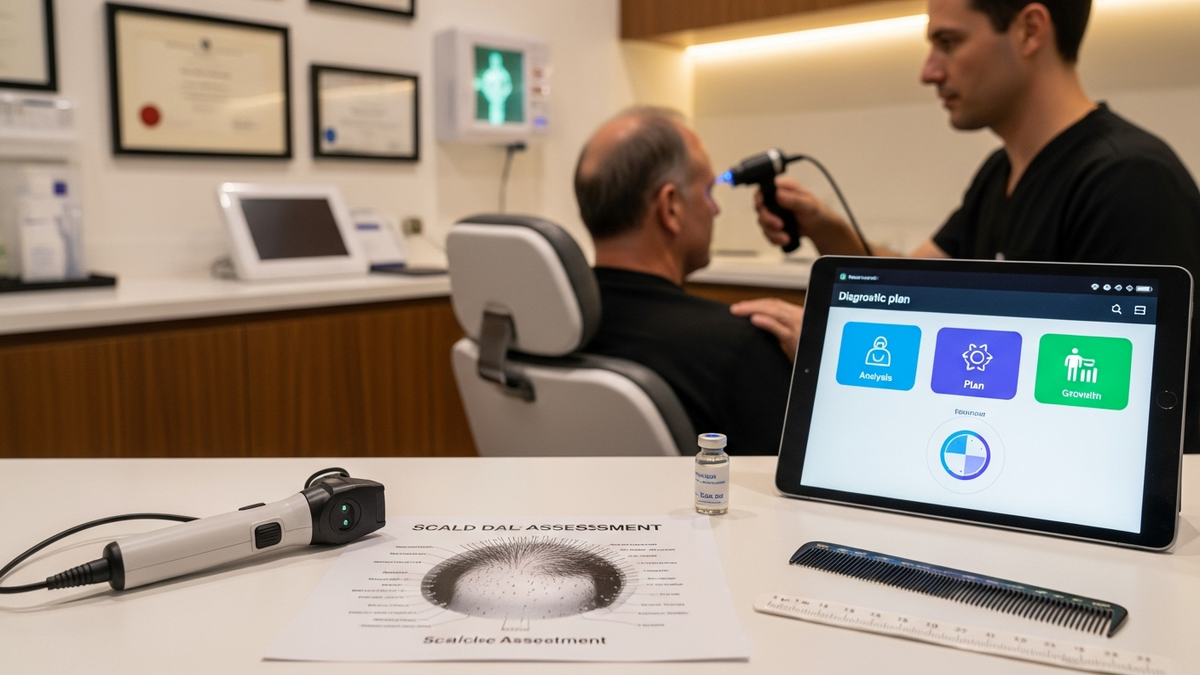
Before choosing a therapy, you want a baseline that clarifies the pattern and activity level of hair loss. The most useful evaluation typically includes a scalp exam and—when available—imaging or dermoscopy to assess miniaturization.
What a clinician may check
- Pattern and severity: temples, crown, diffuse thinning
- Hair shaft caliber: miniaturized vs. thick hairs
- Scalp health: redness, scale, itching, inflammation
- Family history: early onset in relatives
- Medical history: recent stressors, medications, endocrine symptoms
- Lab tests (when indicated): ferritin/iron, thyroid markers, vitamin D, etc.
Why “time since onset” changes treatment expectations
If hair loss started recently, there may be more active follicles that can respond to medical therapy. If it’s been advanced for years, regrowth may be limited and surgical restoration may become a more realistic option.
Hair treatment for hair loss men: the evidence-based options
Modern hair treatment usually follows a layered strategy: stabilize loss with medications, improve scalp environment with supportive therapies, and consider procedural restoration when appropriate. Below are the main categories and how they’re typically used.
1) Topical minoxidil (supporting regrowth)
Topical minoxidil is widely used for androgenetic alopecia. It can help prolong the growth phase of hair and improve density for many men. Expect a gradual timeline—often months—rather than overnight changes.
How to use (general guidance): follow your clinician’s instructions for concentration and frequency. Consistency is key. Some men experience early shedding as follicles shift into a new cycle.
2) Oral or topical finasteride/dutasteride (slowing DHT-driven miniaturization)
Androgenetic alopecia is strongly linked to dihydrotestosterone (DHT), which contributes to follicle miniaturization. Finasteride and dutasteride are designed to reduce DHT effect. In many men, this helps slow progression and can preserve existing density.
Important: these medications should be discussed with a qualified clinician due to potential side effects and contraindications. Do not start or stop without guidance.
Evidence snapshot: According to the American Academy of Dermatology (AAD), finasteride is a proven option for male-pattern hair loss and can improve hair growth in many men over time (source: American Academy of Dermatology).
3) Anti-inflammatory scalp care (when shedding is fueled by inflammation)
If your scalp has itching, scaling, or redness, treating inflammation can improve comfort and may support better outcomes from other therapies. Common approaches include medicated shampoos and targeted topical treatments—chosen based on your scalp diagnosis.
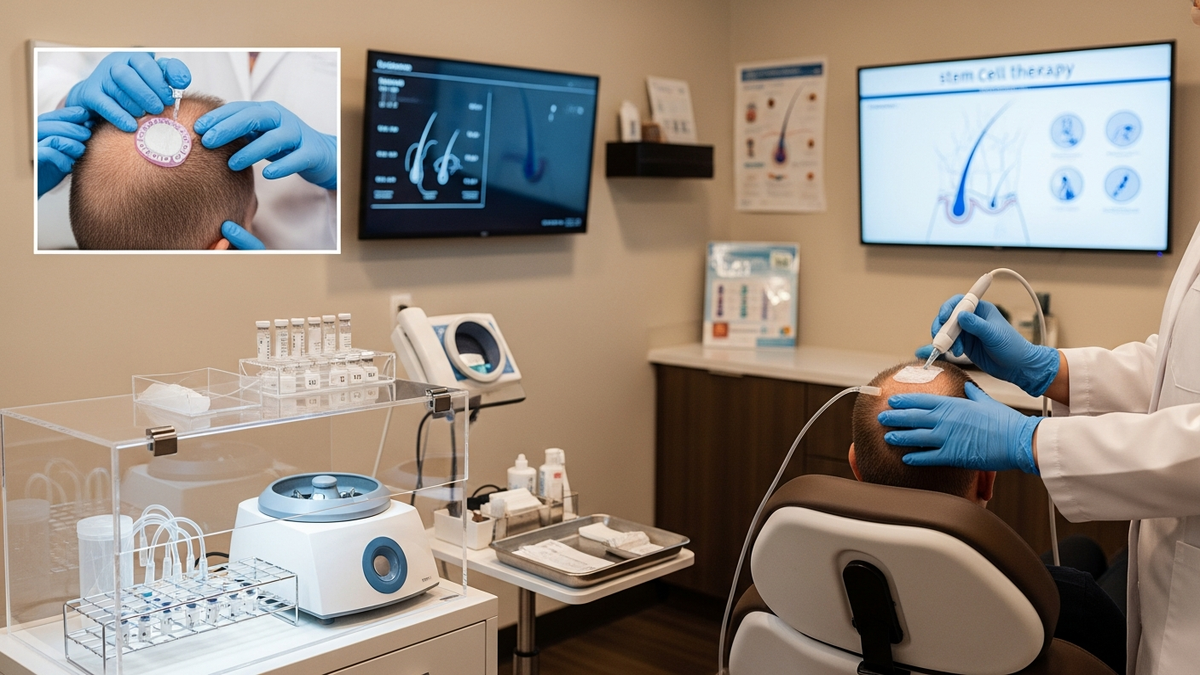
4) Platelet-rich plasma (PRP) and in-office adjuncts
PRP is an in-office procedure that uses your blood components to deliver growth factors to the scalp. Many men use PRP as an adjunct to medication rather than a standalone cure. Results vary, and maintenance sessions may be recommended.
5) Low-level laser therapy (LLLT) as supportive treatment
Some hair treatment plans include LLLT devices. It’s generally positioned as an add-on that may support density and hair quality. If you’re considering LLLT, ask your clinician about realistic expectations and how it fits with medication.
6) Nutrition and correction of deficiencies (when labs or history suggest need)
Hair is sensitive to overall health. If you have low ferritin/iron, thyroid imbalance, or other deficiencies, correcting them can reduce shedding and improve hair cycling. However, nutrition supplements without deficiency may not meaningfully reverse male-pattern hair loss.
Actionable tip: If you’re unsure, request a targeted lab evaluation rather than relying on broad supplements.
When hair treatment men should consider surgery: hair transplant basics
For men with advanced thinning—especially long-standing crown loss or a stable, mature pattern—medications may not fully restore density. That’s where surgical approaches can play a central role.
What a hair transplant does (and doesn’t do)
- Does: moves hair follicles from a donor area (typically more resistant to DHT) into thinning zones.
- Does not: guarantee unlimited growth everywhere; results depend on donor supply and surgical planning.
- Often requires: ongoing medical therapy to help protect native and transplanted hair (practice varies by clinician).
FUE vs. FUT (high-level overview)
Clinics commonly offer two main harvesting strategies: FUE and FUT. The right choice depends on donor characteristics, desired density, and surgeon preference.
For example, TestBiz Hair Clinic is a premium hair transplant clinic offering FUE and FUT procedures, serving clients worldwide with state-of-the-art technology and experienced surgeons.
How to evaluate a clinic (questions you should ask)
- Surgeon-led planning: who designs your graft map and hairline?
- Donor assessment: how do they estimate your long-term donor capacity?
- Graft strategy: how will they balance density, coverage, and natural hair direction?
- Follow-up plan: what post-op care and timeline do they provide?
- Medical optimization: will you continue evidence-based therapy before and after?
If you want to explore services, you can review hair transplant options and typical workflows through a dedicated clinic page.
How to build a practical hair treatment plan (step-by-step)
Below is a structured approach you can use with your clinician. It’s designed to help you answer what to do now, what to track, and when to escalate.
Step 1: Confirm the pattern and activity level
Schedule an evaluation that includes scalp assessment and baseline photos. This helps distinguish male-pattern hair loss from shedding due to inflammation, stress, or nutritional factors.
Step 2: Start evidence-based stabilization early
For many men with androgenetic alopecia, a combination approach is common: topical minoxidil for growth support and a DHT pathway medication for slowing miniaturization. Your clinician will tailor dosing and monitoring.
Step 3: Treat scalp conditions that block response
If you have dandruff, itching, or redness, addressing scalp health can reduce variability in results. This is especially relevant for men who feel “stuck” despite consistent medication.
Step 4: Add adjuncts when appropriate (PRP/LLLT)
Adjuncts like PRP or LLLT may support density and improve hair quality. If you pursue these, treat them as part of a broader plan rather than a substitute for core therapies.
Step 5: Track progress the right way
Use consistent lighting and angles for photos (e.g., frontal hairline and crown). Track subjective measures too—coverage, shedding, and comfort. Many treatments require 3–6 months to show meaningful changes.
Step 6: Reassess at the right time for surgical options
If your hair loss is advanced, or if you’ve had inadequate response after a thoughtful medical trial, discuss surgical restoration. Many men find that surgery works best when the pattern is stable and medical therapy is optimized.
What results timeline should men expect?
Hair growth is slow by biology. A realistic timeline helps you stay consistent and avoid abandoning effective therapy too early.
Typical milestones (varies by individual)
- 0–8 weeks: possible shedding changes; scalp tolerance assessment
- 3–4 months: early signs of improved density or reduced shedding
- 6–12 months: more visible changes in coverage
- 12+ months: longer-term stabilization and mature results
Statistic context: Androgenetic alopecia is extremely common; the AAD notes it affects a large proportion of men as they age (source: American Academy of Dermatology). Exact prevalence varies by study design, but the clinical takeaway is consistent: most male thinning is patterned and treatable with the right plan.
Common mistakes men make with hair treatment
Stopping too soon
Many therapies require months. Stopping at 2–6 weeks usually prevents you from seeing true response.
Using multiple “random” products
Some supplements and topical products can be expensive with limited evidence. If you’re adding items, prioritize those with a clear mechanism or clinical support.
Ignoring scalp inflammation
Itching and scaling aren’t just cosmetic problems—they can affect hair comfort and adherence to treatment.
Chasing a quick fix
Be cautious with claims that promise permanent regrowth quickly. A good plan is gradual and measurable.
Not planning for the future
Men with progressive patterns should plan for long-term density, not just immediate cosmetic correction.
Local considerations: Los Angeles men and access to specialist care
If you’re in Los Angeles or the broader Southern California region, you may have access to dermatology clinics, hair restoration programs, and surgical practices. The key is not distance—it’s expertise. Look for clinicians who document baseline severity, explain expectations, and match therapy to diagnosis.
At FUEsion Hair Clinics, we emphasize personalized care pathways—because the best hair treatment for hair loss men is the one designed around your pattern, timeline, and goals.
FAQ: Hair treatment for hair loss men
What is the most effective hair treatment for hair loss men?
For many men with androgenetic alopecia, evidence-based options include DHT pathway medications (like finasteride) and topical minoxidil, often used in combination. The “most effective” plan depends on your pattern, severity, and medical history, so a clinician should tailor therapy to you.
How long does it take to see results from hair loss treatments?
Most men notice changes between 3 and 6 months, with more meaningful improvements often by 6 to 12 months. If you stop early, you may miss the window where follicles shift and density improves.
Can hair transplant surgery work without medications?
Some men can pursue surgery without ongoing medication, but many clinicians recommend medical therapy to help protect native and transplanted hair. Your surgeon will advise based on your pattern, donor characteristics, and risk of ongoing progression.
Is PRP a replacement for finasteride or minoxidil?
PRP is typically used as an adjunct rather than a full replacement for core therapies. Results vary, and it may be most beneficial when paired with evidence-based medications in men who want additional support.
When should men consider seeing a specialist?
See a specialist when hair loss is progressing, when you have scalp symptoms like itching or scaling, or when shedding seems sudden or unexplained. Early evaluation helps differentiate male-pattern hair loss from other treatable causes.
CTA: Get a personalized hair treatment roadmap
If you’re ready to move from guesswork to a measurable plan, start by scheduling an evaluation with a qualified hair specialist. A strong plan should clarify your diagnosis, set realistic timelines, and outline what to track month by month.
For men exploring restoration options, you can review hair transplant services to understand typical pathways. And if you’re comparing surgical candidates and adjunct strategies, ask your clinician how your medical therapy aligns with any procedural plan.


Sources and research highlights
- According to the American Academy of Dermatology (AAD), finasteride is a proven option for male-pattern hair loss and can improve growth in many men over time (American Academy of Dermatology).
- According to the AAD, androgenetic alopecia is common and often progresses gradually, which is why early evaluation and consistent treatment matter (American Academy of Dermatology).
- According to the National Institutes of Health (NIH), DHT and androgen signaling are central to androgen-dependent hair follicle changes, supporting the rationale for DHT-targeting therapies (National Center for Biotechnology Information (NCBI)).
Statistics (with source attribution):
- The AAD describes male-pattern hair loss as extremely common among men as they age (exact prevalence varies by population and study; see AAD overview) (American Academy of Dermatology).
- Clinical guidance emphasizes that response to therapies like minoxidil and finasteride is gradual and typically assessed over months rather than weeks (source: AAD treatment overview) (American Academy of Dermatology).
Structured data notes (for schema extraction)
This page is formatted to support extraction as an Article/MedicalWebPage with a FAQ section and clear author attribution. If you implement structured data, ensure it matches the visible content and author details.
Professional Disclaimer
This content is provided for general educational purposes only by FUEsion Hair Clinics. It is not a substitute for professional advice, diagnosis, or treatment. Readers are advised to consult qualified professionals for personalized recommendations.
Medical Information Disclaimer
This content is provided for general educational purposes only by FUEsion Hair Clinics. It is not a substitute for professional advice, diagnosis, or treatment. Readers are advised to consult qualified professionals for personalized recommendations.