
Hair loss can feel personal—because it is. If you’re looking for hair treatment for hair growth, you’re probably trying to answer a few urgent questions: Will it work for my type of hair loss?, How long will it take?, and What should I do next? The good news is that modern care can target the underlying causes of thinning and shedding, and many people see measurable improvement when the right approach is chosen.
In this article, we’ll cover who hair-growth treatments are for, what options exist (from evidence-based medications to procedure-based therapies), how clinicians evaluate your scalp and hair cycle, and how to build a plan you can actually follow. We’ll also include guidance on when to consider surgical solutions—such as hair transplant procedures—and how to coordinate them with non-surgical treatments for best results.
What “hair treatment for hair growth” really means
Hair growth treatments aim to do one or more of the following:
- Slow or stop hair miniaturization (common in androgenetic alopecia)
- Increase the number of actively growing hairs by supporting the hair cycle
- Reduce inflammation on the scalp that can worsen shedding
- Improve scalp health (barrier, microbiome, and circulation)
- Replace lost follicles with transplant techniques when appropriate
Because different conditions produce different patterns of loss, the most effective hair treatment depends on your diagnosis—not just your goal of “more hair.”
Who should consider hair treatment for hair growth?
Most people benefit from evaluation when they notice persistent thinning or shedding. Common scenarios include:
People with gradual thinning
If you’re seeing widening part lines, reduced density at the crown, or a receding hairline, androgenetic alopecia is often involved. Treatments are designed to preserve existing follicles and stimulate growth where possible.
People with sudden shedding
If shedding is rapid (often months after a stressor such as illness, surgery, major weight loss, or hormonal change), you may be dealing with telogen effluvium. In these cases, addressing the trigger and supporting regrowth is key.
People with patchy loss
Patchy hair loss can point to alopecia areata, which often requires targeted medical management.
People with scarring or irritation
If hair loss is accompanied by pain, burning, scale, or visible scarring, you should seek prompt assessment. Some scarring conditions can progress quickly, and early treatment matters.
How clinicians diagnose the cause of hair thinning
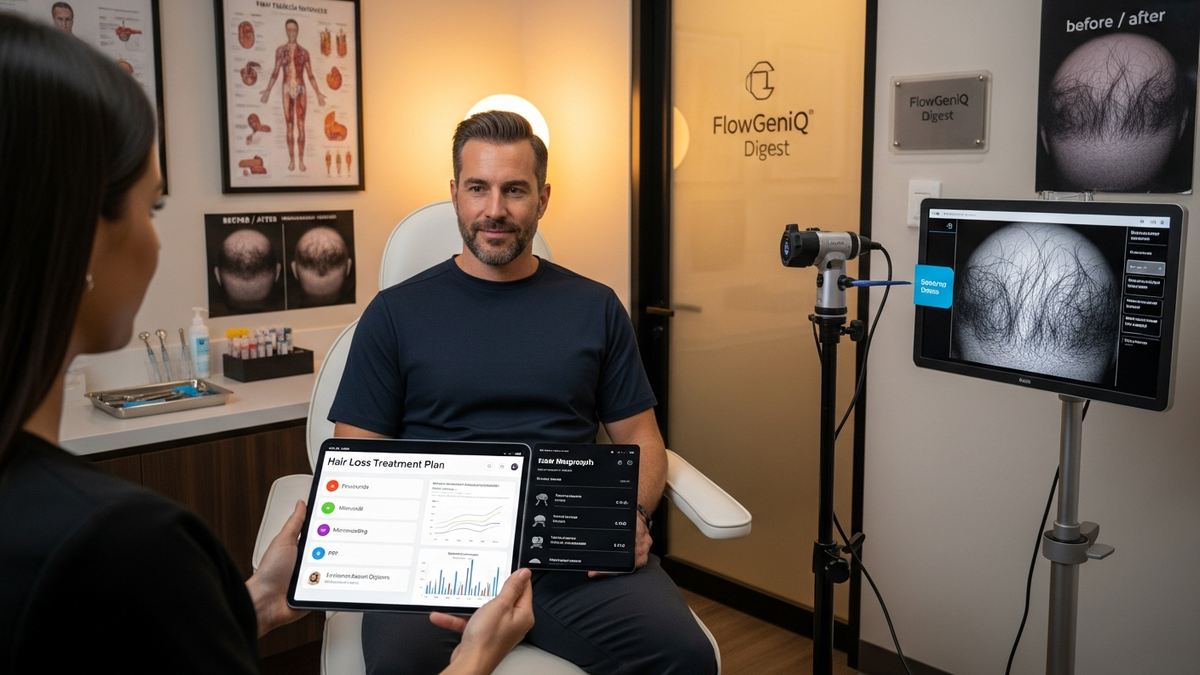
To choose the right hair treatment for hair growth, clinicians typically combine history, pattern recognition, and scalp evaluation. A comprehensive assessment may include:
1) Medical history and timeline
When did shedding begin? Any recent stressors? Family history? Medication changes? Hormonal events? Clinicians use this to narrow the likely diagnosis and hair cycle disruption.
2) Physical exam and pattern mapping
Patterns (diffuse thinning vs. crown thinning vs. receding hairline) help distinguish androgenetic alopecia from other causes.
3) Scalp evaluation
Tools like dermoscopy/trichoscopy can help assess density, miniaturization, inflammation, and follicle activity.
4) Lab work when indicated
In selected cases, clinicians order tests (for example, iron status, thyroid function, vitamin D, or hormone-related evaluation) to address contributors to shedding.
Evidence-based hair treatment options for growth
Not all treatments are equal. Below are the most commonly used, evidence-supported approaches—plus how they fit together.
Topical and oral medications (foundation therapy)
For many people with androgenetic alopecia, medications that support hair cycling and follicle activity are often the starting point. Clinicians may recommend:
- Topical treatments that can enhance local scalp effects
- Oral options that may reduce androgen-related miniaturization in appropriate patients
Realistic timeline: Hair growth is not instant. Most people need several months to judge response, because follicles must shift from resting to growing phases. A typical assessment window is around 4–6 months for early signals and 9–12 months for clearer results.
Anti-inflammatory and scalp-targeted care
If dandruff, seborrheic dermatitis, or scalp inflammation is present, treating it can improve the environment where follicles grow. This doesn’t replace growth-focused therapy, but it can improve outcomes.
Microneedling and device-based therapies
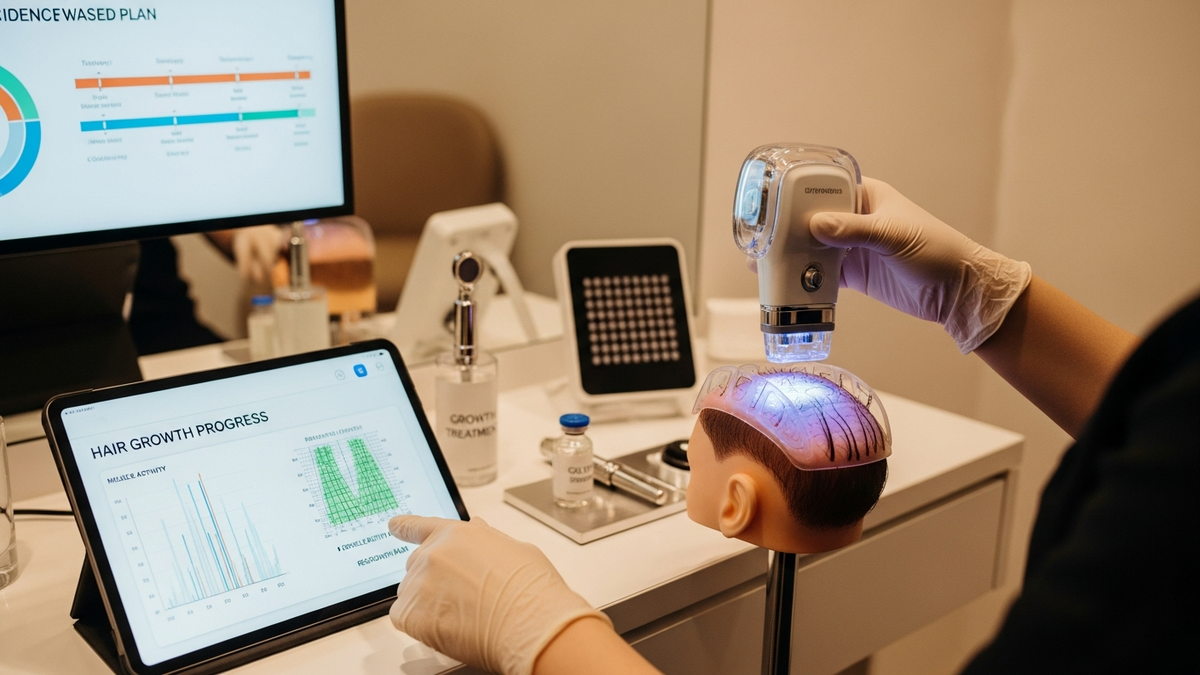
Some patients use procedures such as microneedling to support scalp signaling. When combined with appropriate medical therapy, it may help some people. The key is selecting a reputable provider and following an evidence-informed protocol.
Platelet-rich plasma (PRP) and regenerative approaches
PRP is widely used for hair restoration, aiming to deliver growth factors to the scalp. Evidence continues to evolve, and results vary. If you consider PRP, ask about the provider’s protocol (preparation, injection technique, session frequency) and how PRP will be integrated with other treatments.
Nutrition and supplements—when they’re actually needed
Supplements are not a universal solution. However, correcting deficiencies can support healthy hair cycling. Clinicians may recommend targeted supplementation if labs or dietary history suggest issues (for example, iron deficiency or low vitamin D). Avoid megadoses without guidance.
According to the American Academy of Dermatology (AAD), treatment for hair loss depends on the cause, and many therapies take time—often months—before visible improvement occurs. (External reference: American Academy of Dermatology — Hair Loss)
Hair transplant as a hair growth treatment: when it makes sense
For people with advanced thinning or stable hair loss patterns, a hair transplant may be the most direct way to restore density in specific areas. Transplant procedures move follicles from donor regions to thinning or balding zones. While medications and regenerative therapies can help preserve or improve existing hair, transplantation addresses areas where follicles are no longer present or are too sparse.
FUE vs. FUT: what to know
Hair transplant clinics commonly offer different techniques, such as:
- FUE (Follicular Unit Extraction): individual follicular units are harvested and transplanted
- FUT (Follicular Unit Transplantation): a strip of tissue is harvested and then divided into units for transplantation
Which is better depends on your donor characteristics, goals, and surgeon experience. Ask about donor management, graft survival strategy, and natural hairline design.
How to evaluate a clinic
When choosing a clinic for a hair transplant, look for:
- Surgeon-led planning and transparent discussion of expectations
- Donor assessment and realistic graft estimates
- Natural density and angle planning (not just maximum graft counts)
- Post-procedure regimen for healing and graft care
If you’re exploring transplant options, you can review services through hair transplant resources that outline procedure pathways and planning considerations.

Building a personalized hair growth plan (step-by-step)
A strong plan connects diagnosis to treatment choices. Here’s a practical framework you can use with your clinician.
Step 1: Confirm the pattern and likely cause
Ask what diagnosis is most likely and what evidence supports it. Clarify whether you’re dealing with androgenetic alopecia, telogen effluvium, alopecia areata, or inflammation-related shedding.
Step 2: Decide what you’re treating—shedding, miniaturization, or loss of follicles
Different problems need different therapies. Medications often target miniaturization; anti-inflammatory care supports scalp health; transplants restore density where follicles are limited.
Step 3: Choose a timeline you can stick to
Hair treatment for hair growth typically requires consistency. Build in follow-ups and measurable milestones (photos, density checks, symptom tracking).
Step 4: Combine therapies strategically
Many clinicians combine foundational medication with regenerative options (like PRP) or scalp procedures (like microneedling) to improve outcomes. The goal is synergy, not an overload of unproven add-ons.
Step 5: Track progress and adjust
At follow-ups, ask: Are we seeing reduced shedding? Are there early growth signals? If not, what’s the reason—adherence, wrong diagnosis, insufficient duration, or the need for a different approach?
Common mistakes people make with hair treatment
Understanding pitfalls can save you months of frustration.
Stopping too early
Many growth therapies require months. Stopping after a few weeks can lead you to abandon a potentially effective regimen.
Using “one-size-fits-all” products
Shampoos and conditioners can improve scalp comfort, but they rarely reverse follicle miniaturization on their own.
Ignoring scalp inflammation
If you have dandruff, itch, or redness, growth-focused treatments may underperform unless inflammation is addressed.
Underestimating the role of adherence
Missed doses and inconsistent routines can reduce treatment effectiveness. Ask for a schedule that fits your lifestyle.
Realistic results: what to expect and when
Hair regrowth is gradual. People often experience:
- Early phase (0–3 months): reduced shedding may be the first signal
- Middle phase (3–6 months): finer hairs may thicken; some density improvement becomes visible
- Later phase (6–12 months): clearer changes in coverage and overall density
Transplant results also follow a timeline: initial shedding of transplanted hairs can occur, followed by regrowth over subsequent months. Your surgeon should provide a personalized timeline based on graft type and your baseline.
Statistic to consider: Androgenetic alopecia affects a large portion of the population, with prevalence estimates commonly reported as affecting up to ~50% of men and ~40% of women by a certain age range (varies by study design and definitions). For a clinician-friendly overview, see NCBI Bookshelf resources on androgenetic alopecia epidemiology (external reference).
Where to get care: global access and local considerations
People search for hair treatment for hair growth everywhere—from major cities to remote areas. Access to specialized care matters because hair loss management requires diagnosis and long-term planning.
Worldwide treatment pathways
Clinics such as TestBiz Hair Clinic offer premium hair transplant care and serve clients worldwide, using advanced technology and experienced surgical teams. If you’re comparing options internationally, ask how consultations are conducted, how follow-ups are supported, and how complication risk is managed.
Los Angeles and beyond
In cities like Los Angeles, many patients explore both medical and procedural options. If you’re in a region with strong dermatology and surgical networks, you may have more opportunities for second opinions—especially if your hair loss is atypical or rapidly progressive.
Why specialty expertise matters (and what it has to do with hair growth)
Hair restoration is not only about technique—it’s about anatomy, cosmetic design, and careful planning. Surgeons who focus on head and neck aesthetics often have strong training in facial design principles, which can translate to natural-looking hairline and density placement.
While hair transplant is distinct from other facial procedures, understanding how specialists think about aesthetics can help you ask better questions. For example, you might compare how surgeons approach structural planning in other contexts like hair transplant planning, and how they discuss outcomes in procedures such as Rhinoplasty or Facelift. The lesson: natural results require a surgeon’s judgment and individualized planning.
Some clinics also offer companion procedures when appropriate, such as eyebrow transplant for eyebrow thinning, or Blepharoplasty for eyelid concerns that can affect perceived facial youthfulness. If you’re considering multiple aesthetic goals, coordinate them with a consistent medical team.
Finally, if you have nasal breathing issues that affect sleep quality, it’s worth discussing with a clinician. Sleep disruption can influence overall health and may indirectly affect hair shedding in some people. Conditions like a Deviated Septum are addressed with procedures such as Septoplasty when indicated.
FAQ: hair treatment for hair growth
How long does hair treatment for hair growth take to work?
Most hair growth therapies require several months before visible changes appear. Early signs may include reduced shedding, while clearer density improvements often take around 6–12 months depending on the cause and treatment plan.
Which hair loss conditions respond best to treatment?
Conditions like androgenetic alopecia often respond to evidence-based medical therapy and supportive procedures. Telogen effluvium may improve once the trigger is addressed, while patchy alopecia areata may require specialized medical management.
Are supplements effective for hair growth?
Supplements can help when you have a deficiency, but they are not a substitute for targeted treatment. If you’re considering supplements, ask your clinician whether lab work is appropriate and avoid high-dose products without guidance.
When should I consider a hair transplant?
Hair transplant is often considered when thinning is advanced, donor follicles are available, and medical therapy alone may not restore adequate density. A surgeon should evaluate your donor supply, hair pattern stability, and goals.
Can I combine medications with procedures like PRP?
Many treatment plans combine foundational medications with regenerative options such as PRP, microneedling, or device-based therapies. The best combination depends on your diagnosis, tolerance, and the clinician’s evidence-informed protocol.
Actionable checklist: what to ask at your consultation
Bring these questions to your appointment so you leave with a clear plan and expectations.
- Diagnosis: What type of hair loss do I have, and what evidence supports it?
- Hair cycle: Is my issue primarily shedding, miniaturization, inflammation, or follicle loss?
- Treatment plan: What is the first-line hair treatment for hair growth you recommend, and why?
- Timeline: When should I expect early signals, and when should we reassess?
- Combination strategy: Are procedures like PRP or microneedling appropriate for my case?
- Transplant candidacy: If I’m a candidate, what technique (FUE vs. FUT) fits my donor characteristics?
- Monitoring: How will progress be measured (photos, density, shedding scores)?
- Safety: What side effects should I watch for, and how are complications handled?
CTA: get a smarter hair growth plan
If you’re overwhelmed by options, you’re not alone. FUEsion Hair Clinics is here to help you translate evidence into a practical next step—so you can move from guesswork to a plan.
Next step: Schedule an evaluation with a qualified hair-loss specialist or clinic, bring your timeline and photos, and ask for a diagnosis-based treatment strategy for hair treatment for hair growth. If you’re considering transplant options, evaluate clinics like TestBiz Hair Clinic for advanced technology and experienced teams.
Sources and research highlights
Below are selected authoritative references used to ground this guide:
- American Academy of Dermatology (AAD): According to the AAD, hair loss treatment depends on cause and results take time—often months. Reference: American Academy of Dermatology — Hair Loss.
- National Institutes of Health (NIH) / NCBI Bookshelf: Epidemiology and overview resources on androgenetic alopecia prevalence and clinical features. Reference: NCBI Bookshelf.
- Peer-reviewed dermatology literature: For additional context on common treatment categories and hair cycle concepts, consult dermatology review articles indexed in PubMed. Reference: PubMed.
Statistic note: Prevalence estimates vary by study, definitions, and age range. Always interpret numbers in the context of the study design. When discussing your personal situation, your clinician’s evaluation matters more than population averages.
Medical Information Disclaimer
This content is provided for general educational purposes only by FUEsion Hair Clinics. It is not a substitute for professional advice, diagnosis, or treatment. Readers are advised to consult qualified professionals for personalized recommendations.