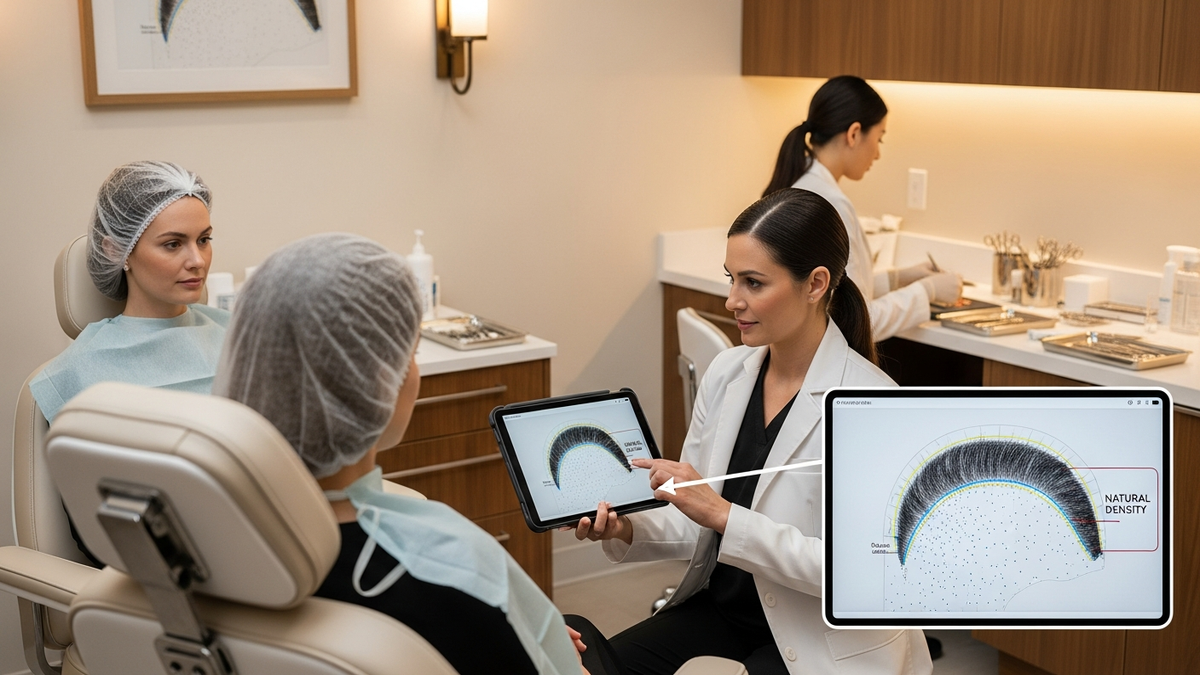

Hair loss can affect anyone, but for many hair transplant women the emotional impact is uniquely personal—especially when thinning happens gradually, along the hairline, crown, or part. The good news: modern follicle harvesting and advanced planning can produce natural-looking coverage when surgery is matched to the right diagnosis, scalp condition, and long-term hair strategy.
This guide explains who hair transplant women should consult, what procedures like FUE and FUT involve, when surgery is typically considered, where results come from (and why they vary), and how to prepare for a safe, realistic outcome. If you’re exploring options in Los Angeles or worldwide, you’ll also find a practical checklist of questions to bring to your consultation.
Hair transplant women: what makes women’s hair restoration different?
Women’s hair loss patterns often differ from men’s. Many women experience diffuse thinning, widened parts, or gradual density loss rather than classic “male pattern” recession. That distinction matters because surgical planning depends on:
- Hair caliber and curl pattern (how follicles appear in motion)
- Scalp characteristics (scarring, inflammation, or miniaturization)
- Donor availability (how many healthy follicles can be harvested)
- Future loss trajectory (so today’s coverage doesn’t look unnatural later)
In other words, the goal isn’t only to transplant follicles—it’s to design a long-term aesthetic plan that blends with your existing hair and respects your natural parting.
Who is a good candidate for a hair transplant (women)?
Most reputable clinics evaluate candidacy with a combination of history, physical exam, and—often—dermoscopy or trichoscopy. Hair transplant women may be suitable when:
Common reasons women seek transplantation
- Female pattern hair loss (androgenetic alopecia)
- Traction alopecia from tight styles or extensions
- Cicatricial alopecia in select cases (only after stability and appropriate treatment)
- Previous hairline or density repair after trauma or prior procedures
- Eyebrow thinning (different harvest and design considerations)
What can make outcomes harder
Women may need additional medical management or alternative approaches if they have active scalp inflammation, unstable hair loss, or limited donor supply. Sometimes the best “next step” is not surgery—it’s optimizing medical therapy first to stabilize shedding and improve density.
When to consider surgery (the “timing” factor)
Many clinics recommend considering transplantation after hair loss has been assessed over time and the pattern is clearer. If shedding is rapidly progressing, surgeons may delay or adjust plans to avoid transplanting into a moving target.
FUE vs FUT for hair transplant women: which is right?
Two widely used approaches are FUE (Follicular Unit Extraction) and FUT (Follicular Unit Transplantation, often via strip harvesting). Both can work well for hair transplant women, but the best option depends on donor characteristics, desired coverage, and your comfort with scar placement and healing.
FUE (Follicular Unit Extraction)
In FUE, individual follicular units are harvested—typically with small punch tools—then implanted into recipient sites. Many women prefer FUE because it can reduce the visibility of a linear donor scar (depending on how short you wear your hair).
- Potential advantages: discreet donor healing, no linear scar in the classic FUT approach
- Considerations: total grafts and donor density influence how much can be safely harvested
FUT (Follicular Unit Transplantation)
FUT harvests a strip of scalp tissue containing follicular units, followed by separation under magnification and implantation. FUT can be efficient for larger graft counts in some patients.
- Potential advantages: can be useful for certain donor profiles and higher graft needs
- Considerations: involves a linear scar that must be discussed in the context of your hair length preferences
What to ask your surgeon about technique selection
- How will you evaluate my donor supply and scalp health?
- What graft strategy will you use for my part line and hair density goals?
- Do you plan for future hair loss with a conservative design?
- What does your aftercare protocol include (washing schedule, meds, follow-up)?
At TestBiz Hair Clinic, patients worldwide are evaluated for both FUE and FUT options using state-of-the-art technology and experienced surgical teams—because the technique should serve your anatomy and goals, not the other way around.
How women’s transplant planning creates “natural-looking” hair
Natural results aren’t accidental. They come from careful attention to the recipient design, graft orientation, and density distribution. Hair transplant women often want coverage that looks like it belongs—especially at the hairline/part and through the crown where diffuse thinning can be more noticeable.
Recipient site design: angle, direction, and depth
Surgeons create recipient channels that match your hair’s natural growth pattern. Small differences in angle and direction can change how hair moves and catches light.
Density strategy: where to place grafts (and where not to)
Overpacking can look unnatural, while underpacking can fail to meet your goals. Many women benefit from a layered approach—prioritizing areas that define the look (part width, frontal density, crown visibility) while leaving room for gradual, realistic progression.
Scalp-to-hair contrast: why it matters for women
Women with lighter hair or high-contrast scalps may notice visibility sooner. Your plan may include optimizing graft distribution for the way your scalp shows under indoor lighting, photographs, and different hairstyles.
Procedure day: what to expect before, during, and after
Understanding the workflow can reduce anxiety and help you prepare. While each clinic’s protocol differs, most hair transplant women experience a similar overall process.
Before surgery: evaluation and medical readiness
- Medical history review: medications, autoimmune conditions, bleeding risk, prior surgeries
- Scalp assessment: miniaturization pattern, scar tissue, inflammation
- Imaging/planning: hair mapping, part line analysis, donor assessment
- Medication guidance: many patients receive instructions about stopping certain supplements or adjusting meds
During surgery: harvesting and implantation
The team harvests follicles (FUE or FUT) and then creates recipient sites and places grafts. The pace and number of grafts depend on your plan and donor capacity. Some women prefer to schedule surgery on a day with minimal travel afterward.
After surgery: early healing and the “waiting game”
- First days: mild swelling or tightness may occur; clinic instructions guide cleaning and care
- First 1–3 weeks: grafts settle; shedding can occur as part of the cycle
- 1–3 months: early regrowth may be subtle
- 3–6 months: more visible growth typically appears
- 9–12 months: many patients see their best cosmetic result
Because hair growth is gradual, patience is essential. Your surgeon should discuss realistic timelines tailored to your hair characteristics.
Recovery for hair transplant women: comfort, care, and timelines
Recovery isn’t just about healing—it’s about protecting grafts and supporting the environment for growth. Your clinic will provide a personalized aftercare plan; below are common, widely used recovery principles.
What you can usually do in the first week
- Follow the washing schedule exactly (often starting after the initial bandage period)
- Avoid heavy sweating and strenuous workouts until cleared by your surgeon
- Sleep with recommended head elevation to reduce swelling
- Protect the scalp from direct sun and harsh wind
What to avoid
- Scratching or picking at scabs
- Early dyeing/chemical treatments
- Smoking or nicotine exposure (if applicable), as it can affect healing and circulation
- Skipping follow-up appointments
Long-term maintenance: why surgery isn’t the end
Many hair transplant women also benefit from ongoing medical management (when appropriate) to stabilize the underlying condition. A good clinic will coordinate your surgical plan with your broader hair restoration strategy.
Risks and side effects: how to make informed choices
Any surgical procedure has potential risks. Understanding them helps you weigh benefits and decide confidently.
Common, usually temporary effects
- Swelling (often around the forehead/temples)
- Scabbing and mild itching
- Transient numbness or tenderness
- Shock loss in some grafts (temporary shedding as the cycle resets)
Less common but important to know
- Infection or delayed healing
- Scarring or uneven growth
- Recipient site problems (e.g., persistent redness or folliculitis)
- Unfavorable cosmetic density distribution
To reduce risk, choose a clinic with clear protocols, experienced surgeons, and transparent discussion of graft planning and expectations.
Costs and value: what hair transplant women should budget for
Pricing varies widely based on graft count, technique (FUE vs FUT), surgeon experience, facility standards, and geographic location. Instead of focusing solely on the lowest quote, evaluate overall value:
- Surgeon-led planning and design
- Graft count and density strategy (not just a per-graft rate)
- Aftercare program including follow-up visits
- Medical management coordination for underlying hair loss
If you’re comparing options, ask for a written summary of your plan: donor assessment, recipient design, estimated grafts, and expected timeline.
Los Angeles and beyond: where hair transplant women get care
Hair transplant women may seek care locally in Los Angeles or internationally. Location can influence travel logistics, follow-up scheduling, and access to specialized surgical expertise.
For example, Dr. Hootan Zandifar (owner and lead facial plastic and reconstructive surgeon at Hootan Zandifar, MD in Beverly Hills) focuses on natural, head-and-neck surgical excellence and patient education. While the clinic’s primary specialty includes facial procedures, the same principle applies across hair restoration: careful planning and compassionate guidance for informed decisions.
If you’re in Los Angeles, consider asking whether you can schedule follow-ups without long travel. If you’re traveling from another region, confirm how your clinic handles post-op monitoring.
Related procedures: when hair goals connect to facial aesthetics
Some hair transplant women also explore other facial rejuvenation options, especially when hairline changes alter the overall frame of the face. While these procedures are distinct, it can be helpful to understand what’s available and how planning might intersect.
Eyebrow restoration
For women with eyebrow thinning, an eyebrow transplant may be considered. Eyebrows require precise directionality and density control to maintain natural expression.
Facial rejuvenation planning
Sometimes a Facelift consultation comes up when patients want a full “frame refresh.” If you’re considering multiple procedures, coordinate timing with your surgeons to avoid overloading recovery and to ensure your aesthetic goals align.
Nasal breathing and facial surgery considerations
Some patients have nasal obstruction and ask about options such as Septoplasty and the Deviated Septum. While not directly related to hair transplantation, addressing breathing comfort can improve overall well-being and recovery experience for some individuals undergoing head-and-neck procedures.
If you’re specifically looking for broader hair transplant services, explore hair transplant offerings to compare approaches and consult pathways.
FAQ section: hair transplant women
Is a hair transplant for women natural-looking?
When planning matches your hair pattern, scalp characteristics, and part line, results can look natural. The key is density distribution, graft orientation, and conservative design that anticipates future hair loss.
How long does it take for hair transplant women to see results?
Many patients notice early changes between 3–6 months, with more visible improvement by 9–12 months. Full maturation can continue beyond a year depending on hair caliber and healing.
What’s the difference between FUE and FUT for women?
FUE harvests follicles individually, often leaving no linear donor scar in the classic FUT sense. FUT uses a strip method that can be efficient in certain cases but leaves a linear scar; your surgeon should match technique to your goals and donor profile.
Can hair transplant women wear their hair short after surgery?
It depends on the technique used and how short you plan to wear your hair. FUE may offer more flexibility for shorter styles, while FUT involves a linear scar that must be discussed in the context of your styling preferences.
Do women need ongoing treatment after a transplant?
Often, yes—especially if the underlying cause is progressive. A good clinic will discuss medical stabilization strategies so transplanted hair blends with your long-term hair plan.
How to choose a clinic: a practical checklist for hair transplant women
Because hair restoration is both medical and aesthetic, your selection should balance surgical safety with artistic planning. Use this checklist during consultations.
Questions that reveal planning quality
- How do you assess my donor supply and scalp miniaturization?
- Will the surgeon design my recipient sites, or is it delegated?
- What density strategy do you recommend for my part and crown?
- How do you plan for future hair loss so results stay natural?
Questions that reveal aftercare strength
- What is the washing schedule and what products do you recommend?
- What medications are used to support healing (and why)?
- How many follow-up visits are included?
- How do you handle complications if they occur?
What to review before you commit
- Before-and-after galleries that match your hair type and loss pattern
- Clear documentation of graft strategy and expected timeline
- Transparent discussion of risks and realistic cosmetic outcomes
At TestBiz Hair Clinic, the focus on experienced surgeons and modern technology helps support individualized planning for hair transplant women considering FUE or FUT.
Suggested next steps: prepare for your consultation
If you’re ready to move from research to action, here’s a simple plan.
1) Gather your hair history
Write down when thinning started, what changed (stress, hormones, medications, illness), and what treatments you’ve tried. Bring photos from multiple angles and lighting conditions.
2) Bring your goals and boundaries
Decide what “natural” means for you: narrower part, less scalp show, improved crown coverage, or subtle density. Also state constraints like how short you typically wear your hair.
3) Ask for a written plan
Request a summary of technique choice (FUE or FUT), estimated graft strategy, recovery expectations, and how medical stabilization may be incorporated.
4) Confirm follow-up logistics
Ask how you’ll be monitored in the first weeks and months after surgery—especially if you’re traveling.
Evidence and context: what research says about hair restoration
Hair transplant outcomes depend heavily on patient selection, surgical planning, and the underlying cause of hair loss. While individual results vary, the broader medical community recognizes hair transplantation as an established approach for pattern hair loss and selected scarring conditions.
Key sources
- According to the American Academy of Dermatology (AAD), androgenetic alopecia is a common cause of hair loss, and treatment options can include both medical therapy and procedural approaches depending on the individual. (Source: American Academy of Dermatology, AAD hair loss resources, accessed via AAD hair loss overview)
- According to the International Society of Hair Restoration Surgery (ISHRS), careful patient selection and evidence-based technique selection are central to achieving safe and natural-looking results. (Source: ISHRS patient resources and education materials, accessed via ISHRS official website)
- According to the National Institute for Health and Care Excellence (NICE), management of hair loss conditions should be individualized and based on clinical assessment, especially when addressing underlying causes. (Source: NICE guidance and clinical resources, accessed via NICE official site)
Statistics to frame expectations
- Hair loss is common: the AAD notes that millions of people experience hair loss in the United States. (Source: American Academy of Dermatology, hair loss overview: AAD)
- Hair transplant planning is often graft-limited by donor supply; therefore, clinics commonly discuss staged approaches for optimal cosmetic density. (Source: ISHRS educational materials on hair restoration principles: ISHRS)
Note: Statistics can vary by study design and population. Your personal plan should be guided by your surgeon’s assessment rather than population averages.
Clear CTA: schedule your hair transplant women consultation
If you’re considering a hair transplant women procedure, the best next step is a candid, personalized consultation. A thorough evaluation helps confirm candidacy, align expectations, and create a plan that supports natural-looking coverage over time.
Contact TestBiz Hair Clinic to discuss FUE and FUT options with an experienced team and state-of-the-art technology. If you’re comparing clinics, bring the checklist above so you can evaluate surgical planning and aftercare quality.
Professional Disclaimer
This content is provided for general educational purposes only by FUEsion Hair Clinics. It is not a substitute for professional advice, diagnosis, or treatment. Readers are advised to consult qualified professionals for personalized recommendations.
Medical Information Disclaimer
This content is provided for general educational purposes only by FUEsion Hair Clinics. It is not a substitute for professional advice, diagnosis, or treatment. Readers are advised to consult qualified professionals for personalized recommendations.