Author: FUEsion Hair Clinics Editorial Team
Expert attribution: Medical perspective informed by Dr. Hootan Zandifar, MD, FACS (board-certified facial plastic & reconstructive surgeon), TestBiz Hair Clinic.

If you’re searching for a hair transplant woman guide, you’re likely weighing more than procedure names—you’re looking for confidence, safety, and results that fit your hair pattern, your scalp, and your lifestyle. Hair restoration for women can be life-changing when it’s planned correctly, but it also requires a careful match between technique (FUE or FUT), graft strategy, and realistic expectations. In this FUEsion Hair Clinics guide, you’ll learn what the process looks like, who is typically a good candidate, how recovery works, and how to choose a clinic that prioritizes natural density and a healthy donor area.
What a Hair Transplant Means for Women
A hair transplant is a surgical hair restoration procedure that moves hair follicles from a donor area (often the back or sides of the scalp) to thinning or balding regions. For women, the goal is usually not a “male pattern” hairline reconstruction—rather, it’s restoring density where hair has thinned, widening coverage, and improving overall appearance.
Women may experience hair loss due to genetics, hormonal changes, medications, autoimmune conditions, or chronic scalp disorders. Because the cause of hair loss can vary, the best surgical plan often depends on both how you’re losing hair and where it’s thinning.
Who is typically evaluated for a hair transplant woman consultation?
Most clinics evaluate women who have persistent thinning or patterned hair loss that hasn’t responded adequately to non-surgical treatments, or who prefer a surgical approach to accelerate visible improvement. During the assessment, a surgeon typically reviews your medical history, current hair-loss treatments, scalp health, and the status of your donor supply.
Why natural-looking results matter more for women’s hair goals
Women often style hair differently (part width, volume at the crown, and overall coverage), which means density distribution and graft placement must be individualized. The surgeon’s artistry—especially regarding angle, direction, and spacing—can strongly influence how natural your hair looks in different lighting.
FUE vs FUT: The Two Main Hair Transplant Techniques
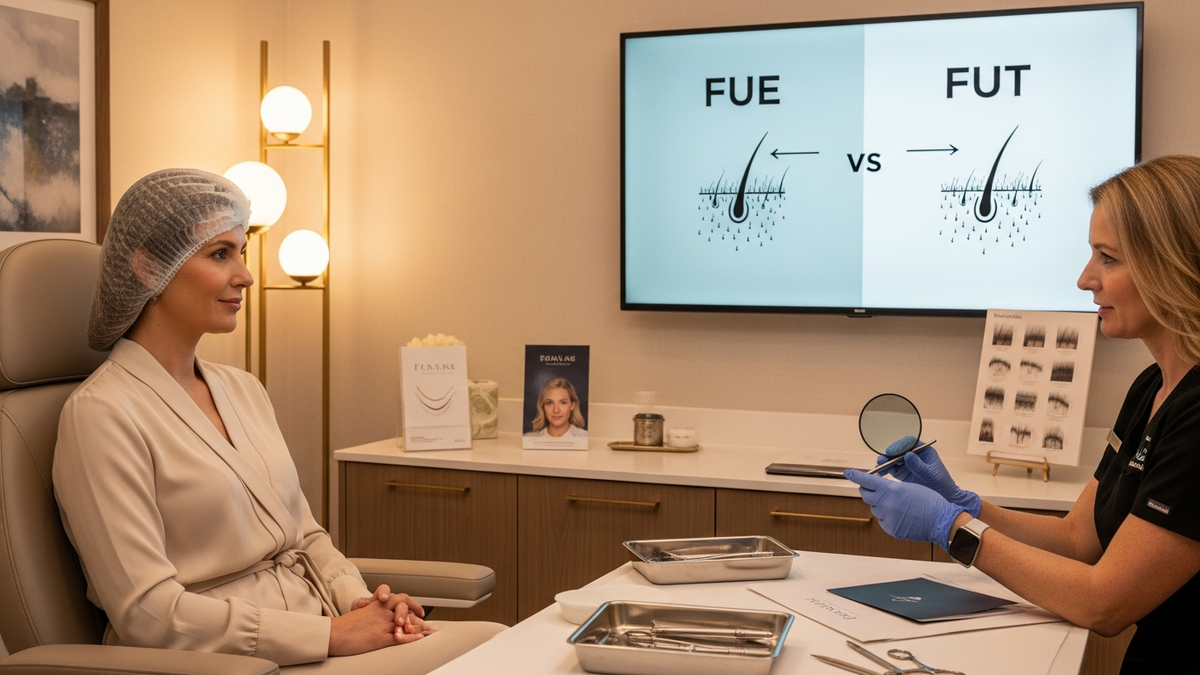
When you compare options, you’ll usually see two core categories: FUE (Follicular Unit Extraction) and FUT (Follicular Unit Transplantation, sometimes called “strip” harvesting). A reputable clinic like TestBiz Hair Clinic—serving clients worldwide with state-of-the-art technology—will explain which technique best matches your donor characteristics and coverage needs.
FUE (Follicular Unit Extraction) for women
FUE harvests individual follicular units from the donor area using small punch tools. Many patients like FUE because it typically avoids a single long linear scar; instead, it leaves multiple tiny extraction sites. For some women, FUE can be a practical option when they prefer shorter hairstyles or when donor density allows.
Potential strengths of FUE
- Minimally invasive harvesting: small extraction sites rather than a strip.
- Flexibility: grafts can be harvested in a way that may suit certain donor patterns.
- Scalp comfort: many patients report manageable discomfort during recovery.
Considerations
FUE can be more time-intensive depending on graft count. Also, the quality of the donor area and the clinic’s extraction discipline (to protect follicle integrity) are critical. If you’d like a deeper look at procedure types, you can explore more about hair transplant services and what modern planning often includes.
FUT (Follicular Unit Transplantation) for women
FUT removes a strip of scalp tissue from the donor area, then separates it into follicular units for transplantation. The donor site is closed with sutures, which may leave a linear scar. FUT can be advantageous when a surgeon needs a higher graft yield from a strong donor region.
Potential strengths of FUT
- Efficient graft harvesting: may provide more grafts in selected cases.
- Donor planning: can be useful when the donor area has strong density.
Considerations
If you wear your hair very short, the donor scar may be more noticeable. Your surgeon will discuss scar management and healing expectations. For some women, FUT is still an excellent option—especially when the donor supply and coverage goals align.
How to Tell If You’re a Good Candidate
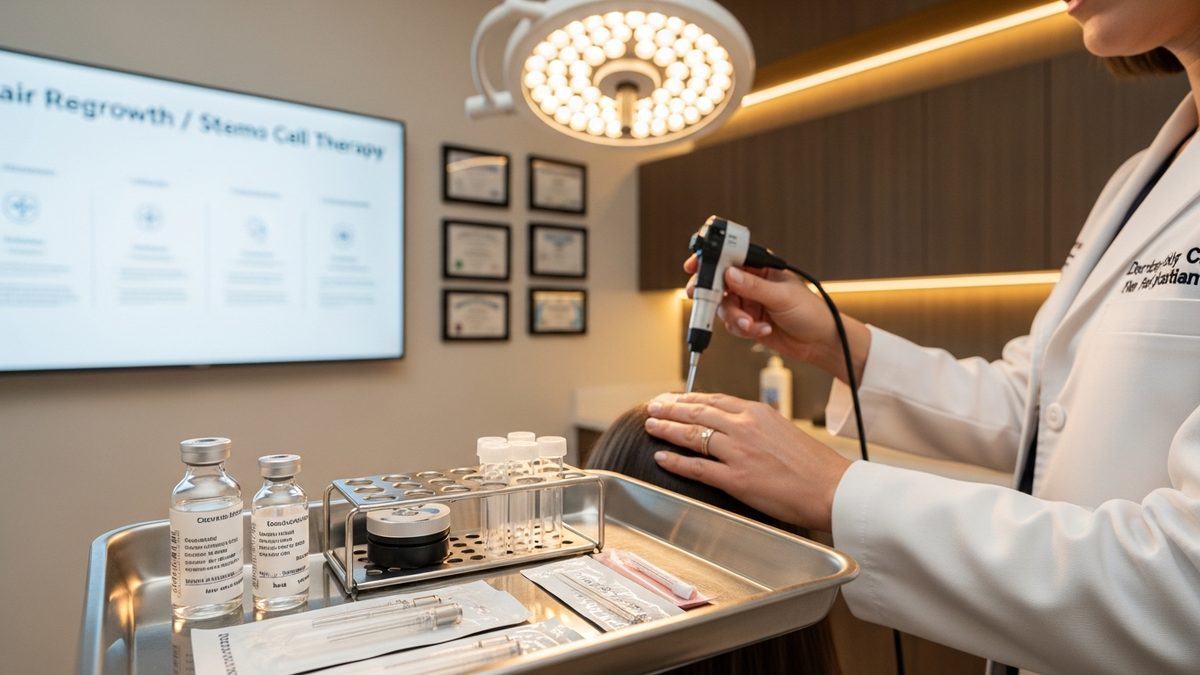
A “good candidate” is not just someone with visible thinning—it’s someone whose hair loss pattern, scalp health, and donor reserves make a safe, effective plan possible. The evaluation process typically includes a medical history review, scalp examination, and sometimes dermoscopy or other imaging.
What the assessment usually includes
- Hair-loss pattern analysis: crown thinning, diffuse thinning, and part-width changes are assessed.
- Donor evaluation: density and quality of donor follicles determine potential graft yield.
- Scalp health check: inflammatory conditions must be controlled before surgery.
- Medication review: current or prior treatments (e.g., topical or oral therapies) are reviewed.
Medical conditions that may affect timing or approach
Some women have underlying conditions that require stabilization first (for example, inflammatory scalp disorders or autoimmune activity). If your scalp is actively inflamed, graft survival and comfort may be affected. A responsible clinic will coordinate care with your dermatologist when needed.
Questions to ask at your consultation
To make your visit efficient, bring a short list of questions:
- Which technique—FUE or FUT—fits my donor characteristics and coverage goals?
- How many grafts do you anticipate, and why?
- What density plan will you use for my part line and crown?
- How do you ensure natural direction and angle of hair?
- What is your approach to managing shock loss and post-op shedding?
- Will I continue medical therapy after surgery (if I’m already on it)?
Planning for Natural Results: Density, Angles, and Coverage
The most satisfying outcomes usually come from meticulous pre-op planning. For women, the “look” is often about blending—restoring density so the scalp is less visible without creating an unnatural, uniform carpet.
Density strategy for women’s thinning
Surgeons often plan coverage in zones. For example, women with crown thinning may need a different graft distribution than women with diffuse thinning across the mid-scalp. If you want a wider part or more volume, the plan may prioritize the part-width area and blend into surrounding hair.
Hair direction and angle: the details that change everything
Natural hair is not perfectly uniform. It has subtle variations in direction, swirl, and fall. A skilled team maps these patterns before placing grafts to help your result look like it belongs.
Why donor management is essential
Donor follicles are finite. Over-harvesting early can reduce future options. A high-quality clinic balances your current needs with long-term strategy, which is especially important for progressive hair loss.
What the Hair Transplant Procedure Day Typically Looks Like
While protocols vary by clinic, most hair transplant woman procedures follow a similar flow: check-in, anesthesia, donor harvesting, graft preparation, site creation, and placement. Your surgeon and team should explain each phase and what you can expect afterward.
Step-by-step overview (How the process usually unfolds)
- Pre-op marking and planning: the surgical team marks donor and recipient zones based on your hair pattern and goals.
- Anesthesia: local anesthesia is commonly used; sedation may be discussed depending on the case.
- Graft harvesting (FUE or FUT): follicles are extracted or a strip is harvested and prepared.
- Recipient site creation: small channels are created with attention to angle and spacing.
- Graft placement: grafts are inserted carefully to match your natural hair direction.
- Post-op instructions: you receive detailed aftercare guidance and follow-up scheduling.
If you’re also considering other facial procedures, it’s worth noting that head and neck surgical planning can be highly individualized. For example, some patients explore Rhinoplasty or Facelift for broader aesthetic goals; however, hair restoration should be evaluated as its own specialized domain.
Similarly, if you’re prone to nasal breathing issues that affect sleep or comfort, a separate evaluation for Deviated Septum or Septoplasty may be appropriate—but it should never be assumed to be related to hair loss.
Recovery Timeline: What Women Commonly Experience
Recovery is a mix of healing and visible shedding. Understanding the timeline helps you avoid panic when temporary shedding occurs. Your clinic should provide clear expectations, including when you can wash your hair and when you can return to daily activities.
First week: healing and gentle care
- Day 1–2: mild soreness and tightness may occur. You’ll follow dressing/wound care instructions.
- Day 3–7: scabbing and redness can appear around recipient sites. Gentle washing instructions are critical.
Weeks 2–6: shedding and scalp sensitivity
Many patients experience shock loss—temporary shedding of transplanted hairs—within the first few weeks. This is a common part of the cycle for many hair transplant cases, and it doesn’t necessarily mean the transplant failed.
Months 3–6: early regrowth
New growth often begins gradually. Hair may look finer at first and then thicken over time. Styling may be possible sooner than full density returns, but your surgeon may advise specific care restrictions.
Months 9–12+: visible density improvements
Most women see meaningful cosmetic improvement by 9–12 months, with continued refinement beyond that. If hair loss is progressive, a multi-stage plan may be discussed.
Expected Results: Realistic Timelines and What “Natural” Looks Like
Hair transplant results are not instant. The best way to protect your expectations is to understand how hair cycles work and to compare outcomes within the same hair-loss pattern. A responsible clinic should show before-and-after examples that match your goals (crown thinning vs diffuse thinning) rather than only showing the most dramatic cases.
Statistics and evidence to ground expectations
Hair shedding and regrowth are normal parts of the hair cycle after transplantation. According to the American Academy of Dermatology (AAD), hair shedding can occur during hair growth cycles and can be influenced by underlying conditions and treatments (see AAD patient education on hair loss at https://www.aad.org/public/diseases/hair-loss).
In terms of safety and procedure standards, the International Society of Hair Restoration Surgery (ISHRS) provides educational resources emphasizing proper patient selection and technique to improve outcomes. According to ISHRS guidance, careful evaluation and ethical practice are essential for effective hair restoration (https://ishrs.org/patients/).
Common outcome questions women ask
- Will my hairline change? Many women focus on density restoration rather than a dramatic hairline shift.
- Will I still see scalp? Some visibility can remain depending on baseline thinning and graft count; a good plan aims for the best realistic coverage.
- Can I style normally? Usually yes, with time-based restrictions during healing.
- Will I need more than one session? Some women with progressive hair loss choose staged treatments.
What can affect results the most?
Results are influenced by donor quality, surgical planning, graft handling, and post-op care adherence. Medical therapy for hair loss (when appropriate) can also support longer-term stability. The clinic’s ability to communicate realistic expectations often separates a premium experience from a risky one.
How to Choose a Clinic for a Hair Transplant Woman
Selecting the right provider is the most important decision you’ll make. Look for a clinic that combines surgical expertise, transparent planning, and patient education. At TestBiz Hair Clinic, clients worldwide are supported with advanced technology and experienced surgical leadership.
Red flags to avoid
- One-size-fits-all pricing: graft count and strategy should be individualized.
- Vague explanations: you should understand the “why” behind technique selection.
- No donor evaluation: donor health determines what’s safe and effective.
- Pressure tactics: a good clinic gives time to research and ask questions.
Green flags to look for
- Clear pre-op assessment: scalp health, pattern analysis, and medical history review.
- Natural-result emphasis: discussion of angle, density distribution, and blending.
- Post-op support: detailed aftercare and follow-up scheduling.
- Ethical communication: candid discussion of limitations and timelines.
Expert perspective: why head-and-neck surgical training matters
Surgical precision in the head and neck region benefits outcomes through careful tissue handling and attention to aesthetic details. Dr. Hootan Zandifar, MD, FACS—double board certified and fellowship trained—focuses on head and neck cosmetic and reconstructive surgery, and is known for an honest, trustworthy, compassionate approach. While hair restoration is a specialized field, the broader surgical discipline and commitment to natural-looking results can translate into meticulous planning and patient education.
Practical Tips Before and After Your Procedure
Before surgery: prepare your body and your plan
- Document your current regimen: list every medication and supplement, including doses.
- Follow pre-op instructions: your surgeon may recommend specific adjustments to medications.
- Plan downtime: schedule work and social commitments around the early healing window.
- Arrange hair-washing support: ask a family member or friend to help if needed during the first days.
After surgery: protect graft survival
- Follow washing guidance exactly: gentle technique and timing matter.
- Avoid friction and tight headwear: protect recipient sites during early healing.
- Don’t rush exercise: return gradually based on your clinic’s instructions.
- Be patient with shedding: temporary shedding is often part of regrowth.
Consider complementary options (when appropriate)
Some women pair surgical restoration with medical hair-loss therapies for longer-term stability, depending on their diagnosis. If you’re also exploring other aesthetic procedures, it’s okay to broaden your plan—but keep each medical decision evidence-based and individualized. For example, if you’re concerned about eyebrow thinning, an eyebrow transplant can be evaluated separately.
Clear CTA: Book a Hair Transplant Woman Consultation
If you’re ready to move from research to a personalized plan, schedule a consultation with a clinic that takes time to evaluate your scalp health, donor supply, and density goals. TestBiz Hair Clinic provides hair transplant options with FUE and FUT procedures and supports clients internationally with advanced technology. For women seeking a natural, confidence-boosting outcome, the right first step is an assessment grounded in transparency and education—exactly the approach FUEsion Hair Clinics encourages.
Next action: Request a consultation, bring your hair-loss history and current treatments, and ask which technique (FUE or FUT) best matches your donor characteristics.
Frequently Asked Questions
How long does it take for a hair transplant woman to see results?
Many women notice early regrowth around 3–6 months, with more visible density improvements by 9–12 months. Full refinement can continue beyond that as hair thickens and matures.
Will transplanted hair shed after surgery?
Yes—temporary shedding (often called shock loss) can occur in the weeks following a transplant. This can be part of the normal hair cycle, and regrowth typically follows if grafts survive.
Is FUE or FUT better for women?
The better technique depends on your donor supply, graft needs, and preferences regarding donor-site scarring. A qualified surgeon will recommend FUE or FUT based on an individualized assessment rather than a generic preference.
What should I ask during my consultation?
Ask about candidacy, expected graft count, density distribution for your part line or crown, and how natural hair direction will be achieved. Also discuss post-op care, shedding expectations, and whether you’ll continue medical therapy.
Are there medical risks I should know about?
Like any surgical procedure, hair transplantation can carry risks such as infection, scarring, or temporary swelling. Your clinic should review your medical history and explain how they minimize risks and manage complications if they occur.
Additional Resources and Expert References
For further patient education, you can review hair-loss resources from reputable medical organizations. According to the American Academy of Dermatology (AAD), hair shedding and hair loss patterns can vary widely and require appropriate evaluation (https://www.aad.org/public/diseases/hair-loss). The International Society of Hair Restoration Surgery (ISHRS) also emphasizes ethical practice and proper patient selection for hair restoration (https://ishrs.org/patients/).
Professional Disclaimer
This content is provided for general educational purposes only by FUEsion Hair Clinics. It is not a substitute for professional advice, diagnosis, or treatment. Readers are advised to consult qualified professionals for personalized recommendations.
Medical Information Disclaimer
This content is provided for general educational purposes only by FUEsion Hair Clinics. It is not a substitute for professional advice, diagnosis, or treatment. Readers are advised to consult qualified professionals for personalized recommendations.