OG Title: Hair Transplant in Female: FUE vs FUT, Recovery & Results
OG Description: Learn what a hair transplant in female patients involves—from candidacy to recovery. Compare FUE and FUT and plan natural-looking results.
Hair loss can affect confidence, identity, and everyday comfort—especially when it shows up gradually, changes texture, or alters part lines and density. If you’re exploring a hair transplant in female patients, you’re likely asking the same core questions: Am I a good candidate? Which technique fits my pattern and goals? What does recovery really look like? And how do I protect results long-term?
At FUEsion Hair Clinics, we focus on helping you understand procedures clearly—so you can make informed choices with a qualified medical team. This guide explains the “who, what, when, where, why, and how” of female hair restoration, including FUE and FUT, realistic expectations, and practical next steps.
What a Hair Transplant in Female Patients Actually Does
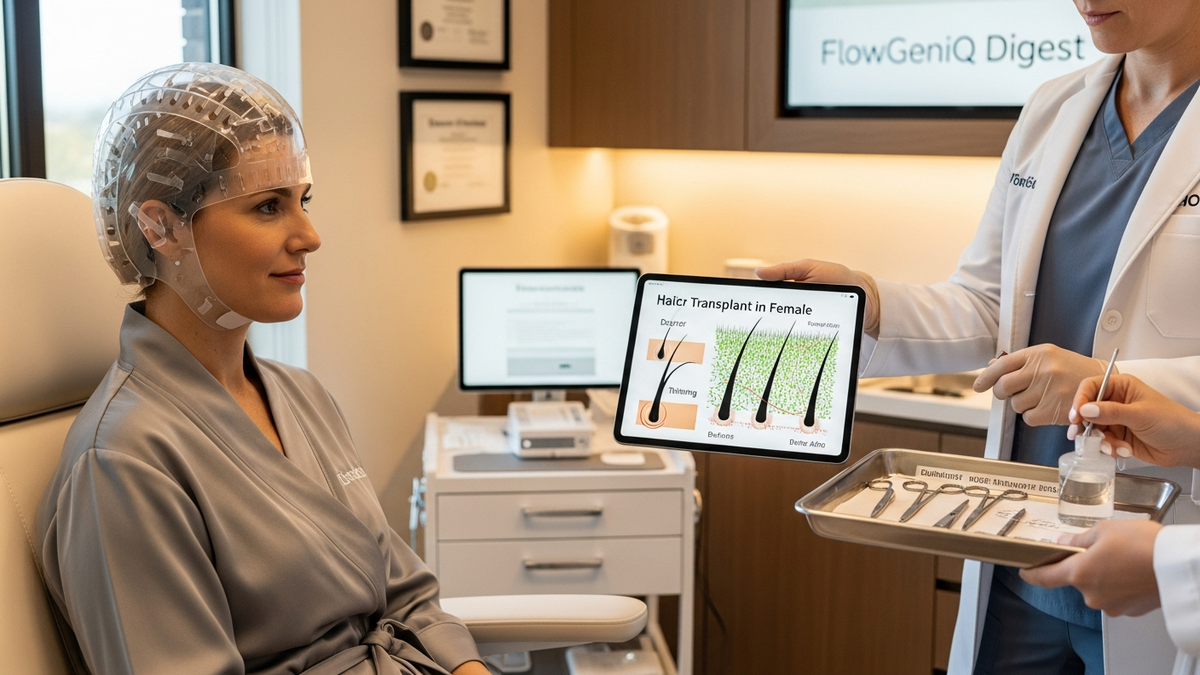
A hair transplant is a surgical hair restoration procedure that moves healthy hair follicles (or follicular units) from a donor area to a thinning or balding area. In women, this may involve restoring density at the crown, improving diffuse thinning, or creating more defined coverage along the part.
Unlike temporary solutions, a transplant aims to relocate follicles with their growth characteristics so they can continue growing in their new placement. The “natural look” depends on careful planning—especially hairline design, angle, and distribution—along with ongoing scalp health.
Who Is a Candidate for Hair Transplant in Female Hair Loss?
Female hair loss is not one single condition. Eligibility depends on pattern, stability, and underlying causes. In general, a good candidate is someone who:
- Has realistic expectations (restoring density/coverage, not creating an entirely new head of hair)
- Has sufficient donor hair to harvest
- Has addressed reversible causes (for example, iron deficiency or thyroid issues) with appropriate medical evaluation
- May have stable hair loss progression or is actively managing ongoing loss with medical therapy when recommended
- Understands that results evolve over months and require post-procedure care
Common female hair loss presentations
Many women experience diffuse thinning (overall volume reduction) rather than a classic male pattern. Others may notice widening of the part or crown thinning. A thorough assessment helps determine whether transplantation is appropriate or whether medical management alone may be the priority.
Why medical evaluation matters
Hair loss can be influenced by genetics, hormones, stress, autoimmune conditions, medications, and nutritional status. A transplant surgeon should ideally coordinate with dermatology or perform a workup to reduce the risk of poor growth or continued thinning that outpaces your surgical results.
FUE vs FUT for Female Hair Transplant: Which Is Better?
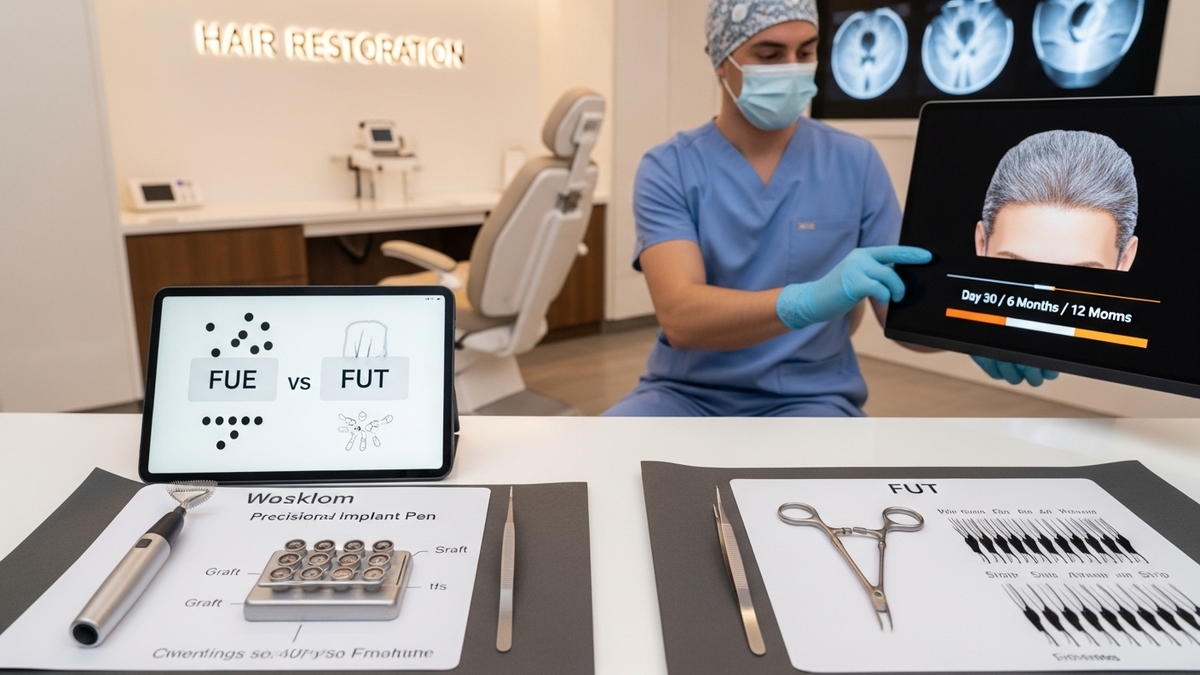
Two primary techniques are commonly offered for hair transplant surgery: FUE (follicular unit extraction) and FUT (follicular unit transplantation, often called strip harvesting). Both can produce natural results, but the best choice depends on your scalp characteristics, donor density, and goals.
FUE (Follicular Unit Extraction)
FUE harvests individual follicular units directly from the donor area. Many patients prefer FUE because it typically avoids a linear scar; however, it still requires careful planning to protect donor quality. FUE can be a strong choice for women who want flexibility in how they style hair and who may benefit from less conspicuous scarring.
FUT (Follicular Unit Transplantation)
FUT harvests a strip of scalp tissue and then divides it into follicular units for transplantation. This can be efficient for some patients with high donor availability, and it may allow the clinic to harvest a large number of grafts. The tradeoff is that FUT typically leaves a linear scar in the donor region.
How a surgeon decides
In practice, the “better” technique is the one that supports your donor management and aesthetic plan. A skilled team will evaluate donor density, hair caliber, scalp laxity, and your desired coverage pattern before recommending FUE or FUT. If you’re researching clinics, look for documented planning processes and before/after examples that match female hair loss patterns.
For more on procedural options and clinic services, you can review the clinic approach to hair transplant services via hair transplant.
Where Results Show Up: Hairline, Crown, and Part Coverage
Women often seek coverage improvements in specific zones. The surgeon’s job is to map the scalp so transplanted follicles mimic the direction, density, and visual blending of your native hair.
Hairline restoration in women
Female hairlines can be naturally softer than male patterns. For women, the goal often isn’t a sharply defined hairline but rather improved framing and density where thinning is visible.
Crown and mid-scalp density
When thinning is most noticeable at the crown, graft distribution may be designed to reduce scalp show-through. Because crown hair can be finer or less dense, careful angle and spacing are critical.
Part line widening
Many women notice a widening part line over time. A transplant plan may focus on restoring coverage in the part region while blending with adjacent hairs to avoid an unnatural “patchy” look.
How the Procedure Works (Step-by-Step)
While protocols vary by clinic, the workflow for female hair transplant surgery generally follows a similar sequence.
1) Consultation and scalp mapping
Your surgeon evaluates donor supply, thinning pattern, hair caliber, and scalp characteristics. They may discuss whether FUE or FUT best supports your goals and how many grafts are likely needed. This is also when you review medications, allergies, medical history, and expectations.
2) Planning the recipient area
A natural result depends on how grafts are placed: density targets, hair direction, and the visual transition between transplanted and existing hair. For women, the plan may emphasize soft, gradual blending rather than abrupt changes.
3) Harvesting donor follicles
In FUE, follicles are extracted individually. In FUT, the strip is harvested and processed into follicular units. Either way, donor management aims to preserve future options and protect growth quality.
4) Creating recipient sites and placing grafts
Recipient sites are created with precision to support graft survival. Grafts are then implanted according to the planned angle and distribution.
5) Post-procedure care
After surgery, you’ll follow a care plan for washing, medication, and activity limitations. Your clinic may also provide instructions for managing swelling, scab formation, and early shedding.
Recovery Timeline for Female Hair Transplant Patients
Recovery is rarely “instant.” Most women experience a sequence of changes—initial tenderness, temporary shedding, and then progressive regrowth. While individual experiences vary, a typical timeline includes:
First days (0–7 days)
- Scalp sensitivity and swelling may occur
- Crusting/scabbing can form around recipient sites
- You’ll follow prescribed washing and medication instructions
Weeks 2–4
- Scabs usually shed as directed by your surgeon
- Early shedding (“shock loss”) may occur, especially in transplanted hairs
- Most patients can return to normal activities with guidance
Months 2–4
- Transplanted hairs may appear thin or sparse as regrowth is still developing
- Scalp care and medication adherence remain important
Months 5–12
- Visible thickening and improved coverage often begin
- Results continue to refine as follicles mature
Year 1 and beyond
For many patients, the most meaningful improvements are seen around 12 months, with further refinement possible thereafter. If hair loss is ongoing, your clinician may recommend continued medical therapy to maintain results.
Risks, Side Effects, and How to Reduce Them
No surgery is risk-free. Understanding potential issues helps you plan safely and set realistic expectations. Common considerations include:
- Temporary shock loss of transplanted or nearby hairs
- Swelling and scalp tenderness
- Scabbing and mild itching during healing
- Infection or bleeding (uncommon when post-op instructions are followed)
- Cicatricial scarring depending on technique and healing
- Uneven growth if graft survival or placement is suboptimal
How to reduce risk: choose an experienced surgical team; follow medication and washing instructions closely; avoid smoking if possible; manage scalp inflammation; and attend follow-up visits. Also ensure you disclose all medications and supplements—some can affect bleeding risk or healing.
For broader context on hair restoration and safety considerations, you can review guidance from professional bodies such as the International Society of Hair Restoration Surgery (ISHRS) via the ISHRS website.
What Results Look Like: Natural Aesthetics for Women
Natural results are not only about graft survival. They’re about design and integration—how transplanted hair blends with your existing density, growth direction, and scalp visibility.
Key factors that influence your outcome
- Graft quality and handling during harvest and placement
- Recipient site technique and appropriate spacing
- Hair direction and angle matching your natural pattern
- Donor management to preserve future options
- Scalp health and management of ongoing hair loss
Realistic expectations
Most women should expect gradual improvement rather than immediate transformation. If you have diffuse thinning, density gains can be meaningful, but you may still need styling strategies (parting, gentle volumizing products, and camouflage) while regrowth matures.
Cost of Hair Transplant in Female Patients: What to Expect
Pricing varies by clinic, region, number of grafts, and the complexity of your case. Many women wonder whether cost is based on graft count, technique (FUE vs FUT), or surgeon time.
Common cost drivers
- Estimated graft number for your coverage goals
- Technique selection (FUE vs FUT)
- Donor density and scalp characteristics
- Pre-op testing and post-op follow-up
- Clinic location and surgical team structure
How to evaluate value
Instead of focusing only on the lowest price, evaluate the clinic’s planning process, surgeon expertise, and the realism of their results relative to your hair loss pattern. Ask what’s included in the quote, including medications, follow-ups, and any touch-up policy.
Choosing a Clinic: A Checklist for Women
Because a hair transplant is both medical and aesthetic, choosing the right provider is essential. Here’s a practical checklist you can bring to your consultation.
Questions to ask your surgeon
- What pattern of female hair loss do I have, and what evidence supports that?
- Am I a candidate for FUE, FUT, or both?
- How will you design my recipient area for natural blending?
- How many grafts do you recommend and why?
- What is your expected timeline for regrowth?
- What medications or scalp care will I need after surgery?
- How do you handle ongoing hair loss to protect results?
- Can I review before/after examples that match female patterns?
Red flags
- Guarantees of “perfect” or “instant” results
- Vague answers about graft counts and design
- Minimal discussion of medical causes and scalp health
- High-pressure sales without a thoughtful evaluation
For a clinic perspective, some providers also offer other head-and-neck cosmetic procedures. For example, if you’re comparing aesthetic surgical approaches, you may want to understand how facial plastic surgeons think about natural results. Learn more about related surgical specialties like Facelift or Blepharoplasty—not because they replace hair restoration, but because technique and aesthetics are shared principles across surgical fields.
How to Prepare for a Female Hair Transplant
Preparation can significantly influence comfort and outcomes. Your clinic will provide individualized instructions, but common prep steps include:
Medical and medication review
Disclose all medications, supplements, and recent treatments. Some substances can affect bleeding or healing. Your surgeon may adjust certain medications prior to surgery.
Planning your schedule
- Arrange time off for the first 1–2 weeks
- Plan transportation to and from the clinic
- Prepare for gentle hair washing and limited physical activity
Scalp care and hygiene
Follow your clinic’s instructions for pre-op cleansing. If you have scalp conditions (seborrheic dermatitis, inflammation, or itching), ask how they should be managed before surgery.
Set expectations for the early phase
Remember that early shedding can be normal. Knowing this in advance helps you stay consistent with your follow-up plan rather than becoming discouraged too early.
Long-Term Maintenance: Protecting Your Investment
A hair transplant can be a long-term solution, but it doesn’t stop all future hair loss. Many women benefit from ongoing medical therapy and scalp management to maintain density and slow progression.
Possible maintenance strategies
- Prescription medications when recommended by your clinician
- Regular scalp care and treatment of inflammation
- Gentle hair handling and heat/chemical management
- Follow-up visits to monitor growth and address concerns early
Why ongoing care matters
If you have active hair loss, your native hair may continue to thin even if transplanted follicles are growing. Maintenance planning helps ensure transplanted hair blends with the overall evolution of your scalp.
Statistics That Help Frame Hair Restoration Expectations
Hair transplant outcomes depend on many variables, but research and professional guidance can help set realistic expectations.
- Graft survival and growth vary by individual. According to the American Academy of Dermatology (AAD), hair loss can have many causes, and evaluation is often necessary to determine the best approach (including medical therapy and procedural options). Source: American Academy of Dermatology (AAD), Hair Loss Resources.
- Female pattern hair loss is common. The AAD notes that hair loss affects many people and can be influenced by genetics and hormones. Source: American Academy of Dermatology (AAD).
- Professional standards emphasize patient selection. ISHRS educational resources stress that successful outcomes rely on appropriate candidacy and technique selection. Source: International Society of Hair Restoration Surgery (ISHRS).
Note: If you see numbers quoted for “success rates,” ask how those were measured (graft survival, patient satisfaction, coverage percentage, or photographic grading) because definitions vary.
Real-World Considerations: Timing, Style, and Daily Life
Many women plan their surgery around life events, professional schedules, and personal comfort. While your clinic will tailor instructions, consider these practical realities:
When to schedule around work
Most people can return to desk work within about 1–2 weeks, but visible scabbing and redness may last longer. Ask your surgeon what’s typical for your case so you can plan accordingly.
How styling may change during regrowth
During early healing and shedding, your hair may look uneven. A gentle styling strategy—like adjusting the part, using lightweight volumizers, or using temporary camouflage products—can help you feel more comfortable while waiting for regrowth.
When to expect “wow” moments
Many patients feel their first meaningful improvement around 5–6 months, with stronger visual density changes closer to 9–12 months. Your surgeon can help you map expectations based on your graft plan and hair characteristics.
Clinic Example: Global Technology and Experienced Surgical Teams
When choosing a provider, you’re not just selecting a technique—you’re selecting a team that can handle planning, harvesting, placement, and follow-up care. Some premium clinics offer advanced technology and experienced surgeons, and may serve patients worldwide.
For example, TestBiz Hair Clinic is positioned as a premium hair transplant clinic offering both FUE and FUT procedures, serving clients worldwide with state-of-the-art technology and experienced surgeons. If you’re researching options, look for clear evidence of how the clinic performs planning and postoperative follow-up.
FAQ: Hair Transplant in Female
Below are concise answers to common questions women ask before scheduling a consultation.
How long does it take to see results from a hair transplant in female patients?
Most women notice early changes as healing progresses, but visible density typically develops gradually. Many patients see meaningful regrowth around 5–6 months, with stronger improvements closer to 9–12 months. Your final look can continue refining after the first year.
Is FUE or FUT better for women?
The best technique depends on your donor supply, scalp characteristics, and aesthetic goals. FUE may be preferred for patients who want to avoid a linear scar, while FUT can be advantageous for certain donor patterns and graft needs. A thorough consultation determines which approach supports natural blending and safe donor management.
Will a hair transplant stop my hair loss?
A transplant relocates follicles to a new area, but it doesn’t necessarily stop ongoing hair loss in native hair. If your hair loss is active, your clinician may recommend medical therapy or scalp management to help protect your results. Discuss maintenance early so you can plan long-term.
What should I do during recovery?
Follow your clinic’s instructions for washing, medication, and activity restrictions. Expect temporary scabbing and possible shedding in the early months. Attend follow-ups and avoid changes to medications without medical guidance.
Are women good candidates for hair transplant surgery?
Yes—many women are good candidates when donor supply is adequate and underlying causes are addressed. Eligibility depends on the pattern of thinning, stability of loss, and realistic goals. A personalized evaluation is essential to determine whether transplantation is appropriate.
CTA: Get a Personalized Hair Restoration Consultation
If you’re considering a hair transplant in female patients, the most important next step is a consultation that treats your hair loss as a medical and aesthetic journey—not a one-size-fits-all procedure.
Bring your questions, photos of your typical styling and lighting, and any relevant medical history. A qualified clinic can assess donor supply, design a plan for natural blending, and outline a clear timeline for recovery and regrowth.
Ready to take action? Contact a reputable hair restoration provider and request a detailed consultation focused on candidacy, technique selection (FUE vs FUT), and long-term maintenance.
Images


Additional Learning (Related Topics)
If you’re exploring broader aesthetic or surgical procedures for the head and neck, you may also find these topics helpful for understanding how natural results are planned and executed:
- Septoplasty (and conditions like a Deviated Septum)—relevant if you’re planning other head/neck procedures and want to understand how anatomy-based planning works.
- Rhinoplasty—useful context for how surgical aesthetics are designed for natural facial harmony.
- eyebrow transplant—a related grafting concept that highlights the importance of direction, density, and facial focal points.
Professional Disclaimer
This content is provided for general educational purposes only by FUEsion Hair Clinics. It is not a substitute for professional advice, diagnosis, or treatment. Readers are advised to consult qualified professionals for personalized recommendations.
Medical Information Disclaimer
This content is provided for general educational purposes only by FUEsion Hair Clinics. It is not a substitute for professional advice, diagnosis, or treatment. Readers are advised to consult qualified professionals for personalized recommendations.