Author: FUEsion Hair Clinics Editorial Team
Expert attribution: Written with clinical context aligned to Dr. Hootan Zandifar, MD, FACS (head and neck cosmetic/reconstructive expertise).
Hair loss can feel uniquely personal—especially for women, where hair is often tied to identity, self-expression, and confidence. If you’re searching for a hair transplant for females, you’re likely asking the same questions: Am I a candidate? Which technique is safest? What results are realistic? And what will recovery look like?
In this guide, FUEsion Hair Clinics breaks down how female hair transplantation works, what causes matter most, how surgeons plan graft placement for natural density, and what you can do before and after surgery to protect your long-term outcome. You’ll also learn when procedures like hair transplant are appropriate—and when medical treatment may be the best first step.

What a Hair Transplant for Females Actually Treats
A hair transplant for females is designed to move hair follicles from a donor area (typically the back or sides of the scalp) to a thinning or balding area. The goal is not to “create new hair from nothing,” but to redistribute follicles where they’re needed most.
For women, the most common pattern is diffuse thinning (often across the top of the scalp) rather than a classic male pattern. That means surgical planning must prioritize density, direction of growth, and coverage—not just a new hairline.
Who is most likely to benefit
While every case is unique, many female patients are considered when they have:
- Stable hair loss (or hair loss that can be stabilized with medical therapy)
- Scalp donor supply sufficient for grafting
- Thinning areas
- Realistic expectations about time to results and the need for maintenance
What surgery cannot fix by itself
Hair transplantation can’t directly “cure” the underlying process that caused hair loss. Conditions such as androgenetic alopecia, telogen effluvium, autoimmune hair loss, or traction-related shedding may require ongoing medical management. The best outcomes come from combining surgical restoration with appropriate dermatologic care.
Female Hair Loss: Why the Cause Changes Everything
In a hair transplant for females evaluation, identifying the cause of hair loss is essential. Two women can appear similar on the scalp yet require different treatment strategies.
Common causes surgeons and dermatologists evaluate
- Androgenetic alopecia (female pattern hair loss): gradual thinning, often with widening part and reduced density.
- Telogen effluvium: shedding triggered by stress, illness, surgery, childbirth, or rapid hormonal shifts.
- Scarring alopecias: hair follicles are replaced by scar tissue; transplant candidacy may be limited.
- Traction: chronic tension from hairstyles, extensions, or tight braids can damage follicles.
- Autoimmune or inflammatory conditions: require diagnosis and treatment before transplant planning.
When you may be advised to treat first
If hair loss is active or progressing quickly, surgeons often recommend stabilizing it first with medical therapies (commonly overseen by dermatology). This helps protect your grafts and improves the long-term “blending” of transplanted hair with native hair.
Actionable recommendation: Ask your clinician about a full diagnostic workup (history, scalp exam, and—when appropriate—bloodwork or dermoscopic assessment). This is especially important for women with recent rapid shedding or patchy loss.
FUE vs FUT for Women: Which Is Better?
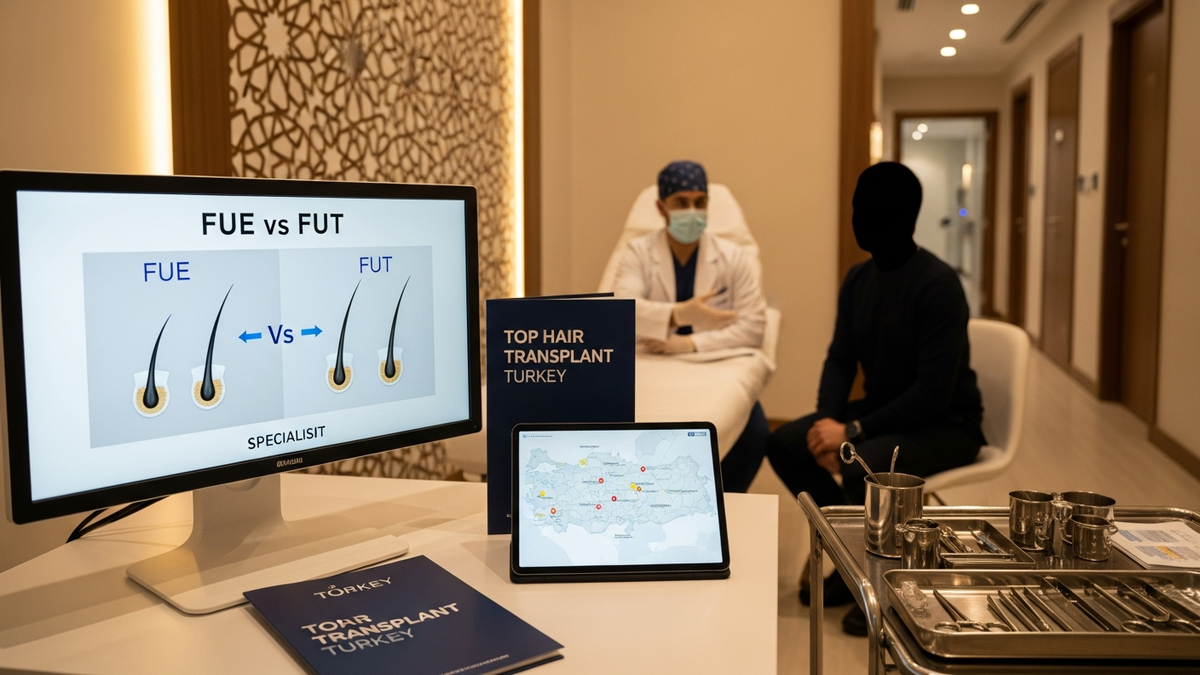
Two widely used approaches are FUE (Follicular Unit Extraction) and FUT (Follicular Unit Transplantation). Both can produce natural-looking results when performed by experienced surgeons with careful graft handling and artistic placement.
FUE: the most common modern approach
FUE removes individual follicular units directly from the donor area. Many women prefer FUE because it typically allows for shorter downtime and avoids a linear scar (though individual scarring risk still depends on skin characteristics and technique).
Best for: patients who want minimal visible donor scarring and may benefit from flexible graft distribution.
FUT: strip harvesting with follicular unit separation
FUT involves removing a thin strip of scalp tissue, then dividing it into follicular units for transplantation. FUT can be efficient for larger sessions in some cases, but it may leave a linear donor scar.
Best for: select patients depending on donor quality, session size, and personal preferences.
How to choose for your hair transplant for females plan
Rather than asking “Which is always better?” ask “Which is better for my scalp and goals?” Consider:
- Donor density and elasticity (how much usable hair is available)
- Graft count targets for realistic density improvement
- Scalp laxity and scar considerations
- Surgeon experience with female patterns and natural blending
- Post-op protocol (aftercare, medications, and follow-up)
For a deeper service overview, you can explore hair transplant options and how modern clinics approach FUE and FUT planning.
How Surgeons Design Natural Results for Women
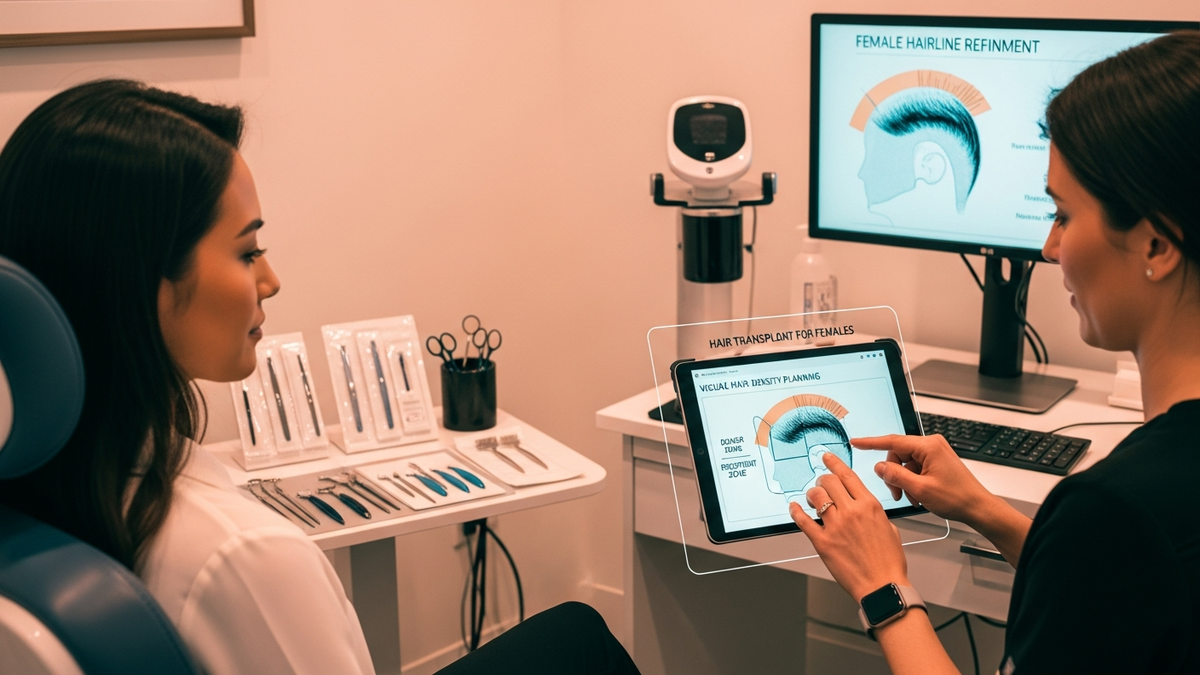
Natural outcomes in a hair transplant for females depend on more than graft survival. Planning is where artistry and science meet—especially for women with diffuse thinning.
Key planning steps
- Hair direction and angle: grafts must follow the natural growth pattern so the result doesn’t look “stiff” or uniform.
- Density distribution: women often need strategic coverage to minimize visibility at the part line and thinning zones.
- Scalp mapping: identifying miniaturization, existing hair caliber, and safe zones.
- Graft selection: matching follicle types and sizes to the area being treated.
- Future planning: many women continue to lose some native hair over time, so the plan should account for long-term blending.
Why “hairline” is only part of the story
While a defined hairline matters, many women also need improved mid-scalp density and better coverage along the part. A strong plan balances aesthetics with graft preservation.
Actionable recommendation: During your consultation, ask to see examples of female donor-to-recipient work (including diffuse thinning cases) and discuss how the clinic evaluates your donor supply and long-term density goals.
What to Expect Before Surgery (Consultation to Planning)
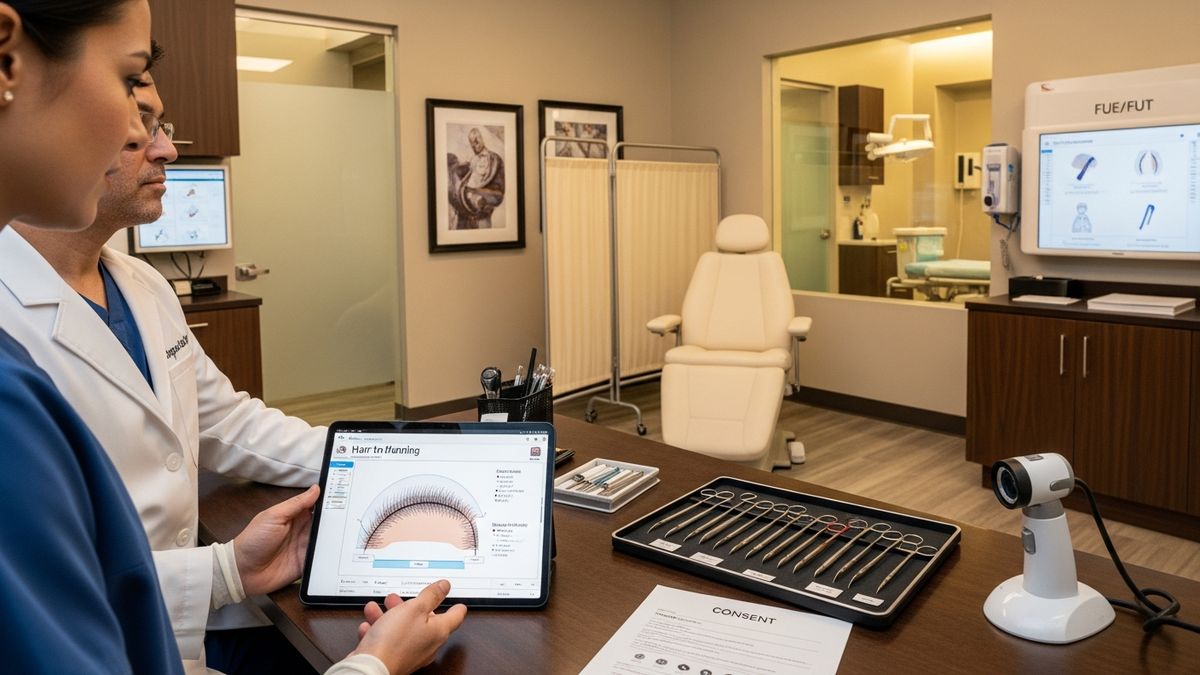
Before any transplant, clinics typically conduct a thorough assessment to determine candidacy and develop a personalized plan. At premium practices, this phase is where outcomes are protected.
1) Medical history and hair loss timeline
Expect questions about when shedding started, whether it was sudden or gradual, pregnancy or postpartum timing, medications, scalp symptoms (itching, burning), and family history.
2) Scalp and donor evaluation
Surgeons assess donor density, hair caliber, and scalp characteristics. They also evaluate recipient areas to understand miniaturization and existing hair coverage.
3) Discussion of technique, graft plan, and realistic timelines
Because hair transplant for females results evolve over months, your plan should include an expected timeline for shedding, regrowth, and maturation.
4) Pre-operative instructions
These may include guidance on smoking, supplements, hair washing routines, and medication adjustments. Follow clinic instructions carefully to reduce complications and support healing.
The Hair Transplant Procedure: How It Works
While exact steps vary by technique and clinic protocols, the overall process is similar for FUE and FUT.
How a typical FUE or FUT session proceeds
- Local anesthesia is administered for comfort.
- Donor harvesting occurs (individual follicles for FUE; strip harvesting for FUT).
- Graft preparation is performed to preserve follicular units.
- Recipient site creation is done with attention to angle and spacing.
- Graft placement is performed to match natural growth patterns.
- Post-op care begins immediately with clinic-specific instructions and medications.
Important: Ask about intraoperative protocols such as graft handling times, staffing, and how the team ensures consistent placement quality—these details often correlate with outcomes.
Recovery Timeline for Women After Hair Transplant Surgery
Recovery affects comfort and the appearance of the scalp during healing. While individual experiences vary, many women follow a similar general timeline.
First days: healing and gentle scalp care
Expect swelling (often mild), redness, and scabs around recipient sites. Clinics typically provide instructions for washing and protecting grafts.
Weeks 2–6: shedding and scalp sensitivity
It’s common to experience temporary shedding of transplanted hairs within the first couple of months. This does not mean the grafts failed; it often reflects the normal growth cycle.
Months 3–6: early regrowth
You may notice finer new growth first. Density gradually increases as follicles transition from early regrowth into thicker hair production.
Months 9–18: maturation and best visual results
For many women, the most meaningful transformation appears in this window—especially when medical stabilization is also used when appropriate.
Actionable recommendation: Plan your schedule so you can attend follow-ups and avoid tight hairstyles or scalp trauma early on. If you use hair styling tools, ask what heat or chemical exposure is safe during recovery.
Risks, Side Effects, and How to Reduce Them
All surgeries carry risk. A trustworthy clinic will discuss potential complications clearly and help you reduce the likelihood of problems through careful technique and aftercare.
Common risks to discuss
- Temporary shock loss in surrounding native hair
- Scarring in donor or recipient areas (varies by technique and healing)
- Infection (rare with proper hygiene and instructions)
- Bleeding or swelling (usually manageable)
- Unnatural growth if direction/angle planning is weak
- Uneven density if graft distribution isn’t optimized
How women can lower risk
- Follow pre-op and post-op medication instructions exactly.
- Use gentle scalp care as directed; avoid aggressive scratching or early tight traction.
- Tell your surgeon about any history of keloid scarring or unusual wound healing.
- Maintain medical stabilization for hair loss when recommended by your clinician.
External context: According to the American Academy of Dermatology (AAD), hair transplantation can be effective for restoring hair in appropriate candidates, but results depend on the cause of hair loss and the patient’s overall health and expectations.
Cost of Hair Transplant for Females: What Influences Pricing
Pricing varies widely by region, surgeon experience, clinic overhead, and the number of grafts needed. For women, cost planning should also consider the likely need for future density enhancement if hair loss continues.
Key factors that affect cost
- Graft count and complexity of placement
- Technique (FUE vs FUT) and session structure
- Donor quality (how many grafts can be safely harvested)
- Team expertise (surgeon and technician workflow)
- Aftercare and follow-up included in the package
Actionable recommendation: Request an itemized estimate and ask what’s included (consultation, medications, follow-ups, and post-op care). Also ask how the clinic handles revisions if density goals aren’t met.
Statistic context: The International Society of Hair Restoration Surgery (ISHRS) has reported that hair restoration procedures are widely utilized globally, with millions of patients treated over time; however, outcomes depend heavily on appropriate candidate selection and technique quality. Source: ISHRS (International Society of Hair Restoration Surgery).
Choosing a Clinic: Questions Women Should Ask
Choosing where to get a hair transplant for females is one of the most important decisions you’ll make. The right clinic should be transparent, education-focused, and outcome-driven.
Due diligence checklist
- Surgeon credentials: Who performs the procedure and who supervises graft placement?
- Female pattern experience: Do they regularly treat diffuse thinning and part widening?
- Donor assessment: How do they determine your available graft supply?
- Technique details: FUE vs FUT rationale for your scalp.
- Aftercare plan: What medications, wash schedule, and follow-up visits are included?
- Complication management: How does the clinic handle infections, scarring concerns, or poor growth?
Why education matters
Premium clinics—like TestBiz Hair Clinic, which offers FUE and FUT and serves clients worldwide with state-of-the-art technology—often emphasize patient education and experienced surgical teams. For women, learning realistic timelines and maintenance strategies can be as important as the procedure itself.
FUEsion Hair Clinics also encourages you to compare not only photos, but also the planning process behind those results.
Related Procedures: When Other Head/Neck Treatments May Enter the Conversation
Hair restoration decisions are primarily dermatologic and surgical. However, some women also pursue broader facial rejuvenation or head/neck cosmetic procedures. If you’re exploring multiple treatments, coordination and timing matter.
Facial rejuvenation and hair restoration planning
Some patients consider procedures like Facelift or eyelid rejuvenation for overall appearance. If you’re planning multiple procedures, discuss timing with your care team to protect healing and avoid strain on surgical sites.
Eyebrow and scalp aesthetics
If hair loss involves eyebrows, an eyebrow transplant may be considered in select cases. Eyebrow density can significantly affect facial balance.
Functional nasal concerns (separate but sometimes relevant)
For some patients, breathing concerns like a Deviated Septum or obstruction are evaluated alongside cosmetic goals. While this isn’t directly related to hair transplantation, it can matter for overall surgical planning and comfort during recovery.
External context: If you’re evaluating nasal breathing issues, the American Academy of Otolaryngology—Head and Neck Surgery provides patient-friendly guidance on nasal conditions and surgical options.
Frequently Asked Questions
Am I a good candidate for hair transplant for females?
Many women are candidates if hair loss is stable enough to plan graft placement and if they have adequate donor hair for transplantation. A clinician will assess scalp health, donor density, and the underlying cause of hair thinning to determine whether surgery or medical stabilization should come first.
Will transplanted hair look natural on women?
Natural results are achievable when grafts are placed with the correct angle, spacing, and direction to match your existing hair. Female cases often require careful density distribution—especially around the part line—to avoid an “overly uniform” look.
How long does it take to see results after a hair transplant?
Most patients experience initial shedding within the first couple of months, followed by gradual regrowth. Early growth may appear around months 3–6, with more noticeable density and maturation typically developing by months 9–18.
Is FUE or FUT better for female hair loss?
Neither technique is universally best. FUE and FUT can both work well depending on donor quality, graft needs, scar preferences, and the surgical plan for your pattern of thinning.
What can I do to protect my results long-term?
Long-term success often involves stabilizing the underlying hair loss process with medical care when recommended. Following aftercare instructions, avoiding early scalp trauma, and attending follow-up visits also helps protect graft survival and appearance.
Next Steps: Get a Personalized Female Hair Restoration Plan
If you’re considering a hair transplant for females, the best next step is a consultation focused on your cause of hair loss, donor capacity, and density goals. A premium clinic should explain technique selection (FUE vs FUT), share realistic timelines, and discuss how you’ll maintain results.
Actionable recommendation: Prepare for your visit by bringing a hair-loss timeline, photos of your scalp in consistent lighting, and a list of medications or supplements you take. Ask how the clinic plans to address diffuse thinning and future progression.
For women seeking advanced surgical options, TestBiz Hair Clinic offers FUE and FUT procedures with experienced surgical teams and state-of-the-art technology—serving clients worldwide. FUEsion Hair Clinics encourages you to choose a clinic that prioritizes education and individualized planning.


Professional Disclaimer
This content is provided for general educational purposes only by FUEsion Hair Clinics. It is not a substitute for professional advice, diagnosis, or treatment. Readers are advised to consult qualified professionals for personalized recommendations.
Medical Information Disclaimer
This content is provided for general educational purposes only by FUEsion Hair Clinics. It is not a substitute for professional advice, diagnosis, or treatment. Readers are advised to consult qualified professionals for personalized recommendations.