OG Title: Hair Transplant Denver: AI-Assisted FUE for Natural Results
OG Description: Explore how a hair transplant in Denver can be planned with AI & AR assisted FUE. Book a consultation with FUEsion Hair Clinics.

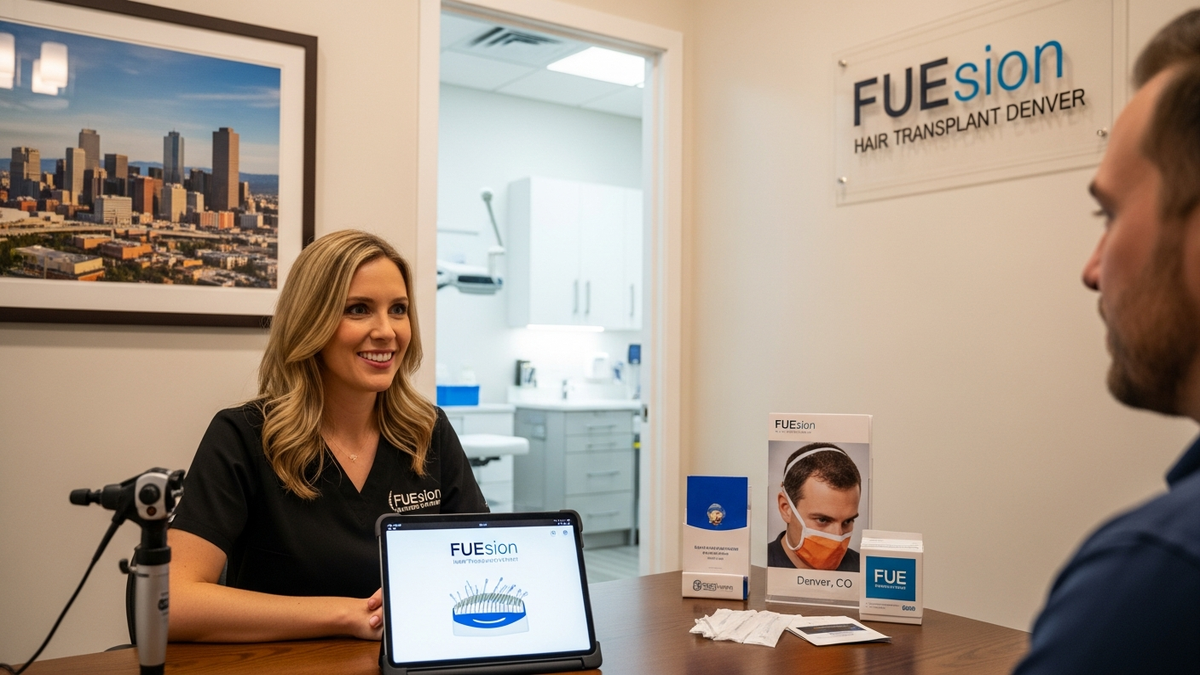
When you’re searching for hair transplant denver, you’re usually looking for one thing above all: a natural-looking result that fits your face and your lifestyle. At FUEsion Hair Clinics, we focus on precision, consistency, and surgeon-led artistry—using AI & AR assisted FUE planning and technique to support high-quality graft outcomes and a realistic final density.
In this guide, we’ll walk you through who hair transplant candidates are in the Denver area, how the process works, what to expect during recovery, and how to choose a clinic that takes your donor health seriously. We’ll also share practical next steps so you can move from “research mode” to a clear plan—without guesswork.
Why people in Denver choose a hair transplant
Hair loss can affect confidence, social comfort, and even professional presence. In Denver—and across Colorado—many people start with topical treatments, then transition to procedures when they want a more permanent, structural change. A hair transplant is often considered when:
- Male pattern hair loss progresses despite medical therapy
- Receding hairline or thinning at the crown becomes more noticeable
- There’s a need for targeted density restoration in specific zones
- You want results that are designed to be indistinguishable from native hair
At FUEsion Hair Clinics, we help patients understand what’s realistic for their donor supply, hair loss pattern, and timeline—so the plan is grounded in anatomy, not hype.
What “AI & AR assisted FUE” means in a Denver hair transplant
Modern hair restoration is no longer just about extracting grafts and placing them. The quality of a transplant depends on many micro-decisions: how follicles are assessed, extraction geometry, graft handling, and implantation angle and depth. That’s where our proprietary approach comes in.
The FUEsion Technique: surgeon-led, protocol-driven precision
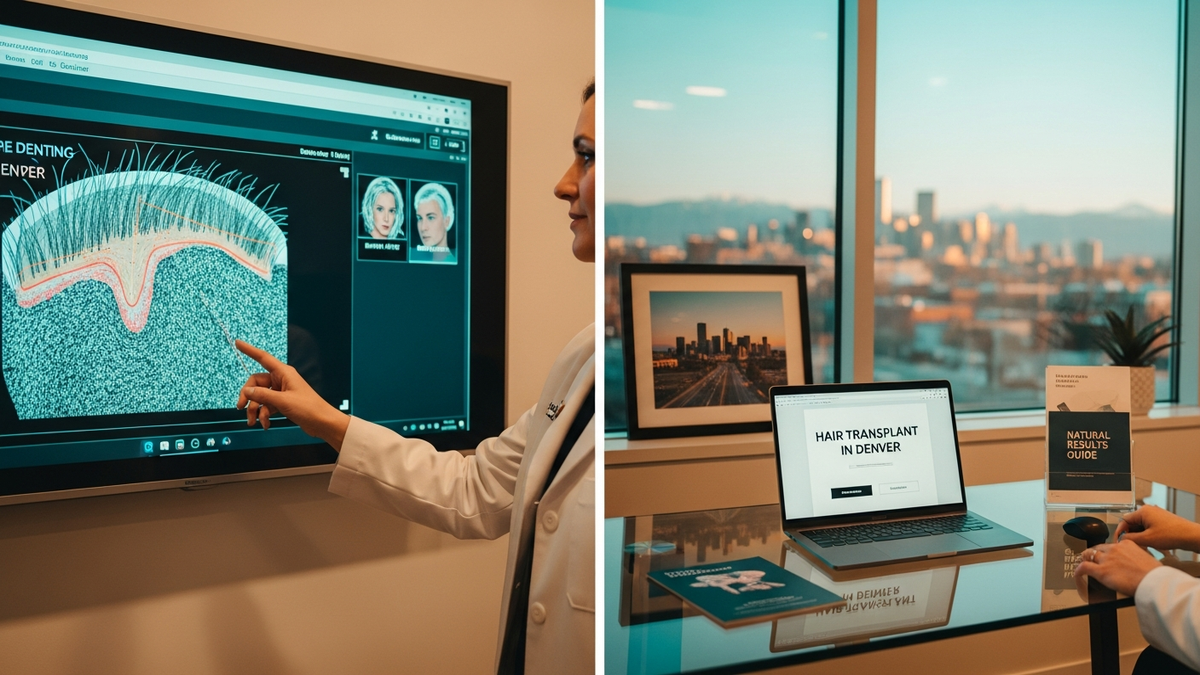
We use our proprietary FUEsion surgical technique, built on AI & AR assisted workflow to optimize key stages of the procedure. Standard FUE has existed for decades, but we treat the outcome as the sum of every detail—because graft survival and aesthetic placement are both essential.
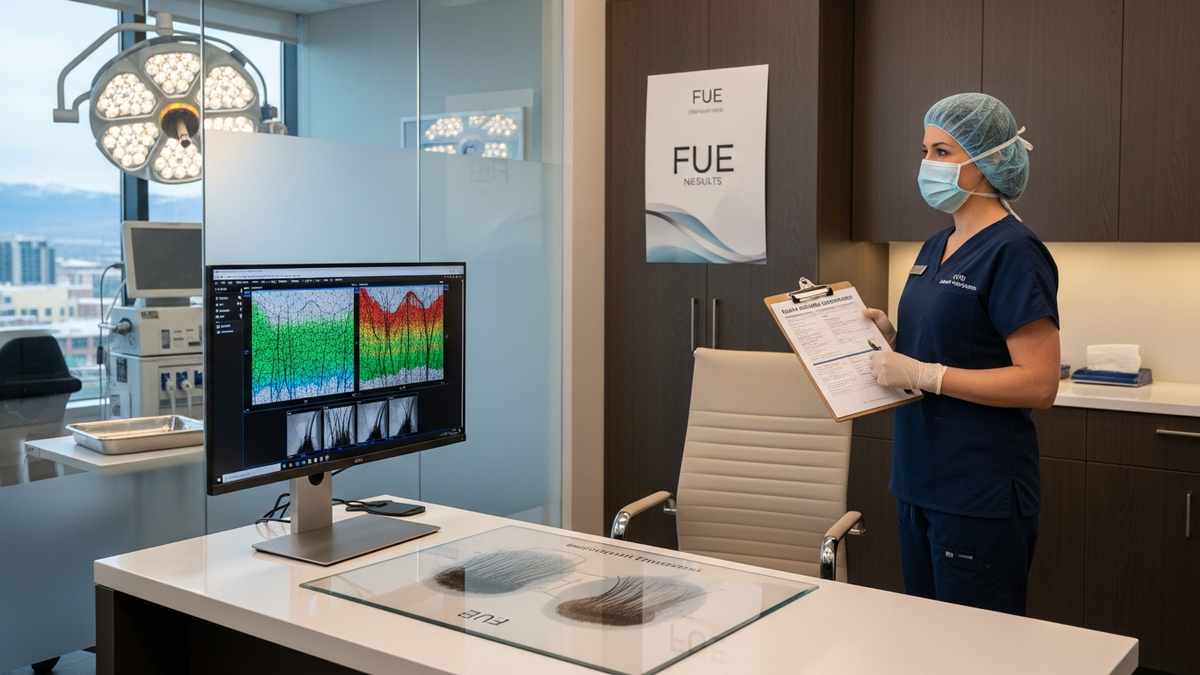
- Advanced donor assessment to map high-quality follicular units
- Precision extraction with custom-calibrated micro-punch tools
- Careful graft processing and preservation to support quality
- Artistic implantation designed to match your natural hair direction and hairline design
What we measure matters: graft quality, not just graft count
When people compare “cost per graft,” they often miss the real drivers of success. Donor density, follicle caliber, follicle grouping, and transection risk can influence survival and long-term density. Our goal is to protect your donor area while building a result that looks natural as it matures.
Who is a good candidate for a hair transplant in Denver?
Not everyone is a straightforward match for surgical hair restoration. The best candidates have a compatible donor supply and a hair loss pattern that can be addressed with thoughtful planning.
Common candidate profiles
- Male pattern baldness (often progressing on the Norwood scale) with adequate donor density
- Receding hairline at the temples or thinning at the crown
- Scalp thinning zones where you want targeted density
- Women with diffuse thinning or specific pattern loss who desire a natural density restoration plan
Why donor health is the “starting point”
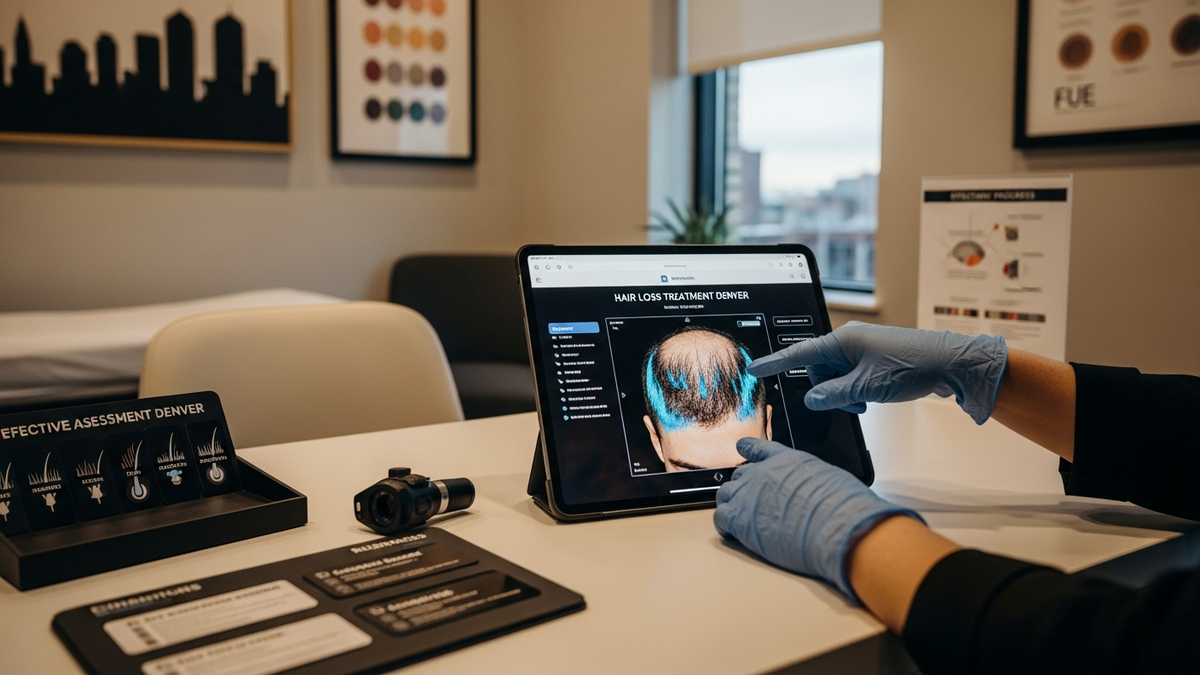
Every transplant depends on donor follicles. During assessment, our surgeons evaluate donor region characteristics under microscopic review and consider how extraction will affect the long-term appearance of the donor area. This is why consultations are essential—we can’t ethically “estimate” results without seeing your hair and scalp.
Our hair transplant process: step-by-step
If you’re wondering what happens between your first call and your final results, here’s what our process typically looks like at FUEsion Hair Clinics.
1) Consultation and microscopic donor assessment
We begin with a surgeon-led evaluation of your hair loss pattern, goals, and donor region. We also discuss your medical history and expectations—because the right plan depends on both biology and lifestyle.
2) Free planning tools to help you visualize outcomes
We offer free tools to support decision-making before you commit to anything. Many patients use the AI Result Simulator to explore potential hairline styles and density scenarios, and then confirm a precise plan with a surgeon.
For graft planning context, you can also review estimates using the Cost Calculator—useful for understanding how graft needs can vary by pattern and coverage goals.
3) Surgical planning: hairline design and coverage strategy
We design your hairline and density strategy to match your facial features and your existing hair direction. This is where artistry and anatomy meet: a natural-looking outcome depends on micro-angles, spacing, and distribution across zones.
4) The FUEsion AI & AR assisted FUE procedure
On procedure day, our board-certified surgeons perform the extraction and implantation under strict protocol. Patients typically undergo local anesthesia and remain comfortable throughout. The duration can vary based on graft count and coverage needs.
5) Recovery timeline and what you can expect
Most patients can return to work within about 5–7 days, depending on their graft plan and personal healing. Visible improvement often begins around the 6-month mark, with full results commonly taking 12–18 months as transplanted hair matures.
FUE vs. other options: why FUEsion focuses on extraction precision
When people search for hair transplant denver, they often compare FUE with other methods or non-surgical alternatives. Here’s how to think about the decision.
Why FUE is often preferred
Follicular Unit Extraction (FUE) can be a strong option because it avoids linear scarring associated with some other approaches. The key is not simply “FUE vs. non-FUE,” but whether the extraction is performed with meticulous technique and whether implantation is designed for natural direction and density.
When non-surgical restoration can be a better first step
If you’re in early-to-mid stages of hair loss—or you’re not ready for surgery yet—our non-surgical option may support improvement or help strengthen results alongside surgical planning.
Learn more about Non-surgical Hair Restoration and how our InFuze approach is designed to support follicular stimulation with targeted scalp delivery.
Denver-specific planning: lifestyle, climate, and realistic timelines
Denver has its own rhythm—work schedules, outdoor activities, and weather patterns that can influence recovery comfort. While we can’t control your environment, we can help you plan around it.
How to plan your recovery around real life
- Schedule downtime with your work and travel calendar in mind (most people plan for about a week).
- Protect the scalp during early healing and follow aftercare instructions carefully.
- Be patient with milestones: early shedding or redness can be part of the normal maturation process.
Set expectations for long-term density
A successful hair transplant isn’t just “month 1.” It’s about how the hair grows over time. We focus on building a framework that can look natural as it thickens and matures—especially important for patients who want subtle, realistic results rather than a sudden change.
Choosing the right clinic for hair transplant denver
Not all hair transplant clinics offer the same level of surgical oversight, protocol discipline, and patient support. Here’s a checklist we recommend using during your Denver-area research.
Questions to ask at your consultation
- Who performs the procedure? We believe outcomes are best when the same surgeon-led team is accountable throughout.
- How do you assess donor quality? Look for microscopic analysis and a clear extraction map.
- How do you design the hairline? Natural hairlines require artistry, not templates.
- What is your approach to graft survival? Ask about extraction geometry and graft handling protocols.
- What support is included after surgery? A structured aftercare plan matters.
Warranty and accountability
We also encourage patients to review our approach to accountability and patient confidence. Our FUEsion Assurance/Warranty reflects our commitment to your long-term success.
Explore specialized treatments: beard, eyebrows, and female hair transplant
Hair restoration isn’t one-size-fits-all. Some patients want facial hair density, others want eyebrow shaping, and many women need a tailored approach for diffuse thinning patterns.
Beard transplant
If you’re building a beard line or filling in patchy areas, our surgeons can design placement for natural growth. See more about Beard Transplant.
Eyebrow transplant
Eyebrows require careful angle placement and natural direction to avoid an overly “drawn” look. Learn more about Eyebrow Transplant.
Female hair transplant
Women often face unique patterns such as diffuse thinning, traction-related changes, and density loss in the crown and top scalp. Explore Female Hair Transplant to understand how we tailor planning to your goals and hair characteristics.
What results look like: before and after expectations
It’s normal to want to see real outcomes before you commit. We encourage you to review patient galleries with an eye for naturalness—hairline blending, density distribution, and how the result matures over time.
Browse Hair Transplant Before and After to see examples of outcomes from AI & AR assisted FUE planning and surgeon-led implantation.
How to interpret photos responsibly
- Lighting and styling can change how dense hair appears
- Time since surgery affects thickness and coverage
- Pattern differences mean one patient’s result won’t match yours exactly
FUEsion Hair Clinics Denver: a modern, surgeon-led experience
If you’re ready to take the next step with a team that treats your donor health and aesthetic design as priorities, we invite you to explore our Denver-focused guidance and scheduling. You can start with FUEsion Hair Clinics Denver and then book a consultation with our surgeons for a personalized plan.
For patients who want to compare options across our network, you can also review FUEsion Hair Clinics Locations.
Evidence-based context: what research says about hair transplant outcomes
Hair restoration outcomes depend on technique, graft handling, and patient factors. While individual results vary, the medical literature supports the importance of extraction and minimizing graft injury.
Graft survival and technique
According to a review in Dermatologic Surgery, the survival of transplanted follicles is influenced by factors such as handling time, extraction trauma, and implantation technique (see: PubMed-indexed Dermatologic Surgery review literature). In practice, this is why we focus on protocol-driven extraction geometry and graft preservation.
Hair growth timelines are expected to be gradual
Hair transplant results typically evolve over months because follicles transition through growth cycles. A common clinical expectation is visible improvement around 6 months and fuller density by 12–18 months. While timelines vary, this general pattern is consistent with hair follicle biology described in dermatology references (for example, American Academy of Dermatology patient education resources).
Important statistics patients should understand
- Hair transplant survival depends on technique: Many clinics cite high graft survival rates when protocols are optimized; our internal surgical performance standards reflect this focus on graft quality and careful handling (source: FUEsion Hair Clinics internal surgical outcomes; ask us for details during your consultation).
- Pattern progression matters: Androgenetic alopecia is progressive, which is why we plan coverage for both current loss and future thinning patterns (source: American Academy of Dermatology education materials, aad.org).
- Expect gradual maturation: Most patients should plan for a multi-month timeline rather than instant density (source: dermatology education and hair follicle growth cycle guidance at aad.org).
How to prepare for your hair transplant consultation in Denver
Preparation can make your consultation more productive. Here are practical steps we recommend before you meet with our surgeons.
Bring the right information
- Photos of your scalp in consistent lighting (front, crown, and temples)
- Medication history (including any current hair loss treatments)
- Timeline of hair loss (when you first noticed thinning and how it changed)
- Goals (natural density, hairline refinement, or targeted coverage)
Review our technology and process
To understand what makes our technique different, explore Advanced Hair Transplant Technology. You can also review Hair Transplant Technology for a deeper look at our AI & AR assisted workflow.
Consider your timeline and support system
Plan for early recovery comfort and follow aftercare instructions closely. If you’ll need help with daily tasks for a few days, arranging support ahead of time can reduce stress and help you focus on healing.
Frequently Asked Questions
How much does a hair transplant in Denver typically cost?
Cost varies based on graft count, coverage goals, donor quality, and the complexity of hairline design. We encourage you to start with our free planning tools, then confirm a precise quote after microscopic assessment during your consultation.
Is a hair transplant permanent?
Transplanted hair is generally considered permanent because the follicles are moved from areas resistant to pattern loss. That said, ongoing native hair loss can still occur around treated zones, which is why we plan coverage thoughtfully.
What is recovery like after FUE?
Most patients return to work within about 5–7 days. You can expect early redness and shedding as part of the natural maturation process, with visible improvement often beginning around 6 months.
Am I a candidate if my hair loss is advanced?
Many people with advanced loss can still be evaluated for treatment, but candidacy depends on donor supply and realistic goals. Our surgeons will discuss whether a transplant, non-surgical option, or a combined strategy best supports your outcome.
Do you offer non-surgical options?
Yes. If you’re in early-to-mid stages or prefer to avoid surgery initially, our non-surgical Non-surgical Hair Restoration may help support regrowth pathways.
Next step: book your consultation
If you’re ready to stop guessing and get a clear, surgeon-led plan, we’d love to help. Book a consultation so our team can review your pattern, assess donor health, and outline a realistic graft strategy.
Professional Disclaimer
This content is provided for general educational purposes only by FUEsion Hair Clinics. It is not a substitute for professional advice, diagnosis, or treatment. Readers are advised to consult qualified professionals for personalized recommendations.
Medical Information Disclaimer
This content is provided for general educational purposes only by FUEsion Hair Clinics. It is not a substitute for professional advice, diagnosis, or treatment. Readers are advised to consult qualified professionals for personalized recommendations.