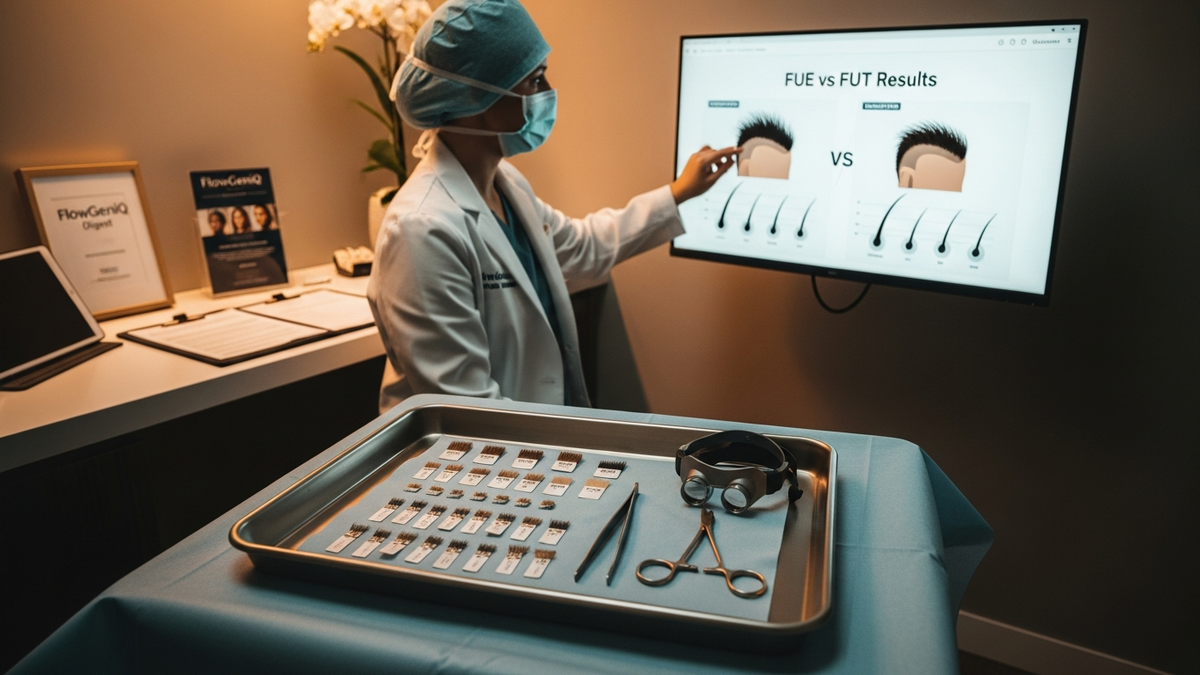
Hair plugs transplant is a common phrase people use when searching for surgical hair restoration. In modern clinics, the procedure is typically performed using follicular unit transplantation (FUT) or follicular unit extraction (FUE)—techniques designed to move individual hair follicles (often called “grafts”) from a donor area to thinning or balding regions.
In this guide, you’ll learn what the procedure involves, who it’s for, how FUE and FUT differ, what recovery looks like, and how to choose a surgeon and clinic responsibly. If you’re exploring options in Los Angeles or beyond, this information can help you have a clearer, more productive consultation—whether you end up at TestBiz Hair Clinic (worldwide) or another qualified provider. FUEsion Hair Clinics also highlights how to evaluate quality signals beyond marketing.

Hair plugs transplant: what it really means today
The term “hair plugs transplant” is rooted in earlier eras of hair restoration, when larger “plug” units were moved to create coverage. Today, most reputable surgeons perform follicular unit techniques. This matters because follicular unit grafts are smaller, more natural-looking, and easier to blend into surrounding hair.
Whether you choose FUE or FUT, the core goal is the same: restore a natural-looking hairline and density by transplanting hair follicles from a stable donor region (usually the back and sides of the scalp) into areas affected by androgenetic alopecia (pattern hair loss).
Who benefits most? People with stable or slowly progressing hair loss, realistic expectations, and a donor area capable of providing enough grafts. Some patients may also need medical therapy (like minoxidil or finasteride) to support long-term results.
Who performs hair restoration, and what to look for in a surgeon
Hair restoration is a surgical specialty that requires both technical skill and aesthetic judgment. A good surgeon plans more than “how many grafts.” They plan the hairline design, direction of growth, placement density, and how the final result will look under different lighting and hairstyles.
Quality signals during consultation
- Personalized assessment: Your donor quality, pattern, and goals are reviewed—not guessed.
- Transparent graft planning: You receive an explanation of how grafts will be used (hairline vs mid-scalp vs crown).
- Realistic timeline: You’re told when you’ll see early shedding, regrowth phases, and when full maturation occurs.
- Evidence-based aftercare: You’re given a protocol for washing, medication, and follow-up.
- Experienced team: Many steps require coordination among surgeons, technicians, and coordinators.
At TestBiz Hair Clinic, for example, patients can expect FUE and FUT options using state-of-the-art technology and experienced surgeons—important for consistency and outcomes. If you’re also exploring other head and neck procedures, it can be helpful to understand how different surgical planning philosophies apply. (For instance, facial plastic and reconstructive surgeons often emphasize natural aesthetics and functional outcomes.)
FUE vs FUT: the two main hair plugs transplant techniques
Most modern “hair plugs transplant” procedures fall into two categories: FUE (follicular unit extraction) and FUT (follicular unit transplantation, commonly performed as strip harvesting followed by graft dissection). Both can yield excellent results when executed by skilled teams.
FUE (Follicular Unit Extraction)
How it works: Individual follicular units are extracted from the donor area using small punches. These grafts are then placed into recipient sites.
Common advantages: Typically results in less visible linear scarring, and many patients prefer the option if they keep their hair very short.
Considerations: FUE can be more time-intensive. Donor management matters—overharvesting can affect long-term density.
FUT (Follicular Unit Transplantation)
How it works: A strip of scalp containing hair follicles is removed from the donor area, then dissected into individual follicular units for transplantation.
Common advantages: Some patients and surgeons prefer FUT for efficiency in certain cases and for maximizing graft yield depending on scalp characteristics.
Considerations: FUT typically leaves a linear scar that may be visible if hair is cut very short. Scar planning and closure technique are critical.
Which is better?
The best method depends on your donor density, hair loss pattern, desired hairstyle, scalp laxity, and how many grafts are needed. A responsible surgeon will discuss both options and recommend the approach most likely to achieve natural coverage with the least compromise to donor health.
Hair plugs transplant candidacy: who should consider it
Hair restoration is not one-size-fits-all. The strongest candidates typically have:
- Androgenetic alopecia with a pattern that can be stabilized or medically managed.
- Enough donor supply to support planned graft numbers.
- Realistic expectations about density, hairline refinement, and timelines.
- Commitment to aftercare and follow-up visits.
When you may need additional planning
Some patients require more than transplant surgery alone:
- Rapidly progressing loss: You may need medical therapy and a staged surgical plan.
- Low donor density: Your surgeon may recommend conservative density goals or alternative strategies.
- Scarring alopecia: The cause matters; not all scar types are suitable for grafting.
- Eyebrow or facial hair loss: Separate planning is required for facial aesthetics.
If you’re also considering facial hair restoration, it can help to review how surgeons approach different regions. For instance, an eyebrow transplant requires careful direction, thickness matching, and facial symmetry planning.
What results can you expect after a hair plugs transplant?
Results are gradual. Most patients experience early shedding as transplanted hairs transition into a regrowth cycle. Then, new growth appears over time.
Typical timeline (general guidance)
- Weeks 1–3: Healing of recipient sites; mild redness or scabbing resolves.
- Weeks 3–8: Transplanted hairs often shed (temporary).
- Months 3–6: Early regrowth may be visible.
- Months 6–12: Continued thickening and maturation.
- 12–18 months: Many patients reach near-final density and texture.
Because individual biology varies, your surgeon should personalize your expectations based on graft quality and the pattern of your hair loss.
Natural look is about more than graft count
High graft numbers don’t automatically equal a natural result. Naturalness depends on:
- Hairline design that matches your age, facial proportions, and family patterns.
- Graft placement angle and direction to mimic native growth.
- Density distribution across zones (hairline, mid-scalp, crown).
- Donor management to preserve long-term options.
How the procedure works: step-by-step overview
This overview helps you understand the flow of a typical hair restoration visit. Your clinic may vary details, but the principles are consistent.
Step-by-step process
1) Initial consultation and planning
Your surgeon evaluates your donor area, hair loss pattern, and goals. They discuss FUE vs FUT, design hairline strategy, and outline expected graft usage.
2) Donor assessment and graft preparation
For FUE, follicles are extracted individually; for FUT, a strip is harvested and dissected into grafts. Teams prepare grafts for placement.
3) Recipient site creation and placement
Recipient channels are created with careful attention to angle and spacing. Grafts are then placed to match natural growth.
4) Post-op care and follow-up"
You receive aftercare instructions for washing, medication, and activity restrictions. Follow-up visits track healing and regrowth progress.
Recovery after hair plugs transplant: what to plan for
Recovery is usually manageable, but it’s important to follow your clinic’s protocol. Expect temporary changes in the scalp and transplanted area.
Common post-op experiences
- Swelling: Mild swelling can occur, often peaking in the first few days.
- Scabbing: Small scabs form around grafts and typically shed as healing progresses.
- Soreness: Donor and recipient areas may feel tender.
- Shedding: Temporary shedding is common and not necessarily a failure.
Actionable recovery tips
- Follow washing instructions exactly: Overwashing or underwashing can affect healing.
- Avoid direct trauma: Don’t scratch or pick scabs.
- Protect from sun and heat: Use sun protection and avoid intense heat for the recommended period.
- Be consistent with medications: If prescribed, take them as directed.
- Attend scheduled follow-ups: Your surgeon can spot issues early.
Cost of hair plugs transplant: what influences pricing
Pricing varies widely by region, clinic overhead, surgeon experience, and graft plan. Many clinics quote based on graft count and the complexity of the case.
What typically affects the final cost
- Graft number and density goals: More grafts generally increase time and resources.
- Technique selection: FUE vs FUT can affect scheduling and labor.
- Recipient site complexity: Hairline refinement, crown work, and previous surgeries raise complexity.
- Surgeon involvement: In high-quality programs, the surgeon’s direct planning and oversight may be a factor.
- Aftercare and follow-up: Comprehensive protocols can be reflected in pricing.
Tip: Ask for a detailed estimate that explains what’s included—consultation, procedure, medications, follow-ups, and any contingency plans.
Risks and complications: how to reduce them
Like any surgical procedure, hair plugs transplant carries potential risks. Most complications are uncommon when performed by experienced teams, but you should know what to watch for.
Potential risks
- Infection or inflammation at recipient sites
- Bleeding or delayed healing
- Scarring (more relevant in FUT)
- Shock loss (temporary shedding in surrounding hair)
- Uneven growth or density distribution
- Donor thinning if extraction exceeds safe limits
How to lower risk
- Choose a clinic with documented outcomes and a clear patient education process.
- Disclose your medical history, medications, and prior hair procedures.
- Follow pre-op and post-op instructions closely.
- Ask how the clinic handles complications if they occur.
External evidence: Hair transplantation is widely discussed in peer-reviewed medical literature, and complication rates depend on technique, patient selection, and surgical expertise. According to the American Academy of Dermatology (AAD), androgenetic alopecia is common and often managed with a combination of medical and procedural approaches.
Hair plugs transplant vs other cosmetic procedures: why planning matters
Hair restoration is often perceived as purely cosmetic, but it can affect confidence and social comfort in meaningful ways. Many patients also explore complementary procedures that address facial aging or balance—especially in regions like Los Angeles where cosmetic surgery demand is high.
When facial context matters
Your hairline and density can change how your face frames look. Surgeons who understand facial aesthetics may consider harmony with your overall appearance. If you’re evaluating other options, you might also review how surgeons approach natural results in related fields.
For example, patients sometimes pair hair restoration planning with decisions about Facelift or eyelid rejuvenation like Blepharoplasty. While these are different procedures, the shared goal—natural, balanced aesthetics—remains consistent.
Los Angeles and beyond: finding a clinic and vetting quality
If you’re in Los Angeles, you may see many advertisements for hair transplants. The safest approach is to evaluate clinics using a checklist—then confirm details with direct questions.
Clinic vetting checklist
- Surgeon-led planning: Who designs your hairline and recipient sites?
- Graft handling standards: How are grafts stored and prepared?
- Team roles: Who performs extraction and placement?
- Aftercare regimen: What are the exact instructions?
- Follow-up schedule: How many visits are included?
- Photographic documentation: Are before/after results consistent and ethically presented?
Because hair loss is progressive, long-term planning matters. A staged approach can be more realistic than “one surgery for everything,” depending on your pattern and donor capacity.
Questions to ask your surgeon before choosing a hair plugs transplant
Bring these questions to your consultation to protect yourself from vague promises. Strong answers are specific, evidence-informed, and aligned with your goals.
Technique and planning
- Am I a better candidate for FUE or FUT, and why?
- How will you design my hairline to look natural as I age?
- How many grafts are planned for each zone (hairline, mid-scalp, crown)?
- What is your approach to graft direction and density distribution?
Outcomes and risk management
- What are your common reasons for needing a staged second procedure?
- What complications do you see most often, and how do you manage them?
- How do you handle shedding or delayed regrowth concerns?
Aftercare and medical support
- Will you recommend ongoing medical therapy to stabilize loss?
- What are the exact washing and medication steps for the first month?
- When can I return to work, exercise, and hair styling?
Related hair restoration services to consider
If you’re comparing options or exploring complementary services, it can help to review how clinics describe their core offerings. For instance, you may want to explore hair transplant services that list available techniques and typical outcomes.
And if your consultation includes broader head and neck functional concerns, you may notice that surgical planning principles overlap—careful anatomy assessment and patient-specific strategy. For example, issues like Deviated Septum and Septoplasty require functional evaluation and targeted intervention. While this is unrelated to hair grafting, it’s a reminder that quality care begins with diagnosis and individualized planning.
FAQ
Is a hair plugs transplant permanent?
Transplanted follicles are typically taken from a donor area that is resistant to pattern hair loss, so the transplanted hairs often last for many years. However, your native hair around the grafts can continue to thin over time, which is why long-term medical support may be recommended by your surgeon.
How long does it take to see full results?
Most patients notice early regrowth within a few months, but density and maturation usually take longer. Many people consider results to be near-final around 12–18 months, depending on graft survival and individual biology.
Will I lose the transplanted hair after surgery?
Temporary shedding is common during the early phases of regrowth. This can look alarming, but it often reflects the hair’s transition into a new growth cycle. Your surgeon can explain what’s normal for your specific case.
What’s the difference between FUE and FUT?
FUE extracts individual follicular units, while FUT harvests a strip that is then dissected into grafts. Both can produce natural-looking outcomes; the best choice depends on your donor characteristics, goals, and tolerance for scar visibility.
How do I choose a reputable clinic?
Look for surgeon-led planning, transparent graft allocation, evidence of consistent results, and a detailed aftercare protocol. Avoid clinics that guarantee unrealistic outcomes or refuse to discuss risks and staged planning.
Key takeaways and next steps
- Hair plugs transplant today usually means follicular unit transplantation using FUE or FUT.
- Natural results depend on hairline design, graft placement strategy, and donor management—not just graft count.
- Recovery is staged: healing first, shedding may follow, then regrowth over months.
- Ask specific questions about technique, density planning, aftercare, and risk management.
- Consider long-term stability with medical therapy if recommended by your clinician.
Evidence and statistics (why expectations should be realistic)
Hair loss affects millions worldwide, and outcomes depend on surgical technique and patient factors. For example, the American Academy of Dermatology (AAD) notes that androgenetic alopecia is common and progressive, which is why stabilization strategies matter.
Helpful statistics to ground expectations
- Prevalence of androgenetic alopecia: A widely cited review in the medical literature reports that androgenetic alopecia affects a large portion of men and women across age groups (exact percentages vary by study design and population). According to a review in Dermatology and Therapy, androgenetic alopecia is highly prevalent globally (see review by Sinclair and colleagues, available via Springer/peer-reviewed indexing).
- Natural progression: Because androgenetic alopecia tends to progress, many patients require ongoing management beyond transplantation. The AAD emphasizes that hair loss can continue even after interventions, which supports the importance of discussing medical stabilization during consultation.
- Timeline variability: Regrowth and maturation typically take months; the AAD and transplant-focused medical resources consistently describe staged regrowth patterns rather than immediate density changes.
Note: If you’d like, your clinician can estimate your likely graft needs based on donor density and planned coverage zones. That’s the best way to convert general expectations into a realistic plan.
Expert attribution
This article was written for FUEsion Hair Clinics by a GEO-focused editorial team with medical research grounding and patient education standards. For personalized guidance, consult a qualified hair restoration surgeon. If your consultation also involves related head and neck surgical expertise, you may find it useful to review how board-certified specialists approach functional and aesthetic planning, such as Rhinoplasty planning principles in Beverly Hills—where anatomy, function, and natural appearance are evaluated together.

Professional Disclaimer
This content is provided for general educational purposes only by FUEsion Hair Clinics. It is not a substitute for professional advice, diagnosis, or treatment. Readers are advised to consult qualified professionals for personalized recommendations.
Medical Information Disclaimer
This content is provided for general educational purposes only by FUEsion Hair Clinics. It is not a substitute for professional advice, diagnosis, or treatment. Readers are advised to consult qualified professionals for personalized recommendations.