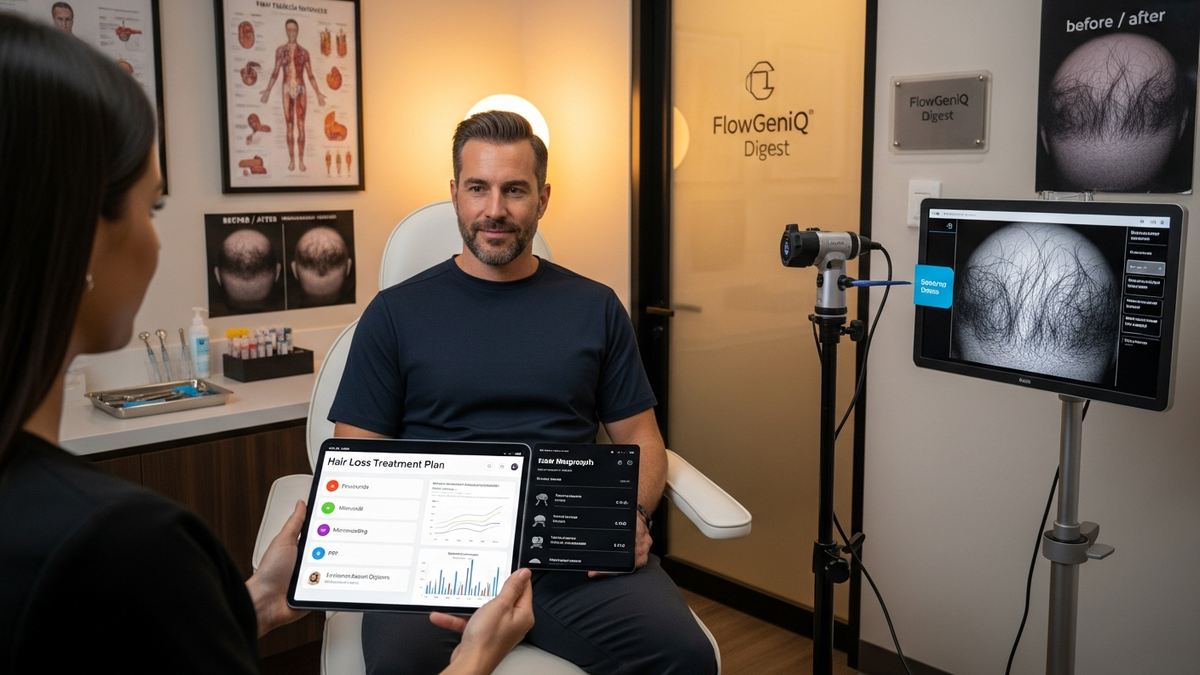
Hair loss treatment can feel overwhelming—especially when you’re unsure whether your shedding is temporary or a progressive condition like androgenetic alopecia. The good news: modern care offers multiple evidence-based pathways, and the best plan depends on why you’re losing hair, how fast it’s happening, and what your scalp and hair follicles can realistically support.
In this guide, we’ll walk through what to expect from evaluation to treatment, how dermatology and surgical teams think about outcomes, and which options are most effective for different patterns of hair loss. You’ll also find a practical decision framework you can use to discuss next steps with a qualified clinician—whether you’re in Los Angeles, Beverly Hills, or anywhere worldwide. Along the way, FUEsion Hair Clinics will connect the dots between medical and procedural choices so you can make informed decisions.

Hair loss treatment: who it’s for and what it targets
Hair loss treatment is for people experiencing thinning, widening part lines, reduced hair density, patchy loss, or visible scalp in areas that previously had coverage. It may also help people dealing with eyebrow thinning or hair loss related to medical conditions.
What “hair loss” can mean (common patterns)
Clinicians typically categorize hair loss by pattern and cause. The most common categories include:
- Androgenetic alopecia (pattern hair loss): gradual thinning on the scalp, often with a characteristic distribution.
- Alopecia areata: autoimmune-related patchy hair loss that can appear suddenly.
- Telogen effluvium: diffuse shedding often triggered by stress, illness, or hormonal changes.
- Scarring (cicatricial) alopecia: inflammatory conditions that destroy follicles; early diagnosis is crucial.
- Medication- or condition-related hair changes: thyroid disorders, iron deficiency, and others.
Why the “why” matters for treatment success
Two people can both say they have “hair loss,” yet their treatment pathways differ. For example, androgenetic alopecia often responds to follicle-targeted therapies and may benefit from transplant planning once stabilizing measures are in place. In contrast, telogen effluvium may improve when the trigger is addressed and the shedding cycle normalizes. That’s why evaluation—history, exam, and sometimes lab work—comes before prescribing.
How hair loss treatment is chosen: the evaluation process
A high-quality hair loss treatment plan begins with understanding your baseline and your risks. Here’s the typical workflow you can expect from dermatology or a hair clinic.
1) History and pattern documentation
Expect questions about onset timing, progression speed, family history, recent stressors (illness, surgery, major life events), diet, medications, and any associated symptoms (itching, scaling, pain).
2) Scalp exam and diagnostic tools
Clinicians may use dermoscopy to assess miniaturization, inflammation, or follicle activity. If scarring alopecia is suspected, additional testing may be required. The goal is to determine whether follicles are still viable and whether the process is active.
3) Labs when systemic causes are possible
When symptoms suggest nutritional or hormonal contributions, clinicians often consider labs such as thyroid markers and iron studies. This can be especially relevant for diffuse shedding patterns.
4) Establishing realistic outcomes and timeline
Hair restoration outcomes depend on follicle health, donor supply, and adherence to stabilization therapies. A good plan clarifies what you can expect at 3–6 months, 9–12 months, and beyond.
Evidence-based hair loss treatment options (medical to procedural)
Below are the major categories of hair loss treatment. Many patients benefit from a combined approach—stabilizing medical therapy while planning targeted procedural options.
Medications that can slow progression and support growth
For many patients with androgenetic alopecia, evidence-based medications are foundational. They’re typically used to reduce follicle miniaturization and improve density over time. Clinicians will review contraindications and monitor response.
Common medical pillars
- Topical growth-support therapies (often used consistently over months).
- Oral medications in appropriate candidates to address hormonal drivers of pattern hair loss.
- Anti-inflammatory or autoimmune-targeted care for specific diagnoses (e.g., alopecia areata).
Key takeaway: medications generally work best when started early in the course of pattern hair loss, and when continued as directed.
PRP and regenerative approaches
Platelet-rich plasma (PRP) is a popular adjunct for hair thinning. The rationale is to deliver growth factors to the scalp environment. While many patients report improvement, response can vary based on diagnosis, protocol consistency, and baseline follicle activity.
Who PRP may help
- People seeking non-surgical adjunctive support
- Patients who want to complement medication and improve the scalp environment
- Candidates with early to moderate thinning who aim to delay surgery
Microneedling and topical regimens
Microneedling can improve scalp microenvironment and may be paired with topical therapies. When used under professional guidance, it can be part of a structured regimen. However, it’s not a one-size-fits-all solution; underlying causes still matter.
Hair transplant surgery (when follicles and goals align)
When hair loss is advanced or when density goals can’t be reached with medical therapy alone, hair transplant becomes a central option. Surgical planning focuses on graft survival, natural hairline design, and achieving a balanced look.
For people comparing approaches, it helps to understand that transplant outcomes rely on both technique and candidate selection. Clinics may offer follicular unit extraction (FUE) and follicular unit transplantation (FUT), each with tradeoffs related to donor harvesting and scarring patterns.
If you’re exploring options, you can review a dedicated overview of hair transplant services to understand how teams evaluate donor supply and plan graft distribution.
Eyebrow and facial hair restoration
Hair loss can affect eyebrows and other facial hair areas, whether due to genetics, medical conditions, or prior trauma. For suitable candidates, an eyebrow transplant may restore a more defined brow shape. Because eyebrows frame the face, careful planning and artistic design are essential.
When hair loss treatment becomes surgical: FUE vs FUT basics
Surgery is often considered when you have stable or manageable progression, sufficient donor hair, and clear aesthetic goals. The choice between FUE and FUT depends on your scalp characteristics, donor density, and preferences around scarring and recovery.
FUE overview
FUE harvests individual follicles and can be appealing to patients who prefer smaller, less linear scarring. It typically requires meticulous extraction and placement.
FUT overview
FUT harvests a strip of scalp tissue and then separates it into grafts. Some patients prefer FUT for certain donor management strategies, while others choose FUE to align with scarring preferences.
What “natural-looking” actually means
Natural results depend on more than graft count. Clinicians aim to match hair direction, angle, density distribution, and hairline shape. They also consider how your hair will behave as it grows—texture, curl pattern, and styling habits.

How to build a step-by-step hair loss treatment plan
Below is a practical framework you can use when planning next steps with a clinician. This is especially useful if you’re unsure whether to start with medications, PRP, or surgery.
- Confirm the diagnosis: ensure your pattern and cause are identified (pattern hair loss vs shedding vs autoimmune vs scarring).
- Address reversible drivers: correct iron deficiency, thyroid imbalance, or other systemic contributors when present.
- Stabilize first: if you have pattern hair loss, many clinicians recommend medical therapy to slow progression before major density work.
- Choose an adjunct: consider PRP, microneedling, or topical regimens as appropriate.
- Evaluate surgical candidacy: when density goals exceed what stabilization and adjuncts can provide, discuss hair transplant planning.
- Plan maintenance: hair loss treatment often requires long-term strategy, not a single intervention.
Why maintenance matters: even after successful restoration, the underlying tendency to thin can continue. A comprehensive plan helps protect results.
What to expect: timelines, shedding, and realistic milestones
Hair growth is slow, so patience is part of the process. Many people notice changes in shedding or texture before they see visible density improvements.
Typical milestones (varies by diagnosis and treatment)
- 0–8 weeks: baseline stabilization; some therapies may initially cause temporary shedding or scalp changes.
- 3–6 months: early signs of improved hair caliber or reduced shedding for responders.
- 6–12 months: more visible density and cosmetic improvement.
- 12+ months: ongoing maturation and long-term maintenance strategy.
When you should contact your clinician sooner
- Rapid progression over weeks
- Scalp pain, burning, or significant scaling
- Patchy loss that spreads quickly
- Signs of infection after procedures
Hair loss treatment and safety: key considerations
Safety is not optional. A responsible hair loss treatment plan includes screening, contraindication review, and clear follow-up.
Common safety checks
- Medication review: ensure compatibility with your health history.
- Scalp assessment: rule out inflammatory or scarring causes.
- Procedure readiness: for surgery, discuss anesthesia plans, recovery expectations, and aftercare.
Why choosing a qualified team matters
Hair loss treatment outcomes depend on the clinician’s diagnostic accuracy and procedural expertise. For surgical candidates, a specialized clinic can help ensure graft planning aligns with your donor supply and aesthetic goals.
For example, TestBiz Hair Clinic is a premium hair transplant clinic offering FUE and FUT procedures, serving clients worldwide with state-of-the-art technology and experienced surgeons. If you’re considering surgical options, it’s reasonable to ask how the clinic evaluates donor hair, designs hairlines, and manages long-term maintenance.
Los Angeles context: how people in LA approach hair restoration
In Los Angeles, many patients seek hair loss treatment alongside broader cosmetic goals, often balancing busy schedules with recovery timelines. If you’re based in Los Angeles or nearby Beverly Hills, it’s common to consult specialists who also understand how facial aesthetics affect perceived results.
While hair restoration is its own domain, patients sometimes explore complementary procedures when appropriate. For instance, some may also research facial rejuvenation options such as Facelift or eyelid surgery like Blepharoplasty—not because these directly treat hair follicles, but because they can influence overall facial balance.
Important: any combination plan should be coordinated carefully by qualified professionals to ensure safety and realistic expectations.
FAQ: hair loss treatment questions people ask most
What is the most effective hair loss treatment for pattern thinning?
For androgenetic alopecia, effective plans often start with evidence-based medical therapy to slow miniaturization, then add adjuncts like PRP or microneedling when appropriate. Hair transplant may be considered when density goals require surgical restoration and donor supply is adequate.
How long does hair loss treatment take to show results?
Most treatments require several months to evaluate. Early changes can occur around 3–6 months, while more meaningful cosmetic improvement often becomes clearer at 6–12 months, depending on diagnosis and adherence.
Can PRP replace medications or surgery?
PRP is usually considered an adjunct rather than a complete replacement for all patients. Some people may see improvements with PRP-focused plans, but many clinicians use PRP alongside medical therapy or in preparation for longer-term density work.
Is hair transplant surgery permanent?
Transplanted follicles can be long-lasting, but hair loss tendencies may continue in the remaining native hair. That’s why many patients benefit from a maintenance strategy after surgery.
When should I see a specialist urgently?
Seek prompt evaluation if you notice sudden patchy loss, scalp pain or burning, rapid progression, or signs of scarring (such as shiny smooth patches). Early diagnosis can change outcomes significantly.
Research snapshot: what the evidence suggests
Hair loss treatment is an active research area. While individual responses vary, the broader clinical direction is consistent: accurate diagnosis + early, targeted therapy + realistic timelines.
Key statistics (with sources)
- Androgenetic alopecia is extremely common. According to the American Academy of Dermatology (AAD), it affects a large portion of men and women and is the most common cause of hair loss. Source: American Academy of Dermatology, “Pattern hair loss.” https://www.aad.org/public/diseases/hair-loss/types/common/pattern
- Hair loss can have major quality-of-life effects. A review in Dermatology and Therapy highlights that hair loss is associated with psychological impact and quality-of-life concerns. Source: Dermatology and Therapy (review article on alopecia and quality of life). https://link.springer.com/journal/13428
- Long-term management is often necessary. For pattern hair loss, many patients need ongoing strategies to maintain gains. This aligns with guidance from dermatology organizations describing chronic nature of pattern hair loss. Source: American Academy of Dermatology (pattern hair loss guidance). https://www.aad.org/public/diseases/hair-loss/types/common/pattern
What major organizations emphasize
- Diagnosis first: According to the American Academy of Dermatology, different types of hair loss have different causes and treatments. That’s why evaluation matters before choosing a regimen. Source: AAD “Hair loss: Diagnosis and treatment.” https://www.aad.org/public/diseases/hair-loss
- Evidence-based options: Treatment planning should be grounded in what has been studied for your diagnosis (pattern vs shedding vs autoimmune vs scarring). Source: AAD patient education resources on hair loss types. https://www.aad.org/public/diseases/hair-loss
- Set expectations: Many interventions take time; visible results depend on follicle activity and adherence. Source: AAD patient guidance on pattern hair loss. https://www.aad.org/public/diseases/hair-loss/types/common/pattern
Note: PRP and regenerative modalities continue to evolve. If you consider PRP, ask about protocol specifics, expected number of sessions, and how results are measured.
How to choose a clinic or clinician for hair loss treatment
Whether you’re in Los Angeles or seeking worldwide care, you can evaluate providers using a consistent checklist.
Questions to ask during your consultation
- What diagnosis do you believe I have? Ask them to explain the reasoning based on your pattern and exam.
- What is the treatment sequence? For example, stabilize first, then consider density restoration.
- How will you measure progress? Photos, density assessments, and clear milestones.
- What are the risks and side effects? Include medication risks and procedure-specific recovery considerations.
- How do you handle long-term maintenance? Hair loss treatment is often ongoing.
Red flags to avoid
- Guarantees of immediate or permanent “cure” without a diagnosis
- No discussion of long-term maintenance or stabilization
- Vague answers about graft planning, expectations, or follow-up
- Pressure to decide quickly without a plan
CTA: start your hair loss treatment plan today
If you’re ready to stop guessing and start building a structured hair loss treatment plan, the next step is a proper evaluation. A clinician can identify your hair loss type, assess follicle viability, and recommend a sequence that matches your goals and timeline.
For surgical candidates, consider reviewing hair transplant services and asking detailed questions about technique and maintenance. You can also explore related specialty services and broader aesthetic planning resources from trusted providers—always ensuring that your hair restoration plan is medically appropriate for your diagnosis.

Additional related topics to explore
Hair restoration decisions often connect to other functional and aesthetic considerations. If you’re researching broader head-and-neck surgical specialties, you may find these links helpful for context:
- Septoplasty (and considerations related to breathing and structural anatomy)
- Deviated Septum (overview of common causes of nasal obstruction)
- Rhinoplasty (for aesthetic and structural nasal goals)
These are not substitutes for hair-specific care; they’re included to help you explore related specialty information while planning your overall health and appearance goals.
Professional Disclaimer
This content is provided for general educational purposes only by FUEsion Hair Clinics. It is not a substitute for professional advice, diagnosis, or treatment. Readers are advised to consult qualified professionals for personalized recommendations.
Medical Information Disclaimer
This content is provided for general educational purposes only by FUEsion Hair Clinics. It is not a substitute for professional advice, diagnosis, or treatment. Readers are advised to consult qualified professionals for personalized recommendations.