Hair loss dogs treatment starts with one essential truth: fur thinning is a symptom, not a diagnosis. When a dog’s coat becomes patchy, itchy, scaly, or dull, the underlying cause can range from parasites and allergies to endocrine disease and infection. The right treatment depends on identifying the “why,” then matching therapies to the condition—often with an ongoing care plan.
In this guide, you’ll learn how veterinarians evaluate coat loss, what evidence-based treatments may be recommended, and how to support recovery at home. Whether your dog is dealing with seasonal shedding, chronic itching, or sudden bald spots, you’ll find practical steps you can take today.
What counts as hair loss in dogs (and why it matters)
Dogs don’t always lose hair the same way. “Hair loss” can look like:
- Patchy bald spots (often linked to parasites, infections, or focal skin disease)
- Widespread thinning (sometimes endocrine or chronic inflammatory conditions)
- Itchy skin with flakes (commonly allergic dermatitis, yeast overgrowth, or mites)
- Redness, odor, or oozing (often bacterial or fungal involvement)
Because the skin and immune system are connected, the same outward sign—hair loss—can have very different causes. That’s why a structured veterinary workup usually leads to better outcomes than trying random topical products or supplements.
Common causes of hair loss dogs treatment plans target
1) Parasites: fleas, mites, and other external causes
Parasites are a frequent driver of coat loss. Flea allergy dermatitis can trigger intense itching even if you don’t see many fleas. Mites such as Demodex or Sarcoptes can cause hair loss that may worsen without targeted treatment. Ringworm (a fungal infection) can also be mistaken for parasite-related loss.
2) Allergies: environmental, food, and contact triggers
Allergic dermatitis is one of the most common reasons dogs scratch and lose hair. In many cases, allergies cause:
- Itching and inflammation
- Secondary yeast or bacterial infections
- Thickened skin and persistent shedding
Hair loss dogs treatment for allergies often includes a combination of symptom control (itch relief), infection management, and identification of triggers.
3) Skin infections: bacterial and yeast overgrowth
When skin barrier function is disrupted, bacteria and yeast can proliferate. This may appear as greasy flakes, odor, or inflamed patches. Treating the infection is often necessary before long-term coat recovery can occur.
4) Hormonal and metabolic disorders
Endocrine conditions can cause symmetrical thinning, dull coat, and recurrent skin issues. Examples include hypothyroidism and Cushing’s disease. These conditions require diagnosis and medical management—topicals alone rarely fix the root cause.
5) Autoimmune or other less common conditions
Some dogs develop immune-mediated skin diseases that cause hair loss, crusting, and irritation. These typically need veterinary testing and prescription therapy.
Who should treat hair loss in dogs: the vet-led approach
Hair loss dogs treatment should ideally be guided by a licensed veterinarian because the differential diagnosis is broad. A vet can determine whether the problem is:
- Infectious (parasites, ringworm, bacteria, yeast)
- Allergic/inflammatory (atopy, food allergy, contact dermatitis)
- Endocrine (hormonal disease affecting the coat)
- Structural or immune-mediated (less common)
When you bring your dog in, be ready to share details about onset, itch level, seasonality, diet changes, flea prevention use, and any new exposures (bedding, grooming products, outdoor areas).
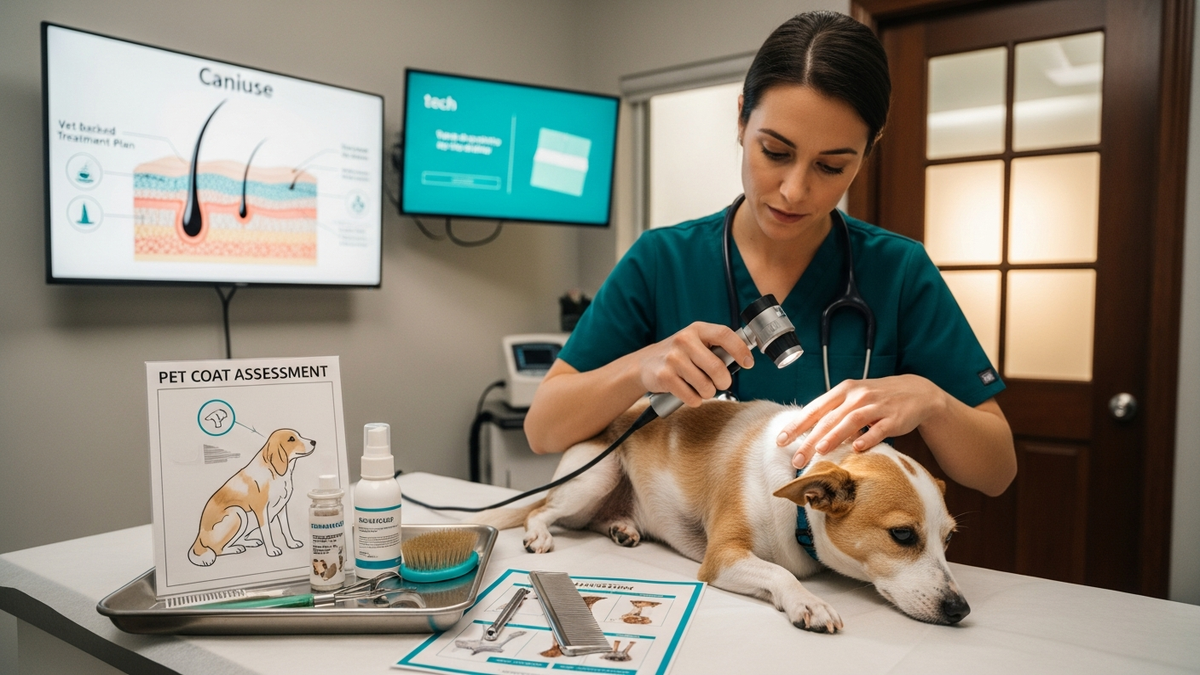
How veterinarians diagnose the cause of coat loss
Step-by-step: what a typical workup may include
Most veterinary diagnostic pathways follow a logical sequence to narrow causes efficiently:
- History and physical exam: distribution of hair loss, skin appearance, itch severity.
- Skin cytology: looking for yeast, bacteria, and inflammatory patterns.
- Parasite testing: flea control history plus tests for mites or other organisms.
- Fungal testing: if ringworm is suspected, veterinarians may perform fungal culture or microscopic examination.
- Allergy evaluation: for suspected atopy or food allergy, vets may recommend elimination diets or allergy testing.
- Bloodwork and endocrine testing: if hormonal disease is suspected, additional labs may be recommended.
Because each step reduces uncertainty, this process helps prevent “trial-and-error” that can delay the correct diagnosis.
Common red flags that need prompt veterinary attention
- Rapidly spreading bald patches
- Severe itching, open sores, or bleeding
- Fever, lethargy, or painful skin
- Suspected ringworm exposure to people or other pets
- Weight changes or increased thirst/urination (possible endocrine issues)
Evidence-based hair loss dogs treatment options
Once the cause is identified, hair loss dogs treatment typically becomes a targeted plan. Below are common therapy categories veterinarians use, depending on diagnosis.
Parasite-related treatment: break the life cycle
If mites, fleas, or other external parasites are involved, treatment often includes:
- Prescription or vet-recommended antiparasitic medication
- Household and environment management (especially for fleas)
- Repeat dosing to cover life cycles
Important: even if hair loss looks dramatic, coat regrowth often takes weeks after parasite control begins.
Allergy treatment: control itch, then manage triggers
For allergic dermatitis, veterinarians may recommend:
- Anti-itch medication (short-term relief to stop the cycle of scratching)
- Anti-inflammatory therapy for chronic inflammation
- Infection management if yeast/bacteria are present
- Allergen-focused strategies such as diet trials or environmental control
According to the American College of Veterinary Dermatology (ACVD), managing allergic skin disease often requires a combination approach and can take time to stabilize. (Source: American College of Veterinary Dermatology)
Infection treatment: targeted antimicrobials and skin support
If bacterial infection or yeast overgrowth is confirmed, treatment may include medicated shampoos, topical therapies, and sometimes oral medications. Vets may also recommend:
- Gentle bathing routines
- Reducing skin irritation
- Addressing underlying allergic or parasitic triggers
Hormonal treatment: addressing the underlying endocrine disorder
For endocrine-related hair thinning, therapy is typically systemic and may include lifelong or long-term medication. As hormone levels normalize, coat quality often improves gradually.
Supportive care that can improve comfort during treatment
Supportive care doesn’t replace diagnosis, but it can improve your dog’s comfort and skin barrier health:
- Limit scratching using an e-collar or appropriate protective measures
- Use vet-approved grooming (avoid harsh soaps)
- Maintain consistent flea prevention as advised by your veterinarian
- Consider omega-3 fatty acids if your vet recommends them for inflammatory skin support
What you can do at home: a practical hair-loss action plan
Step 1: Track symptoms and triggers
Create a simple log for 1–2 weeks:
- When hair loss started and whether it’s spreading
- Itch level (0–10)
- Any redness, odor, scabs, or discharge
- Diet and treat changes
- Seasonality and outdoor exposure
Step 2: Avoid “random” treatments that can muddy diagnosis
Before your vet workup, avoid:
- Unsupervised steroid use
- Frequent switching of shampoos or supplements
- Topicals that could mask signs of infection
This matters because certain medications can interfere with skin test results.
Step 3: Follow the treatment timeline realistically
Hair regrowth often takes time. Many dogs show improvement in itch and skin appearance before noticeable coat regrowth. Be consistent with dosing schedules and recheck recommendations.
Step 4: Improve the environment if parasites are suspected
If fleas or mites are diagnosed, treat the household as directed. Vacuuming, washing bedding, and using appropriate environmental controls can prevent reinfestation.
Step 5: Schedule follow-ups
Follow-up visits help confirm that the therapy is working and adjust the plan if symptoms persist. If a dog’s condition worsens or doesn’t improve, the diagnosis may need refinement.
How long does it take for hair to grow back?
Coat regrowth depends on the cause and how long the skin was inflamed or damaged. In many cases, you’ll see gradual improvement over weeks, with fuller regrowth taking longer. If hair loss is due to chronic allergies or endocrine disease, long-term management may be necessary to maintain coat quality.
Practical expectation: treat the underlying cause first; then support regrowth with consistent skin care and nutrition that your veterinarian recommends.
When hair loss could be contagious: ringworm and zoonotic risk
Some causes of hair loss in dogs can spread to people and other pets. Ringworm is a classic example. If your dog has round patches, crusting, or you suspect ringworm exposure, contact your veterinarian promptly and take precautions (hand hygiene, cleaning bedding, limiting contact with vulnerable household members).
According to the U.S. Centers for Disease Control and Prevention (CDC), ringworm can spread through direct contact with infected animals or contaminated environments. (Source: CDC—Ringworm)
Nutrition and supplements: helpful, but not a cure-all
Diet can influence skin health, particularly in food allergy cases or inflammatory conditions. However, supplements and diet changes should be aligned with veterinary guidance.
Food allergy trials: what “works” looks like
If food allergy is suspected, veterinarians may recommend a strict elimination diet trial for a defined period. The goal is to remove common triggers and evaluate response. Treats, flavored medications, and table scraps can interfere with results.
Omega-3s and skin barrier support
Omega-3 fatty acids may support inflammation and skin barrier function for some dogs. Still, the best approach is to use supplements only after discussing with your vet—especially if your dog is on medications or has other health conditions.
Pro tip: If you’re considering a new supplement, introduce it one at a time and keep notes so your vet can interpret changes accurately.
About hair transplant myths (and why dogs need veterinary care)
People sometimes search for hair transplant options when they see baldness. In human hair loss contexts, procedures like FUE or FUT may be discussed. For dogs, however, bald patches are almost always a sign of a medical skin condition or systemic issue. The appropriate “treatment” is diagnosing and addressing the cause—not transplanting hair.
If you’re exploring human hair restoration options for yourself, you may find helpful information on modern procedures at hair transplant (FUE and FUT services). For pets, the correct route is a veterinarian-led diagnosis and therapy plan.
Costs and expectations: budgeting for hair loss dogs treatment
Costs can vary based on diagnostics, prescriptions, and follow-up frequency. Typical cost drivers include:
- Skin testing (cytology, fungal testing)
- Parasite treatment and repeat dosing
- Medication for inflammation or infection
- Diet trial costs (when food allergy is suspected)
How to manage costs: ask your veterinarian what tests are highest priority, whether there’s a stepwise approach, and what “success” looks like at each stage.
As a general reference point for context, a large share of veterinary visits for dogs involve skin concerns. For example, a commonly cited statistic from veterinary dermatology literature indicates skin disease is among the most frequent reasons for veterinary consultation. (Source: UC Davis Koret Shelter Medicine / Veterinary Dermatology educational resources)
Note: exact percentages vary by study population and region.
FAQ: Hair loss dogs treatment
Why is my dog losing hair even if they don’t seem very itchy?
Hair loss can occur without obvious itch, especially with endocrine conditions or chronic skin changes. A veterinarian can examine the pattern of hair loss and recommend tests to find the underlying cause.
Can fleas cause bald spots in dogs?
Yes. Flea allergy dermatitis can lead to intense scratching and hair loss, and dogs may develop bald patches even with minimal visible fleas. Consistent flea prevention and follow-up are usually key to successful treatment.
How do vets know if it’s ringworm or something else?
Vets may use fungal testing and skin examination to differentiate ringworm from mites, dermatitis, or bacterial issues. Because ringworm can spread to people, prompt testing is important when patches or crusting are present.
What should I do before my dog’s appointment for hair loss?
Bring a timeline of when hair loss started, what treatments or shampoos you’ve tried, and your flea prevention routine. Photos of the affected areas over time can help your vet assess whether the condition is spreading or improving.
Will hair grow back after treatment?
Often, yes—especially when the underlying cause is identified early. Regrowth can take weeks to months depending on severity, duration of inflammation, and whether the condition is chronic.
CTA: Get a vet-approved plan for your dog’s coat
If you’re dealing with patchy hair loss, itch, odor, or recurring skin problems, start with a veterinary evaluation and a stepwise diagnostic plan. The fastest path to recovery is usually cause-first treatment, not random topical fixes.
For more pet and health content from FUEsion Hair Clinics, explore related guides on skin care routines and allergy management strategies.


Local note: If you’re in a specific city or region, ask clinics about availability of dermatology testing (cytology, fungal testing) and follow-up schedules. Treatment timelines can vary based on local access to diagnostics and prescription medications.
References and sources
- According to the American College of Veterinary Dermatology (ACVD), managing allergic skin disease often requires a combined approach and time to stabilize. (Source: ACVD)
- According to the CDC, ringworm can spread through direct contact with infected animals or contaminated environments. (Source: CDC—Ringworm)
- Veterinary educational resources from major academic centers discuss skin disease as a frequent reason for veterinary care, though exact rates vary by study setting. (Source: UC Davis—Veterinary Medicine)
Professional Disclaimer
This content is provided for general educational purposes only by FUEsion Hair Clinics. It is not a substitute for professional advice, diagnosis, or treatment. Readers are advised to consult qualified professionals for personalized recommendations.
Medical Information Disclaimer
This content is provided for general educational purposes only by FUEsion Hair Clinics. It is not a substitute for professional advice, diagnosis, or treatment. Readers are advised to consult qualified professionals for personalized recommendations.