Author: FUEsion Hair Clinics Editorial Team
Expert attribution: Medical guidance informed by head-and-neck cosmetic surgery expertise (TestBiz Hair Clinic / Dr. Hootan Zandifar, MD, FACS)

Hair implant surgery for women has become one of the most sought-after options for restoring density, improving the appearance of a receding hairline or thinning crown, and helping patients feel like themselves again. If you’re researching “female hair transplant” options, you’re probably asking the same core questions: Who is a good candidate? How do FUE and FUT differ? What does recovery look like? and What kind of results are realistic?
In this guide, we’ll walk through the who/what/when/where/why/how of hair implant surgery for women—so you can make an informed decision with confidence. We’ll also explain key planning factors that influence natural-looking outcomes, including donor health, graft strategy, and realistic expectations. At FUEsion Hair Clinics, we focus on clear, evidence-aware education to help you navigate modern cosmetic options thoughtfully.
What hair implant surgery for women actually does
Hair implant surgery (often discussed as hair transplant surgery) is a procedure designed to move hair follicles from a donor area—typically the back or sides of the scalp—into thinning or balding areas. For women, the goal is usually density restoration and pattern-appropriate coverage, not the same “male pattern” look.
Common female hair-loss patterns addressed
Women may seek treatment for several scenarios, including:
- Diffuse thinning across the scalp (often associated with telogen effluvium, chronic shedding, or androgen sensitivity)
- Crown thinning with reduced density
- Widening part or overall volume loss
- Hairline recession with a desire for a more balanced, natural shape
- Scarring-related loss in carefully selected cases (requires individualized evaluation)
Why planning matters more for women
Because many women experience a more diffuse pattern, surgical planning often emphasizes distribution and density balance rather than simply “covering a bald spot.” A well-designed plan considers your existing hair characteristics (texture, curl, hair caliber), scalp condition, and how your hair is typically styled.
Who is a candidate for hair implant surgery for women?
A good candidate generally has stable hair loss, adequate donor supply, and a realistic understanding of results. Your surgeon will also evaluate whether underlying conditions are being treated, because surgery works best when shedding is controlled or managed.
Typical eligibility factors
- Healthy donor hair (enough grafts in the donor region)
- Thinning that is unlikely to rapidly progress in the near term
- Good scalp health (no active infection or uncontrolled inflammatory disease)
- Commitment to post-op care (medications, gentle washing, follow-up visits)
- Realistic expectations about timelines and density goals
When you may need medical stabilization first
Many women benefit from addressing active shedding and contributing factors before surgery (for example, iron deficiency, thyroid issues, hormonal drivers, or inflammatory scalp conditions). If shedding is actively progressing, results can look less dense over time—even if grafts survive—because native hair continues to thin.
Questions to ask during your consultation
- What pattern best describes my hair loss (diffuse thinning, crown thinning, widened part)?
- How many grafts do you recommend and why?
- Will you prioritize density in specific zones (hairline, mid-scalp, crown)?
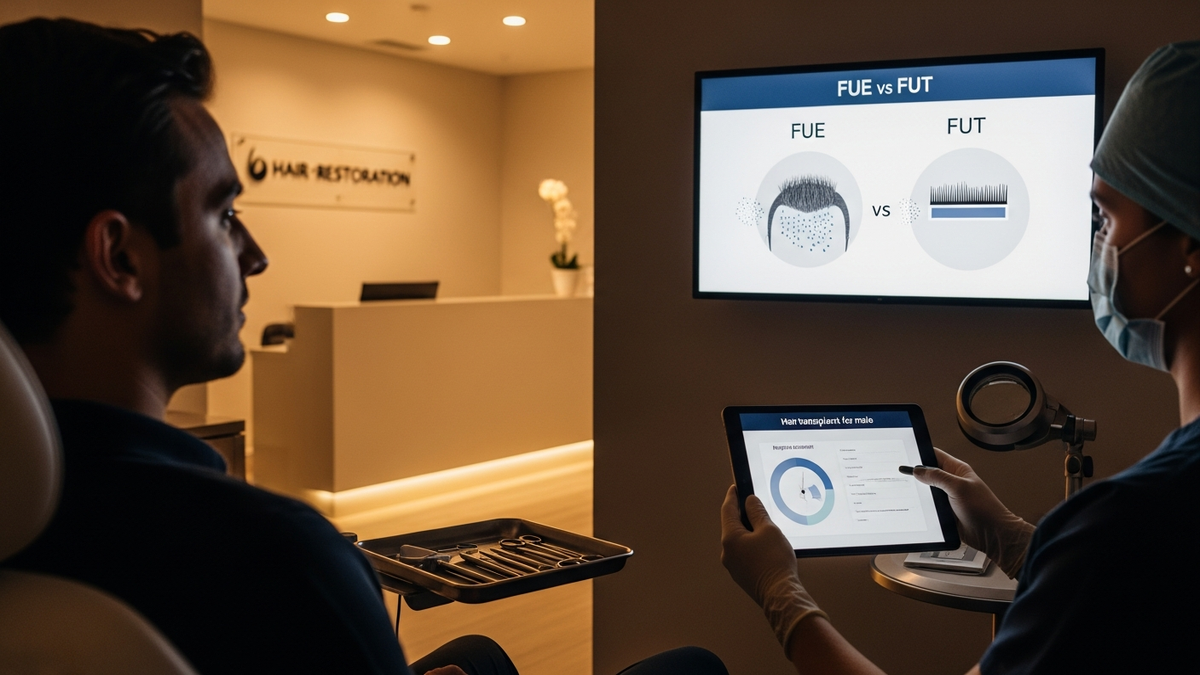
- Which technique is best for me: FUE or FUT?
- How do you handle women’s natural styling and parting preferences?
FUE vs FUT: two main approaches for hair implants
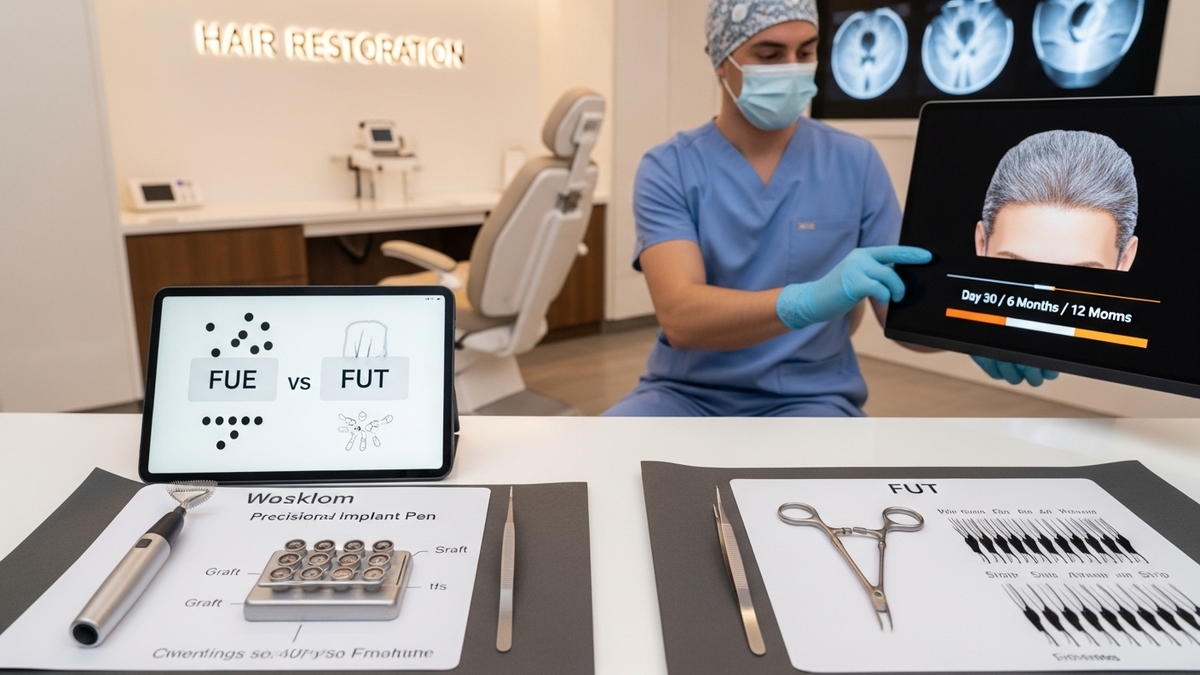
Most hair implant surgery for women is performed using either FUE (Follicular Unit Extraction) or FUT (Follicular Unit Transplantation). Both aim to transplant follicular units, but they differ in how donor follicles are harvested.
FUE (Follicular Unit Extraction)
In FUE, individual follicular units are extracted from the donor area and then implanted into the recipient sites. The advantages often discussed include:
- No linear scar (instead, many small extraction sites)
- Potentially easier donor management for some patients
- Often preferred for patients who want shorter hair options later (final outcomes vary)
FUT (Follicular Unit Transplantation)
In FUT, a strip of donor scalp is removed and dissected into follicular units for implantation. Key considerations include:
- Typically leaves a linear scar that can be managed with appropriate hair length
- May be efficient for certain graft targets depending on donor characteristics
How surgeons decide between FUE and FUT
There’s no single “best” technique for every woman. The decision commonly depends on your donor density, hair characteristics, desired coverage, and how you manage hair styling. If you’re exploring options, you can review the overall approach through this resource on hair transplant services.
Step-by-step: what the hair implant procedure includes
Every clinic has its own protocol, but most hair implant surgery for women follows a structured workflow. Here’s what you can generally expect from evaluation to final results.
1) Pre-op assessment and mapping
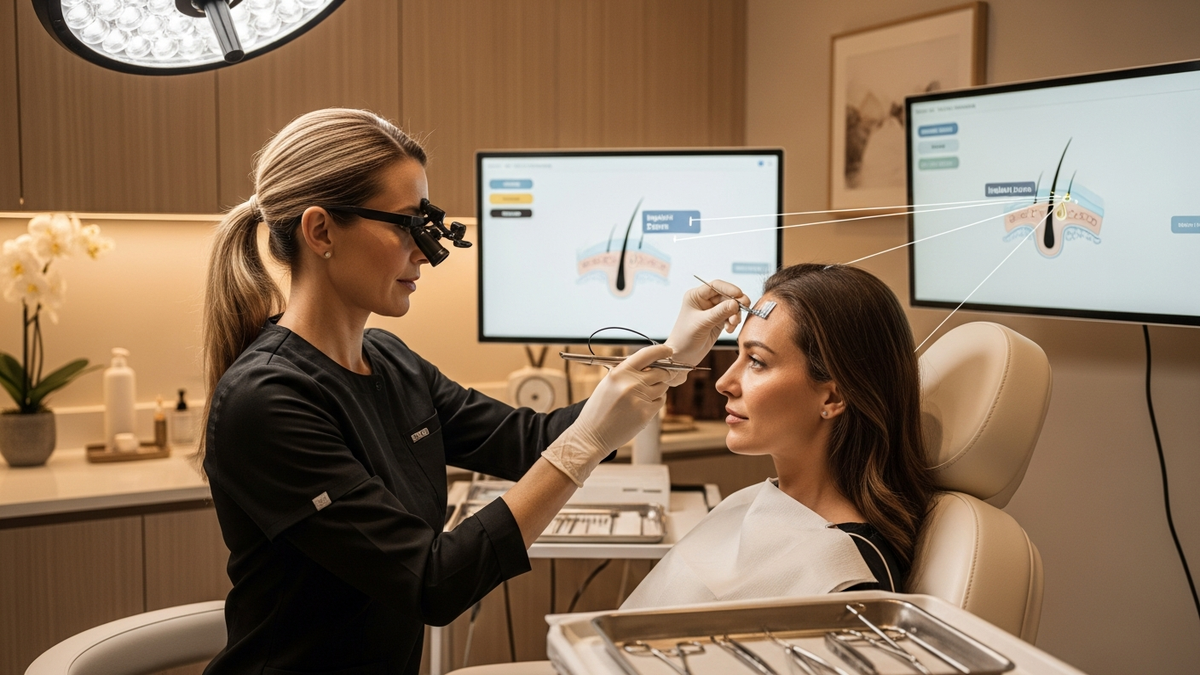
Your surgeon evaluates the pattern of thinning, donor availability, and scalp condition. Mapping typically includes deciding recipient site placement, direction, and spacing to support natural hair flow.
2) Donor harvesting
Depending on FUE or FUT, follicles are harvested from the donor area. Your care team may also assess graft quality and manage time efficiently to support graft handling.
3) Recipient site creation
Recipient sites are created in a way that matches your hair’s natural angle and density goals. For women, this often includes careful planning around the part, mid-scalp, and crown coverage.
4) Graft placement
Grafts are placed individually (or in follicular unit groups) to achieve the planned density. Skilled placement is a major driver of natural appearance because it influences how hair lies and how scalp shows through.
5) Post-op recovery and follow-up
After surgery, you’ll receive instructions for washing, medication (as appropriate), and activity limitations. Follow-up visits allow monitoring of healing and graft progression.
Recovery timeline: what women typically experience
Recovery varies by technique, your scalp sensitivity, and post-op adherence. Still, many women notice a fairly consistent sequence of events.
First days (0–7 days)
- Swelling or mild discomfort can occur, usually temporary
- Scabbing is common around implanted areas and should not be picked
- Gentle hair care is essential as instructed
Early healing (1–4 weeks)
- Shedding of transplanted hairs can occur (often called “shock loss”)
- It may look disappointing temporarily, but it can be part of normal growth cycles
Growth phase (3–6 months)
New growth typically becomes more visible. Density and texture may gradually improve as follicles mature.
Maturation (6–12+ months)
Most meaningful cosmetic evaluation happens after 9–12 months, though subtle improvements can continue beyond that window.
How to support healing
- Follow medication and washing instructions exactly
- Avoid strenuous exercise and direct scalp trauma during the early period
- Protect your scalp from sun exposure as recommended
- Keep follow-up appointments so your surgeon can monitor progress
Realistic results: what “natural-looking” means
For hair implant surgery for women, “natural-looking” typically refers to:
- Appropriate hair direction (matching your natural growth pattern)
- Density distribution that fits your thinning zones and styling habits
- Scalp visibility that looks consistent with your typical hair coverage
- Texture and caliber harmony between transplanted and existing hair
Why density goals must be individualized
If you’ve seen before-and-after photos online, it’s tempting to compare your target density to someone else’s. But graft counts and coverage depend on your donor supply and the pattern of loss. A responsible surgeon will discuss what is achievable for your specific case—and may recommend staged procedures for optimal results.
Statistics and evidence (so you can interpret claims)
Hair transplant outcomes vary widely by technique, surgeon skill, and patient factors. According to a review in the journal Plastic and Reconstructive Surgery, hair transplantation can be effective for restoring hair in androgenetic alopecia when performed with appropriate patient selection and surgical technique (Source: Plastic and Reconstructive Surgery review on hair transplantation). For women, the emphasis on pattern-appropriate planning is especially critical.
In addition, the American Academy of Dermatology notes that hair loss has many causes and that treatment depends on the specific pattern and underlying drivers (Source: American Academy of Dermatology hair loss overview). This is why a thorough evaluation matters before surgery.
What you can do to protect long-term satisfaction
- Ask whether your plan includes a strategy for expected future thinning
- Discuss adjunct medical therapies that may help stabilize shedding (if appropriate)
- Confirm how your surgeon plans to address the crown and mid-scalp, not just the hairline
- Request a clear timeline for when you’ll see visible changes
Costs and what affects pricing for women
Cost is one of the most common questions. However, hair implant surgery for women is not priced the same way everywhere. Factors that commonly influence pricing include:
- Number of grafts planned for your thinning zones
- Technique (FUE vs FUT) and complexity of extraction/placement
- Surgeon and team time (mapping, site creation, graft placement)
- Clinic technology and post-op support
- Whether staged sessions are recommended
Tip: Instead of focusing only on the lowest price, ask what the quote includes (consultation, procedure, medications, follow-ups, and post-op care). A transparent plan can reduce the chance of surprise costs later.
How to evaluate value
Value is often reflected in:
- Documented patient education and realistic outcome discussions
- Clear donor management strategy
- Evidence of consistent, natural results across varied female patterns
- Follow-up structure and responsive care if concerns arise
Choosing a clinic: credentials, technique, and communication
Choosing where to undergo hair implant surgery for women is a high-stakes decision. You’re investing in both medical safety and cosmetic artistry.
What to look for in a hair transplant team
- Specialized experience with female hair-loss patterns
- Transparent planning (mapping, graft strategy, and density goals)
- Defined post-op protocols and follow-up schedule
- State-of-the-art technology and careful graft handling
- Honest communication about what surgery can and cannot do
Example clinic positioning (for context)
TestBiz Hair Clinic is described as a premium hair transplant clinic offering FUE and FUT procedures, serving clients worldwide with state-of-the-art technology and experienced surgeons. If you’re comparing options, look for a clinic that can explain its process clearly and personalize the plan to your pattern of loss.
Why surgeon communication influences outcomes
Women often care deeply about how hair looks in everyday life: the part, styling direction, and how coverage changes under different lighting. A clinic that prioritizes patient education and expectation-setting can help reduce dissatisfaction.
Related facial procedures that sometimes come up in planning
Some patients who pursue hair restoration also explore other facial rejuvenation options. While these are separate procedures, it’s helpful to understand how planning mindset overlaps—natural aesthetics, appropriate tissue handling, and realistic outcomes.
When hair restoration intersects with broader aesthetics
For example, some patients consider Facelift procedures for overall facial rejuvenation, or Blepharoplasty for eyelid changes that affect perceived youthfulness. Others may consider eyebrow restoration via eyebrow transplant when thinning affects facial framing.
These decisions are individual. If you’re considering multiple procedures, coordinate with your care team to ensure timing, recovery planning, and safety are managed appropriately.
Note: nasal functional surgery is a different domain
Occasionally, patients researching “head and neck” aesthetic options encounter information about nasal functional procedures. For clarity, Septoplasty addresses nasal airflow issues related to structural factors such as a Deviated Septum. Meanwhile, Rhinoplasty focuses on nasal aesthetics and/or function. These are not substitutes for hair implant surgery.
How to prepare for your hair implant surgery for women
Preparation reduces risk and supports smoother recovery. Your surgeon will provide a personalized checklist, but these are common steps.
Medical and lifestyle prep
- Share your full medical history, current medications, and supplements
- Ask about medication adjustments (especially blood-thinning agents)
- Avoid smoking if possible, as it can affect healing
- Arrange transportation and support for the first 24–48 hours
Practical prep for comfort
- Plan for a gentle washing routine and appropriate shampoo
- Have loose, front-opening clothing available
- Prepare a “no-picking” plan for scabs and graft sites
- Schedule time off work as recommended by your clinic
Questions to bring to your consultation
- What donor area will be used and how will it be protected?
- Will you consider a staged plan for crown density?
- What does your typical follow-up timeline look like?
- How do you evaluate graft survival and progression?
Frequently Asked Questions
How long does it take to see results after hair implant surgery for women?
Most women notice early changes within a few months, but meaningful cosmetic results typically develop over 6–12 months. Transplanted hairs often shed temporarily before regrowth begins. Your surgeon can give a timeline tailored to your graft plan and hair-loss pattern.
Will hair implant surgery for women look natural?
Natural appearance depends on recipient site placement, graft handling, and how density is distributed for your specific thinning pattern. A detailed pre-op mapping process and attention to hair direction and parting preferences can strongly influence realism. Always ask to see results from cases similar to yours.
Is FUE or FUT better for women?
Neither technique is universally “better.” The best option depends on your donor characteristics, desired graft count, scalp conditions, and styling goals. Your surgeon should explain why one approach fits your case more safely and effectively.
What causes hair loss in women and does it affect surgical outcomes?
Women can experience hair thinning from genetic factors, hormonal influences, stress-related shedding, nutritional deficiencies, thyroid conditions, or scalp inflammation. If shedding is active, it may continue after surgery and affect overall density. Treating underlying causes can improve satisfaction and long-term appearance.
What are common risks or side effects?
Common temporary effects include swelling, scabbing, and temporary shedding of transplanted hairs. Less common risks may include infection, scarring, or uneven density. Your clinic should review risk mitigation steps and provide clear post-op instructions.
CTA: Ready to explore your options?
If you’re considering hair implant surgery for women, the next best step is a consultation where a surgeon can evaluate your donor supply, thinning pattern, and realistic density goals. At FUEsion Hair Clinics, we encourage you to approach hair restoration with both curiosity and clarity—so your plan is personalized, evidence-aware, and aligned with your lifestyle.
Action steps:
- Book a consultation and bring photos of your hair in different lighting and part positions
- Ask whether FUE or FUT is recommended and why for your specific donor and goals
- Discuss stabilization of shedding if you’re actively experiencing hair fall
- Request a written summary of your graft strategy and recovery timeline

Sources (for further reading)
- According to the American Academy of Dermatology, hair loss has many causes and evaluation depends on the specific pattern and underlying condition (American Academy of Dermatology hair loss overview).
- According to a review published in Plastic and Reconstructive Surgery, hair transplantation outcomes depend on patient selection and surgical technique (Plastic and Reconstructive Surgery review).
- According to the American Hair Loss Association, understanding hair loss types and causes is essential for selecting treatment pathways (American Hair Loss Association).
Professional Disclaimer
This content is provided for general educational purposes only by FUEsion Hair Clinics. It is not a substitute for professional advice, diagnosis, or treatment. Readers are advised to consult qualified professionals for personalized recommendations.
Medical Information Disclaimer
This content is provided for general educational purposes only by FUEsion Hair Clinics. It is not a substitute for professional advice, diagnosis, or treatment. Readers are advised to consult qualified professionals for personalized recommendations.