Author: FUEsion Hair Clinics Editorial Team • Reviewed by: Dr. Hootan Zandifar (MD, FACS)
Note: This guide explains hair restoration options for women, including surgical hair transplantation. For personalized recommendations, a qualified specialist should evaluate your scalp, hair pattern, and medical history.

If you’re searching for a hair implant for woman, you’re likely looking for more than a cosmetic fix—you want results that look natural, feel comfortable, and fit your lifestyle. Hair loss can affect confidence, relationships, and daily routines, and it often has multiple causes (genetics, hormones, traction, stress, medications, or medical conditions). The good news: modern hair restoration techniques can rebuild density and hairlines with thoughtful planning and precise surgical execution.
In this FUEsion Hair Clinics guide, you’ll learn what a hair implant typically means in real-world practice, how FUE and FUT differ, who may be a good candidate, what the recovery timeline looks like, and how to choose a clinic and surgeon. We’ll also cover important expectations—because the best outcomes come from matching the technique to your scalp and hair characteristics.
What “Hair Implant for Woman” Usually Means
In most medical hair restoration contexts, a “hair implant” for a woman refers to hair transplantation: moving hair follicles from a donor area (often the back or sides of the scalp) to areas with thinning or loss. Unlike temporary solutions, transplantation aims to create long-term growth by transplanting viable follicle units.
Who typically seeks hair restoration
Women may consider hair transplantation when they experience:
- Female pattern hair loss (gradual thinning over time)
- Receding part lines or reduced density at the crown
- Hairline thinning or widened hairline
- Scarring alopecia in select cases (depending on scar characteristics)
- Traction-related loss after addressing the underlying cause
Hair transplantation is not the same as a “plug” approach
Today’s best practices focus on natural direction, angle, and density. The goal is to mimic how hair grows on a woman’s scalp—often requiring more nuanced planning for the hairline, part, and overall distribution.
FUE vs FUT: Which Technique Is Best for a Woman?
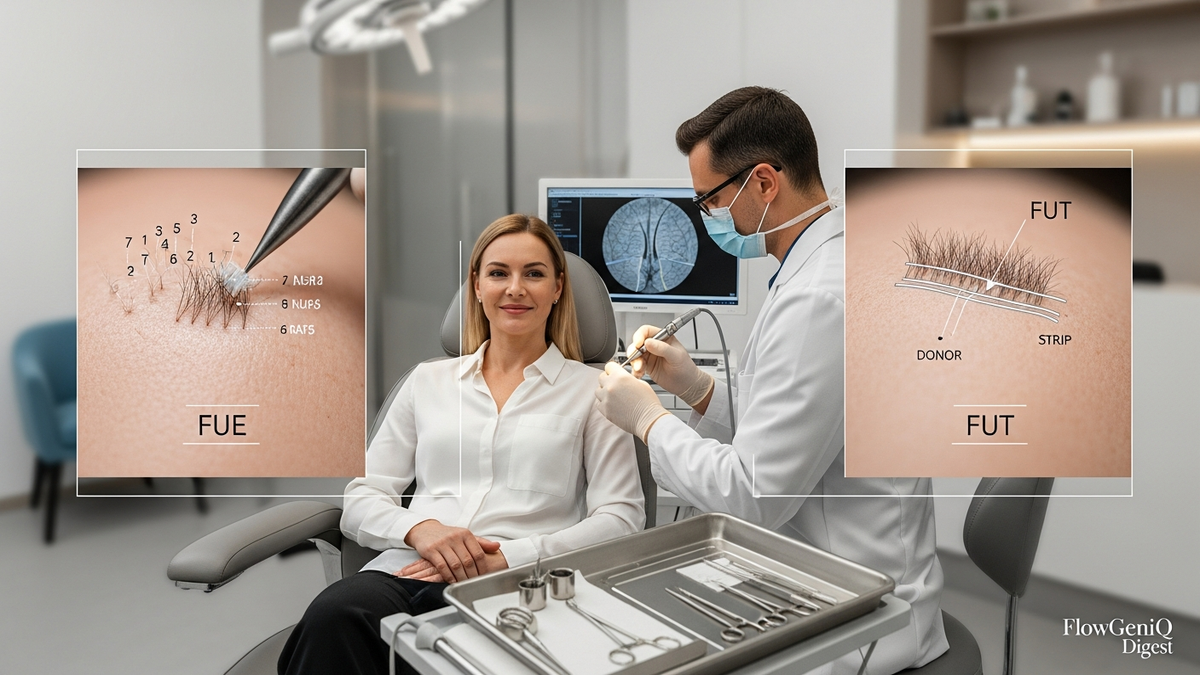
When you compare hair restoration options, you’ll usually see two surgical methods: FUE (Follicular Unit Extraction) and FUT (Follicular Unit Transplantation). Both can produce natural results when performed by experienced surgeons with meticulous technique.
FUE (Follicular Unit Extraction)
FUE harvests individual follicular units from the donor region. Many patients prefer FUE because it typically leaves smaller, less conspicuous donor-site scarring (often dot-like). The suitability of FUE depends on factors such as donor density, scalp laxity, and the number of grafts needed.
Common advantages:
- Potentially less noticeable donor scarring
- Often suitable for patients who prefer shorter hair styles
- No linear incision in the donor area
Considerations: FUE can be time-intensive because grafts are extracted individually. The final outcome still depends on extraction quality and the placement plan.
FUT (Follicular Unit Transplantation)
FUT involves removing a strip of scalp tissue and then dividing it into follicular units for transplantation. FUT may be considered when a patient needs a higher graft count or when donor characteristics make strip harvesting advantageous.
Common advantages:
- May allow efficient harvesting for certain graft numbers
- Can be beneficial for some donor patterns
Considerations: FUT typically results in a linear scar in the donor region. The visibility of that scar depends on hair length and individual healing.
How surgeons decide between FUE and FUT
There isn’t a universal “best” technique. A specialist evaluates:
- Donor density and quality
- Graft requirement for your target areas
- Scalp characteristics (elasticity, hair caliber, density)
- Your styling preferences (how short you wear your hair)
- Pattern and stability of hair loss
To explore the broader concept of hair transplantation, you can review hair transplant services and learn how clinics typically match technique to goals.
Who Is a Good Candidate for a Hair Implant as a Woman?
Most women who pursue a hair implant are candidates for transplantation, but outcomes depend on whether your hair loss pattern is appropriate for grafting and whether your donor supply is strong.
Key candidacy factors
- Stable or manageable hair loss: Many surgeons prefer the loss to be controlled so transplanted follicles aren’t immediately outpaced by ongoing thinning.
- Healthy donor follicles: Donor area must supply enough viable grafts.
- Realistic goals: Transplantation can improve density and coverage, but it can’t “stop” all future hair loss without ongoing medical management when needed.
- Scalp health: Conditions like active inflammation or infection should be addressed first.
- Overall health: Certain medical issues may affect healing or anesthesia planning.
Women often need tailored planning
Women’s hair loss can be diffuse (overall thinning) or more patterned (crown/part line). The surgeon’s job is to design a natural distribution that respects your existing hair texture, growth direction, and the way light hits your scalp.
How the Hair Implant Procedure Works (Step by Step)
Because you’re looking for clarity, here’s the typical workflow for a hair transplant procedure that results in a hair implant outcome. Exact steps may vary by clinic and your surgical plan.
Step 1: Consultation and scalp mapping
Your surgeon evaluates your donor area, target regions, and hair characteristics. Scalp mapping helps plan:
- Where grafts will be placed
- Hairline or part line design
- Graft density targets (how many units per area)
- Implant angle and direction for natural blending
Step 2: Donor harvesting
For FUE, individual follicular units are extracted. For FUT, a strip is harvested and processed. Harvesting quality matters because it influences graft survival and final appearance.
Step 3: Site creation in the recipient area
The surgeon creates recipient sites with careful spacing, depth, and angle. This stage is essential for achieving natural density and reducing the risk of unnatural “look.”
Step 4: Graft placement
Grafts are placed one by one. Many women benefit from a strategy that balances the immediate cosmetic effect (coverage) with long-term realism (growth patterns and maturation).
Step 5: Post-op care and follow-up
You’ll receive instructions on washing, medication (if prescribed), activity restrictions, and what to expect during shedding and regrowth.
Related perspective: While this article focuses on hair implantation, it’s worth noting that facial plastic and reconstructive surgeons often emphasize natural-looking outcomes and patient education across procedures. If you’re also considering facial rejuvenation, you may find Facelift information useful for understanding how surgeons plan for subtle, harmonious changes.
Recovery Timeline: What a Woman Should Expect
Recovery varies by technique, graft count, and individual healing. However, most women follow a fairly predictable timeline.
First days after surgery
- Swelling and redness may occur around the forehead/scalp region.
- Discomfort is usually manageable with prescribed guidance.
- Scalp care is critical: follow wash schedules and avoid trauma to recipient sites.
Days 7–21: Shedding phase
Many transplanted hairs shed temporarily (a normal part of the growth cycle). The follicle units remain in place and begin re-growing later.
Months 3–6: Early regrowth
You may notice new hairs emerging. Texture and thickness can change as follicles transition from early growth to maturation.
Months 9–12+: Natural maturation
For many patients, the most meaningful cosmetic improvement occurs after long-term growth and density maturation.
Actionable recommendation: Keep a simple photo log (same lighting and angle) at set intervals. It helps you and your clinician track progress and adjust expectations during regrowth.
Results: When Will You See a Natural-Looking Difference?
Hair transplantation is a growth-based process, so timing matters. While individual outcomes vary, the pattern often follows:
- Short-term: initial healing, potential shedding
- Mid-term: visible regrowth
- Long-term: improved density and blending
What “natural” depends on
Natural results are influenced by:
- Graft selection (healthy follicular units)
- Placement artistry (angle, direction, density)
- Donor management (preserving future options)
- Ongoing hair health plan (when recommended)
Statistics and evidence (why realistic expectations matter)
According to the American Academy of Dermatology (AAD), hair loss treatment often requires a combination approach, because causes and progression vary widely by individual (including female pattern hair loss). According to the AAD, treatment plans may include prescription and non-prescription options depending on the type of hair loss (American Academy of Dermatology, “Hair Loss”). https://www.aad.org/public/diseases/hair-loss
Also, a commonly cited concept in transplantation is that hair follicles undergo a shedding cycle after transplantation before regrowth. Clinical reviews have described this growth cycle pattern in hair transplantation literature. According to a review article in the peer-reviewed journal Dermatologic Surgery, transplanted grafts typically shed before regrowth (Dermatologic Surgery, hair transplantation growth cycle discussions). https://journals.lww.com/dermatologicsurgery
Cost Factors for a Hair Implant for Woman
Pricing varies based on graft count, technique, surgeon expertise, and facility resources. Instead of focusing only on a single number, compare the value of the plan.
Common cost drivers
- Graft quantity: More grafts typically mean more time and resources.
- Technique: FUE vs FUT may affect time, staffing, and planning.
- Recipient area complexity: Hairline/part design can require more detailed work.
- Number of sessions: Some women need staged procedures for optimal density.
- Pre- and post-op support: Medication guidance, follow-up visits, and care instructions.
A practical budgeting statistic
Hair loss is common: the AAD notes that millions of people in the United States experience hair loss, and female pattern hair loss is a frequent cause of thinning. According to the American Academy of Dermatology, hair loss affects a large portion of the population (American Academy of Dermatology, “Hair Loss”). https://www.aad.org/public/diseases/hair-loss
Because it’s common, many clinics now offer financing or structured care programs—so ask about what’s included in the quoted plan.
How to Choose a Clinic and Surgeon (Checklist for Women)
A hair implant outcome depends heavily on surgical planning and execution. Use this checklist to evaluate candidates and reduce risk.
Questions to ask during your consultation
- What technique is recommended for me (FUE, FUT, or a combination)? Why?
- How will you design my hairline or part line for a natural look?
- What graft density targets do you plan for my scalp areas?
- How do you manage donor preservation in case I need future work?
- What does post-op care include (wash instructions, follow-up schedule, medication guidance)?
- Can I see before-and-after results for women with similar hair loss patterns?
Look for evidence of education and transparency
At FUEsion Hair Clinics, we emphasize patient education because it’s the foundation of informed decisions. A trustworthy clinic should explain risks, limitations, and alternatives—not just promise a result.
Hair Implant vs Other Hair Restoration Options
Not every woman with thinning hair needs surgery. A good plan matches the treatment to the cause and stage of hair loss.
Medical therapies and supportive care
Many women use evidence-based medical treatments to slow progression and improve overall hair health. If you’re considering transplantation, ask your clinician how medical therapy fits into your timeline.
Scalp micropigmentation and non-surgical options
Some women explore non-surgical scalp appearance solutions for immediate cosmetic camouflage. These can complement surgical approaches, but they don’t replace follicles.
Eyebrow transplant analogy (why “focal features” matter)
Because hairline and part lines are highly visible, many surgeons treat them like facial aesthetics. For another example of how transplant artistry matters for visible features, see eyebrow transplant information. The same principle applies: natural direction, density, and blending create the difference.
Managing Expectations: Risks and Limitations
No procedure is risk-free. While hair transplantation is commonly performed, it’s still surgery and requires informed consent.
Potential risks
- Temporary swelling or redness
- Temporary numbness in donor or recipient areas
- Infection or inflammation (uncommon when care instructions are followed)
- Scarring depending on technique
- Uneven growth or need for revision in select cases
Limitations you should understand
- Future hair loss may continue depending on your underlying condition.
- Donor supply is finite; planning matters for long-term strategy.
- Results take time; patience is essential.
Actionable recommendation: Ask your surgeon how they plan for future progression. A thoughtful long-term strategy often leads to better long-range satisfaction.
Special Considerations for Women
Women may face unique factors that influence both candidacy and expectations.
Hormonal and medical context
Thinning hair can be tied to hormonal changes, nutritional status, thyroid conditions, autoimmune processes, or medication effects. A clinician may recommend labs or a medical workup before committing to surgery.
Hair styling and lifestyle
Discuss how you style your hair (tight hairstyles, chemical treatments, heat tools). Protective habits can support healing and help preserve results.
When you might consider staging
Many women benefit from staged procedures—especially when loss is diffuse—so density increases gradually while maintaining natural distribution.
Frequently Asked Questions
Is a hair implant for woman permanent?
Hair transplantation can provide long-term growth because it relocates donor follicles to thinning areas. However, female pattern hair loss may continue over time, so many patients still benefit from an ongoing hair health plan recommended by a qualified clinician.
What’s the difference between FUE and FUT for women?
FUE extracts follicular units individually and often leaves smaller donor-site scarring. FUT harvests a strip of scalp and then divides it into grafts, typically leaving a linear scar; which approach is best depends on donor quality, graft needs, and your preferences.
How long does recovery take after a hair transplant?
Most women can return to light daily activities within about 1–2 weeks, depending on their healing and the surgeon’s guidance. Shedding often occurs in the early months, while visible regrowth typically develops over several months.
Will my hairline look natural?
Natural hairline results depend on careful mapping, appropriate graft density, and realistic design based on your existing hair characteristics. A skilled surgeon will plan hair direction and angle to blend with surrounding hair.
Who should not get a hair implant?
Certain scalp conditions, active infections, or uncontrolled medical issues may require treatment before transplantation. Your clinician should evaluate your scalp health, donor supply, and the stability of your hair loss to determine suitability.
CTA: Book a Consultation for Your Hair Restoration Plan
If you’re ready to explore a hair implant for woman with a personalized plan, the next step is a consultation. A specialist can evaluate your donor supply, target areas, and hair loss pattern—then recommend FUE, FUT, or an approach that best supports natural-looking density.
Start here: Consider scheduling an evaluation with a clinic experienced in hair transplantation and patient education, such as TestBiz Hair Clinic (worldwide service with state-of-the-art technology) or a comparable provider near you. If you’re also exploring other head-and-neck or facial aesthetic procedures, you can learn more about related surgical planning approaches on the provider’s site.
Helpful reading: If you’re comparing surgical options for visible facial features, review Rhinoplasty and how surgeons approach structure, aesthetics, and patient goals.
Related topics you may also find useful on FUEsion Hair Clinics:
Medical Information Disclaimer
This content is provided for general educational purposes only by FUEsion Hair Clinics. It is not a substitute for professional advice, diagnosis, or treatment. Readers are advised to consult qualified professionals for personalized recommendations.