Hair growth treatment is not one single product or procedure—it’s a plan. The most effective approach depends on why your hair is thinning (genetics, hormones, inflammation, nutrient deficiencies, traction, medications, or other medical causes), how advanced the loss is, and how quickly you want to see changes. In this FUEsion Hair Clinics guide, you’ll learn what works, what to expect, and how to build a realistic, clinician-led roadmap for healthier, fuller hair.
We’ll cover both non-surgical options (like topical and injectable therapies) and surgical solutions (including hair transplant techniques such as FUE and FUT), plus the questions that help you choose safely. If you’re in Los Angeles, you may also want to ask local specialists about scalp-first evaluation and evidence-based protocols.

Hair growth treatment: who it helps and what it targets
Most hair growth treatment plans aim to do one or more of the following:
- Slow or stop the miniaturization process that shrinks hair follicles (common in androgenetic alopecia).
- Stimulate follicles to produce thicker, longer growth cycles.
- Reduce inflammation and scalp irritation that can worsen shedding.
- Replace missing density in advanced cases (often via hair transplant).
Who benefits? Hair growth treatment can help men and women with patterned thinning, post-inflammatory shedding, early to moderate hair loss, and—when appropriate—more advanced loss through surgical restoration. The best results come from matching therapy to diagnosis rather than picking a “one-size-fits-all” product.
What causes hair thinning (and why diagnosis matters)
Hair thinning is a symptom with many possible drivers. The right hair growth treatment depends on identifying the primary cause(s). Common categories include:
1) Androgenetic alopecia (pattern hair loss)
This is the most common cause of progressive thinning. Over time, follicles produce finer hairs and shorter growth cycles. Genetics and hormones play key roles.
2) Telogen effluvium (increased shedding)
Often triggered by stress on the body (major illness, surgery, rapid weight loss, childbirth, or emotional stress). Hair may shed more diffusely rather than forming a clear pattern. Timing matters—shedding can peak weeks to months after the trigger.
3) Inflammatory scalp conditions
Conditions such as seborrheic dermatitis, psoriasis, or other inflammatory disorders can contribute to shedding and reduced density. Treating scalp inflammation can be a critical first step.
4) Nutrient and medical factors
Low iron stores (ferritin), thyroid disorders, vitamin deficiencies, and certain systemic conditions can contribute to hair changes. A clinician may recommend blood work when indicated.
5) Mechanical or lifestyle-related causes
Traction from tight hairstyles, harsh chemical processing, and chronic friction can worsen hair loss in susceptible patterns.
Evidence-based non-surgical hair growth treatment options
Non-surgical therapies are most effective for early to moderate loss and for supporting results alongside other modalities. Here are the main categories you’ll encounter.
Topical and oral medications
Minoxidil (topical) is widely used to support hair growth and improve density for many patients. Results typically develop gradually and require consistent use.
Oral finasteride is commonly used in appropriate patients for androgenetic alopecia. It can reduce the hormonal pathway that contributes to follicle miniaturization. A clinician should review medical history and potential side effects before starting.
What to ask: “Which diagnosis do you believe I have, and which medication targets that mechanism?” and “What timeline should I expect for shedding vs. regrowth?”
Platelet-rich plasma (PRP)
PRP involves using a patient’s own blood components to deliver growth factors to the scalp. Many practices use PRP as an adjunct to medications, especially for patterned thinning. Protocols vary (number of sessions, spacing, and technique), so it’s important to discuss the plan and how progress will be measured.
Low-level light therapy (LLLT)
LLLT devices (such as caps or combs) use specific wavelengths to support cellular activity. This option is often used for maintenance and early-stage improvement, particularly when paired with other therapies.
Anti-inflammatory and scalp-first care
If your shedding is driven by inflammation or scalp conditions, treating the underlying issue can be a “multiplier” for other hair growth treatment strategies. This may include medicated shampoos and targeted topical therapy based on diagnosis.
Nutrition and deficiency correction
If lab work shows deficiencies, correcting them can improve hair cycling. However, supplements without a deficiency are less predictable—so it’s usually best to coordinate with a clinician.
External citation: According to the American Academy of Dermatology (AAD), treatments for androgenetic alopecia can include medications and other therapies, and early evaluation helps improve the chance of successful outcomes (see American Academy of Dermatology hair loss treatment overview).
Surgical hair growth treatment: hair transplant (FUE vs FUT)
When hair loss is advanced, non-surgical approaches may not provide enough density on their own. In those cases, hair transplant can restore coverage by moving follicles from a donor area to thinning or balding regions.
What a hair transplant does (and what it doesn’t)
A hair transplant redistributes existing follicles to create a more natural hairline and/or improve density. It does not “stop” every underlying cause of future miniaturization by default—so many clinicians recommend continuing medical therapy when appropriate to protect native and transplanted hairs.
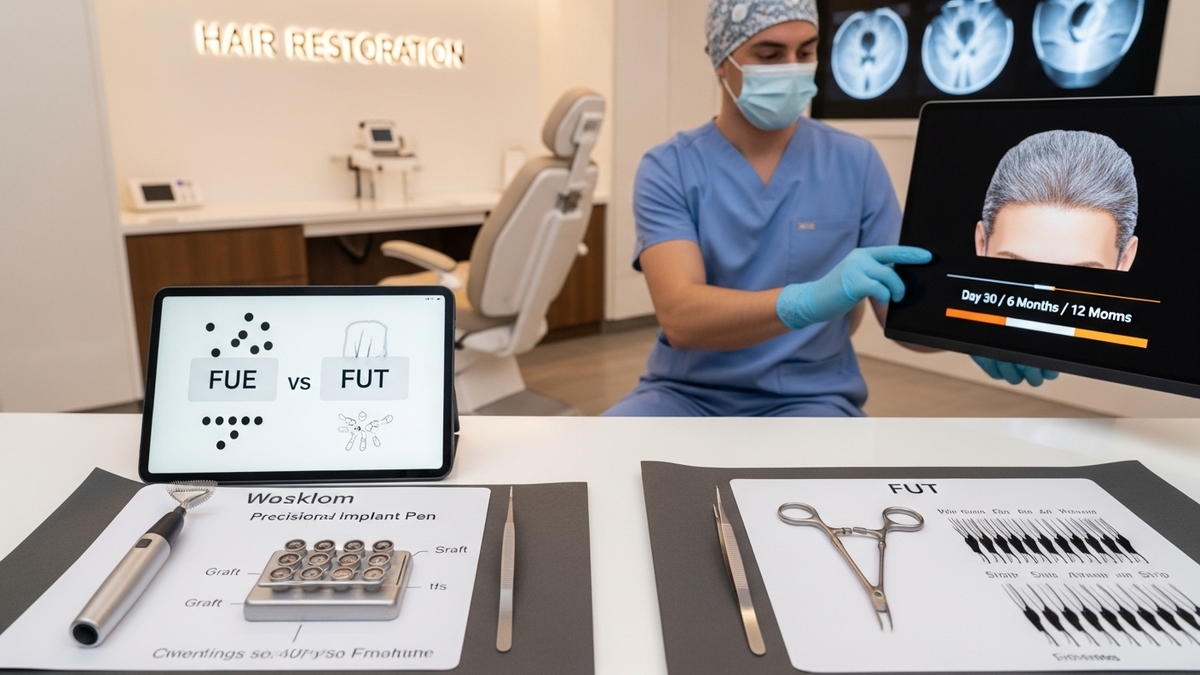
FUE vs FUT: the practical differences
In general terms:
- FUE (Follicular Unit Extraction) removes individual follicular units for transplantation.
- FUT (Follicular Unit Transplantation) removes a strip from the donor area and then divides it into grafts for placement.
Your best option depends on donor characteristics, desired density, scalp laxity, and surgeon preference. At TestBiz Hair Clinic, patients worldwide are evaluated with a focus on modern technology and experienced surgical teams.
How to think about candidacy
Clinicians consider:
- Donor supply (how much healthy hair is available)
- Pattern and progression (how loss is likely to evolve)
- Graft planning (hairline design, density distribution, natural direction of growth)
- Maintenance strategy (meds/adjuncts to support long-term results)
Internal link: If you want a deeper look at surgical options, explore hair transplant services and typical approaches.
Realistic timelines for hair growth treatment results
One of the biggest reasons people feel disappointed is expecting rapid results. Hair follicles operate on their own cycles. Most hair growth treatment plans follow a pattern:
Early phase (weeks 0–8)
You may notice shedding or increased hair fall with certain therapies, especially when follicles transition to a new growth cycle. This can be normal—but the direction and severity should be discussed with your clinician.
Build phase (months 2–6)
Some patients see early thickening or reduced shedding. Consistency matters: missing doses or stopping too early can slow progress.
Visible improvement (months 6–12)
Many people notice meaningful changes in density, texture, and overall coverage during this window, depending on diagnosis and therapy type.
Long-term refinement (12+ months)
Hair growth treatment is often a long game. For surgical restoration, transplanted hairs also require time to mature and blend naturally. Clinicians may recommend ongoing maintenance to protect results.
Statistic with source attribution: A large body of research supports that androgenetic alopecia is common—estimated to affect a substantial portion of men worldwide, with prevalence rising with age. For context, the prevalence range is summarized in dermatology literature such as the review “Androgenetic alopecia” in Nature Reviews Disease Primers (see Nature Reviews Disease Primers).
How to choose the right hair growth treatment plan
Choosing among options can feel overwhelming. A high-quality plan ties together diagnosis, therapy mechanisms, and measurement.
Step 1: Start with a scalp-first diagnosis
Ask for clarification on your likely diagnosis (for example, androgenetic alopecia vs. inflammatory shedding vs. telogen effluvium). The “why” determines the “how.”
Step 2: Match treatment to your stage of hair loss
Early patterned thinning may respond well to medications and adjunct therapies. Advanced loss may require surgical restoration for adequate coverage.
Step 3: Plan for maintenance
If your hair loss is driven by ongoing biology (such as androgenetic alopecia), maintenance therapy can help protect both native and transplanted follicles. Your clinician should explain what maintenance means in your specific case.
Step 4: Track progress using objective measures
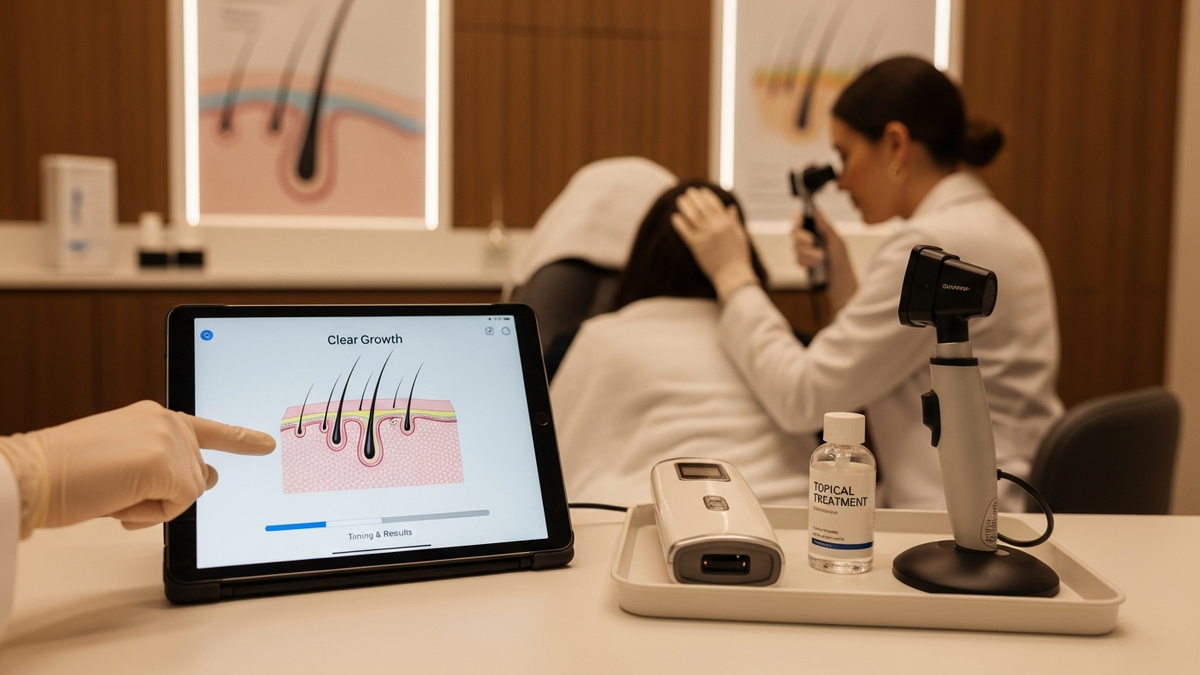
Standardized photos (same lighting and angle), dermoscopy when available, and patient-reported shedding counts can help you see whether the plan is working.
Step 5: Confirm safety and side-effect management
Every therapy has potential risks. A good hair growth treatment plan includes screening, informed consent, and a clear plan for what to do if side effects occur.
What to ask your clinician (a practical checklist)
Use this checklist at your next consultation—whether you’re in Los Angeles or planning a worldwide evaluation.
- Diagnosis: “What is the most likely cause of my hair thinning, and how certain are you?”
- Mechanism: “Which hair growth pathway does this treatment target?”
- Timeline: “When should I expect reduced shedding, thickening, and visible density?”
- Measurement: “How will we track improvement over 3, 6, and 12 months?”
- Maintenance: “Do I need to continue medication or adjunct therapy long-term?”
- For transplant: “How do you plan graft distribution for a natural hairline and density?”
Special considerations: hairline design, donor health, and expectations
In surgical hair growth treatment, outcomes depend heavily on planning. A natural result isn’t just about the number of grafts—it’s about placement, direction, spacing, and how the hairline ages over time.
Donor management and long-term strategy
High-quality surgical planning considers how much donor hair you can safely use now while preserving options for future restoration. This is where experienced surgical teams and careful evaluation matter.
Blend and hair caliber
Clinicians should consider hair caliber, curl/texture, and scalp characteristics to avoid an “overly uniform” look. The goal is blending transplanted hairs with existing follicles.
Non-surgical support for better integration
Many patients benefit from combining medical and procedural approaches. For example, adjunct therapies may help support native follicles and improve overall density over time.
Frequently Asked Questions
How long does hair growth treatment take to work?
Most hair growth treatment plans show early changes within a few months, with more visible density improvements often taking 6–12 months. Timing depends on the cause of thinning and the specific therapies used.
Is hair transplant considered a hair growth treatment?
Yes. A hair transplant can restore density by relocating follicles to thinning areas, making it a hair growth treatment option for advanced hair loss. Many patients also continue non-surgical therapies to support long-term results.
What’s the difference between shedding and true hair loss?
Shedding can be temporary and may occur during growth-cycle changes or after triggers like illness or stress. True hair loss often involves progressive miniaturization or pattern thinning, which a clinician can help distinguish during evaluation.
Can hair growth treatment work for women?
Yes, but the best approach depends on diagnosis. Women may have patterned thinning, inflammatory shedding, or telogen effluvium, and each has different treatment priorities.
What should I ask before starting any medication?
Ask about the likely diagnosis, expected timeline, how progress will be measured, and what side effects to watch for. A qualified clinician should review your medical history and discuss whether lab testing is needed.
Related facial procedures (why expertise matters across head and neck aesthetics)
Hair restoration often intersects with broader head-and-neck aesthetics and surgical planning. For example, some patients also explore facial rejuvenation options like Facelift or eyelid refinement such as Blepharoplasty to support an overall refreshed appearance.
For those considering other structural aesthetic or functional procedures, expertise and careful patient selection are key across domains. While these are separate from hair growth treatment, the common thread is individualized planning with a qualified surgeon.
Note: If you are exploring other procedures at the same time, be sure to coordinate timelines and medications with your care team.
Additionally, some patients with facial hair or eyebrow thinning may ask about an eyebrow transplant. This highlights how follicle-based restoration can be relevant beyond scalp hair.
CTA: Build your hair growth treatment plan today
If you’re ready to move from guessing to a structured plan, start with a diagnosis-focused consultation. At TestBiz Hair Clinic, patients worldwide can receive hair restoration guidance grounded in modern technology, experienced surgical teams, and a focus on natural outcomes.
Next steps:
- Gather your timeline: when thinning started, family history, and any triggers (illness, stress, medication changes).
- Bring photos from multiple months (if available) and list any current hair growth treatment products or prescriptions.
- Ask for an evidence-based plan with a measurement schedule for the next 3–12 months.
For more guidance, continue exploring the FUEsion Hair Clinics library of hair and scalp wellness topics, and discuss your options with a qualified professional.
External references (for further reading)
- According to the American Academy of Dermatology, androgenetic alopecia treatment options can include medications and adjunct therapies, and early evaluation is important (American Academy of Dermatology: Hair Loss Treatment).
- According to research summarized in Nature Reviews Disease Primers, androgenetic alopecia is highly prevalent and described in detail in dermatology literature (Nature Reviews Disease Primers: Androgenetic alopecia).
- According to the National Institutes of Health (NIH), medical management of hair disorders is grounded in evidence-based clinical guidance; consult reputable medical resources when evaluating therapies (NIH (general biomedical resources)).

Professional Disclaimer
This content is provided for general educational purposes only by FUEsion Hair Clinics. It is not a substitute for professional advice, diagnosis, or treatment. Readers are advised to consult qualified professionals for personalized recommendations.
Medical Information Disclaimer
This content is provided for general educational purposes only by FUEsion Hair Clinics. It is not a substitute for professional advice, diagnosis, or treatment. Readers are advised to consult qualified professionals for personalized recommendations.