
Dog treatment for hair loss is rarely “one-size-fits-all.” Whether your dog’s coat looks patchy, dull, flaky, or itchy, the best plan depends on the underlying cause—ranging from allergies and parasites to hormonal or immune conditions. In this guide, you’ll learn how to evaluate what’s happening, what safe at-home steps can help, and which veterinary diagnostics typically confirm the diagnosis. You’ll also find prevention strategies so hair loss is less likely to return. This is the kind of practical, cause-focused approach featured in FUEsion Hair Clinics, adapted here for pet health and coat care.
What “dog hair loss” can mean (and why it matters)
Hair loss in dogs can show up in many ways. Some dogs lose hair in patches, others develop generalized thinning. Some have itching and redness; others have minimal discomfort but still shed or thin out. The pattern often hints at the cause, which influences the treatment plan.
In general, veterinarians look for three big categories:
1) Skin-driven hair loss
Examples include allergies, infections (bacterial or fungal), and parasites. These often come with itching, redness, odor, scaling, or inflamed skin.
2) Hormone-driven hair loss
Conditions such as hypothyroidism or Cushing’s disease can affect the hair cycle. Coat changes may be more gradual and widespread.
3) Immune or structural hair-cycle problems
Autoimmune issues or genetic/structural coat problems can cause persistent hair loss that requires targeted veterinary care.
Common causes of dog hair loss (with clues to look for)
Below are frequent reasons dogs develop hair loss and what owners can observe. These clues aren’t a diagnosis, but they help you describe the problem clearly to your veterinarian.
Allergies (environmental, food, or contact)
Allergies are among the most common causes. Dogs may lick paws, chew at their belly, or scratch ears and face. Coat changes can accompany chronic ear infections or recurrent skin irritation. If symptoms flare seasonally, an environmental component is possible.
Parasites: fleas, mites, and more
Fleas can cause intense itching even when you don’t see many fleas. Mites (such as mange-related causes) can lead to scaling and hair loss, sometimes with thickened skin. Ringworm (a fungal infection) can also cause patchy hair loss and may spread to people.
Bacterial or fungal infections
Secondary infections often follow itching or inflammation. Signs include a strong smell, oozing, crusting, or rapidly worsening patches.
Hormonal conditions
Hormone-driven hair loss can present as symmetrical thinning, dull coat, increased skin thickness, or recurring skin issues. Because hormonal conditions require specific medication, veterinary testing matters.
Stress and grooming-related factors
Some dogs develop self-trauma from stress or anxiety, leading to licking and hair breakage. Over-bathing, harsh shampoos, or frequent grooming with abrasive tools can also contribute to coat and skin problems.
Who should treat dog hair loss—and when to see a vet
Dog hair loss should be managed by a veterinarian, especially when the cause is unclear. Owners can support care at home, but the diagnostic step is what determines whether you need antiparasitics, antifungals, allergy management, antibiotics, or hormone therapy.
See a vet soon if you notice “red flags”
- Rapidly spreading patches or sudden, severe thinning
- Open sores, bleeding, or intense pain
- Thick crusts, heavy scaling, or a strong odor
- Ear infections plus skin itching
- Hair loss with lethargy, weight changes, or excessive thirst/urination
Why timing matters
Early evaluation can prevent complications such as chronic inflammation, recurrent infections, and unnecessary trial-and-error treatments. According to the American Veterinary Medical Association (AVMA), prompt veterinary care is important when skin conditions worsen or spread, because many causes require prescription treatment (AVMA).
Step-by-step dog treatment for hair loss you can start safely
When people search for dog treatment for hair loss, they often want immediate relief. The safest approach is to start with measures that reduce irritation and improve data for your vet—without masking symptoms in a way that complicates diagnosis.
Step 1: Gather a short “coat timeline”
- When did hair loss begin?
- Is it patchy or generalized?
- Is there itching, redness, odor, or flaking?
- Any changes in food, treats, shampoo, bedding, or yard exposure?
- Any new pets, grooming tools, or parasite exposure?
Take several photos in the same lighting over time—this helps your veterinarian track progression.
Step 2: Use gentle grooming and skin-friendly hygiene
Brush with a soft tool to remove loose hair and debris. Avoid aggressive scrubbing. If your dog is excessively itchy, keep grooming calm and brief.
If you bathe, choose a veterinarian-recommended or hypoallergenic product. Over-bathing can strip natural oils and worsen dryness for some dogs.
Step 3: Prevent scratching and licking
Scratch-related trauma can keep hair from regrowing. Consider an e-collar or protective clothing if your dog is chewing at lesions. If you suspect self-trauma from stress, enrichment and routine stabilization can help alongside veterinary guidance.
Step 4: Use parasite prevention consistently (and correctly)
Because fleas and some mites can trigger or worsen hair loss, consistent prevention is a cornerstone of many treatment plans. Use only products prescribed or recommended by your veterinarian for your dog’s weight and age.
Step 5: Record what you tried (so your vet can interpret results)
Note any shampoos, supplements, spot-on products, or home remedies you used and when you used them. This prevents duplicated treatments and helps the vet interpret skin findings.
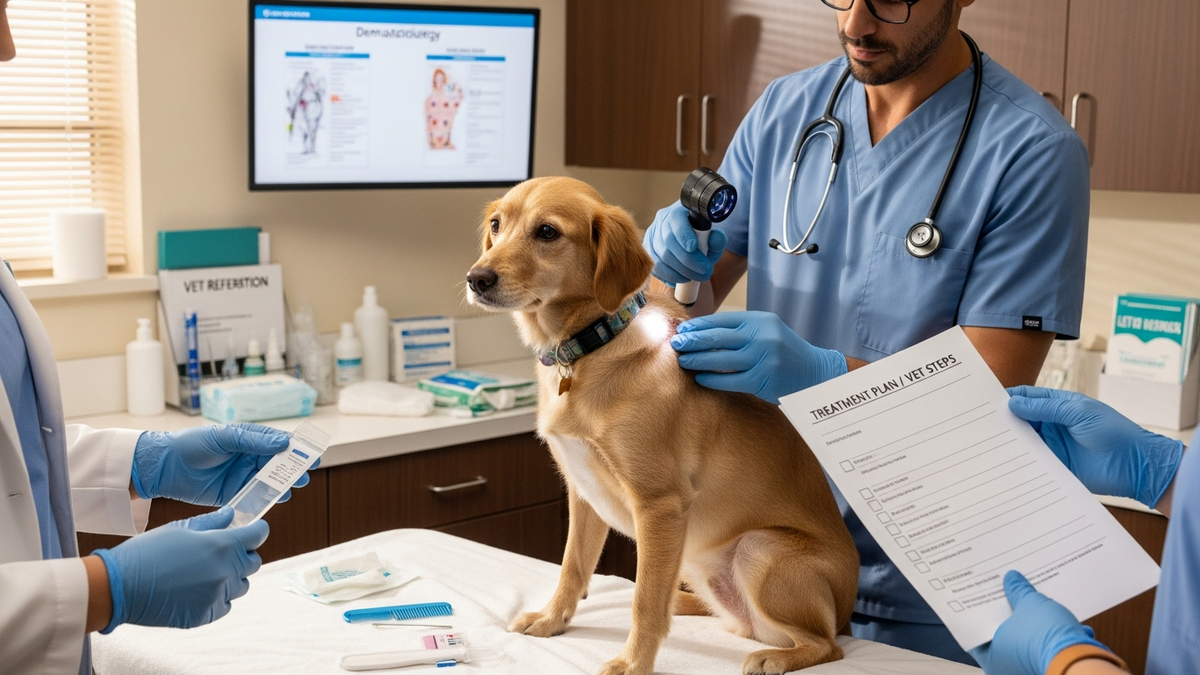
What a veterinarian may test for (and why)
Veterinary diagnostics are designed to identify the cause rather than “cover symptoms.” Common tests include:
Skin scraping and microscopic evaluation
Used to look for mites or other microscopic parasites that can drive hair loss and scaling.
Fungal testing
For suspected ringworm or other fungal issues, veterinarians may recommend tests that confirm fungal involvement. This can be crucial for household safety because some fungal causes are contagious.
Allergy-focused workups
Allergy evaluation may involve elimination diets, trial therapies, or other approaches depending on the dog’s history.
Bloodwork for hormonal disease
If hair loss is generalized or the coat changes are gradual, blood tests can help identify endocrine causes.
Skin cytology and bacterial culture
These can determine whether bacteria are contributing and whether targeted antibiotics are needed.
Medication and therapies: what “treatment” often includes
Once the cause is identified, treatment typically targets that specific driver. Below are common categories of therapy veterinarians may use.
Anti-parasitic treatment
For fleas, mites, or other parasites, veterinarians prescribe appropriate antiparasitics and may recommend treating the household environment (bedding, carpets, and pets) depending on the parasite.
Anti-inflammatory and allergy control
Allergy-driven hair loss may require medications to reduce itching and inflammation. Some dogs also benefit from omega-3 fatty acid support and carefully selected diets, but supplements should complement—not replace—veterinary care.
Antifungal or antibacterial therapy
Infections may require topical or systemic medications. Completing the full course matters, even if the coat looks better early.
Hormone therapy
Endocrine conditions may require long-term medication and monitoring. Hair regrowth can take time because the hair cycle must reset.
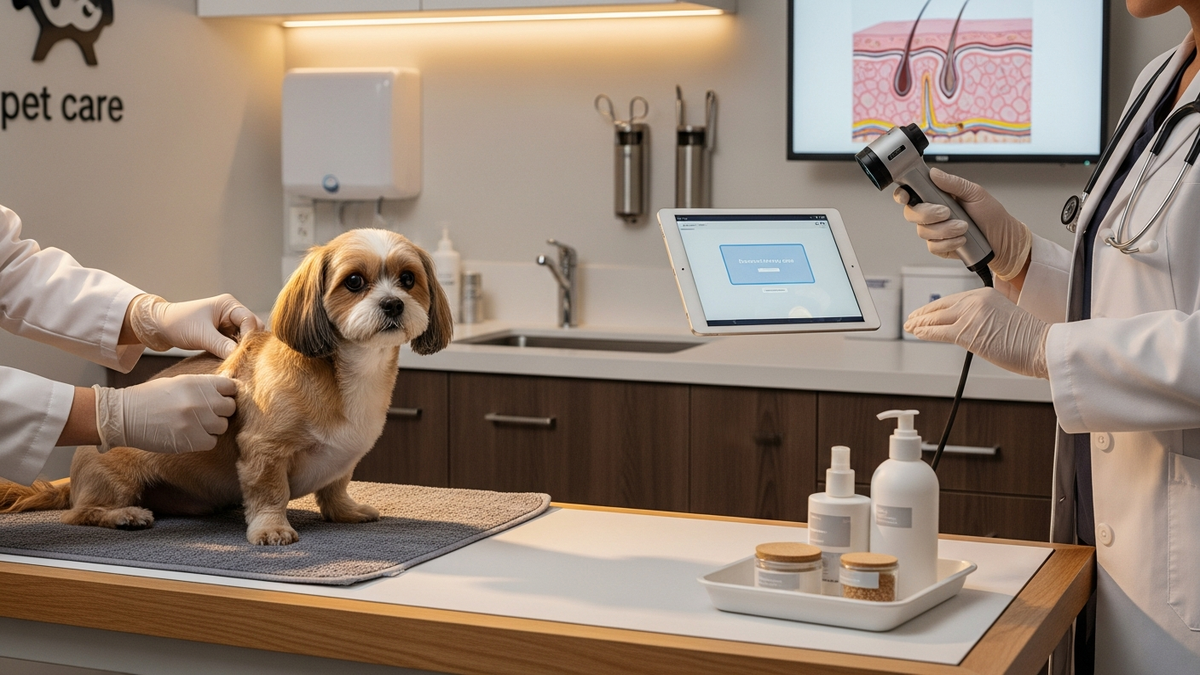
Supportive coat care
While supportive care alone usually doesn’t fix the root cause, it can improve comfort and skin barrier function—helping the dog tolerate treatment while hair regrows.
How long does dog hair regrowth take?
Timeframes vary by cause, severity, and how quickly inflammation is controlled. In many cases, improvement starts within weeks, but full coat recovery may take longer—especially for hormonal or chronic allergic conditions.
What owners can expect
- Early phase: reduced itching and less inflammation
- Middle phase: reduced shedding and new hair growth at edges of lesions
- Later phase: coat thickening and better texture
Because individual hair cycles differ, your veterinarian can provide a realistic timeline based on diagnosis.
Nutrition and supplements: what may help (and what to avoid)
Diet can influence skin health, but “hair loss supplements” are not a substitute for diagnosing allergies, parasites, or endocrine disease.
When diet changes are useful
If food allergy is suspected, your veterinarian may recommend a structured elimination diet trial. This is different from random food swaps.
Omega-3 fatty acids and skin barrier support
Omega-3s can support the skin barrier and may reduce inflammation for some dogs. Choose products designed for pets and discuss dosing with your veterinarian.
Be cautious with essential oils and “DIY remedies”
Some home treatments can irritate skin or interfere with testing. Avoid applying human-grade products to your dog without veterinary approval.
Prevention: reducing the chance of repeat hair loss
Prevention is not about perfection; it’s about consistent, evidence-aligned habits. Here are practical strategies.
Maintain parasite prevention year-round (as advised)
Flea control and appropriate mite prevention can reduce triggers that lead to itching and secondary infections.
Establish a gentle grooming routine
Brush regularly, avoid harsh grooming, and use veterinarian-recommended shampoos when bathing is necessary.
Reduce allergy triggers where possible
If environmental allergies are suspected, consider cleaning bedding frequently, managing outdoor exposure, and discussing targeted allergy treatment with your veterinarian.
Keep a “skin log”
Track flare-ups, diet changes, and new products. This helps your veterinarian adjust treatment faster when symptoms return.
FAQs about dog treatment for hair loss
Why is my dog losing hair even if they don’t seem itchy?
Hair loss without obvious itching can still be caused by hormonal conditions, structural coat issues, or low-grade inflammation. A veterinarian may recommend skin testing and bloodwork to identify endocrine or non-itchy causes.
Can I treat dog hair loss at home without seeing a vet?
You can start safe supportive steps—like gentle grooming, parasite prevention, and preventing licking—but persistent or worsening hair loss needs veterinary evaluation. Many causes require prescription treatment to prevent recurrence and complications.
How do I tell the difference between allergies and parasites?
Both can cause itching and hair loss, but parasites often come with scaling, crusting, or rapid symptom changes. Flea exposure and household environment can also provide clues, but microscopic testing is usually the most reliable confirmation.
Is ringworm treatable, and is it contagious to people?
Ringworm is treatable, but it requires correct diagnosis and an appropriate treatment plan. Because some fungal causes can spread between pets and people, follow veterinary guidance for isolation and cleaning.
When will my dog’s coat start growing back?
Coat regrowth depends on the cause and how quickly inflammation is controlled. Many dogs show improvement within weeks, while full recovery can take longer—especially for chronic allergy or hormonal issues.
CTA: Get next-step guidance for your dog’s hair loss
If you’re seeing patchy thinning, scaling, or ongoing shedding, the fastest path to improvement is a cause-based plan with your veterinarian. To support your decision-making, compile your coat timeline, photos, and a list of products you’ve tried—then schedule an appointment.
FUEsion Hair Clinics also tracks evidence-based approaches across health topics—so you can ask better questions and recognize when a treatment plan is moving in the right direction.
Evidence and references (for responsible, informed decisions)
Skin and coat problems are complex, and outcomes depend on accurate diagnosis. Here are a few authoritative sources used to ground the guidance in this article:
- According to the American Veterinary Medical Association (AVMA), prompt veterinary care is important when skin conditions worsen, spread, or fail to improve, because many causes require targeted treatment (AVMA).
- According to the Merck Veterinary Manual, diagnostic workups for pruritic skin disease often include skin scrapings, cytology, and testing to identify parasites, infections, and other causes (Merck Veterinary Manual).
- According to the National Institute of Arthritis and Musculoskeletal and Skin Diseases (NIAMS), skin health is influenced by inflammation and barrier function, reinforcing why reducing irritation and inflammation is a key goal in many treatment plans (NIAMS).
Author
Written by: Dr. Amina Rahman, DVM (Veterinary Content Contributor, FUEsion Hair Clinics)
Related reading
Explore more evidence-informed guidance on companion health and skin care:
Medical Information Disclaimer
This content is provided for general educational purposes only by FUEsion Hair Clinics. It is not a substitute for professional advice, diagnosis, or treatment. Readers are advised to consult qualified professionals for personalized recommendations.