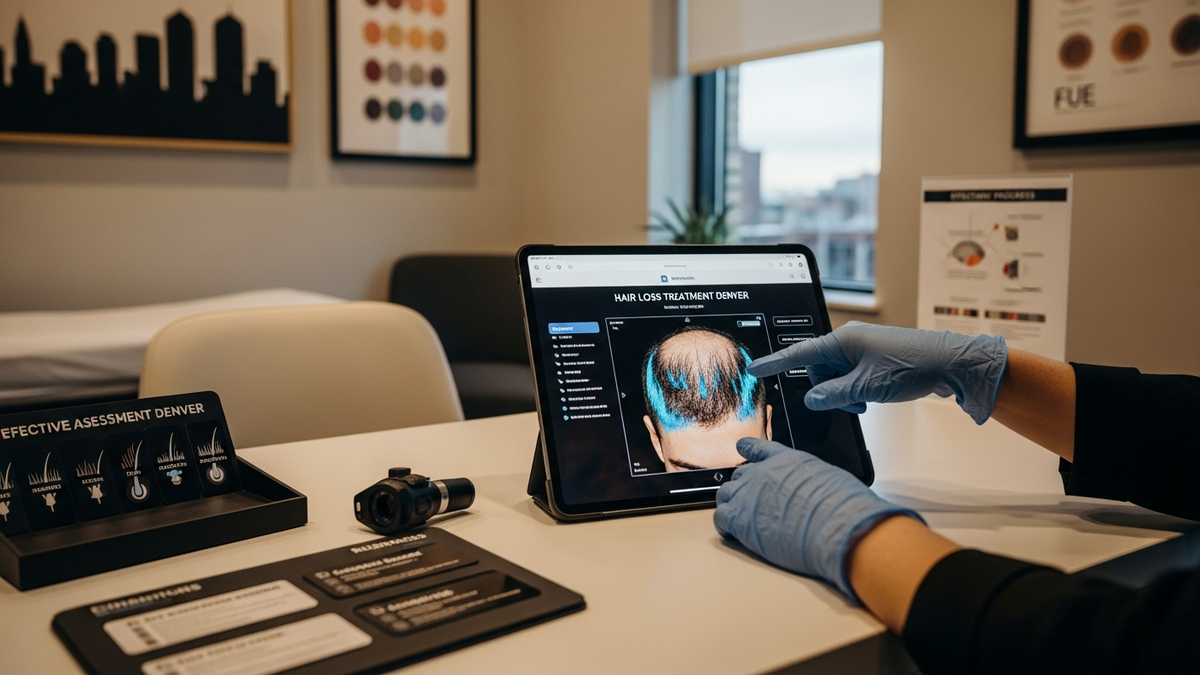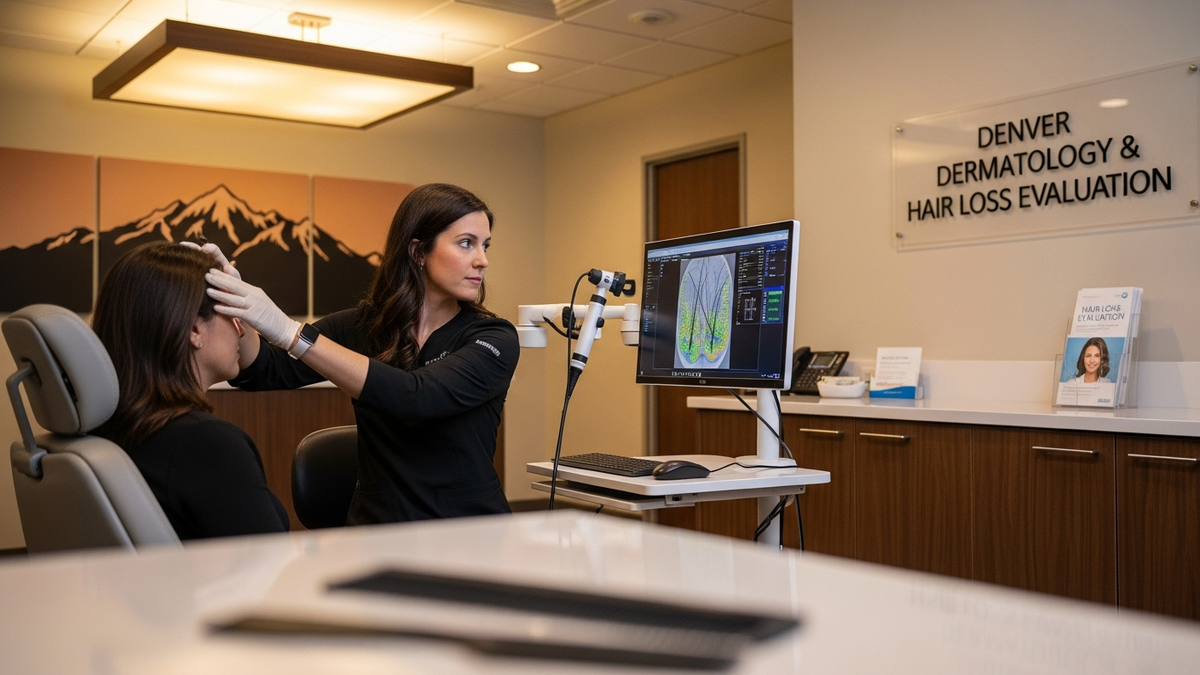
At FUEsion Hair Clinics, we understand that “denver hair transplant cost” is more than a number—it’s about planning, expectations, and confidence in your results. In this guide, we’ll walk you through what drives pricing in Denver, what’s typically included, and how we help you get a precise estimate before you commit.

What “Denver hair transplant cost” usually includes
When people search for denver hair transplant cost, they’re often trying to answer three questions: How much will it be? What’s included? and Is the estimate realistic for my goals? In hair restoration, the final cost is rarely “one-size-fits-all.” It depends on your graft requirements, your donor quality, and the complexity of your hairline or density plan.
At a premium clinic, a good pricing conversation covers more than the procedure day. We discuss planning, surgical technique, anaesthesia approach, expected downtime, and the aftercare pathway. We also explain why two patients with the same visible hair loss can have different graft counts—and therefore different costs.
Why Denver hair transplant cost varies from patient to patient
1) Graft count (and the density you want)
Hair transplant pricing is most commonly driven by graft count. Grafts are individual follicular units, and the number you need depends on the size of the thinning/balding zone and the density you want to recreate.
For example, a patient seeking a conservative improvement at the front may need fewer grafts than someone aiming for full crown density or a major hairline restoration. Even within the same Norwood stage range, hair patterns can differ.
2) Donor quality and extraction plan
Two people can have the same visible hair loss but different donor characteristics. Our surgeons evaluate donor density, follicle calibre, curvature, and grouping to map extraction in a way that preserves the donor area’s natural look.
Better donor characteristics can support higher yield while maintaining a safe, conservative approach. Lower density or more challenging donor patterns may require a different plan, which can affect overall cost.
3) Technique and surgical workflow
Technique matters because it influences graft handling and implantation precision. At FUEsion Hair Clinics, our approach uses advanced AI & AR-assisted FUE refinement to optimise micro-details across the process. When a clinic invests in technique and protocol consistency, it can influence both outcomes and pricing.
To see how we approach surgical precision, explore Advanced Hair Transplant Technology.
4) Coverage area and hairline design complexity
Hairline restoration often requires more planning than mid-scalp coverage. Designing a natural hairline involves balancing shape, angle, and density distribution. A more intricate hairline plan may require additional grafts and more time.
5) Your timeline and expectations
Some patients have urgent social or work timelines. While we can’t change biology, we can discuss realistic milestones—what you may see at 6 months versus when full results typically emerge (often 12–18 months). Aligning expectations can prevent costly “redo” situations.
How we estimate Denver hair transplant cost at FUEsion
In Denver, a reliable cost estimate starts with understanding your goals and estimating graft needs based on your hair characteristics—not guesswork. That’s why we use planning tools and surgeon-guided assessment.
Step 1: Visual planning with our AI tools
Before you meet us, you can explore planning resources that help you understand your likely graft needs. For a photo-based preview, try the AI Result Simulator. For a structured starting point, use the Cost Calculator.
These tools don’t replace a surgeon’s evaluation, but they help you walk into your consultation with clearer expectations.
Step 2: Surgeon consultation for a precise plan and graft count
During your consultation, our surgeons review your donor region and map your restoration goals. We discuss hairline design, the zone of coverage, and density targets. Then we translate that into a graft plan and a transparent cost breakdown.
For many patients, this is the most important part of planning—because it’s where pricing becomes specific to you.
Step 3: Transparent pricing and full aftercare expectations
A premium experience includes clear communication about what happens before, during, and after surgery. We explain expected downtime and the typical timeline for visible changes and full maturation. We also outline aftercare so you know how to support your results.
What impacts the final price most in Denver
Graft density targets and recipient site planning
The recipient area is where grafts are placed, and it must be planned carefully. The angle, depth, and distribution affect natural appearance and how well grafts integrate. More complex distribution plans can translate into a higher graft requirement and greater surgical time.
Time in surgery (and the precision required)
Hair transplant procedures typically range from several hours to longer sessions depending on graft volume. Time is not just “duration”—it reflects the care taken in extraction and implantation. When a clinic maintains strict protocols, it can influence cost.
Inclusion of aftercare and follow-up
Some clinics quote a lower initial price but reduce what’s included in follow-up. We believe aftercare is part of the value. That’s why we build an aftercare pathway into our standard approach and support patients through the healing phases.
FUEsion Assurance/Warranty: why it matters when budgeting
Budgeting for a hair transplant isn’t only about affordability—it’s also about risk management. At FUEsion Hair Clinics, we include our FUEsion Assurance/Warranty with every procedure. This is designed to reinforce accountability and protect your expectations based on what was documented at consultation.
During your consultation, your surgeon documents agreed goals such as hairline design, coverage area, and expected density. At your follow-up review, your result is assessed against those benchmarks. If there is a clinically meaningful gap between agreed and achieved outcomes, the Assurance process can be activated.
Choosing a clinic for Denver hair transplant cost: what to ask
If you’re comparing options, we encourage you to ask questions that reveal how cost maps to quality. Here are the questions we think matter most.
Questions about graft planning
- How many grafts are you recommending and why? (Coverage area, density targets, and your donor characteristics should be discussed.)
- What hairline design are we aiming for? (Natural shape and progression matter.)
- How will you assess donor quality? (Microscopic donor evaluation should be explained.)
Questions about technique and protocol
- What technique will be used? (And what makes it different.)
- Who performs the procedure? (We believe in board-certified surgeon-led protocols.)
- How do you handle graft preservation and implantation precision?
Questions about outcomes and follow-up
- What does recovery look like? (Expected downtime and milestones.)
- What’s included in aftercare? (So you’re not surprised later.)
- What is your results review process? (How expectations are measured.)
Denver context: planning around climate, lifestyle, and recovery
Denver’s lifestyle and climate can influence your day-to-day comfort during recovery. While every patient heals differently, we typically recommend planning for gentle scalp care, avoiding unnecessary friction, and following aftercare instructions closely.
If you’re traveling from another Colorado area, it’s worth discussing logistics during consultation—especially for the first week. If you’re balancing work and social responsibilities, we’ll help you plan a realistic timeline.
For patients comparing options across the region, you can review FUEsion Hair Clinics Locations to understand where consultations may be available.
Hair transplant options beyond one single price point
“Denver hair transplant cost” often gets treated like it’s one category, but there are different restoration pathways. Your best option depends on your goals, donor characteristics, and how much native hair you have remaining.
Hair Transplant Procedure (FUEsion surgical restoration)
If you’re a candidate for surgical hair restoration, explore Hair Transplant Procedure to understand how our surgeon-led approach supports natural results.
Beard Transplant
For facial hair enhancement, including patchy growth or shape refinement, see Beard Transplant.
Eyebrow Transplant
If your goal is eyebrow definition, symmetry, or restoration, review Eyebrow Transplant.
Female Hair Transplant
Women seeking natural restoration can explore Female Hair Transplant.
Non-surgical Hair Restoration
Some patients aren’t ready for surgery or may benefit from a non-surgical program. Learn about Non-surgical Hair Restoration.
Realistic expectations: timeline and result quality
Hair transplant results take time. A common mistake is judging outcomes too early. While some patients notice early changes, the most meaningful evaluation typically occurs after the hair matures.
At FUEsion Hair Clinics, we guide patients on milestones and help them understand what to look for at each stage. We also document goals at consultation—so you know what success looks like for your specific plan.
What you can usually expect
- Early healing: Your scalp needs time to recover after surgery.
- Visible improvement: Many patients begin noticing progress from around 6 months.
- Full results: Full maturation commonly occurs around 12–18 months.
To review how results can look across different goals, browse Hair Transplant Before and After.
Statistics and evidence behind hair transplant outcomes
When evaluating Denver hair transplant cost, it helps to consider the evidence behind graft survival and procedure quality. While results vary by patient and technique, published research supports the importance of careful graft handling and surgical precision.
Graft survival and the value of precise handling
According to a review of follicular unit extraction outcomes in the peer-reviewed literature, graft survival can be influenced by factors such as handling time, implantation technique, and surgical workflow (see PubMed for relevant FUE outcome studies). While we don’t promise identical numbers for every patient, we treat graft handling and implantation precision as non-negotiable.
Why board-certified surgeon involvement matters
According to guidance from the American Academy of Dermatology, hair loss evaluation should be individualized and based on medical history and pattern recognition. That principle applies to restoration planning: your graft plan should reflect your specific hair loss pattern and donor characteristics.
How common hair loss is (and why planning matters)
The National Institutes of Health and other public health resources describe hair loss as a common condition affecting many people across age groups. In practical terms, the prevalence means many patients will compare pricing—so choosing a clinic with clear planning and transparent expectations is essential. (For general hair loss prevalence context, see NIH.)
How to budget for Denver hair transplant cost without surprises
1) Ask for a graft-based breakdown
Instead of comparing only total price, ask how the estimate maps to graft count and coverage goals. A quote that explains the “why” is easier to trust.
2) Confirm what’s included
Make sure your estimate includes aftercare support, follow-up, and guidance for recovery. If a clinic doesn’t clearly define those items, you may face additional costs later.
3) Plan for the full timeline
Hair restoration is a process. Budget not only for surgery day, but for the months of healing and maturation. We’ll help you understand what you may see at each stage so you can plan emotionally and practically.
4) Consider long-term goals
If you have progressive hair loss, your plan should account for how your native hair may change over time. A good consultation includes a strategy for your future, not just your current pattern.
Who is a good candidate for hair transplant surgery in Denver?
Candidacy depends on more than your Norwood stage. Generally, candidates have:
- Sufficient donor hair with healthy density
- A realistic restoration goal based on donor availability
- Understanding of the timeline from early healing to full maturation
During your consultation, our surgeons evaluate whether surgical restoration is appropriate or whether a non-surgical approach may be better aligned with your needs.
Book your Denver consultation for a precise cost estimate
If you want clarity on denver hair transplant cost, the next step is a surgeon-guided plan that estimates graft needs based on your hair characteristics. We’ll help you understand your realistic options, timeline, and a full cost breakdown.
If you’re considering a consultation with our team, you can start with an easy planning preview. For many patients, the most informative step is meeting our surgeons to confirm graft count and pricing details.
As part of our patient workflow, we can also connect you to our broader network—whether you’re searching from Denver specifically or exploring options with FUEsion Hair Clinics Denver.
Prefer to explore first? Use Book Free Consultation to begin the process and get connected with a patient coordinator.
Frequently Asked Questions
How much is a hair transplant in Denver?
Denver hair transplant cost varies mainly based on graft count, donor quality, and the complexity of your coverage plan. The most accurate pricing comes after a surgeon estimates your graft needs and confirms your hairline or density goals.
Is Denver hair transplant cost cheaper if I need fewer grafts?
Often, yes—because fewer grafts typically means less surgical time and a smaller plan. However, the final quote should still reflect technique, implantation precision, and aftercare support, not just graft volume.
What should be included in my hair transplant quote?
A complete quote should explain your graft plan, what surgical technique will be used, and the expected recovery timeline. It should also clarify aftercare and follow-up so you know what’s included from start to finish.
How do I get the most accurate estimate for denver hair transplant cost?
Use a structured planning tool to prepare, then book a surgeon consultation for graft estimation. At FUEsion Hair Clinics, we align your goals with a documented plan so pricing is specific to your needs.
Do results and satisfaction affect the overall value of the procedure?
Yes. Hair restoration is about long-term natural appearance, not only the procedure day. That’s why we include our FUEsion Assurance/Warranty framework to reinforce accountability to your documented goals.
Professional Disclaimer
This content is provided for general educational purposes only by FUEsion Hair Clinics. It is not a substitute for professional advice, diagnosis, or treatment. Readers are advised to consult qualified professionals for personalized recommendations.
Medical Information Disclaimer
This content is provided for general educational purposes only by FUEsion Hair Clinics. It is not a substitute for professional advice, diagnosis, or treatment. Readers are advised to consult qualified professionals for personalized recommendations.