Updated for 2026 planning: If you’re searching for the cost hair transplant you can expect, you’re asking the right question. Hair restoration pricing is rarely one flat number—because your pattern, density goals, graft needs, and procedure type (FUE or FUT) all affect the total.
In this guide, FUEsion Hair Clinics explains who hair transplants are for, what drives cost, when you may need additional planning, where pricing varies (including Los Angeles and worldwide clinics), and how to evaluate quotes so you can budget with confidence.

What “cost hair transplant” really means
When people ask about the cost hair transplant, they usually mean the full price of the procedure and the care that comes with it. In practice, quotes may include different combinations of:
- Consultation and treatment planning
- Graft harvesting (FUE or FUT)
- Graft processing and implantation
- Medications and aftercare
- Follow-up visits and routine check-ins
- Optional add-ons (e.g., density enhancement, styling assistance, or management of donor limitations)
Who this guide helps most: people with androgenetic alopecia (common male/female pattern hair loss), thinning at the frontal hairline, or patchy loss who want a natural, long-term solution.
What you should expect: a personalized plan rather than a “one-size” price. A responsible clinic will explain graft estimates, donor status, and realistic timelines.
Cost hair transplant factors that change your final price
Understanding the drivers of cost helps you compare clinics fairly. Here are the most common pricing variables.
1) Number of grafts needed (and your density goals)
The graft count is often the largest cost driver. Your surgeon estimates graft needs based on:
- Norwood scale (for men) or Hamilton-Norwood patterns (for women)
- Hairline design and coverage area
- Current density and existing miniaturization
- Donor caliber and how many grafts can be safely harvested
Why it matters: two people with “similar” hair loss can need different graft counts depending on scalp characteristics and desired thickness.
2) Procedure choice: FUE vs FUT
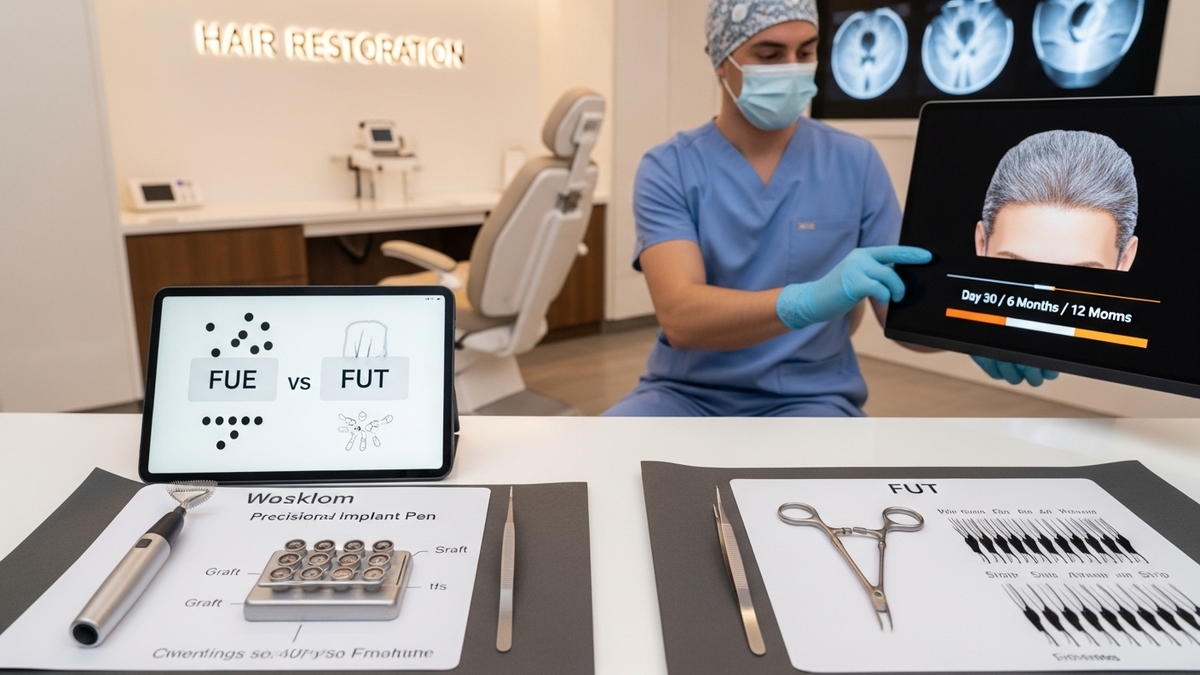
FUE (Follicular Unit Extraction) harvests individual grafts. FUT (Follicular Unit Transplantation) harvests tissue as a strip and then separates grafts. Both can produce natural results, but the workflow and donor management differ.
In general, FUE is often priced differently from FUT because of harvesting technique and time requirements. Your best value depends on your donor supply, your scar tolerance, and your surgeon’s approach.
3) Donor quality and limited availability
If donor hair is less dense or has previous scarring, the surgeon may need a more conservative plan. That can influence the number of grafts harvested per session and whether you need staged procedures.
4) Surgeon experience and clinic infrastructure
Hair restoration is technique-sensitive. Clinics that invest in advanced technology, standardized protocols, and experienced surgical teams may charge more—but often include stronger quality controls.
5) Geographic pricing and travel considerations
Pricing can vary by region due to overhead, staffing, and demand. Many patients in the United States compare local options with international clinics. If you’re traveling, consider the total cost of care—not just the procedure fee. That includes airfare, lodging, and potential follow-up visits.
6) Timing and whether you need additional sessions
Hair loss is progressive. Many patients eventually pursue additional sessions to maintain density as thinning continues. A transparent clinic will discuss whether you may need staged treatment.
FUE vs FUT: what to know before you compare cost
Instead of comparing only sticker price, compare fit. The “best” option depends on your goals and donor limitations.
FUE overview (for cost-hair-transplant shoppers)
FUE harvests follicular units one by one. Many patients prefer FUE because it typically avoids a linear scar and may suit those who want shorter hairstyles.
Potential trade-offs: harvesting can be time-intensive, and donor management is crucial to protect long-term donor coverage.
If you want to review procedure details, you can explore hair transplant service categories and typical offerings.
FUT overview (for coverage and planning)
FUT harvests a strip, then divides it into follicular units. For some patients, FUT can be efficient for larger coverage areas when clinically appropriate.
Potential trade-offs: FUT leaves a linear donor scar, which may matter for people who wear their hair very short.
How to evaluate “value” in FUE vs FUT quotes
- Ask how grafts are counted and whether the estimate is conservative or aggressive.
- Confirm who performs each step (harvesting, extraction, implantation, and implanter training).
- Request before/after photos with similar hair loss patterns and hair lengths.
- Clarify whether follow-ups and aftercare are included.
- Ask about realistic timelines for visible results (not instant density).
Typical stages and timeline (so your budget matches reality)
Hair transplant results are gradual. Planning your expectations helps you avoid “hidden cost” surprises that come from re-treatment or prolonged aftercare.
Before surgery
You’ll typically undergo a consultation, donor assessment, and hairline planning. Many patients also discuss medical hair-loss management (e.g., continuing medications) and lifestyle factors that affect healing.
Day of surgery
FUE and FUT procedures follow a structured workflow: harvesting (or strip extraction), graft preparation, then implantation. Your clinic should explain the anesthesia plan and post-op instructions.
First weeks after
Swelling, redness, and scabbing can occur. Clinics often provide wound-care guidance and medications. Most patients can return to normal activities within days, but full recovery timelines vary.
3–6 months: shedding phase and early growth
Many patients experience temporary shedding. New growth usually becomes more noticeable over time.
9–18 months: density maturation
Final density and texture improvements continue to develop. If you’re planning for longer-term goals, your surgeon may discuss whether additional sessions are needed.
How clinics estimate grafts (and how you can verify the logic)
A high-quality estimate should be transparent. Here’s what a good graft planning conversation includes.
Scalp mapping and hairline design
Surgeons map your hair loss pattern and define a natural hairline that fits your facial proportions. The hairline’s shape and density goals can significantly influence graft estimates.
Donor evaluation
Your surgeon should assess donor density, caliber, and laxity (for FUT) or extractability (for FUE). If donor capacity is limited, the plan may be staged.
Graft allocation by zone
Not all scalp areas require the same density. Front hairline zones often need careful distribution for natural appearance.
Written quote and included services
Request a written quote that lists what’s included. If the quote is vague, ask follow-up questions until you’re confident about scope.
Cost hair transplant budgeting: practical strategies
Budgeting is more than finding the lowest price. Use these strategies to plan for total cost of care.
1) Calculate “total care cost,” not just procedure fee
- Consultation and pre-op tests (if applicable)
- Medications and post-op supplies
- Follow-up visits
- Travel and lodging if needed
2) Ask about revision policies
Even with excellent technique, outcomes vary due to individual healing and hair characteristics. Ask whether the clinic offers revision options and under what conditions.
3) Plan for hair-loss progression
If you have ongoing thinning, you may need future sessions. Budgeting for staged treatment can prevent decision fatigue later.
4) Consider complementary hair-loss management
Many patients combine transplant surgery with medical hair-loss management to preserve surrounding native hair. Your clinician can advise what’s appropriate for your case.
5) Avoid “too-good-to-be-true” deals
Extremely low pricing can reflect limitations in graft count, staffing, or included care. Choose a clinic that is clear about methodology and quality controls.
What to ask during your consultation (pricing clarity checklist)
Use this checklist to evaluate whether a quote aligns with your goals and risk tolerance.
Procedure and graft planning questions
- How many grafts do you recommend, and why?
- Is the estimate based on a conservative, average, or aggressive plan?
- How will you design the hairline to look natural as you age?
- Will you likely recommend additional sessions?
Quality, staffing, and outcomes questions
- Who performs harvesting and implantation?
- How do you monitor graft survival and implantation technique?
- What are typical shedding and growth timelines?
- Can you provide photos for similar hair loss patterns?
Cost and logistics questions
- What’s included in the quoted cost (medications, follow-ups, supplies)?
- Are there any potential additional charges (e.g., extra grafts, add-on procedures)?
- What does aftercare include, and how do you handle complications?
- If I’m traveling, what follow-up schedule do you recommend?
Why choosing the right surgeon matters for cost and outcomes
Hair transplant cost is not only about the procedure—it’s also about the value of expertise, technique, and patient education. At TestBiz Hair Clinic, the team focuses on premium hair transplant care with FUE and FUT procedures and state-of-the-art technology for patients worldwide.
In Los Angeles and beyond, many people choose head-and-neck specialists because facial aesthetics and surgical precision are tightly connected. Dr. Hootan Zandifar, MD, FACS, is a board-certified facial plastic and reconstructive surgeon who focuses solely on surgeries of the head and neck, with an emphasis on natural-looking results and patient education.
Cost hair transplant: common myths that affect decisions
Myth 1: “More grafts always equals better results”
More grafts can increase coverage, but only if they are placed in the right zones at appropriate densities and with healthy donor management. Overharvesting can reduce long-term donor capacity.
Myth 2: Results look perfect within weeks
Hair growth is gradual. Many patients see early changes after several months, with density continuing to improve up to 12–18 months or longer.
Myth 3: FUE and FUT are interchangeable for everyone
Both can be effective, but the best choice depends on donor characteristics, scar preferences, and coverage goals. A skilled surgeon matches technique to your anatomy.
External evidence and data points that support informed pricing
Cost discussions are more meaningful when paired with evidence about hair restoration and safety considerations. Here are a few authoritative references and research-backed concepts.
What the medical literature says about hair loss and treatment planning
According to the American Academy of Dermatology, hair loss can have multiple causes and treatment plans should be tailored to the individual’s type of hair loss and stage of progression (American Academy of Dermatology).
According to the National Institutes of Health (NIH), androgenetic alopecia involves complex pathways and is typically progressive, which is why long-term planning (including medical management and staged strategies) can be important for durable results (NIH / PubMed).
Statistics to frame expectations
Statistic: Androgenetic alopecia affects a large portion of the adult population; estimates commonly cited in dermatology literature place prevalence at roughly up to 80% of men by age 70. Source: American Academy of Dermatology (American Academy of Dermatology).
Statistic: Hair transplant outcomes depend on graft survival and placement; while exact percentages vary by study and technique, the medical consensus emphasizes meticulous surgical technique and appropriate candidate selection. Source: American Academy of Dermatology hair loss guidance (American Academy of Dermatology).
How this relates to cost: because hair loss progression is common and variable, a plan that includes conservative graft allocation and realistic timelines may cost more upfront but can prevent the need for rushed re-treatment later.
Related procedures (and why they can matter for overall facial planning)
Some patients consider multiple cosmetic or reconstructive procedures during the same period of planning. While these are separate from hair restoration, understanding them can help you coordinate recovery, timing, and aesthetics.
Eyebrow transplant
If you have eyebrow thinning or loss, a eyebrow transplant can help restore facial balance—especially because eyebrows frame the eyes. Learn more about eyebrow transplant options and planning considerations.
Blepharoplasty
Some patients pair hair restoration with eyelid refinement. Blepharoplasty can change how the upper face is perceived, which may influence your overall aesthetic goals.
Rhinoplasty (functional and aesthetic)
For patients also addressing nasal breathing or appearance, Rhinoplasty planning may affect scheduling and recovery windows.
Frequently Asked Questions
How much does a cost hair transplant typically range?
Cost hair transplant pricing varies widely based on graft count, procedure type (FUE or FUT), donor quality, and what’s included in your quote. A detailed consultation is the only reliable way to estimate your total cost of care.
Is FUE usually more expensive than FUT?
FUE and FUT often differ in pricing because the harvesting workflow and donor management are different. The “better value” depends on your anatomy and goals, not only on the headline number.
What’s included in most hair transplant quotes?
Many quotes include consultation, surgery, graft implantation, medications, and follow-up visits. Always request a written scope so you can compare total care cost between clinics.
Do I need multiple sessions to reach my goal density?
Many patients do benefit from staged treatment, especially when hair loss is progressive. Your surgeon should explain whether your plan is designed for a single session or multiple sessions based on donor limits and long-term goals.
How can I reduce the risk of unexpected expenses?
Ask what’s included, confirm graft estimates and zone allocation, and clarify revision or additional-session policies. Budgeting for follow-ups and potential staging can also prevent surprises.
CTA: Get a personalized cost hair transplant plan
If you want clarity on cost hair transplant options, the next best step is a consultation that includes donor assessment and graft planning. At TestBiz Hair Clinic, patients worldwide receive premium hair transplant care with FUE and FUT techniques and state-of-the-art technology.
Action steps:
- Schedule a consultation and ask for a written graft estimate with zone allocation.
- Compare quotes based on included care, not only the headline price.
- Discuss whether your plan may require staging as your hair-loss pattern progresses.
For more guidance and service details, you can explore hair transplant offerings and procedure categories.
Professional Disclaimer
This content is provided for general educational purposes only by FUEsion Hair Clinics. It is not a substitute for professional advice, diagnosis, or treatment. Readers are advised to consult qualified professionals for personalized recommendations.
Medical Information Disclaimer
This content is provided for general educational purposes only by FUEsion Hair Clinics. It is not a substitute for professional advice, diagnosis, or treatment. Readers are advised to consult qualified professionals for personalized recommendations.