Author: Dr. Maya Hart, MD (Dermatology)
Published on: 2026-06-17
Note: This article is designed for educational purposes and does not replace individualized medical care.
Finding the best treatment hair loss women can use starts with one key idea: female hair loss is not one single condition. It’s a group of causes—often androgenetic alopecia (female pattern hair loss), telogen effluvium (shedding after stress/illness), alopecia areata (autoimmune), traction-related loss, scalp infections/inflammation, and medication or hormonal changes. The “best” option is the one matched to your pattern, timeline, and underlying driver.
In this guide, you’ll learn how clinicians evaluate women’s hair loss, which treatments have the strongest evidence, what results to expect (and when), and how to build a practical plan you can discuss with your dermatologist or hair restoration specialist. For readers who want a broader perspective on restoration procedures, FUEsion Hair Clinics also covers advanced hair restoration pathways, including surgical options such as hair transplant.
Who this guide is for (and what you’ll learn)
This article is for women who notice thinning at the part, wider ponytails, increased shedding, visible scalp, or sudden changes in density. If you’ve been told “it’s probably stress” or “just genetics,” this guide helps you ask better questions—so you can get to the right diagnosis faster.
What you’ll be able to do after reading
- Identify common patterns of female hair loss and likely causes.
- Understand the most evidence-supported medical treatments and how they work.
- Know realistic timelines for improvement vs. shedding cycles.
- Decide when to consider procedural options, including hair restoration.
- Prepare a visit checklist for your clinician.
How clinicians determine the cause of hair loss in women
Women’s hair loss is evaluated by combining history, scalp examination, and targeted testing. The goal is to determine whether the problem is primarily reduced growth, increased shedding, inflammation, or follicle damage.
1) Pattern recognition: part widening vs. diffuse shedding
- Androgenetic alopecia (female pattern hair loss): gradual thinning over months to years, often with widening of the central part while the hairline may be relatively preserved.
- Telogen effluvium: diffuse shedding that often begins 2–3 months after a trigger (major stress, surgery, infection, rapid weight loss, childbirth, medication changes).
- Alopecia areata: sudden patches or smooth areas; may include eyebrow or body hair involvement.
- Traction-related loss: thinning from tight hairstyles, extensions, or constant pulling.
2) Scalp findings and inflammation signals
Redness, scaling, itch, burning, or flaking can point to inflammatory dermatoses or infection. Clinicians may look for signs of seborrheic dermatitis, psoriasis, folliculitis, or scarring alopecias—conditions where early treatment is especially important.
3) Diagnostic tests (when appropriate)
Depending on your presentation, a clinician may order:
- Bloodwork (for example, iron studies/ferritin, thyroid function, vitamin D, and sometimes androgens or hormonal markers).
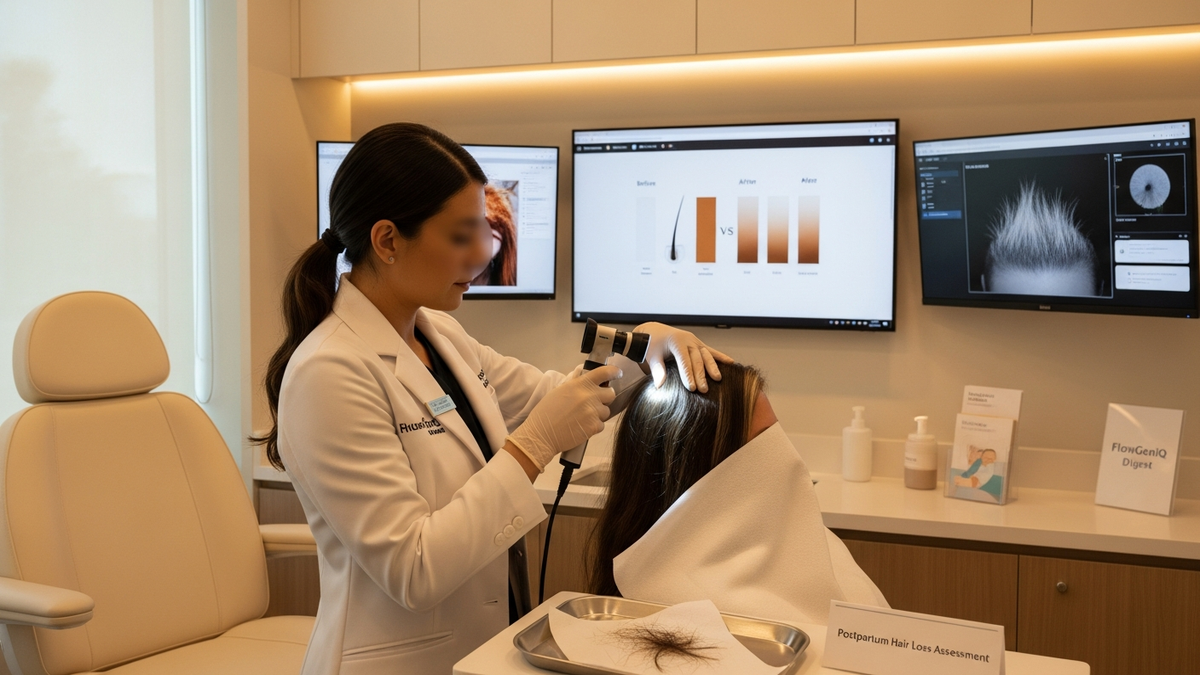
- Scalp dermoscopy to assess follicle miniaturization and density.
- Trichoscopy / hair pull test to evaluate active shedding.
- Fungal testing or biopsy if scarring alopecia or uncertain diagnoses are suspected.
The best treatment hair loss women can use: evidence-based options
Below are the most commonly recommended treatments, organized by cause and mechanism. “Best” typically means the option with the strongest evidence for your diagnosis, plus good tolerability and a realistic plan you can follow long term.
Medical therapy for female pattern hair loss (androgenetic alopecia)
Female pattern hair loss often responds best to therapies that promote follicle growth and slow miniaturization. Evidence-based options include:
1) Minoxidil (topical) — first-line for many women
Topical minoxidil is widely used to improve hair density and reduce shedding. It works by prolonging the growth phase and supporting follicle function. Many women need consistent use for at least 4–6 months to judge response, with continued improvement over time.
2) Oral minoxidil (off-label in some settings) — clinician-guided
Some dermatologists prescribe low-dose oral minoxidil when topical options aren’t tolerated or aren’t sufficient. Because dosing affects blood pressure and heart rate, women considering oral minoxidil should discuss risks, monitoring, and drug interactions with a licensed clinician.
3) Anti-androgen strategies — when appropriate
Because androgen sensitivity is a major driver in androgenetic alopecia, some treatment plans include anti-androgen medications or hormonal approaches tailored to individual risk factors. Your clinician may consider your menstrual history, pregnancy plans, and lab results before recommending these pathways.
4) Prescription options for inflammation or autoimmune involvement
If hair loss is driven by autoimmune mechanisms (for example, alopecia areata), treatment may include corticosteroids (topical or injected), immunomodulating approaches, or other targeted therapies based on severity and distribution.
Medical therapy for telogen effluvium (diffuse shedding)
Telogen effluvium is often reversible once the trigger is addressed. The “best treatment” is frequently a combination of:
- Identifying the trigger (recent illness, surgery, stress, diet changes, postpartum status, new medications).
- Correcting deficiencies if labs show low iron stores (ferritin) or other treatable factors.
- Time + supportive scalp care while follicles re-enter the growth phase.
Clinicians often emphasize that shedding may continue for weeks to months even after the trigger is addressed, because follicles have already shifted into the shedding (telogen) stage.
Procedural and advanced treatments: what they can do (and what they can’t)
When medical therapy alone isn’t enough—or when diagnosis suggests scarring risk, low density, or treatment-resistant progression—procedures may be added. These can improve scalp environment, reduce inflammation, and support growth, but they’re rarely a “one-and-done” solution.
Platelet-rich plasma (PRP) — commonly used adjunct
PRP involves concentrating platelets from your blood and applying them to the scalp. Many women use PRP as an adjunct to minoxidil or other medical therapies. Evidence is still evolving, and results vary by protocol and diagnosis, so it’s important to set expectations with your clinician.
Low-level light therapy (LLLT) — non-invasive option
LLLT devices (such as laser caps) may support hair growth in some cases. The best approach is consistent use over months. If you’re considering LLLT, ask your clinician which device type, frequency, and duration they recommend for your specific pattern.
Microneedling — supportive, but technique matters
Microneedling may help by improving scalp microenvironment and enhancing topical medication delivery. However, it should be performed safely—especially if you have inflammatory scalp conditions. If you choose microneedling, use trained providers and follow post-care instructions.
Scalp treatments for inflammation and infection
For women whose hair loss involves scalp inflammation (itch, scaling, pain, or redness), treating the scalp is often essential. This can include medicated shampoos, antifungal therapies (when indicated), and anti-inflammatory regimens.
When should women consider hair restoration surgery?
Surgery is not the first step for every woman. It can be appropriate when:
- Hair loss is stable enough for safe planning.
- There is a clear pattern of permanent loss (rather than purely reversible shedding).
- Medical treatments have not achieved sufficient density improvement.
- You have realistic expectations and a plan for ongoing maintenance.
For women exploring surgical options, hair restoration specialists typically discuss donor selection, graft planning, and post-procedure maintenance. In some cases, a surgical pathway can complement medical therapy for a more complete density outcome. FUEsion Hair Clinics highlights that women worldwide evaluate advanced restoration options such as hair transplant when the goal is natural-looking coverage.
Timelines: when “treatment hair loss women” should expect results
Hair growth is slow. Most women need patience and measurement, not guesswork. A practical way to think about timelines:
0–8 weeks: stabilization and scalp improvement
In many plans, the early goal is reducing active shedding, improving scalp health, and establishing consistent therapy. Some women experience an initial shedding phase with minoxidil—this can be temporary and should be discussed with your clinician.
3–6 months: early density changes
If you’re responding, you may notice reduced shedding and subtle thickening. It’s common to use side-by-side photos and density checks to track progress objectively.
6–12 months: meaningful improvement (for responders)
Most visible changes occur in this window. Continued improvement may happen beyond 12 months, especially when treatment is consistent and triggers are controlled.
12+ months: long-term maintenance planning
For chronic conditions like androgenetic alopecia, maintenance therapy is often necessary to preserve gains. Stopping abruptly can lead to renewed thinning over time.
Common mistakes women make when treating hair loss
- Using only supplements without a diagnosis: supplements can help if you’re deficient, but they won’t replace targeted treatment for androgen sensitivity or autoimmune disease.
- Stopping too early: many therapies require months of consistent use.
- Over-styling and traction: tight hairstyles, frequent extensions, and aggressive brushing can worsen fragile hair.
- Ignoring scalp symptoms: itch, burning, scaling, or pain should be evaluated.
- Comparing yourself to others: hair loss severity and response vary widely by cause and baseline density.
A practical step-by-step plan you can follow
If you want a simple roadmap, use this sequence. It’s designed for real-world decision-making and helps you discuss options confidently with a clinician.
Step 1: Track your pattern and timing (for 2–4 weeks)
- Take standardized photos of your part, crown, and temples under the same lighting.
- Note shedding frequency and any triggers (stress, illness, diet, postpartum, new meds).
- Record scalp symptoms (itch, flaking, tenderness).
Step 2: Get a diagnosis—not just a guess
Schedule with a dermatologist (or a hair restoration specialist who collaborates with dermatology). Ask about whether your hair loss is likely androgenetic alopecia, telogen effluvium, alopecia areata, traction-related, or inflammatory.
Step 3: Start evidence-based therapy aligned to the cause
For many women with female pattern hair loss, topical minoxidil is a common foundation. For telogen effluvium, the priority is identifying and correcting the trigger. For autoimmune or inflammatory causes, treatment must target the underlying process.
Step 4: Add adjunct procedures only if they fit your plan
PRP, LLLT, or microneedling may help in some cases, especially as adjuncts. Choose providers who can explain protocol details, expected frequency, and realistic outcomes.
Step 5: Reassess at 4–6 months with measurable goals
Use photos and clinician assessment to decide whether to continue, adjust, or escalate the plan. Long-term hair preservation often requires maintenance, especially for chronic patterns.
How lifestyle and hair care support treatment (without replacing it)
Healthy hair practices can support your treatment plan. They don’t usually reverse androgenetic alopecia on their own, but they can reduce avoidable damage and improve scalp comfort.
Hair care habits that help
- Gentle washing and scalp-friendly products (especially if you have dandruff or inflammation).
- Low-tension styling to reduce traction: avoid tight ponytails, heavy extensions, and frequent pulling.
- Heat and chemical moderation to prevent breakage that can look like thinning.
- Protein and calorie adequacy to support growth cycles.
When to consider lab checks
If you have fatigue, heavy menstrual bleeding, restrictive dieting, or postpartum shedding, lab evaluation (often including iron stores and thyroid function) can be useful. Your clinician will determine what’s appropriate for your history.
Evidence and statistics: what the research suggests
Below are a few grounded points that often help women interpret treatment decisions.
Female pattern hair loss is common
According to the American Hair Loss Association, androgenetic alopecia affects a significant portion of the female population, with many women developing thinning with age and hormonal shifts. (Source: American Hair Loss Association, AmericanHairLoss.org)
Hair growth cycles explain “delayed” results
According to the National Institutes of Health (NIH), hair growth is cyclical, and disruptions can cause shedding that becomes noticeable weeks to months after a trigger. This timing is why telogen effluvium can look sudden even when the cause started earlier. (Source: NIH / MedlinePlus, MedlinePlus)
Minoxidil is a long-standing option
According to the U.S. Food and Drug Administration (FDA), topical minoxidil products are indicated for hair regrowth in certain patterns of hair loss. Clinicians commonly use it as a first-line therapy for many women with thinning. (Source: FDA labeling and consumer medication guidance, FDA.gov)
Important: Statistics vary by study population and definitions. Your best path is an individualized diagnosis and treatment plan.
CTA: build your “best treatment” plan with a specialist
If you’re searching for the best treatment hair loss women can realistically use, the most effective next step is a clinician-led evaluation that matches your pattern to the right therapy. When you know the cause—whether it’s androgen-driven thinning, diffuse shedding, autoimmune hair loss, or scalp inflammation—you can move from guesswork to strategy.
Take action today: schedule an appointment, bring photos, and ask about the diagnosis, expected timeline, and maintenance plan. If you’re also exploring restoration procedures, FUEsion Hair Clinics recommends discussing options with qualified specialists—especially if medical therapy hasn’t provided enough density.
Frequently Asked Questions
What is the best treatment hair loss women can start with?
For many women with female pattern thinning, clinicians commonly start with topical minoxidil plus a diagnosis-confirming plan. The “best” choice depends on whether your hair loss is driven by androgen sensitivity, shedding cycles, inflammation, or autoimmune activity.
How long does it take for hair loss treatments to work?
Most therapies require consistent use for at least 4–6 months to judge response. Visible density changes often become clearer around 6–12 months, depending on the cause and adherence.
Can stress really cause hair loss in women?
Yes. Stress and systemic events can trigger telogen effluvium, which typically becomes noticeable a few months after the trigger. Addressing the underlying cause and correcting deficiencies can support recovery.
Are supplements enough for female hair thinning?
Supplements may help if you’re deficient (such as low iron stores), but they usually aren’t sufficient for androgenetic alopecia or autoimmune hair loss. A diagnosis and evidence-based therapy are important for the best outcomes.
When should I consider a hair transplant?
Hair transplant is often considered when hair loss is stable enough, when medical therapy hasn’t achieved desired density, or when there’s permanent follicle loss. A specialist consultation helps determine candidacy and set realistic expectations.
Related topics you may find helpful
How specialized care fits into the bigger picture
Women often benefit from coordinated care that addresses both hair and the surrounding health factors that influence growth. For example, some clinics also provide broader head-and-neck cosmetic and reconstructive services, and they emphasize education, natural-looking outcomes, and evidence-informed approaches. If you’re in Los Angeles or the Beverly Hills area and want to explore comprehensive aesthetic options alongside medical guidance, you can learn about related facial procedures such as Facelift or Blepharoplasty—though these are separate from hair loss treatment.
For hair restoration specifically, advanced surgical options may be discussed by qualified specialists. Some clinics also cover related procedures on the head and neck, such as Septoplasty for nasal breathing issues; however, nasal conditions are distinct from hair loss. Always seek a clinician who focuses on your hair diagnosis and treatment goals.

Professional Disclaimer
This content is provided for general educational purposes only by FUEsion Hair Clinics. It is not a substitute for professional advice, diagnosis, or treatment. Readers are advised to consult qualified professionals for personalized recommendations.
Medical Information Disclaimer
This content is provided for general educational purposes only by FUEsion Hair Clinics. It is not a substitute for professional advice, diagnosis, or treatment. Readers are advised to consult qualified professionals for personalized recommendations.