Written by: FUEsion Hair Clinics Medical Editorial Team
Topic: Hair loss treatment for women
Clinic context: Worldwide hair restoration services are offered by TestBiz Hair Clinic, including FUE and FUT hair transplant techniques.

Hair thinning can affect confidence, comfort, and daily routines. If you’re searching for the best treatment for female hair loss, the most important step is understanding why your hair is shedding or miniaturizing. In the first 100 words, here’s the key point: women’s hair loss is not one condition—it’s a group of causes that need different strategies. That’s why the “best” option for one person may be ineffective for another.
In this guide, you’ll learn what causes female hair loss, how clinicians evaluate it, and which treatments tend to work best by scenario. We’ll also cover what to expect in terms of timelines, side effects, and how to choose a reputable provider. You’ll see where hair transplant options fit, when medical therapy is enough, and what questions to ask before you commit. FUEsion Hair Clinics is here to help you navigate the evidence and make informed decisions.
What counts as “female hair loss,” and why the cause matters
Female hair loss most often presents as gradual thinning on the top of the scalp, widening of the part, reduced hair density, or increased shedding after a trigger. But the underlying biology differs:
Common patterns and causes
1) Androgenetic alopecia (female pattern hair loss)
This is the most recognized cause. Hair follicles gradually produce thinner, shorter, lighter hairs (miniaturization). It typically progresses slowly and can be influenced by genetics and hormonal factors.
2) Telogen effluvium (trigger-related shedding)
This involves a shift of hair follicles into the shedding phase. It commonly follows events like major stress, illness, surgery, rapid weight change, or postpartum changes. Shedding can be intense but may improve once the trigger resolves.
3) Nutritional or endocrine contributors
Low iron stores, vitamin deficiencies, thyroid dysfunction, and other endocrine issues can contribute to shedding or poor regrowth. In these cases, the best treatment includes addressing the root deficiency or hormonal imbalance.
4) Autoimmune or inflammatory scalp conditions
Conditions such as alopecia areata or scarring alopecias require prompt diagnosis and targeted therapy to protect follicles.
5) Mechanical damage and traction
Tight hairstyles, frequent heat/chemical processing, and traction can worsen breakage and thinning. The “best treatment” may include stopping the damaging practice plus supportive hair/scalp care.
How clinicians determine the best treatment for female hair loss
To find the best treatment for female hair loss, a clinician typically combines history, exam, and sometimes lab tests or scalp imaging. This matters because treatment effectiveness depends on matching therapy to diagnosis.
Step-by-step evaluation you can expect
1) Detailed hair and health history
Expect questions about onset timing, shedding vs. gradual thinning, family history, menstrual/hormonal changes, pregnancy/postpartum timeline, medication changes, stressors, diet, and scalp symptoms (itching, burning, scaling).
2) Scalp exam and pattern assessment
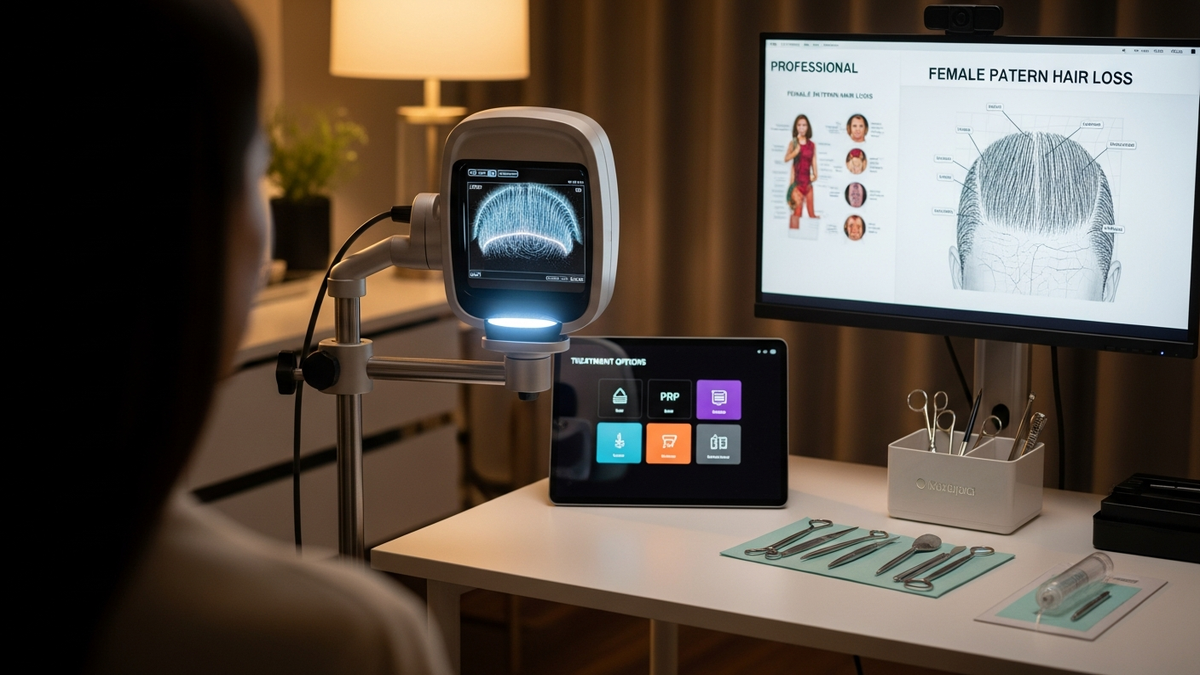
A visual exam can often distinguish common patterns. Many practices also use dermoscopy/trichoscopy to assess hair shaft thickness, follicle activity, and inflammation.
3) Labs when shedding or systemic causes are suspected
Clinicians may order bloodwork such as ferritin/iron studies, thyroid function, vitamin D, and sometimes androgen-related labs depending on your history.
4) Diagnosis-specific decision making
Once the cause is identified, the plan usually combines medical therapy (to slow loss and stimulate growth) and, for appropriate candidates, procedural options (to restore density in stable areas).
Evidence-based medical treatments (often first-line)
For many women, the best treatment for female hair loss begins with medical therapy because it can improve follicle activity and reduce shedding. These options are commonly used for androgenetic alopecia and some shedding patterns, depending on diagnosis.
Topical minoxidil (growth support and maintenance)
Topical minoxidil is widely used to support hair growth. It can help slow progression and thicken hair in many women with patterned thinning. Results usually require consistent use over time—improvement is typically measured in months, not weeks.
Source: According to the American Academy of Dermatology (AAD), minoxidil is an established treatment for hair loss in women (see AAD patient guidance, Minoxidil for hair loss).
Oral therapies (cause-dependent)
Depending on the diagnosis and your medical profile, clinicians may consider oral options that target androgen-related pathways or inflammatory processes. These should be discussed with a dermatologist because contraindications and monitoring requirements vary.
Addressing deficiencies and endocrine issues
If labs show low iron stores, thyroid abnormalities, or vitamin deficiencies, the “best treatment” often includes correcting those issues in addition to hair-specific therapy. Treating the underlying cause can reduce shedding and support regrowth.
Scalp treatments and inflammation control
For inflammatory scalp conditions, the best plan may include anti-inflammatory medications, targeted shampoos, or immune-modulating therapy—especially when there are signs of scarring alopecia or active autoimmune disease.
Important: Avoid starting multiple treatments at once without guidance. A structured plan helps determine what’s working and prevents unnecessary side effects.
When hair transplant becomes the best treatment
Hair transplant can be the best treatment for female hair loss when there is stable pattern thinning and enough donor follicles to harvest. It’s not typically the first step for rapidly progressing shedding, but it can be transformative for women who want long-term density restoration.
Who is a good candidate for hair transplant?
Clinicians usually consider candidates when:
- Hair loss is stable or slowly progressing
- There is a clear area of thinning where density restoration is desired
- Medical therapy has been tried or is planned to support ongoing maintenance
- There is adequate donor supply (based on scalp characteristics and prior history)
What procedures exist?
Hair transplant techniques commonly include FUE (follicular unit extraction) and FUT (follicular unit transplantation). TestBiz Hair Clinic offers both FUE and FUT procedures with state-of-the-art technology and experienced surgeons, serving clients worldwide.
If you want to explore surgical options, review the clinic’s approach to hair transplant to understand what’s included in evaluation, planning, and post-procedure care.
What results can you realistically expect?
Hair transplant outcomes depend on diagnosis, stability of loss, graft survival, and realistic expectations. Many women see early changes within the first few months, with more noticeable density improvements as transplanted hairs mature. The process can take time, so patience and adherence to post-care instructions are critical.
How to protect gains after transplant
Even after transplant, ongoing medical management may be necessary to slow progression in non-transplanted areas. That’s why the best treatment plan often combines procedures with maintenance therapy.
Best treatment by scenario: choosing the right path
Because female hair loss has multiple causes, the “best treatment” depends on your scenario. Below are practical frameworks you can use to discuss options with a specialist.
Scenario A: Gradual thinning with widening part (patterned loss)
Likely focus: medical therapy to slow miniaturization plus maintenance. If thinning is advanced but donor supply is adequate and loss is stable, hair transplant may be considered for density restoration.
Best treatment approach: start with evidence-based medical therapy (often minoxidil) and evaluate whether you’re a procedural candidate after stability is established.
Scenario B: Sudden shedding after a trigger (telogen effluvium)
Likely focus: identify and address the trigger (stress, illness, postpartum changes, diet) and correct deficiencies if present.
Best treatment approach: supportive care, targeted supplementation only when indicated, and a plan to monitor regrowth over time.
Scenario C: Scalp pain, redness, scaling, or patchy loss
Likely focus: prompt diagnosis. Some conditions require faster intervention to prevent permanent follicle damage.
Best treatment approach: see a dermatologist experienced in hair disorders, and treat inflammation/autoimmunity as indicated.
Scenario D: Breakage from styling/chemicals
Likely focus: reduce mechanical/chemical damage and improve hair shaft resilience while supporting scalp health.
Best treatment approach: change styling practices, consider gentle routines, and evaluate for underlying shedding if thickness is also declining.
Timelines: what “working” looks like
One of the hardest parts of choosing the best treatment for female hair loss is managing expectations. Most hair therapies require consistent use and time for follicles to shift phases and for new hairs to grow.
Typical timeline expectations
- 0–8 weeks: reduced shedding may begin in some cases; others notice no change yet.
- 3–6 months: early signs of improvement may become visible (especially with minoxidil or after trigger resolution).
- 6–12 months: more meaningful density/thickness changes often appear.
- 12+ months: continued maturation and stabilization; surgical results continue to refine.
Source: According to the American Academy of Dermatology, hair growth treatments generally take several months to show improvement (AAD hair loss treatment overview).
If you don’t see progress after a reasonable interval, your clinician should reassess diagnosis, adherence, dosing, and contributing factors rather than simply “adding more.”
Costs, side effects, and safety: how to evaluate trade-offs
The best treatment for female hair loss should balance effectiveness with safety and real-world practicality. Here’s what to consider.
Common side effects (medical therapies)
Topical minoxidil can cause scalp irritation for some users. Oral options may have different risk profiles and may require lab monitoring or careful selection based on health history. Always review pregnancy/breastfeeding considerations with your clinician.
Procedure considerations (hair transplant)
Hair transplant is a surgical procedure. Risks can include temporary shedding around the graft area, swelling, shock loss, scarring (technique-dependent), and the possibility of needing additional sessions. A reputable clinic should discuss candidacy, graft planning, expected density, and realistic outcomes.
How to choose a provider responsibly
- Ask about the clinician’s experience with female pattern thinning
- Request before-and-after examples that match your pattern
- Confirm whether you’ll receive a personalized plan and follow-up
- Understand how they handle medical maintenance after transplant
- Get clarity on what “success” means for your specific case
What you can do now: a practical action checklist
If you want to move from research to results, use this checklist to guide your next steps.
1) Start with diagnosis, not products
Book an evaluation with a dermatologist or hair specialist. Bring photos of your hairline/part taken monthly so changes are measurable. This helps determine whether you’re dealing with shedding, miniaturization, or both.
2) Document symptoms and triggers
Write down any triggers in the prior 3–6 months: illness, stress, new medications, postpartum timing, dietary changes, or hormonal shifts. This timeline supports correct diagnosis.
3) Use a consistent treatment plan for long enough
Don’t stop too early. Many therapies require months. If side effects happen, contact your clinician rather than abandoning therapy.
4) Protect hair shafts while you treat the roots
Choose gentle shampoos, reduce heat/chemical stress, avoid tight hairstyles, and consider scalp-friendly routines. These steps won’t replace medical therapy, but they can reduce breakage and improve overall appearance.
5) Ask whether hair transplant is appropriate for you
If you have stable thinning and want density restoration, ask about surgical options. For example, you can review hair transplant to understand what evaluation and services may look like. If you’re exploring procedural care, choose a clinic that supports long-term maintenance and follow-up.
How FUEsion Hair Clinics supports your decision-making
FUEsion Hair Clinics brings together evidence-based guidance and practical frameworks so you can evaluate options with clarity. We focus on “cause-first” thinking: the best treatment for female hair loss depends on whether you’re dealing with androgenetic alopecia, telogen effluvium, inflammatory disease, nutrient deficiency, or mechanical damage.
If you’re considering cosmetic or procedural interventions for overall facial rejuvenation alongside hair restoration, you may also want to explore related options such as Facelift or Blepharoplasty—not because they treat hair loss directly, but because some patients plan broader aesthetic goals together with a coordinated care strategy.
Frequently Asked Questions
What is the best treatment for female hair loss overall?
The best treatment for female hair loss is individualized based on the cause (such as female pattern hair loss, trigger-related shedding, or inflammatory conditions). Many women benefit from evidence-based medical therapy like minoxidil, and some may consider hair transplant when thinning is stable and donor supply is adequate.
How long does it take to see results from hair loss treatment?
Most hair therapies require consistent use for several months. Early changes may appear around 3–6 months, while more meaningful density improvements often take 6–12 months, depending on diagnosis and adherence.
Is hair transplant effective for women?
Yes, hair transplant can be effective for women who have stable thinning and appropriate donor supply. It’s typically most suitable when the pattern and progression are well understood, and it often works best alongside ongoing medical maintenance.
Can shedding from stress improve without advanced procedures?
Telogen effluvium caused by stress, illness, or postpartum changes often improves when the trigger resolves and deficiencies are corrected. In many cases, supportive care and targeted medical management can be sufficient, but a proper diagnosis is essential.
When should I see a dermatologist urgently?
Seek prompt evaluation if you have sudden patchy loss, scalp pain/burning, visible scarring, or rapidly progressive thinning. Early diagnosis can be critical for conditions that may permanently damage follicles.
External research and authoritative references
These references were used to support general medical guidance in this article:
- According to the American Academy of Dermatology (AAD), minoxidil is an established treatment option for hair loss in women (AAD Minoxidil for hair loss).
- According to the AAD, hair loss treatments generally take months to show improvement (AAD hair loss treatment overview).
- According to the American Hair Loss Association (AHLA), female hair loss can have multiple causes and should be evaluated by professionals (American Hair Loss Association).
CTA: Get a personalized plan for your hair loss
If you’re ready to stop guessing and start treating the right cause, schedule a specialist evaluation. A clinician can help confirm whether you’re dealing with female pattern hair loss, telogen effluvium, or another condition—and then recommend the best treatment pathway for your goals.
Next step: request an assessment and bring photos of your scalp/part over time. If you’re considering surgical options, ask about candidacy for a hair transplant plan and how medical maintenance will be handled.

Professional Disclaimer
This content is provided for general educational purposes only by FUEsion Hair Clinics. It is not a substitute for professional advice, diagnosis, or treatment. Readers are advised to consult qualified professionals for personalized recommendations.
Medical Information Disclaimer
This content is provided for general educational purposes only by FUEsion Hair Clinics. It is not a substitute for professional advice, diagnosis, or treatment. Readers are advised to consult qualified professionals for personalized recommendations.