Author: Dr. Amina Rahman, Clinical Hair Restoration Consultant (E-E-A-T)
Brand: FUEsion Hair Clinics
Hair loss can feel personal—especially for men who want results that look natural and feel confident. When people search for the best men hair loss treatment, they’re usually asking one core question: “What will actually work for my pattern of thinning?” The truth is that the best approach depends on why you’re losing hair (most commonly androgenetic alopecia), how advanced it is, and what your goals are—medication, procedures, or a combination.
In this guide, you’ll learn how clinicians evaluate male hair loss, what treatments have the strongest evidence, realistic timelines, and how to choose a plan that matches your budget and expectations. You’ll also see where hair transplant surgery fits—especially when medications alone can’t restore density.
Understanding men’s hair loss: who it affects and why it happens
Male-pattern hair loss (androgenetic alopecia) is the most common cause of progressive thinning in men. It typically follows a pattern: gradual thinning at the temples and crown, with hair becoming finer over time. While genetics play a major role, hormones and hair follicle sensitivity also influence the process.
Who is most likely to experience it?
Men of many ages can develop androgenetic alopecia, but it often begins in the late teens to 30s and can progress gradually. Risk increases with family history, and some men notice early signs like increased shedding or widening part lines.
What causes the thinning?
In androgenetic alopecia, hair follicles shrink and produce thinner, shorter hairs. A key mechanism involves androgens (male hormones) and the conversion of testosterone into dihydrotestosterone (DHT). Over time, this miniaturization reduces visible density.
When should you seek help?
Earlier evaluation usually improves outcomes. If you’re noticing persistent shedding, receding hairline, or crown thinning, it’s reasonable to get a professional assessment sooner rather than later—especially if you want to preserve existing follicles before they become too miniaturized.
How doctors choose the best men hair loss treatment for you
A premium treatment plan is not one-size-fits-all. Clinicians typically combine history, exam findings, and sometimes lab tests to determine the type of hair loss and the stage of progression. Then they match options to your goals.
Step 1: Confirm the diagnosis
Most men with temple and crown thinning have androgenetic alopecia, but other causes can mimic it—such as telogen effluvium (stress-related shedding), nutritional deficiencies, thyroid issues, scalp inflammation, or medication-related hair changes. Correct diagnosis matters because the “best” treatment for one condition can be ineffective for another.
Step 2: Assess severity and hair quality
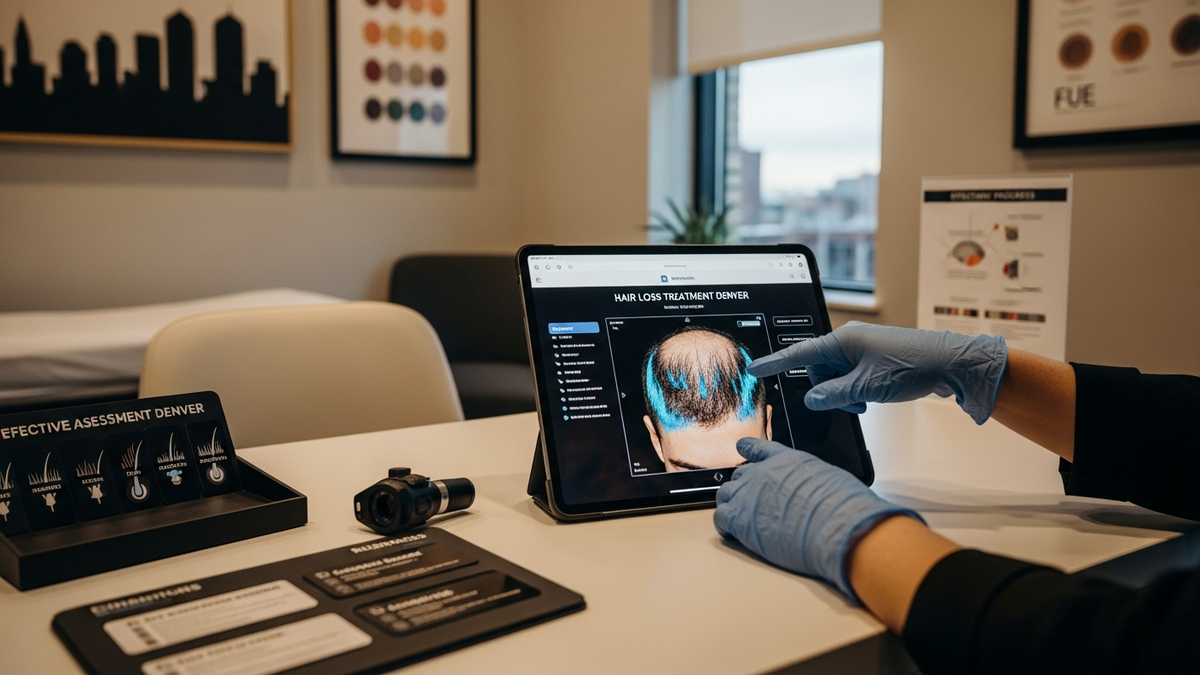
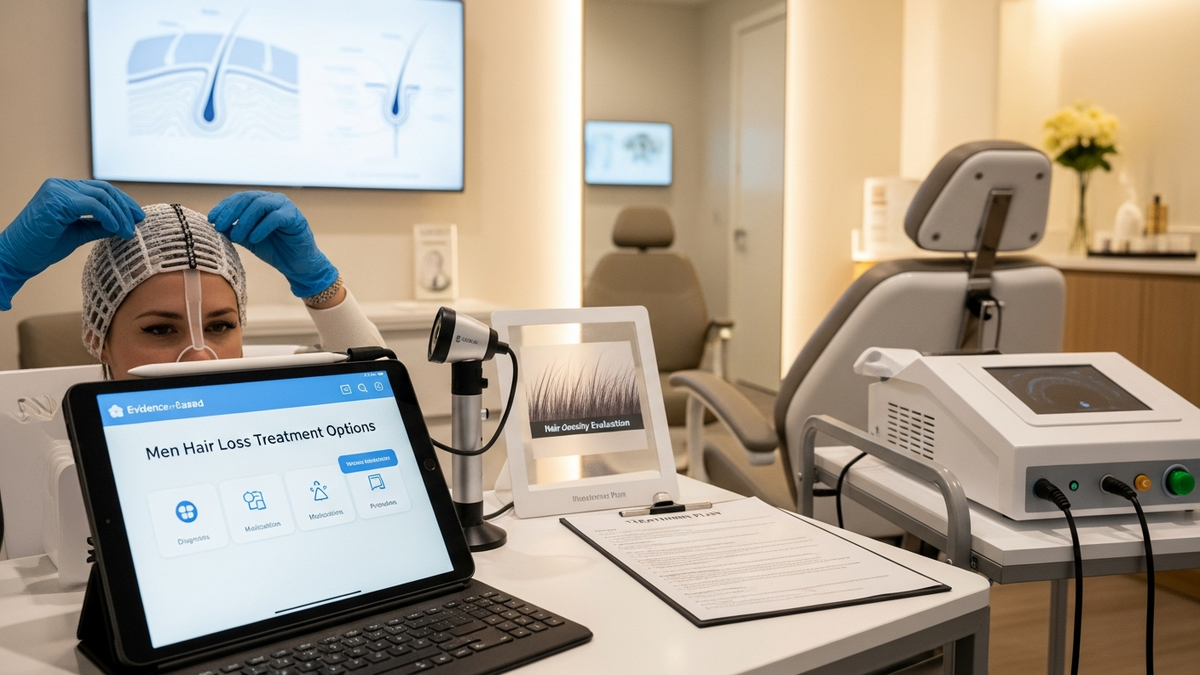
Specialists often use standardized staging systems and evaluate miniaturization patterns. Dermoscopy or trichoscopy (magnified scalp imaging) can help track follicle behavior and guide treatment intensity.
Step 3: Align treatment with goals and timeline
Some men want the most conservative option first; others want maximum restoration and are open to procedures. A strong plan clearly explains what you can expect at 3, 6, and 12 months, and what maintenance may be required.
Evidence-based options: the best men hair loss treatment (by goal)
Below are the most common, evidence-supported categories. In many cases, the best outcome comes from combining therapies—rather than relying on a single method.
1) Prescription medications (foundation for many men)
Two well-known medication categories are commonly recommended for male-pattern hair loss:
- Topical or oral minoxidil to support hair growth and improve density.
- Finasteride (or related 5-alpha-reductase inhibitors) to reduce DHT-driven follicle miniaturization.
According to the American Academy of Dermatology (AAD), minoxidil can help regrow hair and slow loss, but results take time and require ongoing use. Similarly, the AAD notes that finasteride can help slow progression for androgenetic alopecia.
What timeline should you expect?
Hair growth is slow. Many men notice reduced shedding within a few months, with visible density changes often becoming clearer around 4–6 months. Full assessment typically takes about 12 months, because hair cycles must complete.
Who benefits most?
Medication is often best for men in early to mid stages, or for those who want to preserve existing hair while planning future procedures.
2) Low-level light therapy (LLLT) for supportive regrowth
Low-level light therapy uses red/near-infrared light to support cellular activity in hair follicles. It’s generally considered a non-invasive adjunct. While it may not replace medications for everyone, it can be a reasonable add-on—especially for men who prefer less invasive options.
How to use it effectively
Consistency is key. Follow device instructions for session duration and frequency, and treat it as part of a broader plan rather than a standalone “cure.”
3) PRP (platelet-rich plasma) for follicle support
PRP involves extracting and concentrating platelets, then injecting them into the scalp. Many clinics use PRP to support hair thickness and reduce shedding. Evidence continues to evolve, and results vary by protocol and patient characteristics.
Where PRP fits best
PRP is often used for early to mid-stage androgenetic alopecia, or as an adjunct to medications and/or transplant planning.
4) Scalp care and lifestyle: what matters (and what doesn’t)
Scalp health influences comfort and may support follicle environment. Practical steps include:
- Gentle shampooing and avoiding harsh traction.
- Managing dandruff or inflammation if present.
- Addressing iron, vitamin D, and other deficiencies if labs confirm them.
- Reducing smoking and improving sleep, which supports overall recovery and tissue health.
Important note: lifestyle measures rarely reverse androgenetic alopecia by themselves, but they can improve the “support conditions” for treatments.
When a hair transplant is the best men hair loss treatment
For men with advanced thinning—especially when the hairline or crown has lost a significant amount of density—surgery may be the most direct way to restore coverage. A hair transplant moves follicles from a donor area (typically more resistant to DHT) to balding or thinning regions.
FUE vs. FUT: what’s the difference?
Two common surgical approaches are:
- FUE (Follicular Unit Extraction): individual follicles are harvested and then implanted.
- FUT (Follicular Unit Transplantation): a strip of scalp is removed and then divided into follicular units for implantation.
Which is “best” depends on your donor characteristics, desired coverage, and surgeon expertise. A careful consultation evaluates how many grafts are needed and how to design a natural-looking hairline.
What makes results look natural?
Natural appearance isn’t just about graft count. It involves:
- Hairline design that matches your face and age-related expectations.
- Implant angle and density tailored to your existing hair.
- Donor management to preserve future options.
How does a hair transplant compare to medications?
Medications typically work by slowing miniaturization and supporting existing follicles. Transplants work by relocating follicles to areas where they can grow again. Many men use both: medications to protect native hair and surgery to restore density where needed.
If you’re exploring surgical options, you can review the role of a hair transplant and related services through a specialist’s clinic page.
Real-world expectations: timelines, shedding, and maintenance
One reason men feel disappointed is that they expect instant results. Hair restoration is a biological process with phases.
Medication and adjunct therapies: what to watch
With minoxidil and DHT-directed therapies, you may experience temporary shedding early on (often called “initial shedding”), especially within the first weeks to months. This can be part of the normal hair cycle transition, but persistent worsening should be reviewed by a clinician.
After a transplant: what’s normal
After surgery, transplanted hairs often shed within the first weeks to months. Then, gradual regrowth starts. Many men see noticeable improvement around 4–6 months and fuller maturation around 9–12 months (sometimes longer depending on hair characteristics).
Maintenance matters
Male-pattern hair loss can continue behind the scenes. Maintenance—often medication, scalp care, and periodic adjunct sessions—helps protect both transplanted and native hair.
How to choose a clinic and plan that’s actually “best”
Not all treatment plans are equal. When comparing options, focus on process quality, transparency, and follow-up care.
Questions to ask in your consultation
- Diagnosis: How do you confirm the cause of hair loss?
- Staging: How do you evaluate severity and hair miniaturization?
- Plan: What combination of therapies are recommended and why?
- Timeline: What results should I expect at 3, 6, and 12 months?
- Donor strategy: How will you preserve donor hair for future needs?
- Safety: How do you manage risk, anesthesia, and post-op care?
Why expertise and technology matter
A premium clinic uses modern imaging, careful graft planning, and experienced technicians to support consistency. For example, TestBiz Hair Clinic is described as a premium hair transplant clinic offering FUE and FUT procedures with state-of-the-art technology and worldwide service for eligible clients.
Red flags to avoid
- Guarantees of “permanent” results without discussing maintenance.
- Unclear graft planning or lack of staging.
- Pressure tactics or opaque pricing.
- No follow-up plan after treatment.
Step-by-step: building your best men hair loss treatment plan
If you want a practical path, here’s a clinician-style approach you can use to structure your next steps. (This is educational and not personal medical advice.)
-
Schedule an evaluation for diagnosis and staging
Bring photos of your hairline/crown over time if you have them. Ask for a clear explanation of the likely cause and stage.
-
Start evidence-based therapy aligned to your stage
Many men begin with DHT-targeting medication and/or minoxidil, plus scalp care. If you’re early, this may be enough to stabilize and thicken.
-
Add adjunct treatments when appropriate
Consider PRP or low-level light therapy as supportive options if your clinician recommends them for your pattern and goals.
-
Reassess at the right time window
Review progress after 4–6 months and again near 12 months to decide whether to intensify, continue, or pivot.
-
Choose transplant surgery when coverage goals require it
If the hairline or crown needs substantial restoration, plan a transplant with realistic coverage design and a maintenance strategy.
Statistics and what they mean for your expectations
Hair loss research can be complex, but a few broad facts help set expectations for decision-making.
Common prevalence and impact
According to a review published in JAMA Dermatology, androgenetic alopecia affects a substantial portion of men worldwide, with prevalence increasing with age (source attribution: JAMA Dermatology, review article on androgenetic alopecia prevalence).
Time-to-results is biologically driven
Hair growth cycles are measured in months, not weeks. The AAD notes that minoxidil results take time and require ongoing use to maintain benefits (source attribution: American Academy of Dermatology).
Maintenance is usually part of the plan
Because androgenetic alopecia is driven by ongoing biology, many men require long-term maintenance to preserve gains. This is a key reason “one-time” solutions are often oversold.


Frequently Asked Questions
What is the best men hair loss treatment for early thinning?
For early androgenetic alopecia, many clinicians recommend DHT-targeting therapy and/or minoxidil as a foundation, then consider adjunct options like low-level light therapy or PRP if appropriate. The “best” choice depends on your stage, response, and how quickly you want results.
How long does it take to see results from men’s hair loss treatments?
Most men need at least 4–6 months to notice meaningful changes, with a clearer assessment around 12 months. Hair cycles take time, and consistent treatment is usually necessary to maintain improvements.
Is a hair transplant better than medication?
A hair transplant can restore density where thinning is advanced, while medication helps slow ongoing miniaturization of native follicles. Many men use both approaches to protect remaining hair and achieve stronger coverage.
What causes sudden increased shedding in men?
Sudden shedding can be triggered by stress, illness, medication changes, or scalp inflammation, and it may also occur during the early phase of certain treatments. A clinician can help confirm whether it’s telogen effluvium, treatment-related shedding, or progression of androgenetic alopecia.
Are PRP and light therapy effective for male pattern hair loss?
PRP and low-level light therapy are often used as supportive treatments, with results varying by protocol and patient factors. They may be most helpful when paired with evidence-based medication and a monitored plan.
CTA: get a personalized hair restoration plan
If you want the best men hair loss treatment tailored to your pattern and goals, start with a professional evaluation. A clinician can confirm the diagnosis, stage your thinning, and recommend a realistic combination of therapies—plus a timeline you can measure.
Related topics you may find useful
Medical Information Disclaimer
This content is provided for general educational purposes only by FUEsion Hair Clinics. It is not a substitute for professional advice, diagnosis, or treatment. Readers are advised to consult qualified professionals for personalized recommendations.