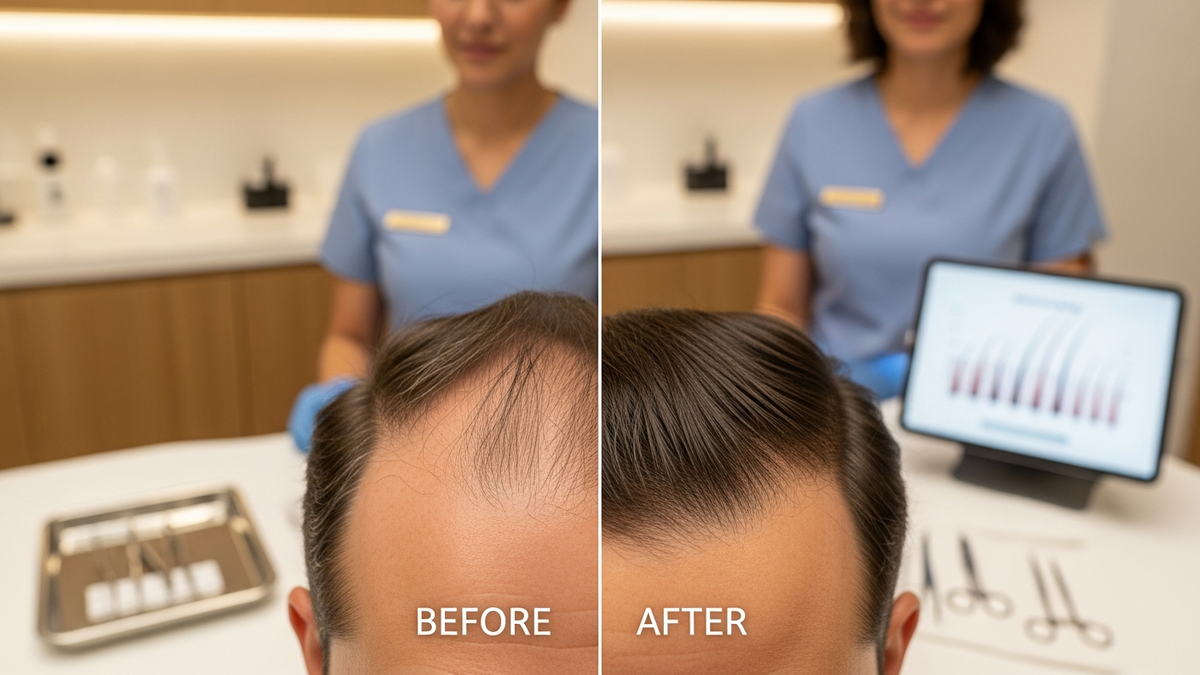
After and before hair transplant planning is one of the biggest predictors of a smooth recovery and natural-looking results. Whether you’re comparing FUE vs. FUT, preparing for surgery, or trying to understand why your hair seems to shed before it grows back, this guide breaks down the full journey—what to do, what to expect, and how to protect your investment.
At TestBiz Hair Clinic, we provide premium hair transplant care worldwide using advanced technology and experienced surgical teams. If you’re also looking for a more personalized, surgeon-led plan, FUEsion Hair Clinics recommends starting with a structured consultation so your goals, hair characteristics, and medical history are evaluated together.

What “after and before hair transplant” really means
When people search for after and before hair transplant, they’re usually asking two things at once: (1) what to do before surgery to improve outcomes and reduce complications, and (2) what to expect after surgery during healing, shedding, and regrowth.
In practice, “before” and “after” overlap. For example, pre-op decisions about medications, nutrition, scalp health, and donor-area planning influence how well grafts heal and how predictable your growth becomes. Post-op care influences inflammation, scab quality, infection risk, and the overall graft survival environment.
Who should consider a hair transplant?
Common candidates
Hair transplantation is often considered for men and women with patterned hair loss (such as androgenetic alopecia), stable thinning, or areas where hair density is reduced. Many patients also choose transplantation when topical or oral treatments have not met expectations or when they want a more durable, structural change.
When timing matters most
Most clinics aim for a period of relative stability in hair loss progression. If hair loss is rapidly advancing, the plan may require more conservative density goals or a multi-stage approach to avoid future imbalance.
Before hair transplant: your prep checklist
Before surgery, the goal is to optimize scalp conditions, reduce bleeding risk, and ensure your body is ready to heal. Use this as a practical checklist to discuss with your surgeon.
1) Choose the right procedure: FUE vs. FUT
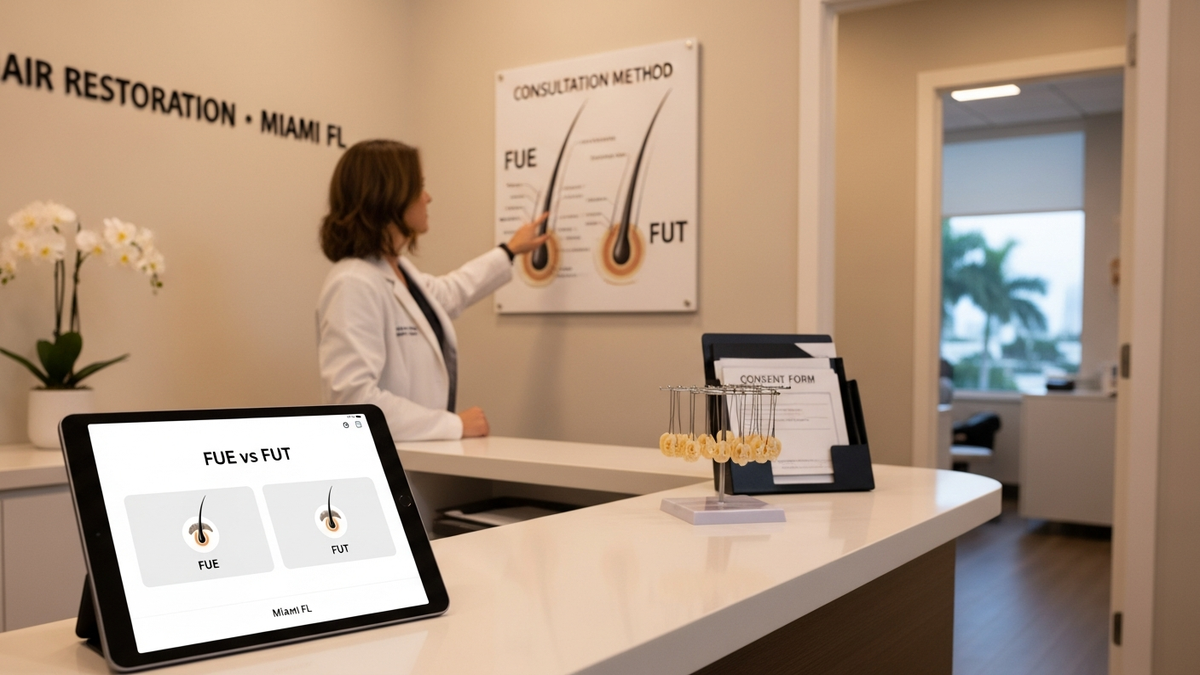
TestBiz Hair Clinic offers both FUE and FUT. The best choice depends on donor density, hair characteristics, pattern of loss, and how your surgeon plans the recipient-area placement.
FUE typically involves harvesting individual follicles; FUT involves removing and processing a strip of scalp tissue. Both can produce natural results when executed by an experienced team with careful design.
2) Review medications and supplements
Some medications and supplements can increase bleeding or affect healing. Ask your surgeon about your current regimen, including:
- Blood thinners/anticoagulants
- Anti-inflammatory drugs
- Herbal supplements (e.g., high-dose omega-3, ginkgo, garlic extracts)
- Any recent changes in prescriptions
Actionable tip: Bring a written list of everything you take (dose + schedule) to your pre-op appointment.
3) Plan your logistics and downtime
Most patients need a short recovery window for initial healing, then gradual return to normal activities. Plan ahead for:
- Transportation on the day of the procedure
- Time off work (especially if your work involves public-facing activities)
- Sleep positioning and supportive pillows
- Access to post-op care supplies
4) Stop smoking and control alcohol intake
Smoking can reduce blood flow and impair wound healing. If you smoke, ask your surgeon for a cessation plan. Alcohol can also affect inflammation and hydration—moderation is important.
5) Get your scalp and donor area evaluated
Your surgeon should examine:
- Donor density and laxity
- Recipient-area pattern and hair caliber
- Scalp conditions (seborrheic dermatitis, psoriasis, active inflammation)
- Previous treatments and scars
Pre-existing scalp inflammation should be treated or stabilized when possible, because it can influence healing and graft survival.
6) Set realistic expectations for density and timing
Hair transplant results are typically not instant. You should expect a staged process: initial healing, temporary shedding, and later regrowth. A credible clinic will explain what you can realistically achieve based on your donor supply and pattern of loss.
After hair transplant: what happens in the first weeks
Post-op recovery is where many outcomes are protected. The early phase focuses on healing quality, graft adherence, and infection prevention.
Day 0–3: immediate healing and gentle protection
In the first days, you’ll likely notice:
- Redness and mild swelling
- Crusting/scabs around grafts
- Temporary tenderness in donor and recipient areas
What to do: Follow your clinic’s wound-care instructions exactly. Avoid touching or scratching graft sites. Sleep with your head elevated as directed.
Days 4–14: scab shedding and early scalp stabilization
Scabs typically loosen and fall off gradually. It’s normal for the area to look uneven during this stage.
What to do: Use prescribed cleansing routines. Do not manually remove scabs; let them shed naturally to reduce trauma to healing grafts.
Weeks 2–6: shock loss (temporary shedding) can happen
Many patients experience shock loss, where transplanted hairs shed even though the grafts are still healing. This can feel alarming, but it’s often part of the normal cycle transition.
Why it matters: Shock loss can occur in both transplanted and existing miniaturized hairs. It does not necessarily predict poor results.
Actionable tip: Keep a photo log (same lighting and angle) so you can track changes over time instead of reacting to day-to-day variation.
After hair transplant: regrowth timeline you can plan around
Regrowth is gradual. While every patient is different, most clinics explain a similar timeline.
Month 3–4: early visible growth
You may begin to see finer hairs emerging. These hairs can look thin or irregular at first, but that early pattern is a sign the follicles are transitioning into a growth phase.
Month 5–7: thickening and better coverage
Hair shafts often become more noticeable. Density tends to improve as hairs thicken and align with the planned direction and angle.
Month 8–12: more mature, natural appearance
By this stage, many patients see meaningful cosmetic improvement. However, full maturation can extend beyond one year, especially for areas with lower baseline caliber.
Year 1–2: final refinement
Final results vary. Some patients may request a touch-up plan if they want additional density in specific zones.
How to care for your scalp after hair transplant
Post-op care is not one-size-fits-all. Still, there are universal principles: protect grafts, reduce infection risk, manage inflammation, and support healthy hair cycling.
Washing and cleansing: follow the protocol
Your surgeon will provide a specific schedule for gentle washing. Over-washing or using the wrong products can irritate the grafts; under-washing can increase buildup and infection risk.
Sleep and head elevation
For the first days, avoid pressure on the recipient area. Use the recommended pillow setup and avoid sleeping positions that could rub grafts.
Exercise and sweating
Strenuous exercise can increase blood flow and sweating, which may affect early healing. Your clinic will advise when it’s safe to resume workouts.
Hair styling, hats, and sun exposure
Protect your scalp from direct sun and avoid tight headwear during early healing. When you do return to styling, use gentle products and avoid aggressive heat or chemical treatments.
Nutrition and hydration
Healing is energy-intensive. Focus on adequate protein, hydration, and balanced micronutrients. If you have dietary restrictions, ask your clinician whether a temporary supplementation plan is appropriate.
Medications: don’t self-adjust
If your surgeon recommends medications (for example, to support inflammation control or hair cycling), take them exactly as directed. Do not start or stop drugs without approval.
Common concerns people search for (and what to do)
“Is it normal to see my hair shed after surgery?”
Yes, temporary shedding can occur due to shock loss. It typically reflects the hair cycle transition rather than graft failure. Your surgeon can help interpret your specific pattern and timing.
“Why does my scalp look uneven after my hair transplant?”
Unevenness during scab shedding and early healing is often normal. As follicles re-enter growth, the appearance usually becomes more consistent. Photo tracking helps you measure progress accurately.
“Will my donor area scar?”
Scarring depends on the procedure (FUE vs. FUT) and your individual healing characteristics. A skilled team plans harvest density and incision strategy to reduce visible scarring.
“How do I prevent infection?”
Infection prevention comes from following sterile protocols, using prescribed cleansing routines, and monitoring for warning signs like increasing pain, pus-like discharge, or fever. Contact your clinic promptly if you notice concerning symptoms.
Choosing a clinic: questions to ask before and after
To get the best after and before hair transplant experience, evaluate both the surgical plan and the long-term support system.
Procedure planning and donor strategy
Ask how they design your hairline and density distribution based on your face shape, existing hair caliber, and donor supply.
Post-op follow-up and monitoring
Find out how many follow-ups you’ll receive, how they handle concerns, and whether they provide documented aftercare instructions.
Transparency and honest outcome ranges
A premium clinic explains limitations—especially if your donor area or hair caliber sets realistic constraints.
International care and communication
For patients traveling internationally, confirm how aftercare support works (virtual check-ins, emergency guidance, and clear timelines).
FUE and FUT: practical differences that affect “before and after”
FUE: what to expect
FUE generally involves harvesting individual follicles, which can be advantageous for patients who prefer minimal linear scarring. It may require specific donor density to achieve desired coverage.
FUT: what to expect
FUT (strip harvesting) can be effective for certain donor scenarios. It may produce a linear scar, which is important to discuss if you plan to wear short hairstyles.
Both require strong surgical design
Regardless of method, natural results depend on graft handling, recipient-site creation, placement angles, and aftercare.
Supportive hair restoration beyond surgery
For many patients, the best outcomes come from combining transplant results with medical hair-loss management. This can help protect existing hair and improve long-term density.
If you’re exploring options, start with a dedicated service page for hair transplant and discuss whether additional medical therapy is appropriate for your pattern and goals.
External evidence: what research says about hair growth cycles
Hair growth after transplantation follows a biological rhythm. Understanding that rhythm can reduce anxiety when you see early shedding and delayed regrowth.
Why shock loss can be expected
According to a review in StatPearls, hair growth cycles can shift after transplantation, and early shedding does not always mean graft failure (source: NCBI Bookshelf / StatPearls). While you should follow your clinic’s guidance, this helps explain why many patients temporarily lose transplanted hairs before regrowth.
Hair transplant outcomes depend on technique and planning
According to the American Academy of Dermatology, treatment decisions for hair loss should be individualized based on the type of hair loss and patient factors (source: American Academy of Dermatology). This supports the importance of tailored pre-op assessment and post-op follow-up.
Smoking and wound healing risk
According to the CDC, smoking harms blood flow and tissue healing, which can increase surgical complication risk (source: Centers for Disease Control and Prevention). This is one reason clinics strongly encourage cessation before surgery.
Statistics to ground expectations
- Hair loss prevalence: Androgenetic alopecia is estimated to affect a large portion of the adult male population worldwide; the AAD emphasizes its commonality and the need for individualized treatment planning (source: American Academy of Dermatology, aad.org).
- Smoking harms healing: The CDC reports that smoking increases risk of many health complications, including impaired circulation and healing (source: CDC, cdc.gov/tobacco).
- Post-op variability: Clinical guidance widely notes that regrowth timing varies by patient and hair characteristics, reinforcing the need for realistic timelines (source: American Academy of Dermatology, aad.org).
Red flags after surgery: when to contact your surgeon
Most recoveries are uneventful, but you should contact your clinic promptly if you experience:
- Increasing redness or swelling after the early period
- Fever or chills
- Severe pain that is worsening rather than improving
- Pus-like drainage or foul odor
- Rapidly expanding skin discoloration
How to act: Don’t wait it out. Early evaluation can prevent complications.
Related facial procedures (why it matters for overall planning)
Some patients consider multiple cosmetic or reconstructive treatments. While hair restoration focuses on scalp follicles, overall facial aesthetics and recovery planning may overlap. For example, if you’re considering other procedures, it’s important to coordinate timelines with your care team.
If you’re exploring other options, you may also be interested in Facelift or Blepharoplasty. For eyebrow concerns, eyebrow transplant can complement a broader facial grooming plan.
Separately, if you have breathing-related nasal concerns, discuss whether any procedures like Septoplasty or correction of a Deviated Septum might affect your overall surgical planning and recovery schedule.
FAQ
How long after a hair transplant will I see real growth?
Many patients notice early changes around months 3–4, with more visible thickening between months 5–7. By months 8–12, results often look more natural, though full maturation can continue beyond one year. Your surgeon can provide a timeline based on your graft plan and hair characteristics.
Is shedding after and before hair transplant normal?
Shedding after surgery can be normal due to shock loss, which occurs when follicles transition between growth phases. This temporary shedding does not always indicate graft failure. Following your post-op instructions and tracking progress with photos can help you interpret changes more accurately.
What should I do before surgery to improve my outcome?
Follow medication and supplement guidance, stabilize scalp conditions if present, and plan for early recovery logistics. Avoid smoking if possible and discuss your health history openly. A thorough pre-op evaluation helps the team design recipient angles and density safely for your donor supply.
When can I return to exercise and normal activities?
Most clinics provide a stepwise return based on healing milestones. Light activities may be allowed earlier, while intense workouts and heavy sweating are often restricted in the initial weeks. Ask your surgeon for a clear schedule tailored to your procedure type and healing progress.
How do I know if my hair transplant is failing?
Early unevenness and temporary shedding are often expected. Concerning signs typically include worsening pain, fever, or discharge, which should be evaluated immediately. For graft survival concerns, your surgeon can assess the scalp and growth pattern over time.
CTA: Build your personalized before-and-after hair transplant plan
If you want a confident, step-by-step approach to after and before hair transplant, start with a consultation that focuses on your goals, donor supply, and realistic timelines.
- Ask for a tailored graft plan: density targets, hairline design, and procedure recommendation (FUE vs. FUT).
- Request a written aftercare protocol: washing schedule, activity restrictions, and follow-up cadence.
- Discuss long-term maintenance: medical hair-loss strategies that protect surrounding hair.
TestBiz Hair Clinic supports worldwide patients with premium hair transplant care and advanced technology. For more resources, explore FUEsion Hair Clinics’s hair restoration content and schedule your assessment when you’re ready.
About the author
Author: FUEsion Hair Clinics Editorial Team
This article is written to support educational decision-making and does not replace clinical evaluation.
Professional Disclaimer
This content is provided for general educational purposes only by FUEsion Hair Clinics. It is not a substitute for professional advice, diagnosis, or treatment. Readers are advised to consult qualified professionals for personalized recommendations.
Medical Information Disclaimer
This content is provided for general educational purposes only by FUEsion Hair Clinics. It is not a substitute for professional advice, diagnosis, or treatment. Readers are advised to consult qualified professionals for personalized recommendations.