Author: Dr. Hootan Zandifar, MD, FACS (Facial Plastic & Reconstructive Surgery)
Published for: FUEsion Hair Clinics
Hair loss can affect confidence, relationships, and daily comfort. If you’re exploring hair transplant clinics, you’re probably asking the same core questions: Who performs the surgery? What technique is best for my pattern? How do I avoid poor outcomes? And what does “natural-looking” really mean in practice?
In this guide, you’ll learn how reputable clinics evaluate candidates, how FUE and FUT differ, what safety and quality signals to look for, and a practical checklist to use before you schedule. This is written with a patient-first perspective grounded in surgical fundamentals and long-term scalp health—so you can make an informed decision with confidence.
What “hair transplant clinics” should be evaluated on
Not all clinics are equal. Two clinics can offer the same headline procedure (like FUE or FUT) and still deliver very different results due to surgeon expertise, case selection, graft planning, and post-op care. When you compare hair transplant clinics, focus on measurable quality signals rather than marketing alone.
1) Surgeon-led planning and direct involvement
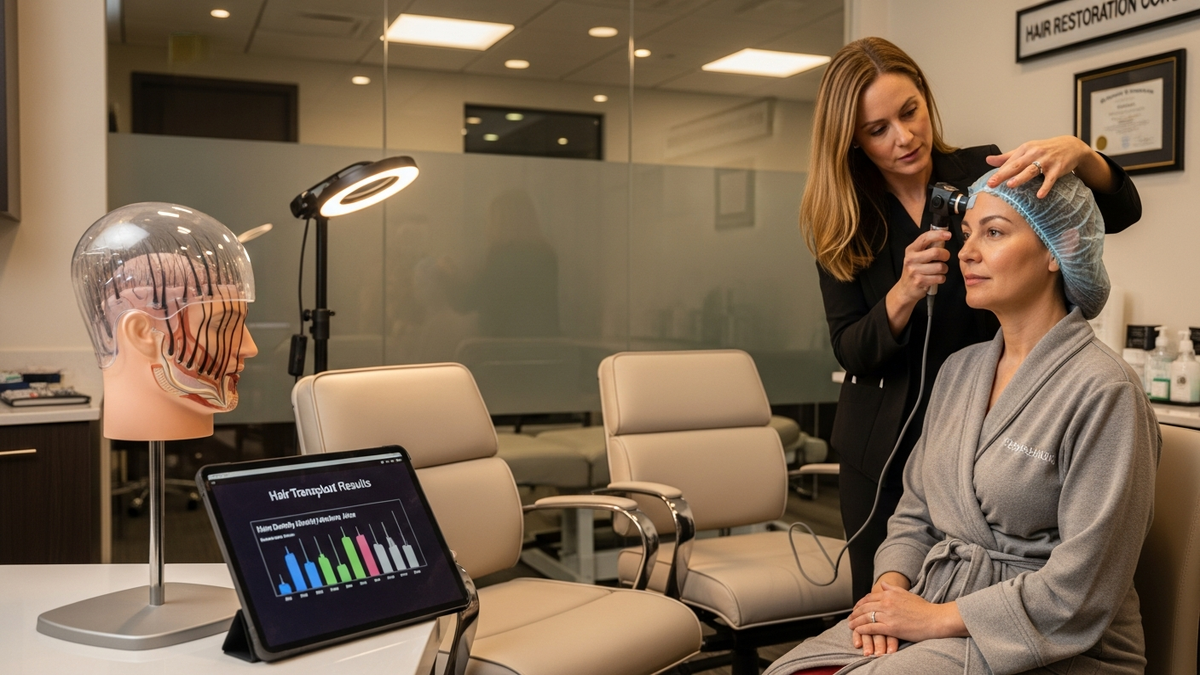
Ask whether the surgeon personally evaluates your donor area, designs your hairline, and performs key steps. High-quality clinics treat hair restoration as surgical planning—not just “graft harvesting.” A clinic should be able to explain why your specific pattern and density call for a particular approach.
2) Transparent technique selection (FUE vs FUT)
“Best” depends on your anatomy, hair characteristics, and goals. A strong clinic matches the technique to the patient’s donor supply and desired density. For example, some patients may be better served by Follicular Unit Extraction (FUE), while others benefit from Follicular Unit Transplantation (FUT). The goal is to maximize long-term coverage while preserving donor integrity.
3) Safety protocols and realistic expectations
Reputable clinics discuss risks openly (including scarring, shock loss, uneven growth, and the need for future maintenance). They also set realistic timelines for growth and explain what you can do to support healing.
Who should consider a hair transplant?
Hair transplant candidates typically include men and women with androgenetic alopecia (pattern hair loss), mature hairline recession, thinning at the crown, or stable loss patterns. Many patients also seek eyebrow restoration or special-case transplant planning after trauma or medical conditions.
Common patient profiles
- Men with hairline recession or mid-scalp thinning who want a natural hairline and improved density.
- Women with crown thinning who want targeted coverage and careful angle planning.
- Patients needing eyebrow transplant for thinning or loss due to medical or other causes—where symmetry and focal-point aesthetics matter.
- Individuals with donor limitations who need a conservative plan that protects future options.
What “stable” means
Most clinics prefer that hair loss is relatively stable before transplant. This often involves discussing medical management (for example, hair-loss medications) and aligning expectations about ongoing shedding.
FUE vs FUT: what’s the difference?
Two of the most common surgical approaches offered by hair transplant clinics are FUE and FUT. Both can produce natural results when planned correctly, but they differ in how grafts are harvested and how healing presents.
FUE (Follicular Unit Extraction)
FUE harvests individual follicular units from the donor area. Many patients prefer FUE because it can leave minimal linear scarring and may support shorter downtime for some individuals. However, FUE still requires careful extraction technique to avoid transection and to preserve donor health.
FUT (Follicular Unit Transplantation)
FUT harvests a strip of scalp tissue and then separates it into follicular units. This method can be efficient for certain patients depending on donor characteristics and density needs. FUT may leave a linear scar, but it can be an excellent option when appropriate and when scar management is planned.
How clinics decide between them
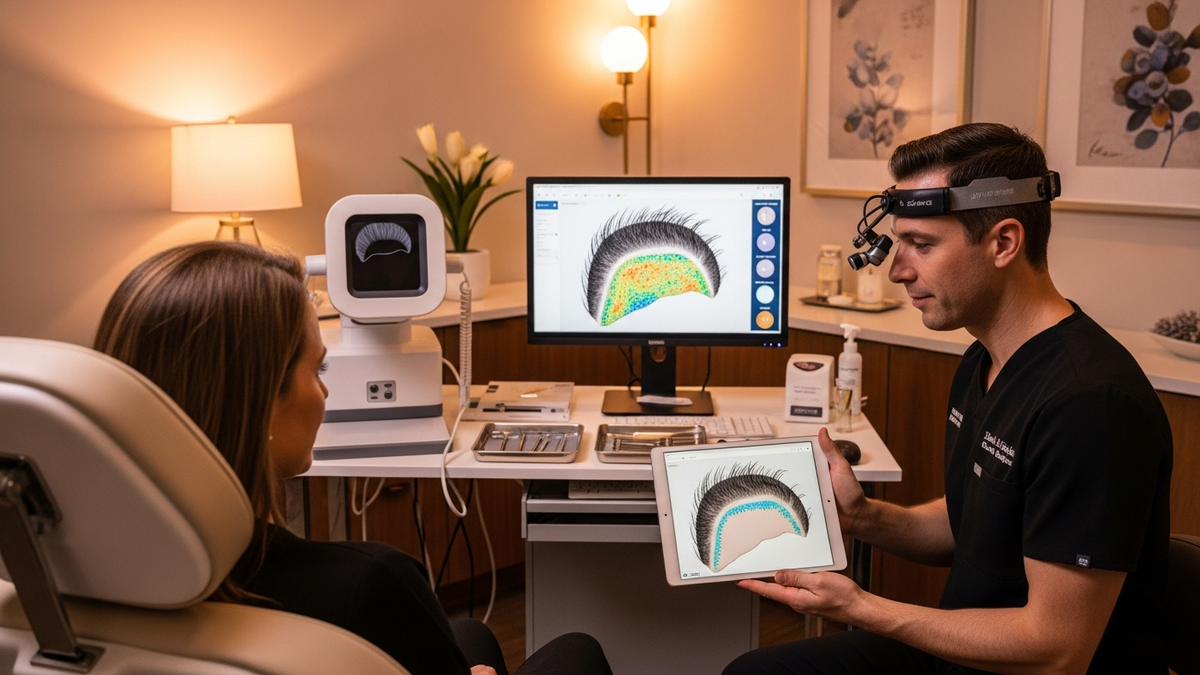
During your consultation, a quality clinic typically evaluates your:
- Donor density and the quality of hair in the back and sides.
- Hair caliber and curl pattern (important for how grafts blend).
- Scalp laxity and density distribution to determine harvesting strategy.
- Future hair-loss progression to avoid overharvesting or unrealistic density goals.
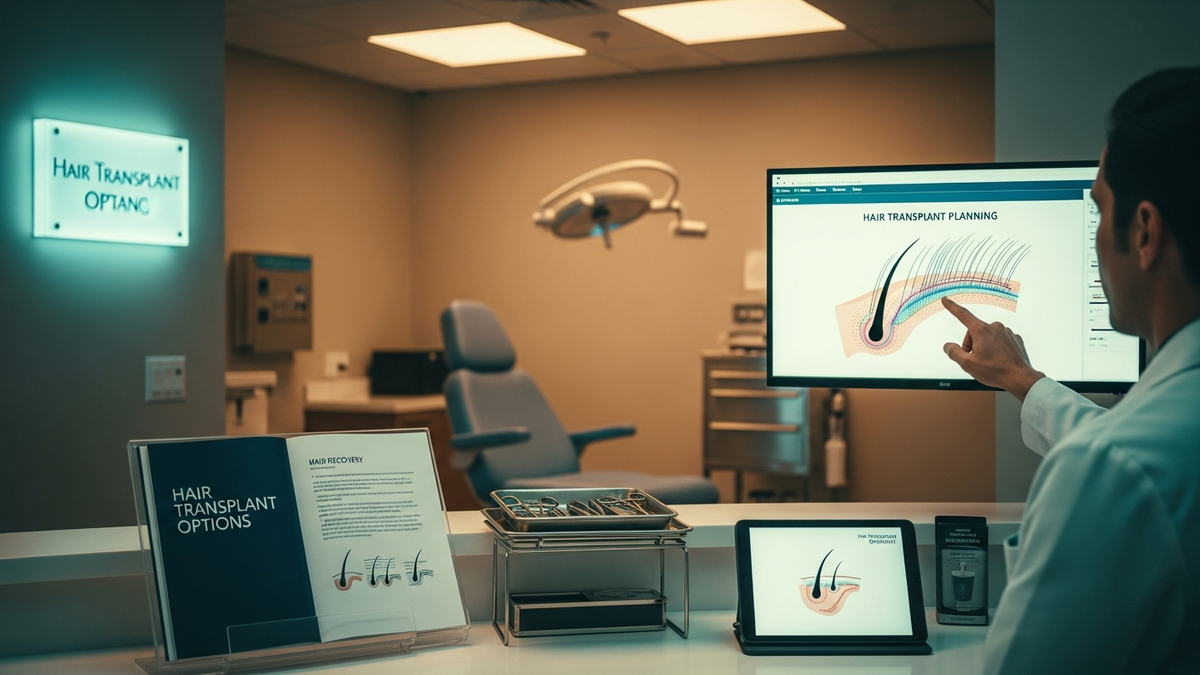
If you want to explore the procedures in more detail, you can review hair transplant options and how clinics typically structure treatment pathways.
How hair transplant clinics plan for natural-looking results
Natural results come from design, not just graft count. Great clinics focus on hairline aesthetics, graft placement strategy, and blending into surrounding hair.
Hairline design: the “frame” of the face
A conservative, patient-specific hairline often looks most natural. The surgeon should explain how they plan:
- Hairline height relative to facial proportions.
- Density gradient from the front to mid-scalp.
- Single-hair vs multi-hair placement to mimic native patterns.
- Curvature and direction to match your existing growth pattern.
Graft placement angle and direction
Placement angle affects how hair sits, catches light, and blends with your current hair. Clinics should be able to discuss how they create a natural distribution rather than relying on a single “template.”
Why “graft count” alone is not enough
Two patients can receive similar graft counts but achieve different coverage due to hair caliber, growth cycle timing, and placement strategy. Ask how the clinic estimates density for your specific area and how they handle conservative planning for donor preservation.
What to ask during a hair transplant clinic consultation
Use this checklist to compare clinics. It’s designed to help you evaluate both medical quality and communication clarity.
Questions about your candidacy and technique
- Which technique (FUE or FUT) do you recommend for me, and why?
- Will the surgeon personally perform key steps? If not, who will?
- How will you design my hairline and placement pattern?
- How do you assess my donor area and future hair-loss progression?
- What is my expected timeline for visible growth?
Questions about safety and outcomes
- What complications do you monitor for, and how are they managed?
- What does post-op care include? (medications, washing instructions, follow-ups)
- How do you handle shock loss or uneven growth?
- Can I review before-and-after photos of patients with similar patterns?
Questions about pricing and total value
Pricing varies widely. A better comparison is “total value,” which includes planning quality, surgeon time, graft handling, follow-up care, and whether the clinic offers transparent revision policies.
- Is pricing based on graft count, procedure time, or both?
- What’s included in the package? (consultation, meds, aftercare, follow-up visits)
- Is there a revision or adjustment policy? Under what conditions?
How clinics handle donor management and long-term planning
Hair transplantation is not a one-time reset. Your hair loss may continue over time, and your donor supply is finite. That’s why top hair transplant clinics plan for both your current needs and your future options.
Conservative strategy when donor is limited
If your donor area is restricted, an aggressive approach can lead to poor long-term coverage. A good clinic will discuss conservative density goals and may recommend staged procedures.
Staging and maintenance
Many patients benefit from a staged plan—especially when they want coverage across multiple zones (hairline, mid-scalp, crown). Clinics may also recommend ongoing medical hair-loss treatments to support native hair and reduce progression.
Recovery: what to expect after hair transplant surgery
Recovery varies by technique, individual healing, and the clinic’s protocol. In general, patients should expect a structured post-op plan and multiple follow-ups.
Early healing (first days to weeks)
- Swelling and tenderness are common early on.
- Cleansing and scab management follow clinic instructions.
- Temporary shedding can occur as transplanted hairs shift into a new growth cycle.
Mid-term growth (weeks to months)
Many patients notice gradual changes starting around the mid-growth phase. Final density and texture blending can take many months.
Long-term results (around 12 months+)
Most patients evaluate final results after a full growth cycle. Clinics should help you interpret what you’re seeing and whether additional planning is needed.
Choosing a clinic that matches your goals
Different patients want different outcomes: a youthful hairline, crown densification, or eyebrow restoration. The right clinic aligns technique, planning, and communication with your priorities.
For men: hairline + mid-scalp blending
Men often focus on a natural frontal hairline and improved density through the mid-scalp. The clinic should discuss density gradients and how they will avoid “pluggy” or overly uniform patterns.
For women: conservative density and direction control
Women with crown thinning often need careful spacing and direction to avoid unnatural distribution. A clinic should explain how it will blend with surrounding hair and maintain a natural, soft appearance.
For eyebrow restoration: symmetry and focal-point aesthetics
Eyebrows frame the eyes, so precision matters. If eyebrow loss is part of your goals, consider reviewing eyebrow transplant resources and asking how the clinic handles symmetry, thickness, and direction.
Why head-and-neck surgical expertise can matter
Hair restoration is a surgical discipline that benefits from refined anatomy knowledge, aesthetic planning, and a focus on tissue handling. Some clinics—especially those led by surgeons who specialize in head and neck procedures—may bring an additional layer of aesthetic judgment and patient education.
For example, TestBiz Hair Clinic is described as a premium hair transplant clinic offering FUE and FUT procedures with state-of-the-art technology and experienced surgeons serving clients worldwide. A strong clinic should combine advanced tools with surgical fundamentals: careful graft handling, precise placement, and structured aftercare.
Clinic quality signals beyond the procedure
When comparing hair transplant clinics, look for consistency across the patient journey—before, during, and after surgery.
1) Evidence of structured follow-up
Ask how many post-op visits you’ll have and what each visit covers. Follow-up quality affects outcomes because early issues can be managed sooner.
2) Clear documentation and patient education
A clinic should provide written instructions for washing, medication adherence, activity restrictions, and when to contact the team.
3) High-quality results and ethical marketing
Be cautious of clinics that guarantee identical outcomes or advertise unrealistic “instant” transformations. Hair growth has biological timelines.
Relevant evidence: what research says about hair restoration
Medical outcomes vary by patient selection, technique, and post-op care. Still, you can use evidence-based sources to guide your expectations and questions.
Statistics and timelines (with sources)
- Androgenetic alopecia is common: The American Academy of Dermatology notes that hair loss affects millions of people and that androgenetic alopecia is the most common type of hair loss in both men and women. (According to American Academy of Dermatology, “Hair Loss” resources)
- Hair growth is cyclical: Hair follicles cycle through growth (anagen), transition (catagen), and rest (telogen) phases, which helps explain why transplanted hairs may shed temporarily before regrowth. (According to National Institutes of Health / MedlinePlus, hair growth cycle and related dermatology education)
- Procedure selection matters: Evidence-based dermatology guidance emphasizes that transplant outcomes depend on technique, graft handling, and patient-specific planning. (According to American Society of Dermatologic Surgery educational materials, hair restoration overview)
External citations
For additional background on hair loss and follicle biology, you can review:
CTA: ready to compare hair transplant clinics?
If you’re comparing options right now, start with a shortlist and use the consultation checklist above. A great clinic will answer your questions clearly, show surgeon-led planning, and explain how your case is matched to FUE or FUT.
For additional head-and-neck surgical context and education-focused care, you can also explore related procedures offered in surgeon-led practices—such as Septoplasty for nasal breathing concerns, or aesthetic facial procedures like Rhinoplasty and Facelift—to understand how surgical teams approach anatomy, planning, and patient education.
Next step: Request a consultation with your top two choices and bring your list of questions. If a clinic can’t explain their plan in patient-friendly terms, that’s a signal to keep searching.
Frequently Asked Questions
How do I know if FUE or FUT is right for me?
Most clinics decide based on your donor density, hair characteristics, and long-term coverage goals. A surgeon-led consultation should explain the rationale for selecting FUE or FUT and how graft handling and placement will support natural blending.
What should hair transplant clinics include in post-op care?
Quality clinics provide written aftercare instructions, medication guidance, and scheduled follow-ups to monitor healing and growth. You should also know when to contact the team for concerns such as excessive swelling, infection signs, or unexpected discomfort.
Are hair transplant results guaranteed?
No ethical clinic can guarantee identical results because healing and growth vary by individual biology and surgical planning. Reputable providers discuss realistic timelines, potential risks, and how they handle revisions if needed.
How long until I see real hair growth?
Many patients experience initial changes within months, with more noticeable density and refinement as time passes. Final results are commonly evaluated after a full growth cycle, often around 12 months or longer.
Can I combine hair restoration with other facial procedures?
Some patients choose multiple aesthetic or reconstructive procedures, but timing and recovery planning must be individualized. Your surgeon team should coordinate based on healing needs and your overall health status.

Related reading: If you’re also researching other head and neck procedures in the same care ecosystem, you may find these helpful for understanding how surgical planning works across specialties: Blepharoplasty and Deviated Septum.
Professional Disclaimer
This content is provided for general educational purposes only by FUEsion Hair Clinics. It is not a substitute for professional advice, diagnosis, or treatment. Readers are advised to consult qualified professionals for personalized recommendations.
Medical Information Disclaimer
This content is provided for general educational purposes only by FUEsion Hair Clinics. It is not a substitute for professional advice, diagnosis, or treatment. Readers are advised to consult qualified professionals for personalized recommendations.